JPEdLab iconJPEdLab
Save history

Create an account and play

Explore first, then save your progress whenever you are ready. No email address is required.

Start free
  1. Japanese grammar
  2. JLPT N4 grammar
  3. 〜そうです

〜そうです~sou desu

Sou desu (〜そうです) means “looks / seems”.

このkonoケーキけーきkeekiはわwaおいしoishiそうです。そうですsoudesu

This cake looks delicious.

Use 「〜そうです」 to describe an impression from appearance before you know the actual taste or condition.

In the course›

How it works

  1. You haven’t tasted the cake yet, but it looks delicious. Use 「そうです」 to express this impression.

    You haven’t tasted the cake yet, but it looks delicious. Use 「そうです」 to express this impression.

  2. 「おいしそうです」 means it looks delicious. After tasting it, you can say 「おいしいです」 to describe the taste.

    「おいしそうです」 means it looks delicious. After tasting it, you can say 「おいしいです」 to describe the taste.

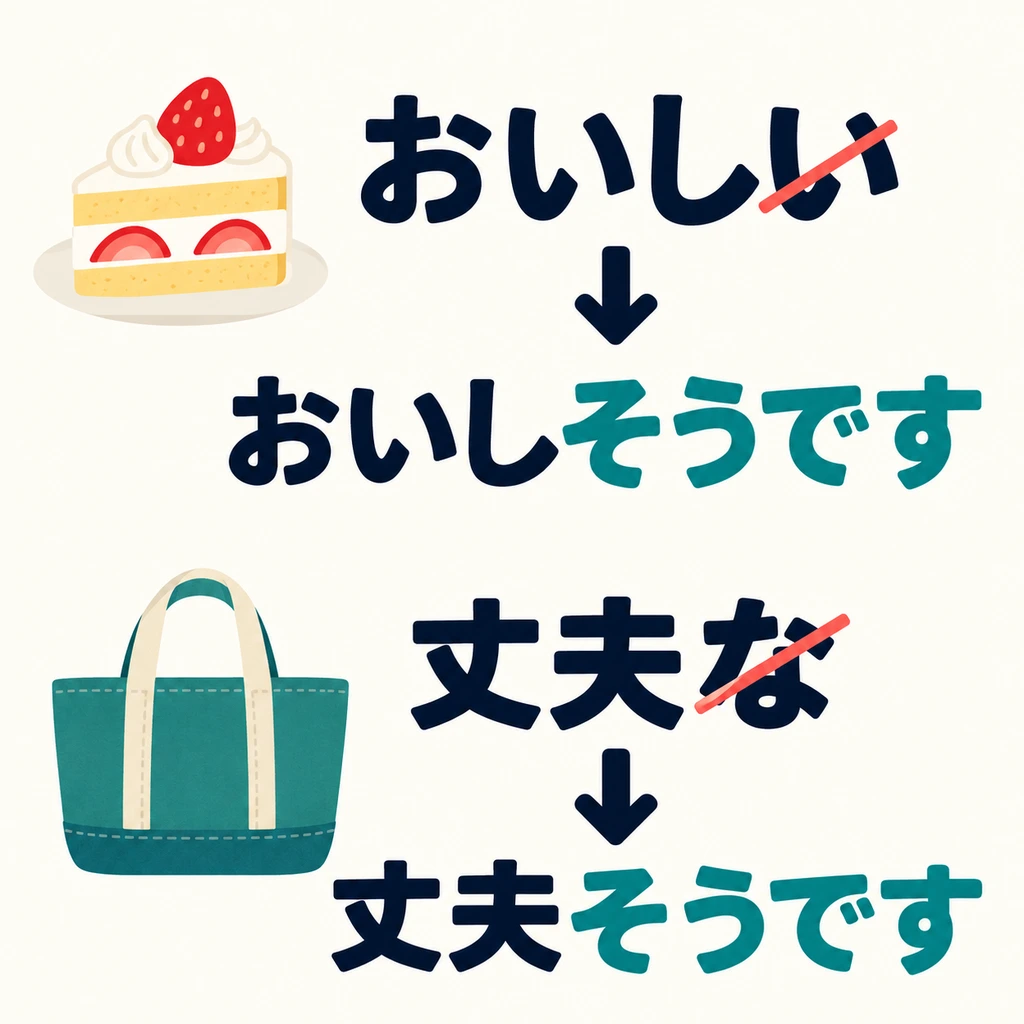
  3. For い-adjectives, remove the final 「い」 and add 「そうです」: おいしい→おいしそうです.
    For い-adjectives, remove the final 「い」 and add 「そうです」: おいしい→おいしそうです.

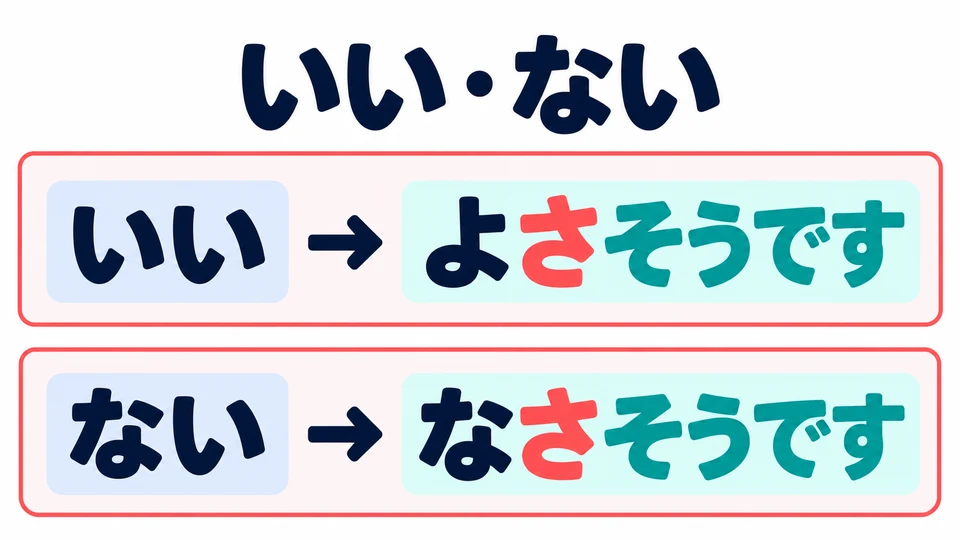
  4. For 「いい」 and 「ない」, the rule of simply removing 「い」 does not apply. Use 「よさ」 and 「なさ」 before 「そうです」.
    For 「いい」 and 「ない」, the rule of simply removing 「い」 does not apply. Use 「よさ」 and 「なさ」 before 「そうです」.

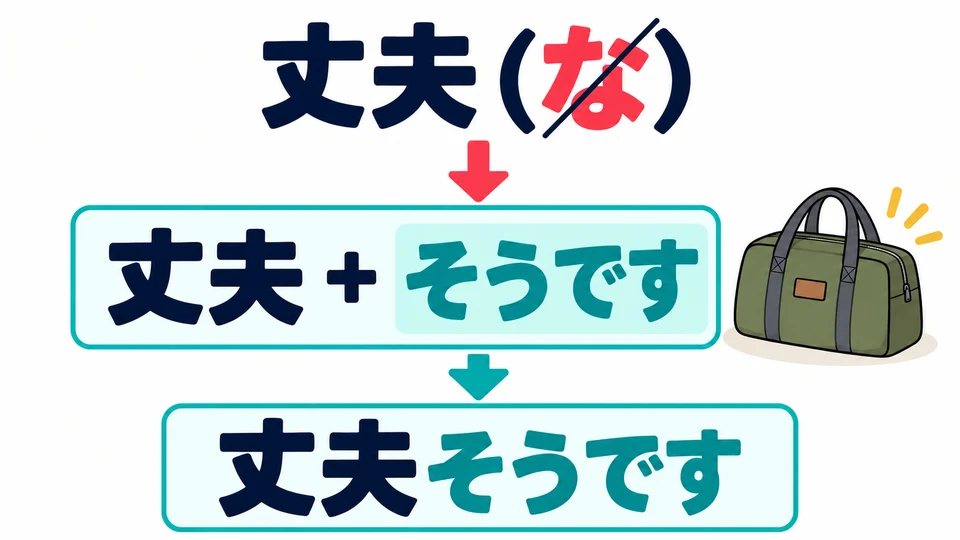
  5. For な-adjectives, add 「そうです」 directly: 丈夫(な)→丈夫そうです. Do not include 「な」.
    For な-adjectives, add 「そうです」 directly: 丈夫(な)→丈夫そうです. Do not include 「な」.

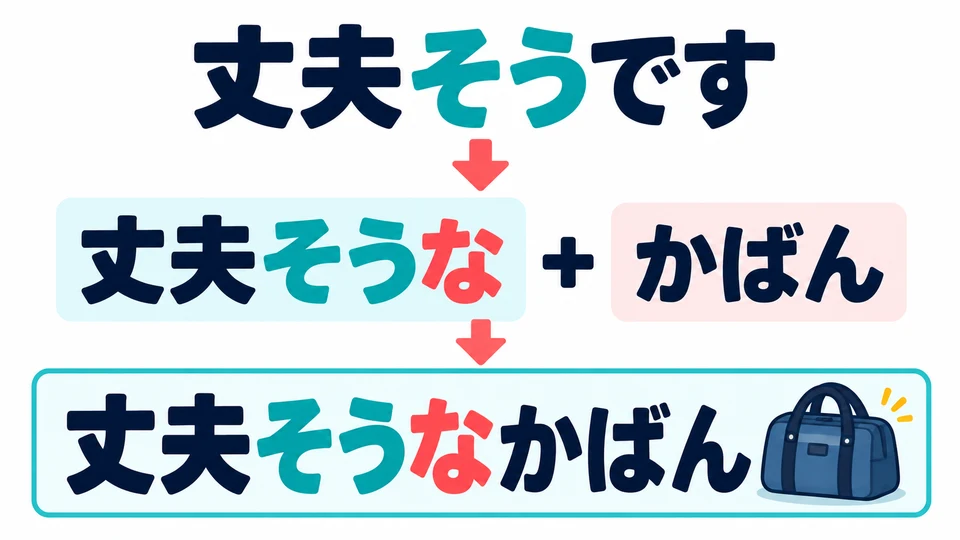
  6. To modify a noun, use 「そうな」 and drop the sentence-final 「です」. It expresses an impression based on appearance, with the noun directly after it.
    To modify a noun, use 「そうな」 and drop the sentence-final 「です」. It expresses an impression based on appearance, with the noun directly after it.

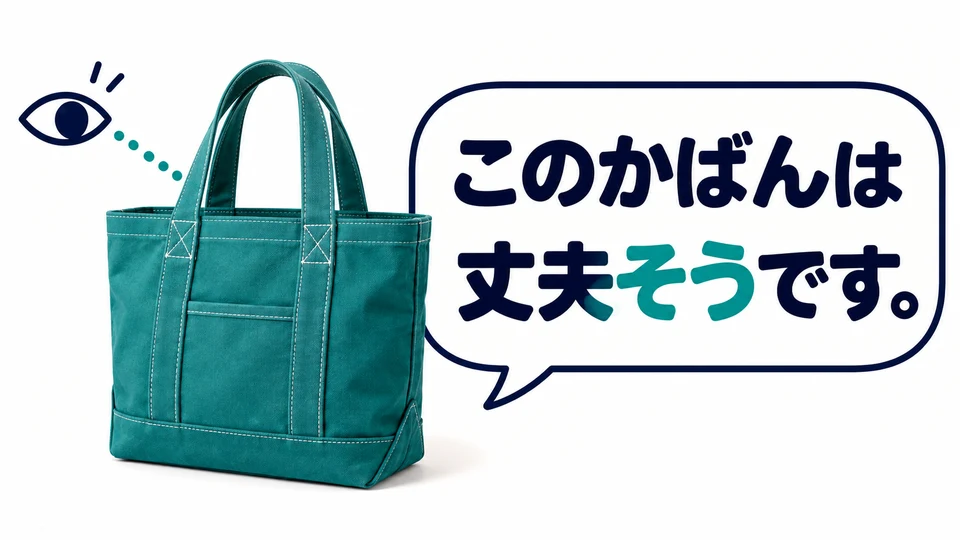
  7. The bag’s material and stitching make it look sturdy. You can say 「このかばんは丈夫そうです」.
    The bag’s material and stitching make it look sturdy. You can say 「このかばんは丈夫そうです」.

  8. Check both changes: keep only the adjective stem. Don’t say 「おいしいそう」 or 「丈夫なそう」.

    Check both changes: keep only the adjective stem. Don’t say 「おいしいそう」 or 「丈夫なそう」.

  9. If someone asks about the cake before ordering, you can reply 「とてもおいしそうですよ」 to express a positive impression of how it looks.

Example sentences

  • このkonoケーキけーきkeekiはわwaおいしoishiそうです。そうですsoudesu

    This cake looks delicious.

  • このkonoかばんkabanはわwa丈夫じょうぶjoubu

In a conversation

  • A
    このケーキけーきはわどうですか。か

    A: How about this cake?

  • B
    とてもおいしそうですよ。よ

    B: It looks really delicious.

  • A
    じゃあ、

Check yourself

  1. Level 0 · Conjugate

    Change to 〜そうです: “looks …”. 〜そう(様態)

    写真で見ると、このケーキは(おいしい)です。

  2. Level 1 · Recognise

    Which sentence is correct?

  3. Level 1 · Recognise

    Listen and choose the meaning

  4. Level 2 · Build

    Put the words in order

    This cake looks delicious.

  5. Level 3 · Use

    What goes in the blank?

    このケーキは です。

    This cake looks delicious.

More grammar in this theme

  • 〜そうですlooks / seems

More JLPT N4 grammar

Keep practising

Test your Japanese vocabulary12 adaptive questions, freeCheck your pronunciationRead aloud and get a scorePractise verb forms10-question conjugation quizSee the whole courseGrammar, vocabulary and quizzes by theme

If someone asks about the cake before ordering, you can reply 「とてもおいしそうですよ」 to express a positive impression of how it looks.

そうです。そうです
soudesu

This bag looks durable.

じゃあ
それ
を
注文ちゅうもん
します。します

A: Then, I'll order that.

Beginner 3
At Shops and Restaurants
More quizzesOpen this lesson’s quizzes in the course
〜てみますtry doing
〜てもらえませんかcould you do for me?
〜やすい・〜にくいeasy / hard to do
〜すぎますtoo much / too ~
〜てありますhas been prepared
〜と読みます・〜と書いてありますis read as / says
〜はどういう意味ですかwhat does ~ mean?
〜にしますI’ll choose / have ~
Next〜てみます
See all 138
〜ので/〜なのでreason; gentle explanation
〜ならif; under that condition
〜のは〜ですmake an activity the topic
〜ようになりますbecome able; develop a habit
〜ようと思っていますintend / am thinking of ~
〜つもりですintend / plan to ~
何を〜するかembedded what-question
〜かどうかwhether or not