
何を〜するかnani o ~suru ka
Nani o suru ka (何を〜するか) means “embedded what-question”.
I haven't decided what to major in yet.
Use 「何を〜するか」 with a plain-form question to say what you have not decided or are wondering about.
In the course
How it works
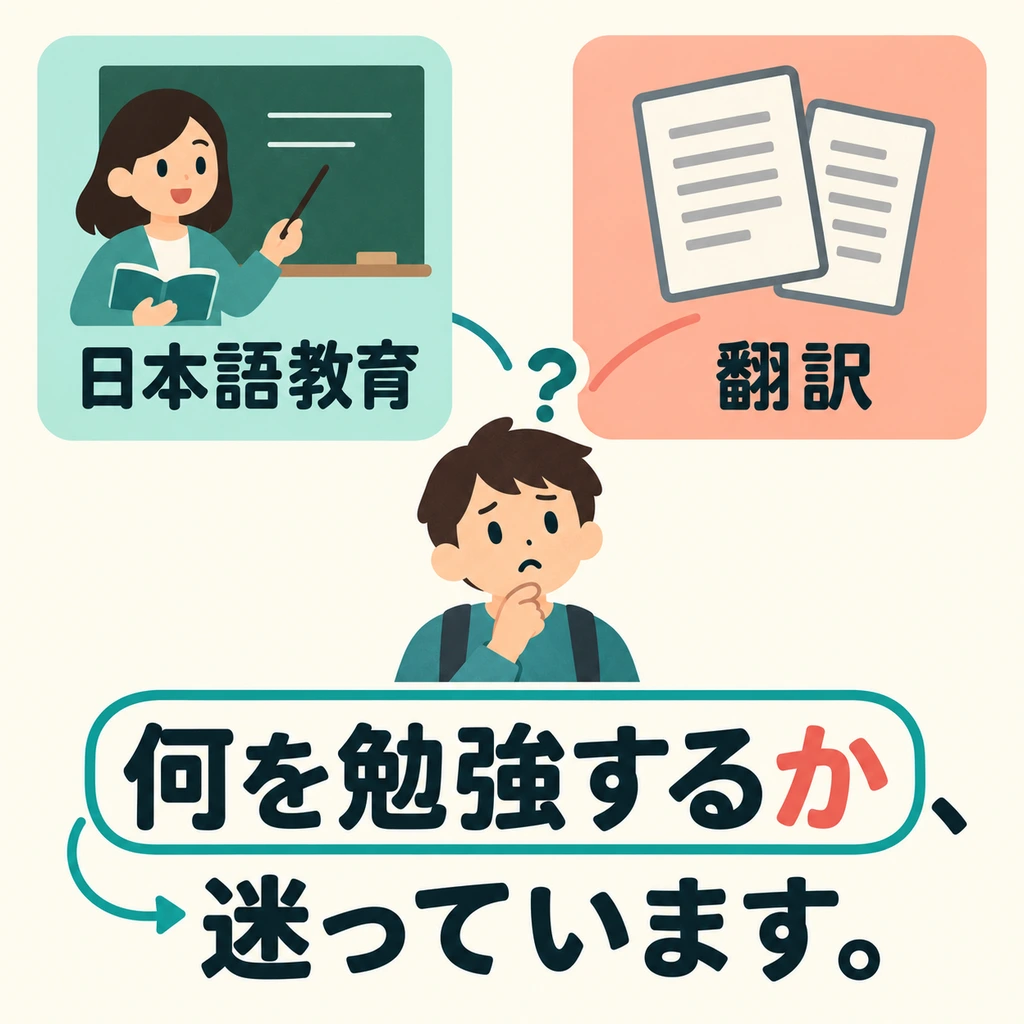
Preparing to study abroad, but still torn between two majors. The student in the picture has not decided what to study yet.
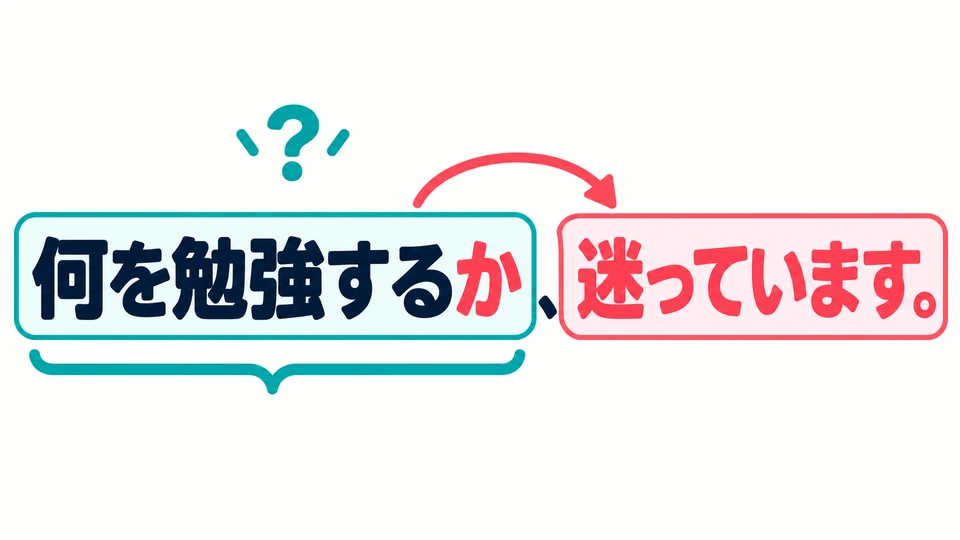
「何を勉強するか」 expresses the question “what to study.” This whole question becomes part of the rest of the sentence.
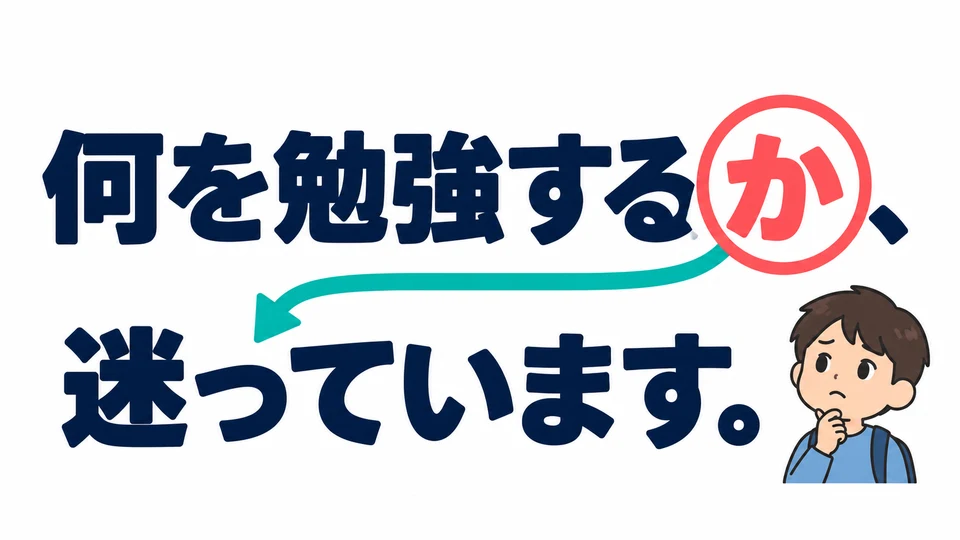
Here, 「か」 connects a question to the rest of the sentence. The whole sentence describes the speaker’s uncertainty.
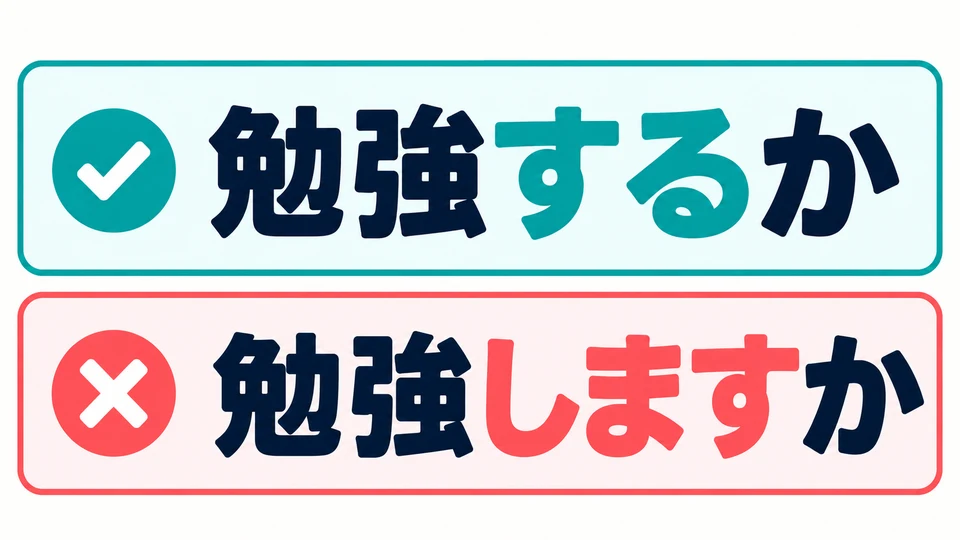
Use the plain form in the question part: 「勉強するか」. Do not insert 「勉強しますか」 directly.
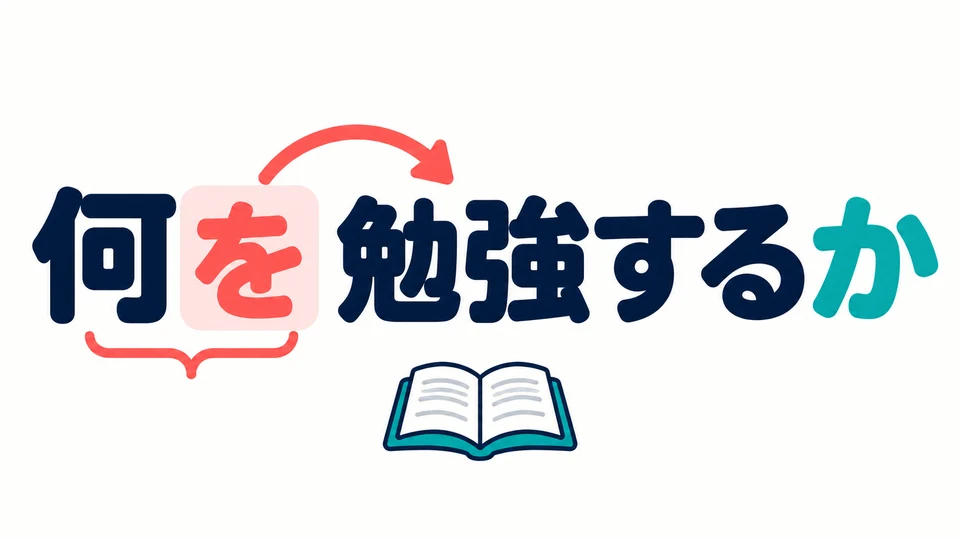
Keep the particle after the question word. The 「を」 in 「何を」 marks what is being studied.
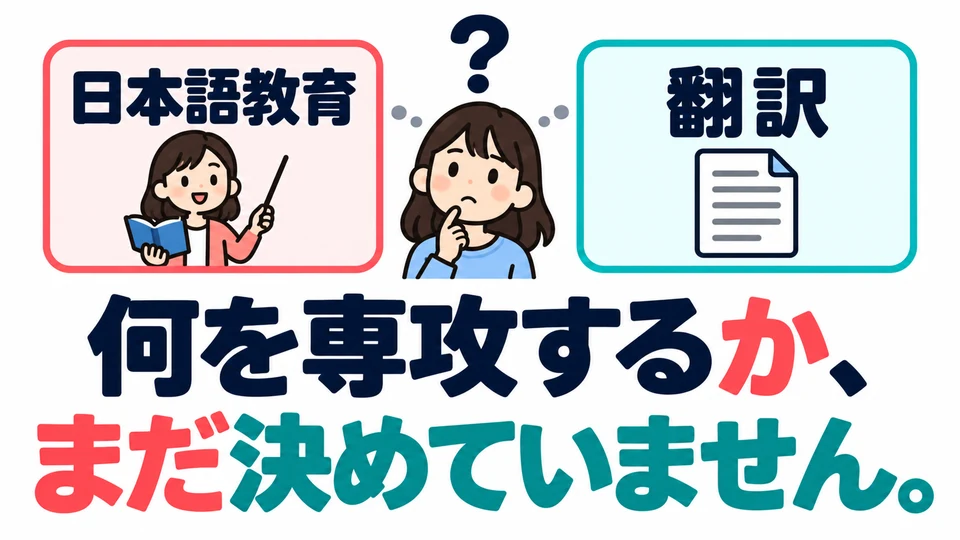
「何を専攻するか、まだ決めていません」 means the speaker has not yet decided what to major in.
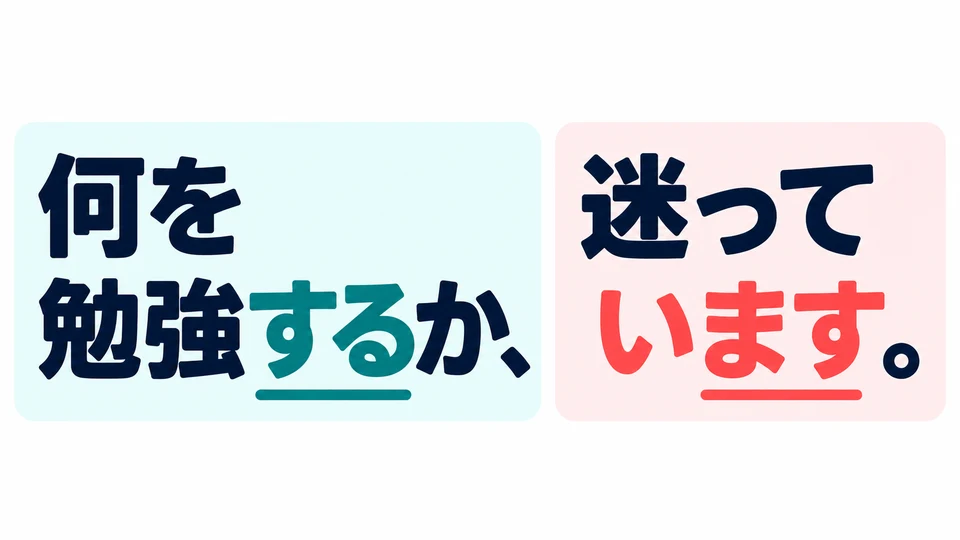
The question part at the beginning uses the plain form. The later 「迷っています」 can still use the polite form.
Example sentences
- 何nanをo専攻senkouするsuruか、kaまだmada決めkimeてteいません。imasen
I haven't decided what to major in yet.
- 何
In a conversation

- A留学の準備は進んでいますか。
A: Are your preparations for studying abroad progressing?
- Bいいえ、何を専攻する
Check yourself
Level 1 · Recognise
Which sentence is correct?
Level 1 · Recognise
Listen and choose the meaning
Level 2 · Build
Put the words in order
I'm still wondering what to major in.
Level 3 · Use
What goes in the blank?
何を専攻 (する+か)まだ迷っています。
I am still unsure what to major in.
More grammar in this theme
- 何を〜するかembedded what-question