JPEDLAB iconJPEDLAB
Save history

Create an account and play

Explore first, then save your progress whenever you are ready. No email address is required.

Start free
Read as articleCards
See the whole course›Beginner 3›Future Goals

Japanese grammar · ≈ JLPT N4 · Beginner 3

〜んですか~n desu ka

follow-up explanation question

Use 「〜んですか」 after hearing news or noticing a situation to ask gently for reasons or more details.

Start the interactive lessonIllustrated cards, audio and speaking practice

How it works

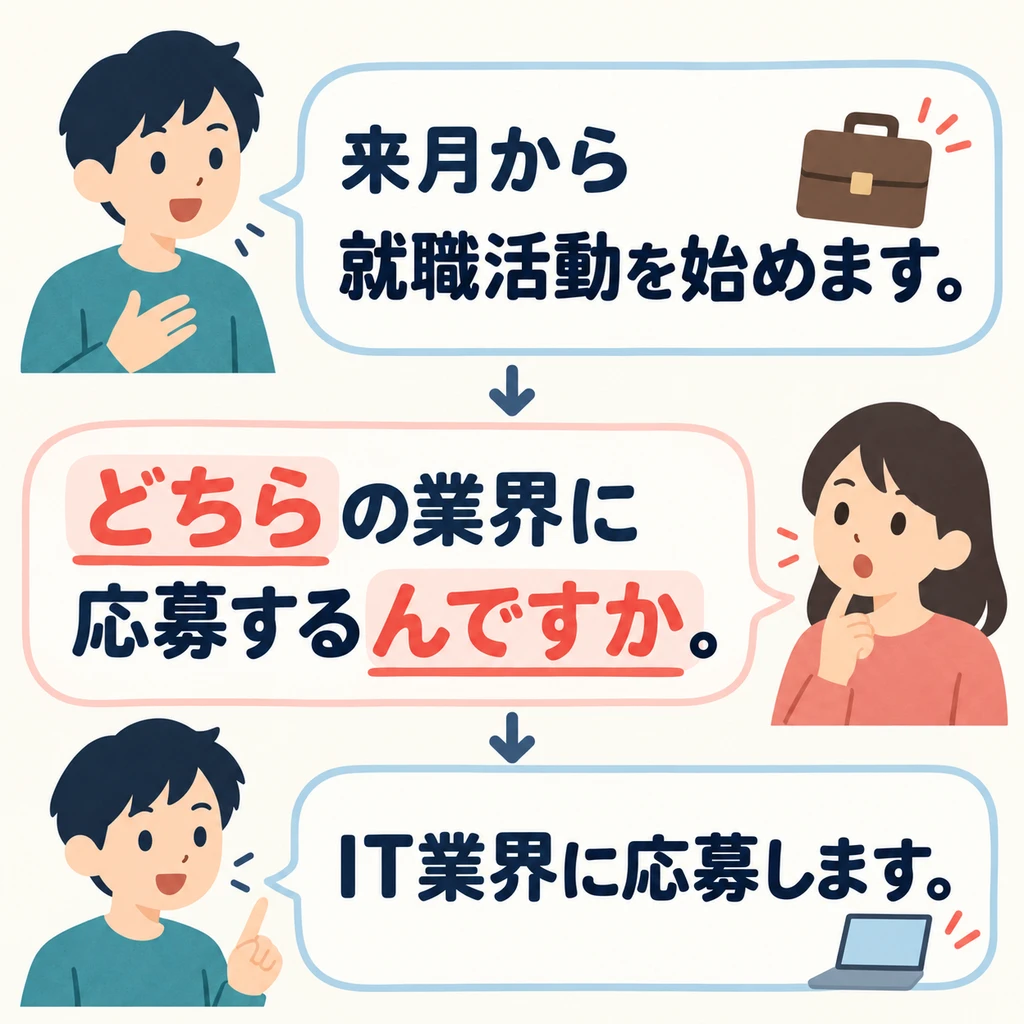
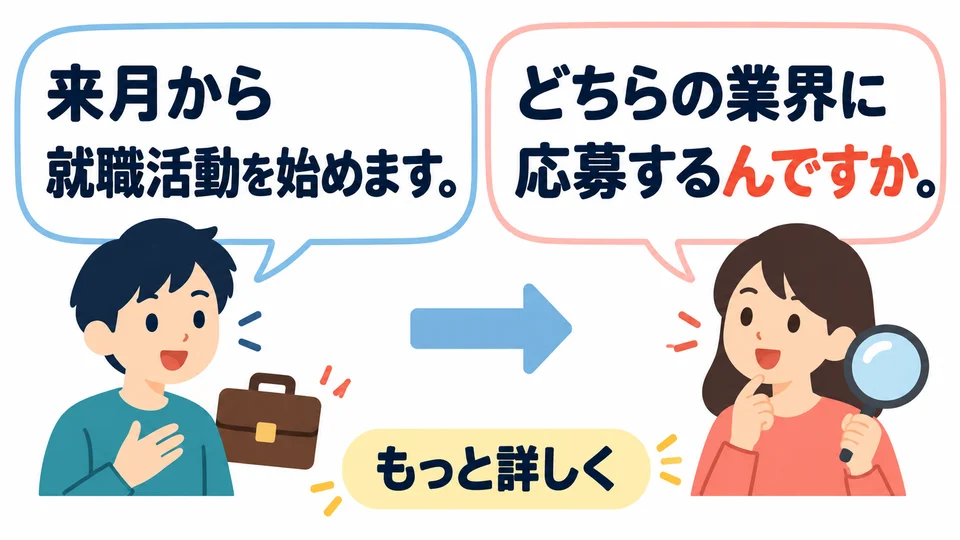
  1. After hearing that someone will start job hunting, ask which industry they are applying to. Notice how the question in the picture follows up on what was said.
    After hearing that someone will start job hunting, ask which industry they are applying to. Notice how the question in the picture follows up on what was said.

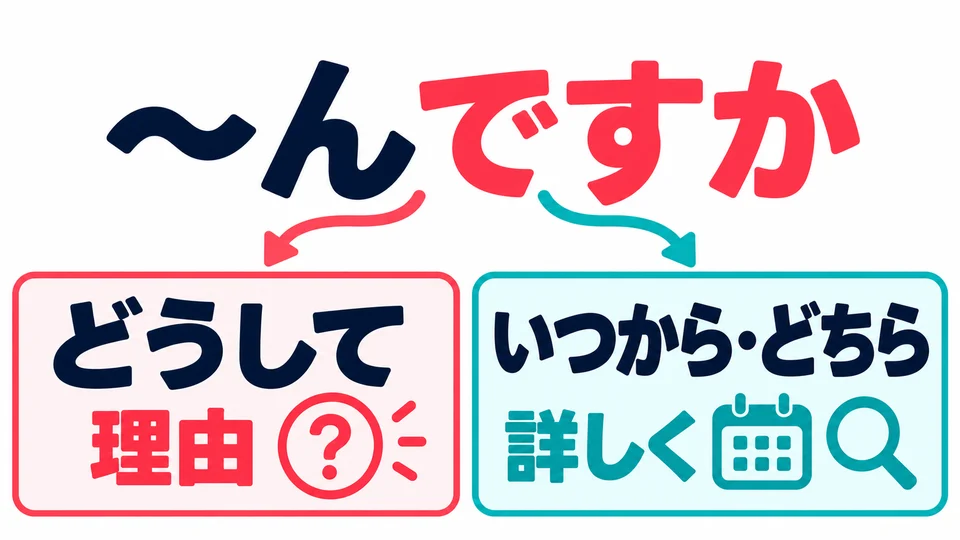
  2. Use 「んですか」 to ask for an explanation, whether you want a reason or more details.
    Use 「んですか」 to ask for an explanation, whether you want a reason or more details.

  3. After hearing some news or noticing a situation, use it to ask a follow-up question and show you want to know more.
    After hearing some news or noticing a situation, use it to ask a follow-up question and show you want to know more.

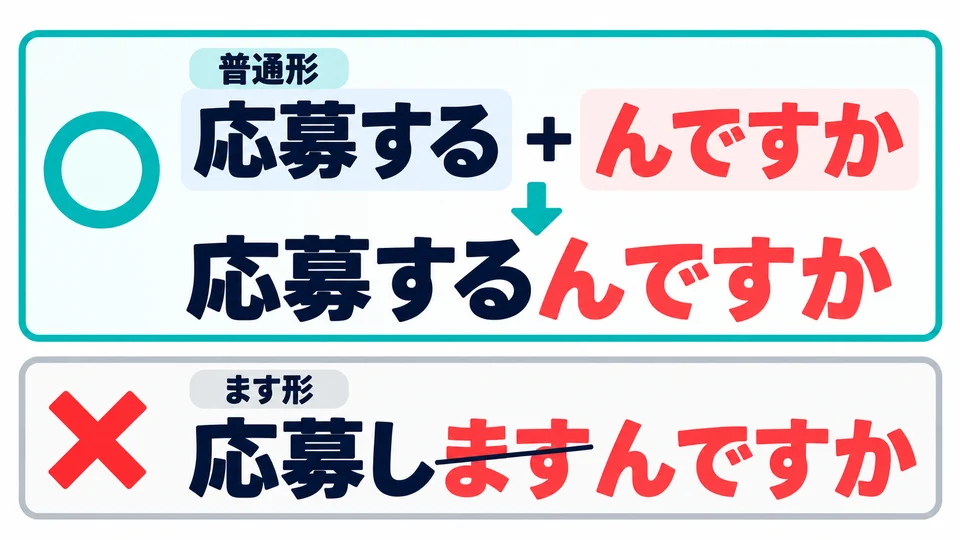
  4. Attach 「んですか」 to a verb in its plain form, as in 「応募するんですか」. Do not use the ます form.
    Attach 「んですか」 to a verb in its plain form, as in 「応募するんですか」. Do not use the ます form.

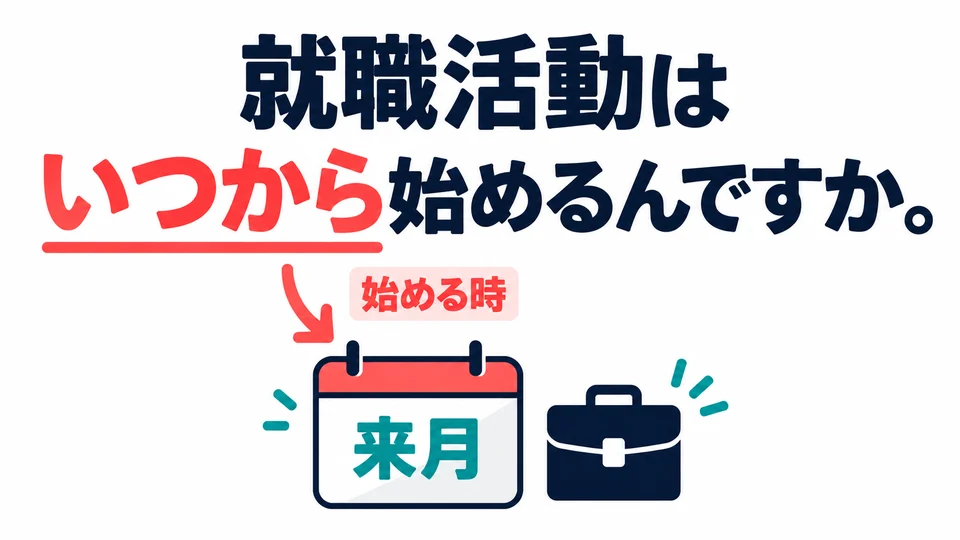
  5. 「いつから始めるんですか」 asks when something will start. Here, the speaker wants to know the plans for job hunting.
    「いつから始めるんですか」 asks when something will start. Here, the speaker wants to know the plans for job hunting.

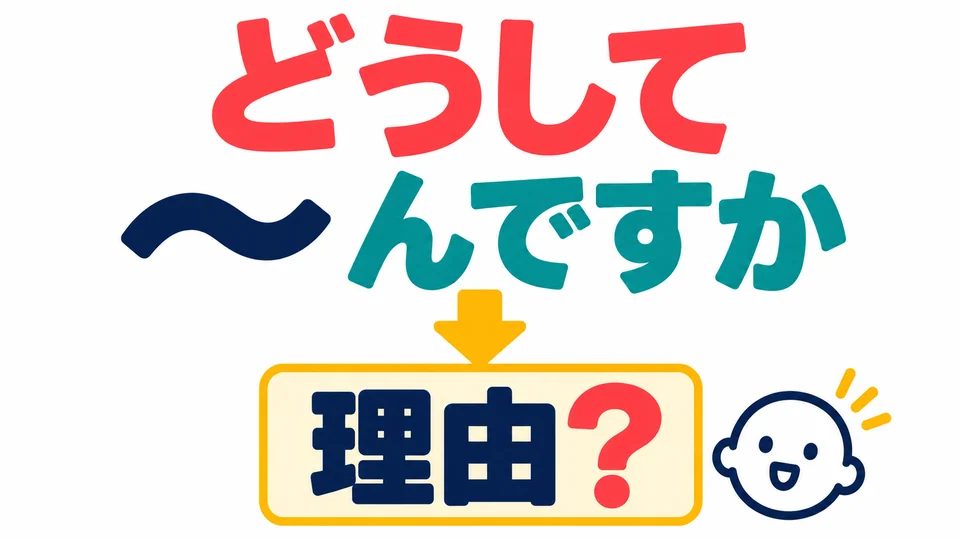
  6. 「どうして~んですか」 asks for a reason, inviting the other person to explain why things are that way.
    「どうして~んですか」 asks for a reason, inviting the other person to explain why things are that way.

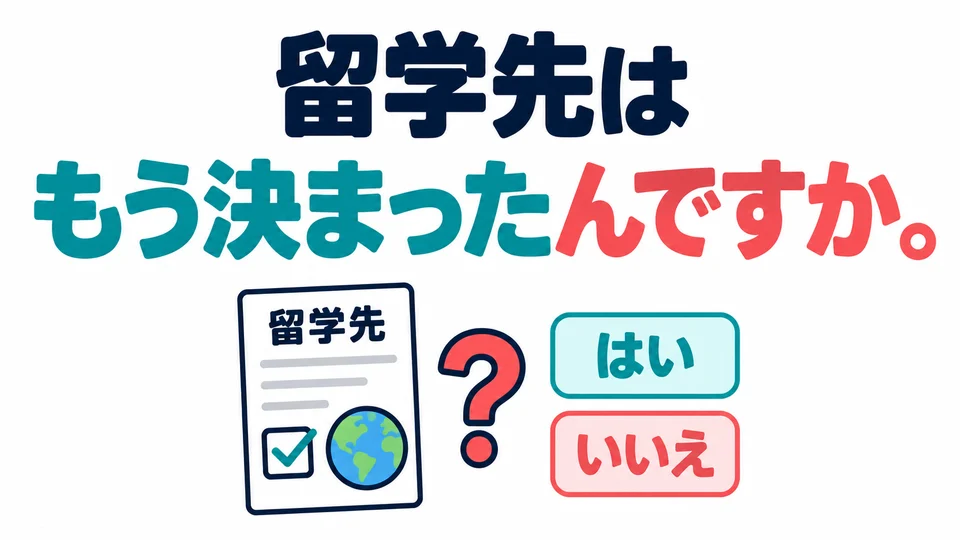
  7. 「もう決まったんですか」 has no question word. Here, it checks whether the study-abroad destination has already been decided.
    「もう決まったんですか」 has no question word. Here, it checks whether the study-abroad destination has already been decided.

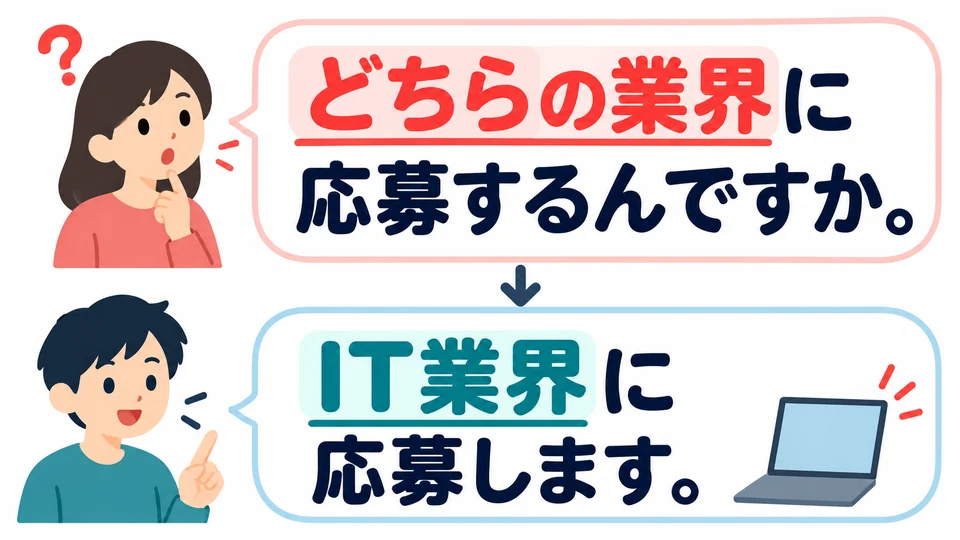
  8. When asked 「どちらの業界」, name the specific industry. The answer in the picture is the IT industry.
    When asked 「どちらの業界」, name the specific industry. The answer in the picture is the IT industry.

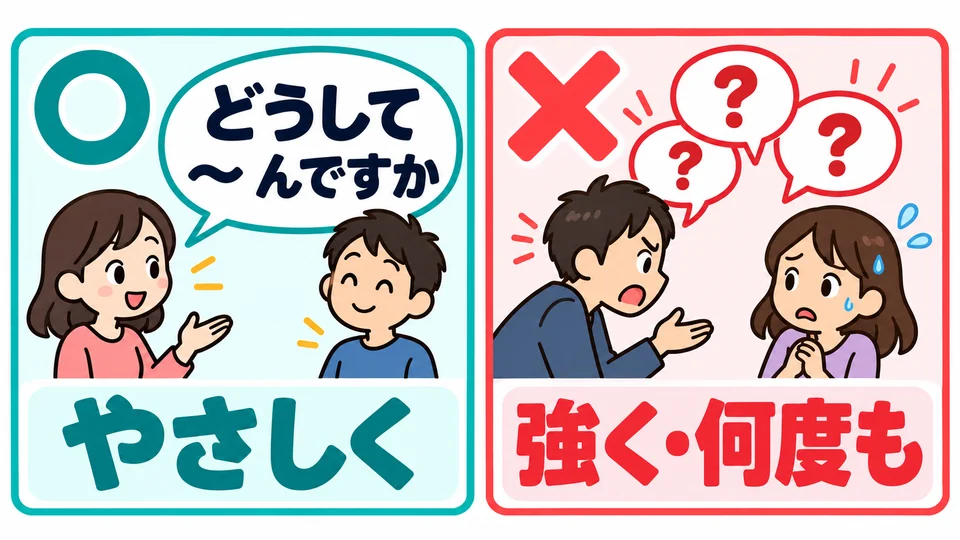
  9. Ask for reasons in a gentle tone. Repeated, forceful questions can make the other person feel interrogated.

    Ask for reasons in a gentle tone. Repeated, forceful questions can make the other person feel interrogated.

Example sentences

  • 就職しゅうしょくshuushoku活動かつどうkatsudouはわwaいつitsuからkara始めるはじめるhajimeruんnですdesuか?かka

    When are you starting your job hunt?

In a conversation

  • A
    来月らいげつから就職しゅうしょく活動かつどうを始めます。はじめます

    A: I'll start my job search next month.

  • B
    どちらの業界ぎょうかいに応募おうぼするんです

Check yourself

  1. Level 1 · Recognise

    Which sentence is correct?

  2. Level 1 · Recognise

    Listen and choose the meaning

  3. Level 2 · Build

    Put the words in order

    Have you already decided on your study abroad destination?

  4. Level 3 · Use

    What goes in the blank?

    就職活動はいつから始め 。

    When will you start job hunting?

More grammar in this theme

  • 〜んですかfollow-up explanation question

Keep practising

Test your Japanese vocabulary12 adaptive questions, freeCheck your pronunciationRead aloud and get a scorePractise verb forms10-question conjugation quizSee the whole courseGrammar, vocabulary and quizzes by theme
  • 留学りゅうがくryuugaku先さきsakiはわwaもうmou決まったきまったkimattaんnですdesuか?かka

    Have you already decided where to study abroad?

  • か。か

    B: Which industry are you applying to?

  • A
    IT あいてぃー業界ぎょうかいに応募おうぼします。します

    A: I'm applying to the IT industry.

    • B
      具体的ぐたいてきにどの会社かいしゃですか。か

      B: Which companies specifically?

    • A
      ソニーそにーとトヨタとよたに応募おうぼする予定よていです。です

      A: I plan to apply to Sony and Toyota.

    〜たらwhen / after ~
    〜ようと思っていますintend / am thinking of ~
    〜つもりですintend / plan to ~
    何を〜するかembedded what-question
    〜かどうかwhether or not
    〜するためにpurpose; in order to
    〜なければなりませんobligation; must do
    Previous〜するために
    Next〜なければなりません