
〜かどうか~ka dou ka
Ka dou ka (〜かどうか) means “whether or not”.
I'm still wondering whether to get a job or not.
Use 「〜かどうか」 with a plain form to make a yes-or-no question part of a sentence about doubt or uncertainty.
In the course
How it works
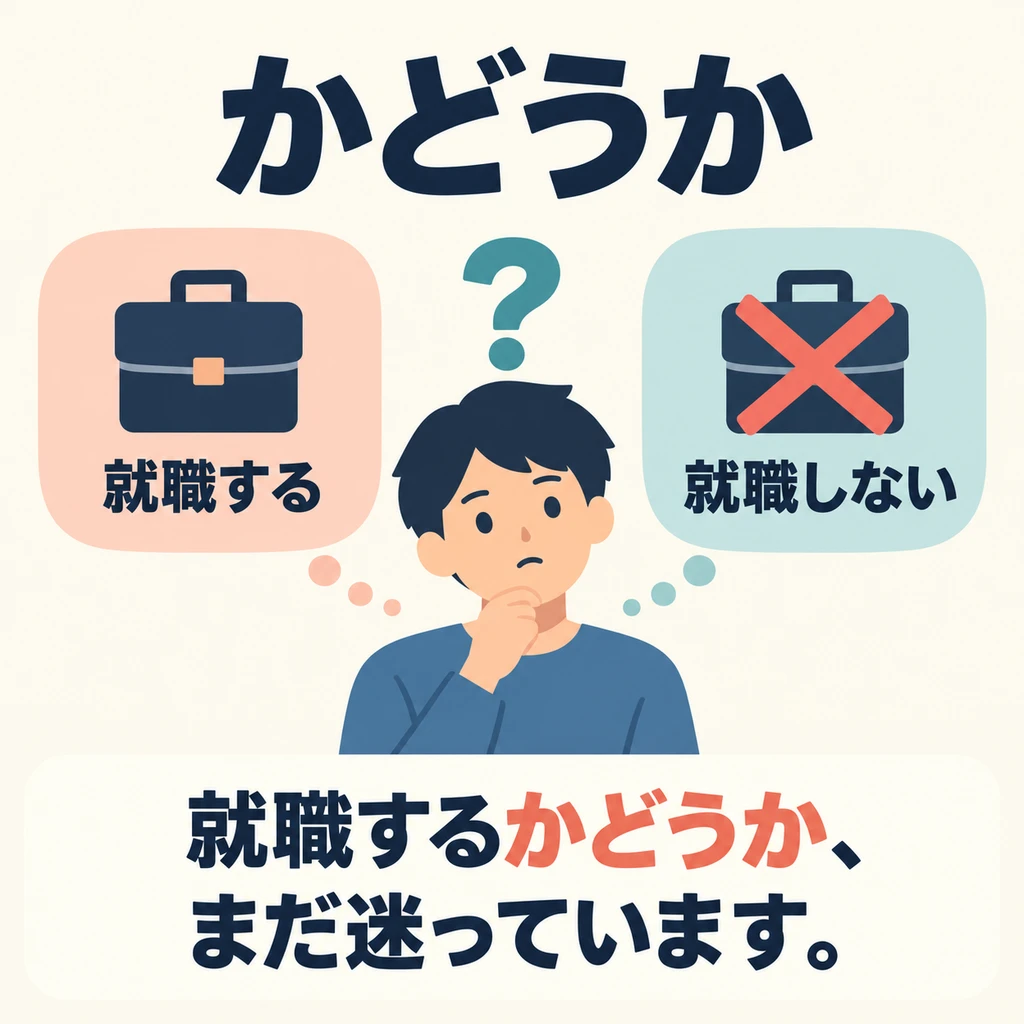
He is still unsure whether to get a job. Look at the picture: both options are still open, and the answer is undecided.
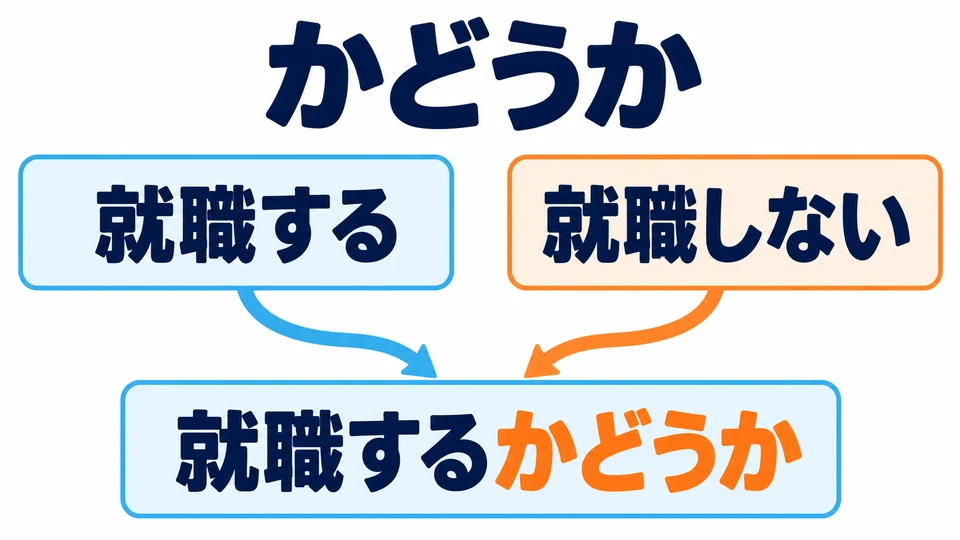
「かどうか」combines “do it” and “do not do it” into one question. It means “whether or not.”
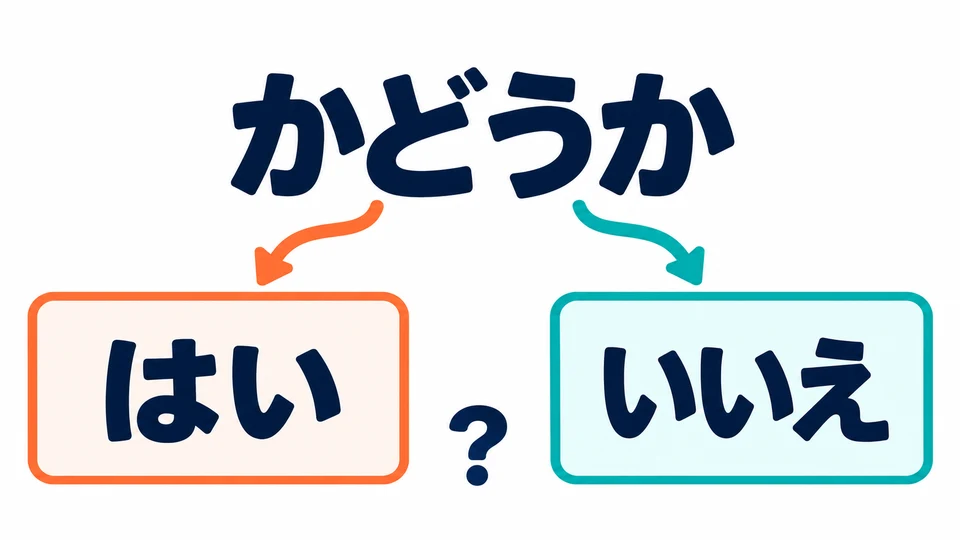
Here, 「どうか」does not ask “how.” The question is whether the answer is “yes” or “no.”
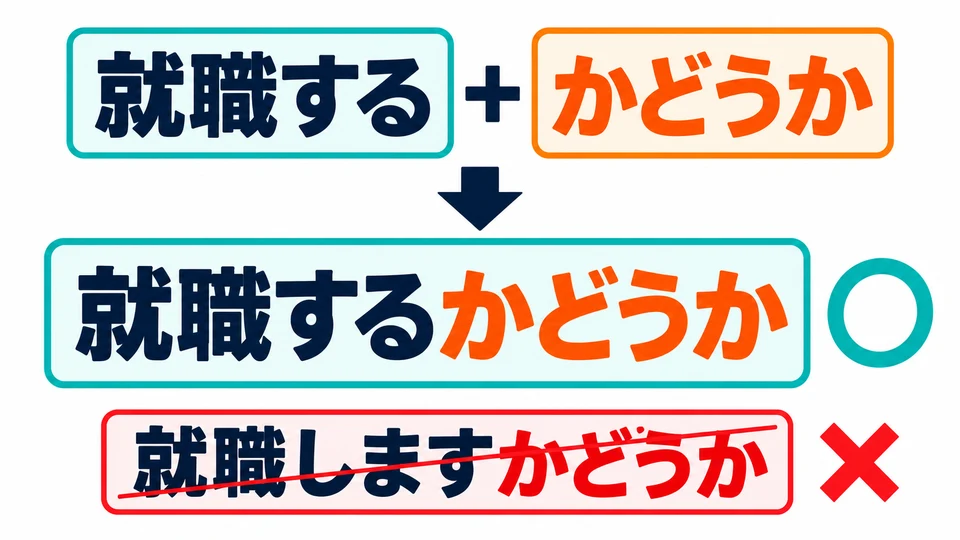
Attach 「かどうか」to a verb’s plain form: 就職するかどうか. Do not use 「します」before it.
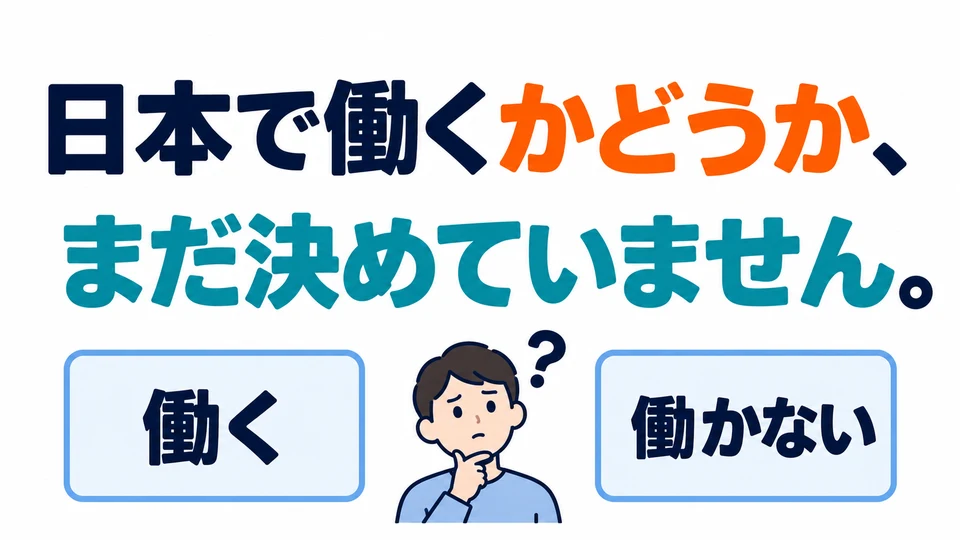
「日本で働くかどうか、まだ決めていません」means “I have not yet decided whether to work in Japan.”
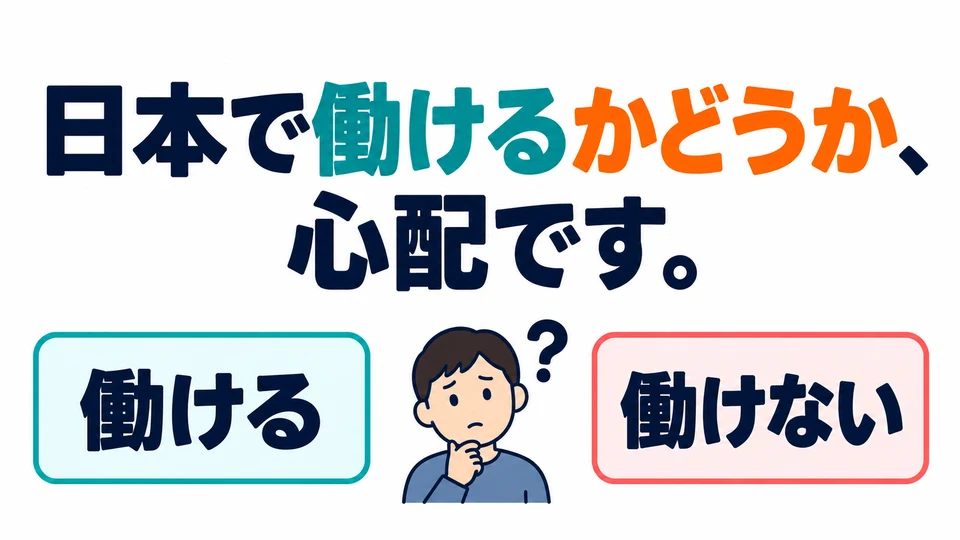
「日本で働けるかどうか、心配です」expresses worry about being able to work in Japan, not about wanting to go.
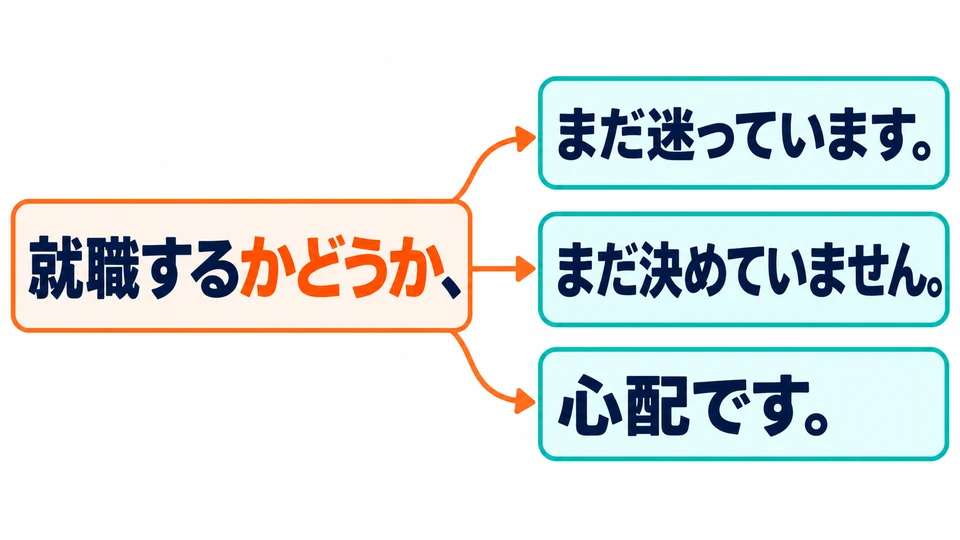
Put a “whether or not” question inside a sentence, then add “I am unsure,” “I have not decided,” or “I am worried” to describe your situation.
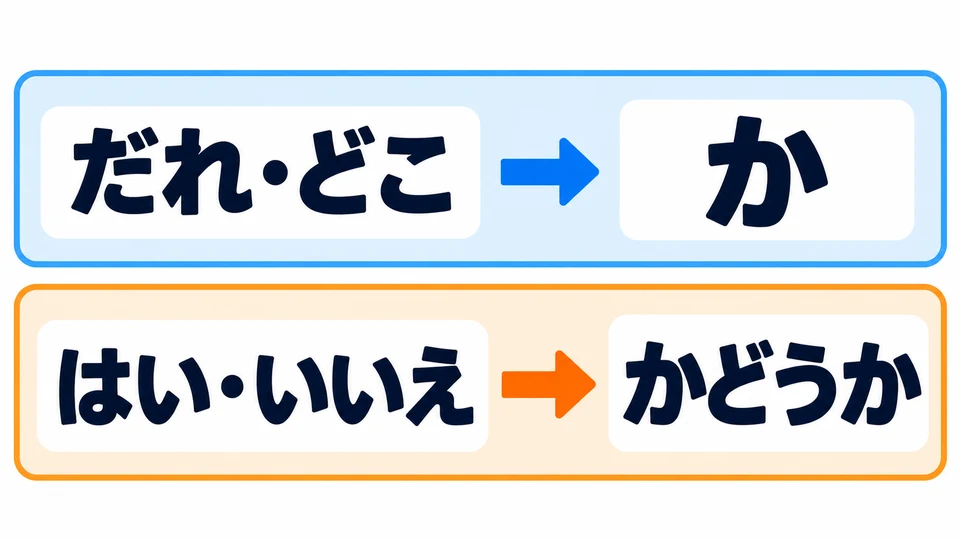
For questions like “who” or “where,” use a question word plus 「か」. For a yes-or-no question, use 「かどうか」.
Example sentences
- 就職shuushokuするsuruかkaどうdouか、kaまだmada迷っmayoてteいます。imasu
I'm still wondering whether to get a job or not.
- 日本
In a conversation

- A進路は決まりましたか。
A: Have you decided on your career path?
- Bいいえ、就職するかどうか、まだ迷って
Check yourself
Level 1 · Recognise
Which sentence is correct?
Level 1 · Recognise
Listen and choose the meaning
Level 2 · Build
Put the words in order
I'm still wondering whether to study abroad.
Level 3 · Use
What goes in the blank?
間に合う 心配です。
I'm worried about whether I'll make it in time.
More grammar in this theme
- 〜かどうかwhether or not