
〜たら~tara
Tara (〜たら) means “when / after ~”.
When I graduate, I will go on a trip with my friends.
Use 「〜たら」 to talk about what you will do after an expected event is completed; it does not mean immediately.
In the course
How it works

Look at the picture: graduate first, then travel. 「たら」 tells us what happens after the first event is completed.
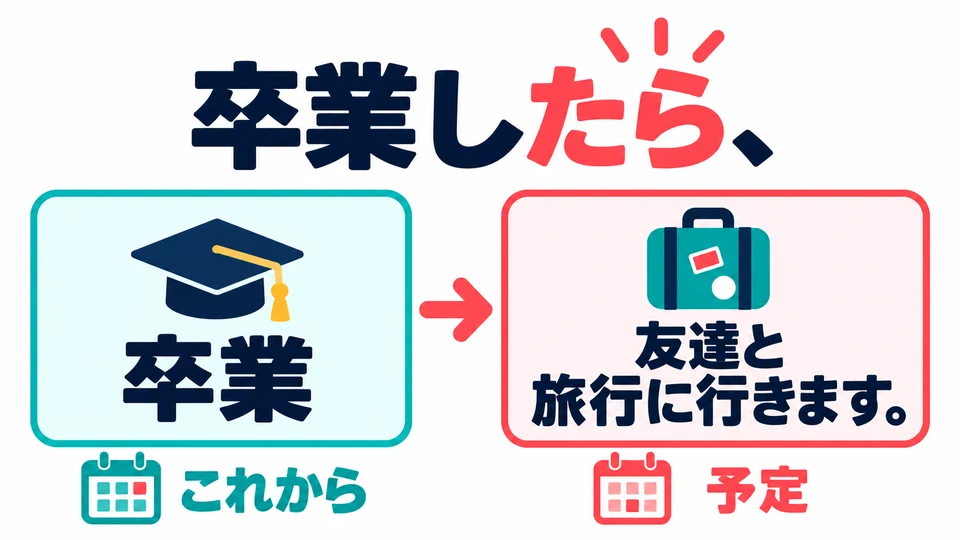
When discussing plans after graduation, treat graduation as an event you expect to happen, then describe your plans for afterward.
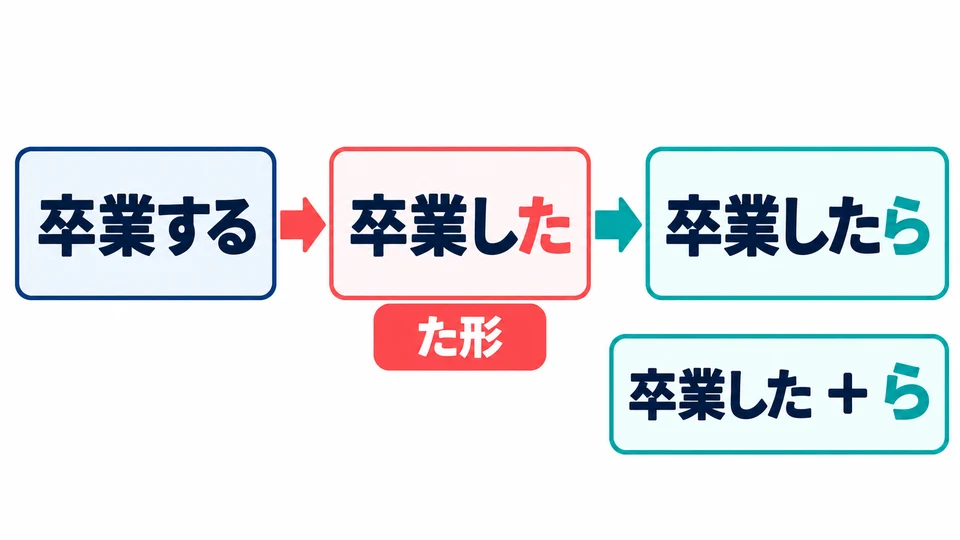
Put the verb in its た-form, then add 「ら」: 卒業する→卒業した→卒業したら.
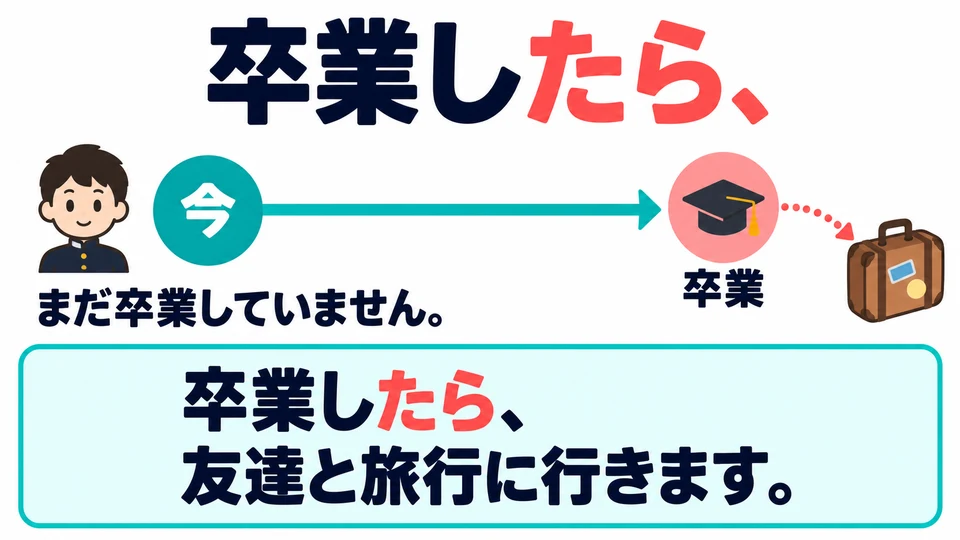
Here, 「た」 does not mean you have already graduated. You can discuss plans after graduation even before you graduate.

The second half can also express a wish: 大学を卒業したら、日本で仕事がしたいです。
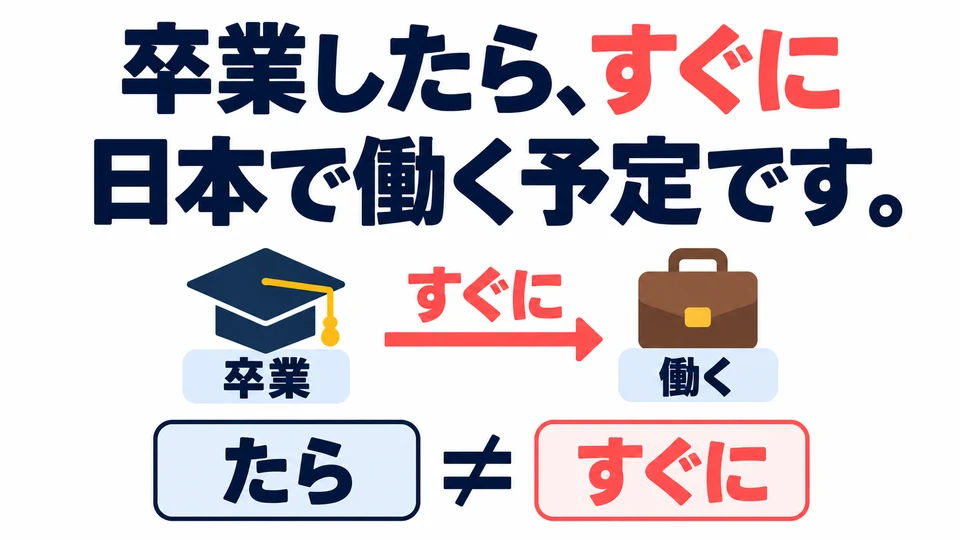
「たら」 itself does not mean “immediately.” Add 「すぐに」 to emphasize starting work right after graduation.
Example sentences
- 卒業sotsugyouしたら、shitara友達tomodachiとto旅行ryokouにni行きます。ikimasu
When I graduate, I will go on a trip with my friends.
- 大学daigakuをo
In a conversation

- A卒業後の予定はもう決まりましたか。
A: Have you already decided on your plans after graduation?
- Bはい、卒業したらすぐに日本
Check yourself
Level 0 · Conjugate
Change to 〜たら/〜だら: “after doing it”. 〜たら
専攻を(決める)、先生に相談します。
Level 1 · Recognise
Which sentence is correct?
Level 1 · Recognise
Listen and choose the meaning
Level 2 · Build
Put the words in order
I plan to get a job in Japan after graduation.
Level 3 · Use
What goes in the blank?
すぐに日本で働く予定です。
After graduation, I plan to work in Japan right away.
More grammar in this theme
- 〜たらwhen / after ~