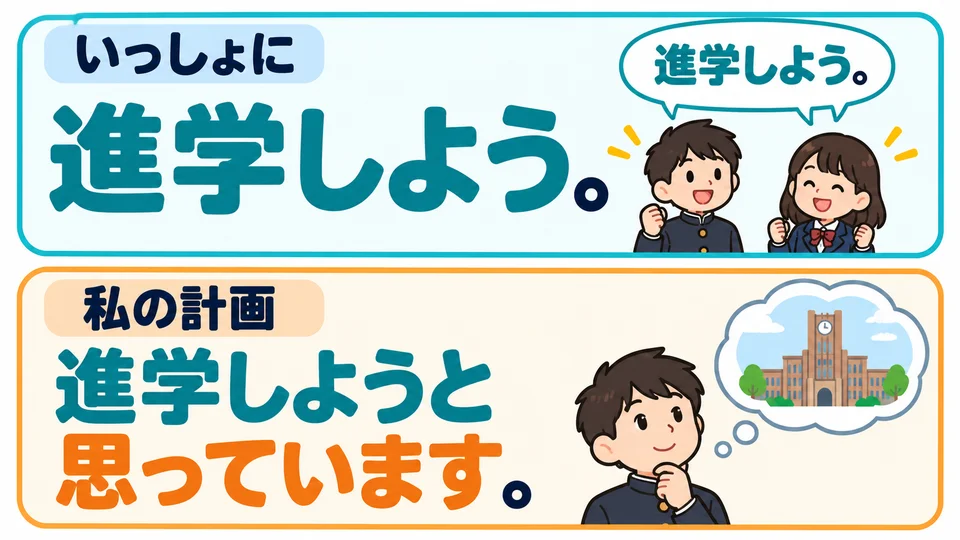
〜ようと思っています~you to omotte imasu
You to omotte imasu (〜ようと思っています) means “intend / am thinking of ~”.
I'm thinking of studying languages at a university starting this spring.
Use 「〜ようと思っています」 for an intention you have held and still maintain, even if every detail is undecided.
In the course
How it works
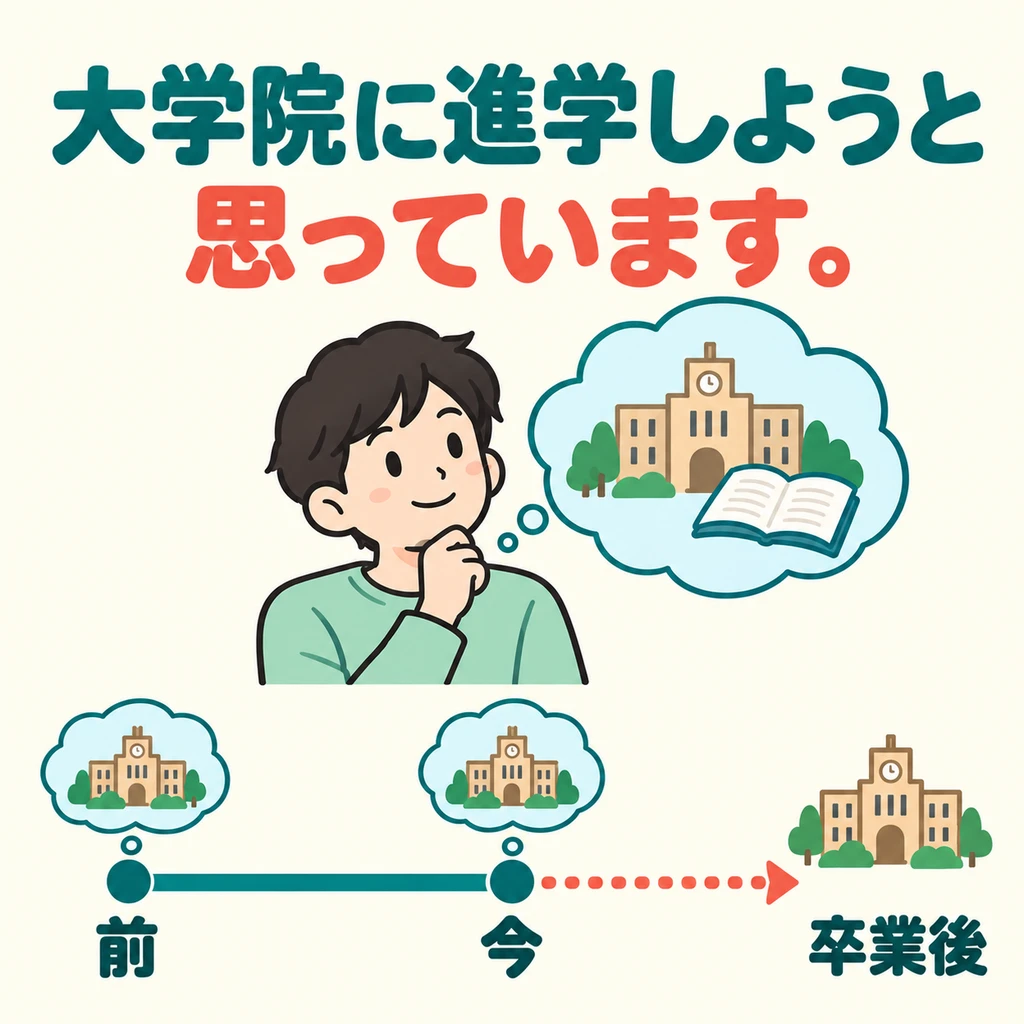
Look at the timeline: the idea of continuing their studies began earlier, and they still intend to do so now.
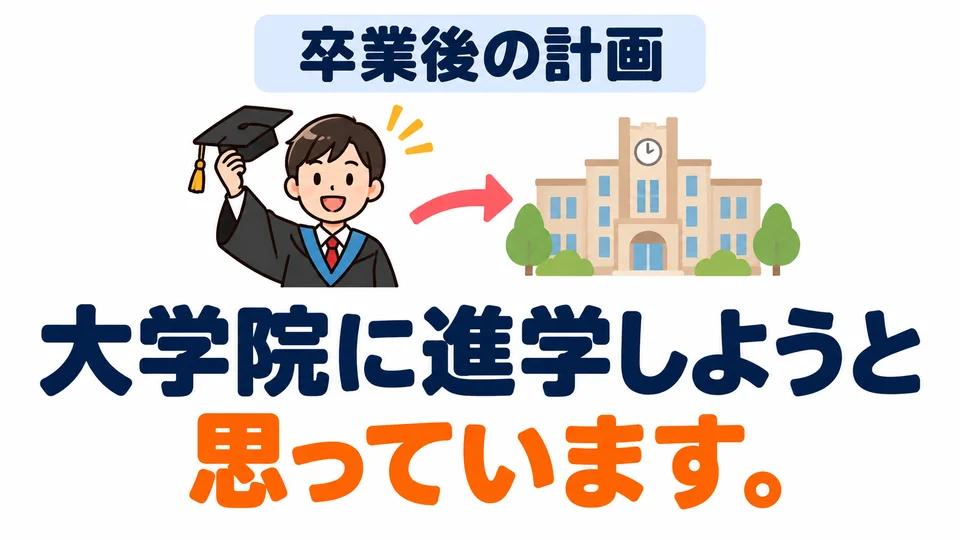
When talking about plans after graduation, use this pattern to tell someone what you intend to do.
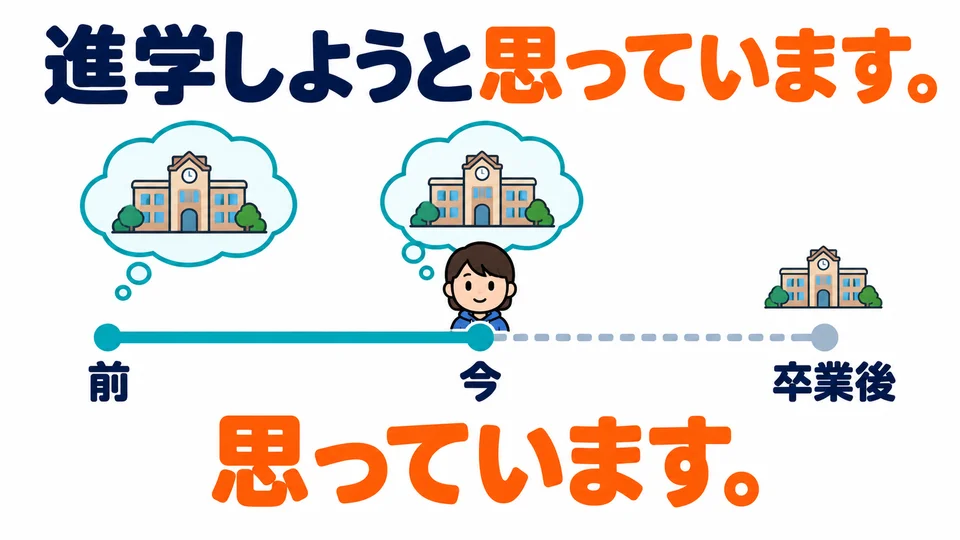
With 「思っています」, it is the intention that continues. It does not mean they have already begun further studies.
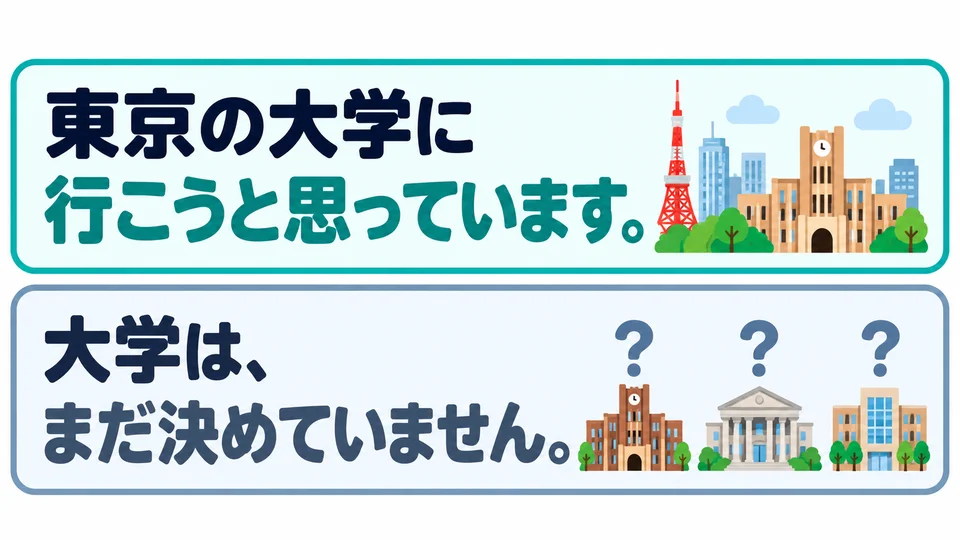
They intend to continue their studies in Tokyo but have not chosen a school yet. Having an intention does not mean every detail is settled.
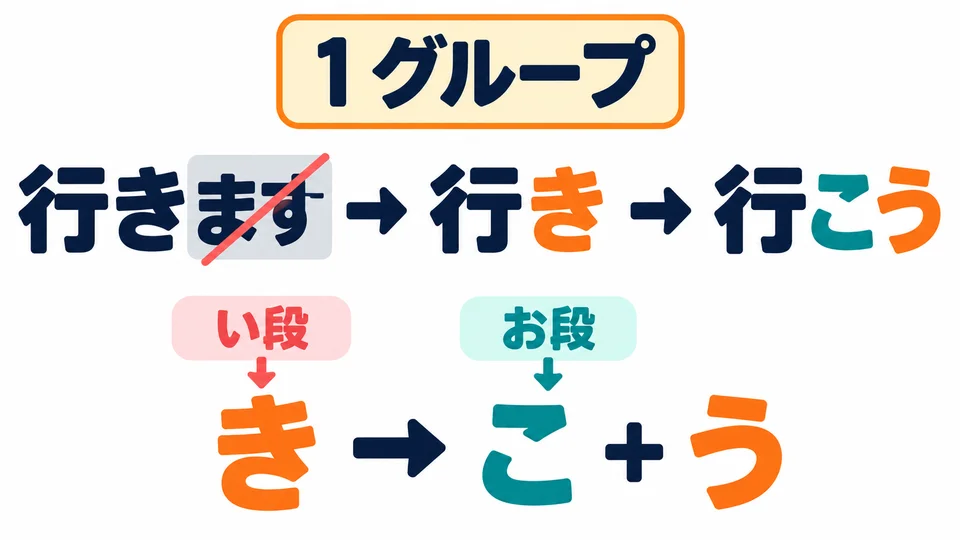
For Group 1 verbs, remove ます, change the final i-row sound to the o-row sound, and add う: 行き→行こう.
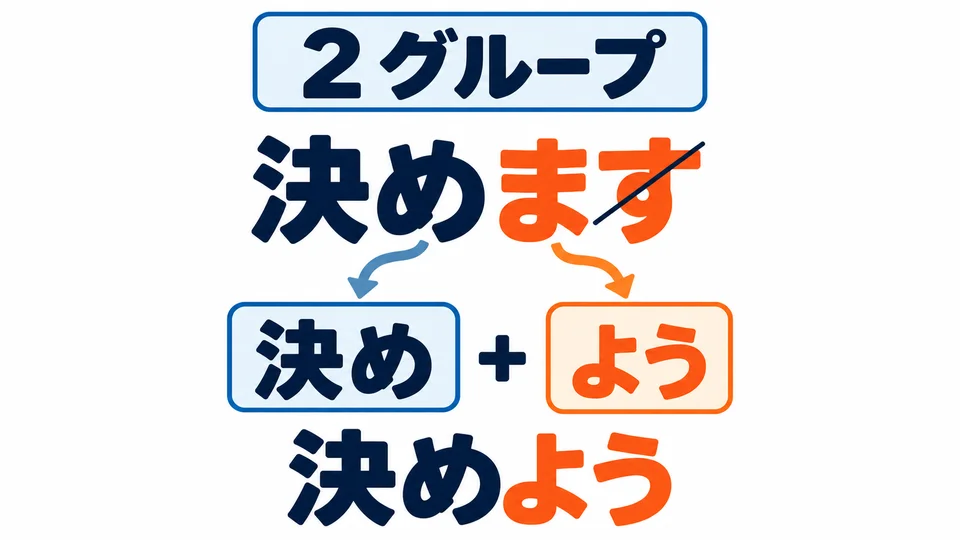
For Group 2 verbs, replace ます with よう: 決めます→決めよう. The part before ます stays the same.
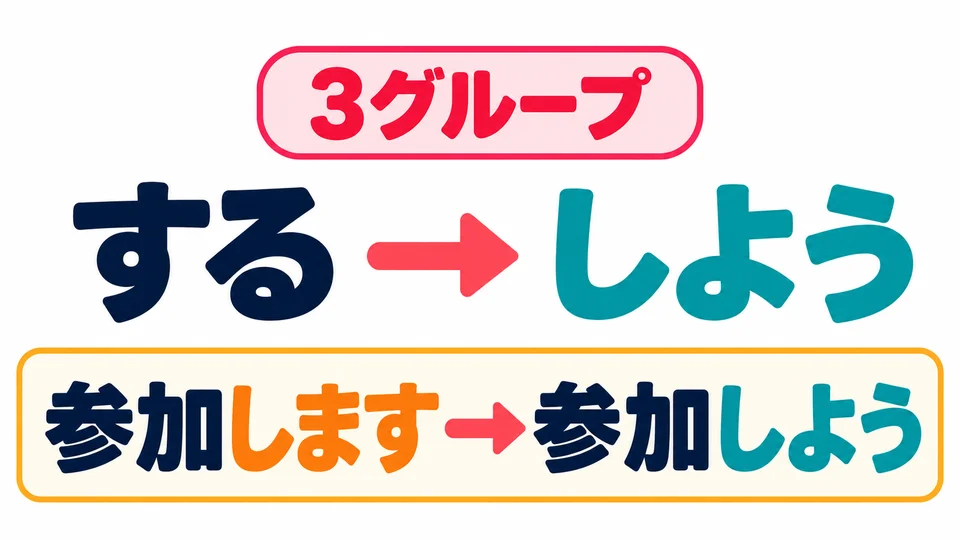
In Group 3, する becomes しよう. The volitional form of 参加します is 参加しよう.
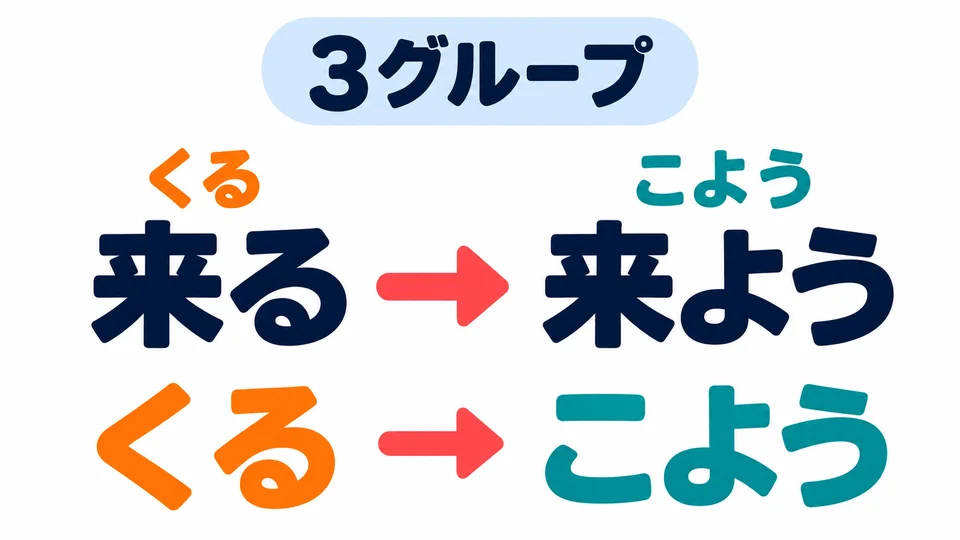
In Group 3, 来る becomes 来よう, read 「こよう」. Notice how the reading of 来 changes.
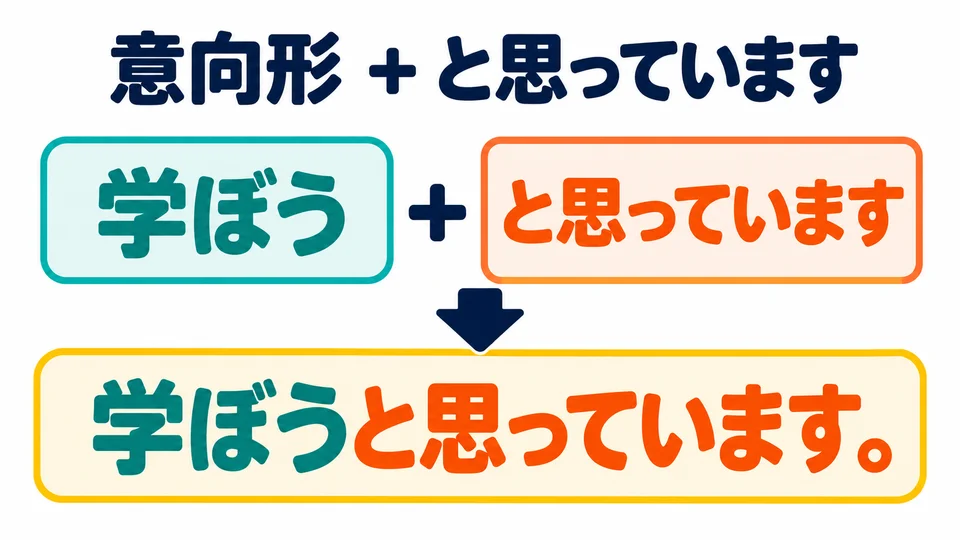
Example sentences
- このkono春haruから、kara大学daigakuでde語学gogakuをo学ぼうmanabouとto思っomotてteいます。
In a conversation

- A卒業後の計画はありますか。
A: Do you have any plans after graduation?
- Bはい、大学院に進学しようと思っ
Check yourself
Level 0 · Conjugate
Change to 〜(よ)うと思っています: a plan. 意向形
明日から毎朝六時に(起きます)と思っています。
Level 1 · Recognise
Which sentence is correct?
Level 1 · Recognise
Listen and choose the meaning
Level 2 · Build
Put the words in order
I'm planning to attend language school from next year.
Level 3 · Use
What goes in the blank?
東京の大学に と思っています。
I'm thinking of going to a university in Tokyo.
More grammar in this theme
- 〜ようと思っていますintend / am thinking of ~