JPEdLab iconJPEdLab
Save history

Create an account and play

Explore first, then save your progress whenever you are ready. No email address is required.

Start free
  1. Japanese grammar
  2. JLPT N4 grammar
  3. 〜たらいいですか

〜たらいいですか~tara ii desu ka

Tara ii desu ka (〜たらいいですか) means “asking what one should do”.

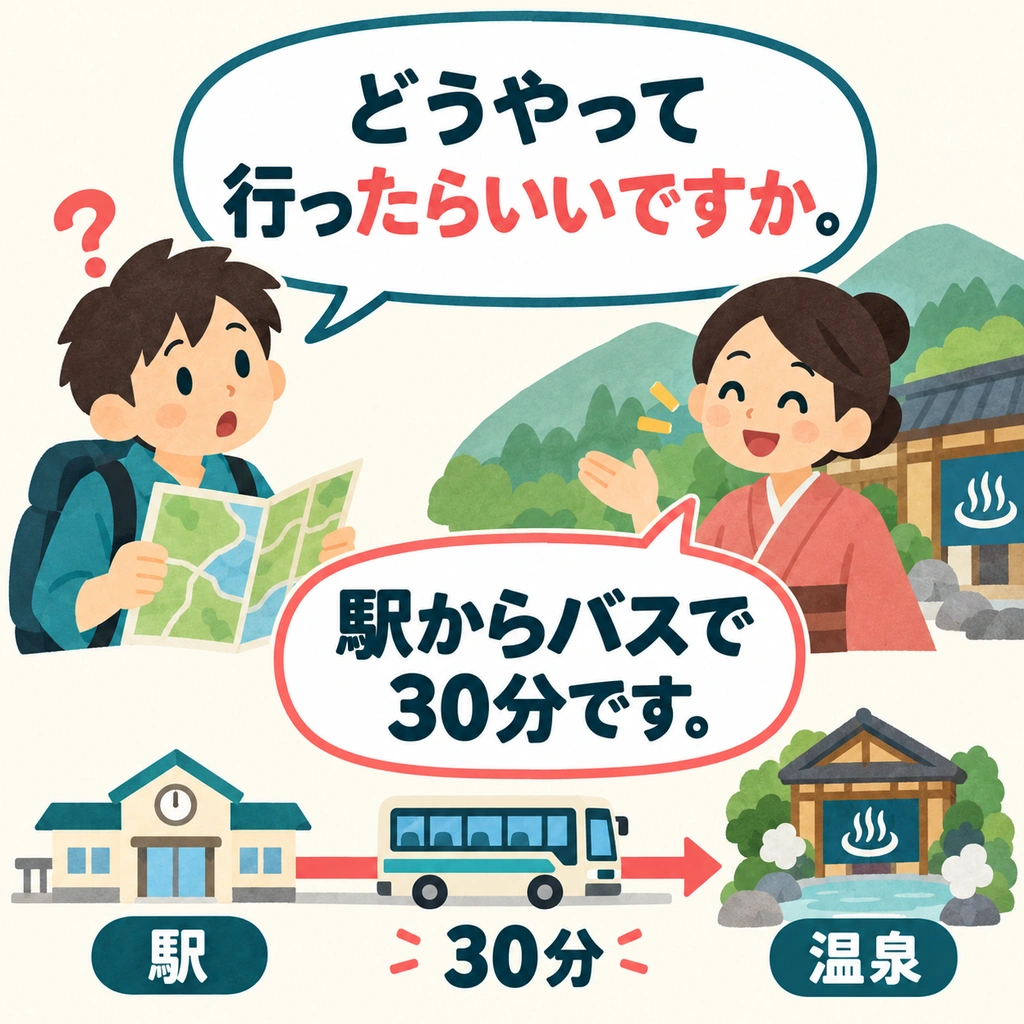
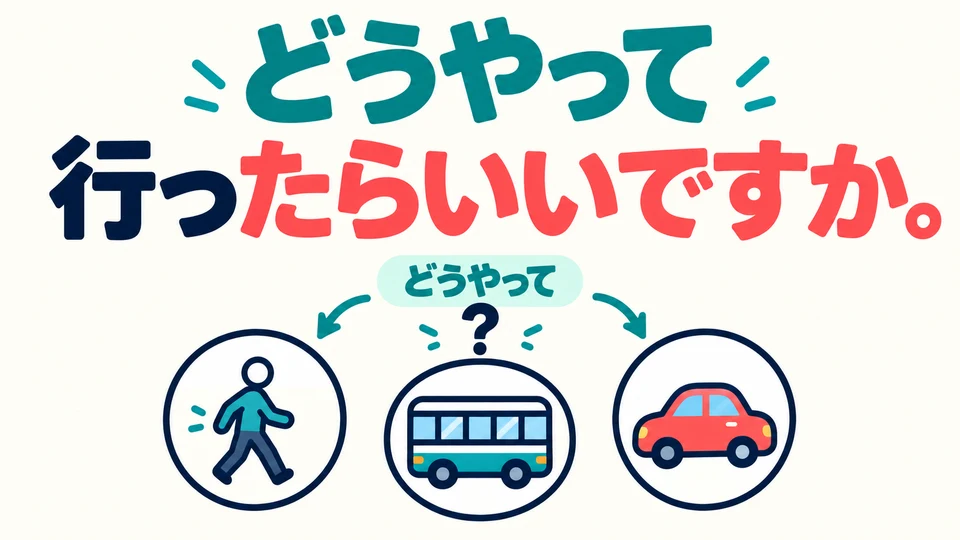
どうdouやっyattてte行ったらいったらittaraいいですiidesuかka

How should I go there?

Use 「〜たらいいですか」 to ask someone for advice or instructions about what to do next.

In the course›

How it works

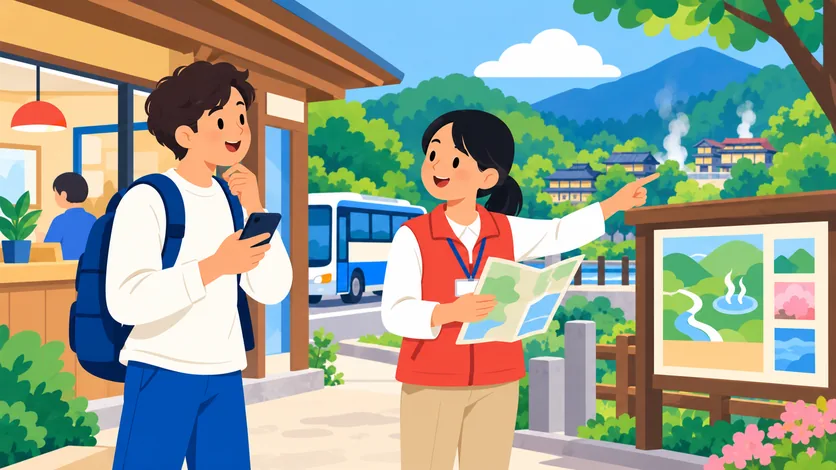
  1. When you don't know how to get to the hot springs, ask someone who knows the area. What transport do they recommend in the picture?
    When you don't know how to get to the hot springs, ask someone who knows the area. What transport do they recommend in the picture?

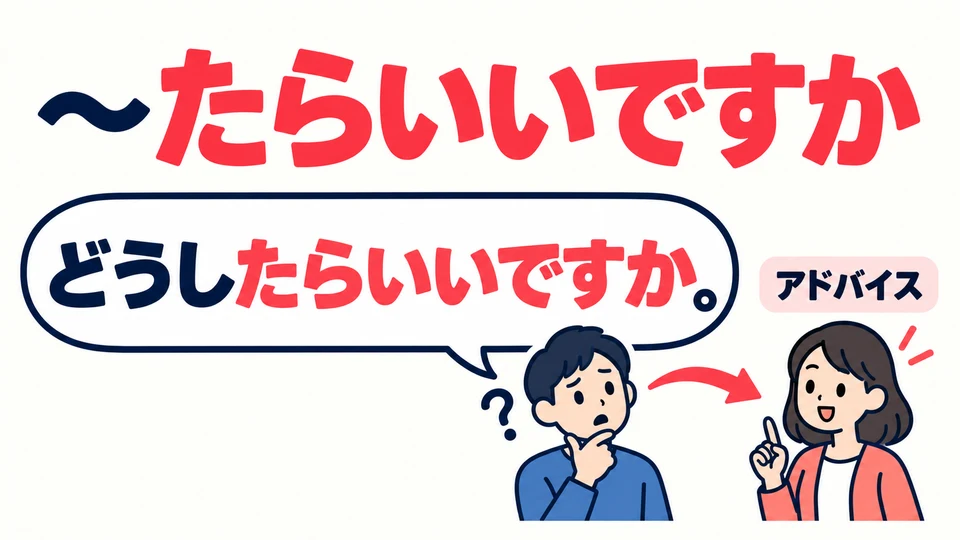
  2. Use 「~たらいいですか」 to ask, “What should I do?” You want advice or instructions from the other person.
    Use 「~たらいいですか」 to ask, “What should I do?” You want advice or instructions from the other person.

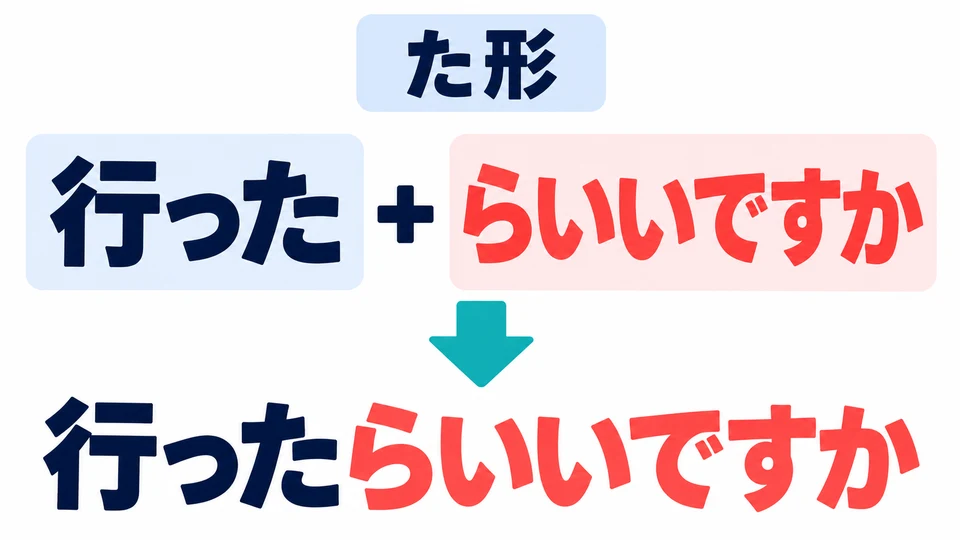
  3. Add 「らいいですか」 to the verb's た-form: 行った→行ったらいいですか。
    Add 「らいいですか」 to the verb's た-form: 行った→行ったらいいですか。

  4. 「どうやって行ったらいいですか」 asks how you should get there and invites the other person to suggest a way.
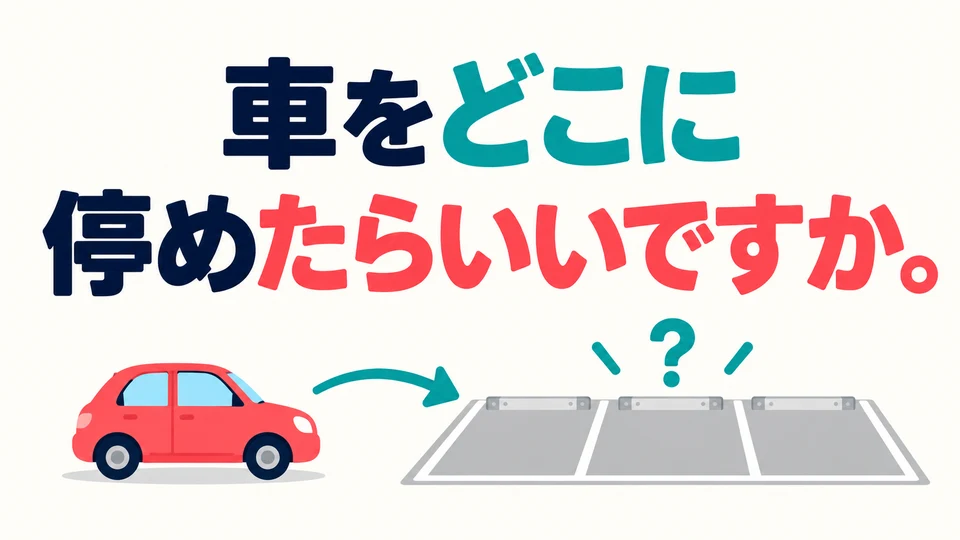
    「どうやって行ったらいいですか」 asks how you should get there and invites the other person to suggest a way.

  5. 「車をどこに停めたらいいですか」 asks where you should park the car and invites the other person to tell you a place.
    「車をどこに停めたらいいですか」 asks where you should park the car and invites the other person to tell you a place.

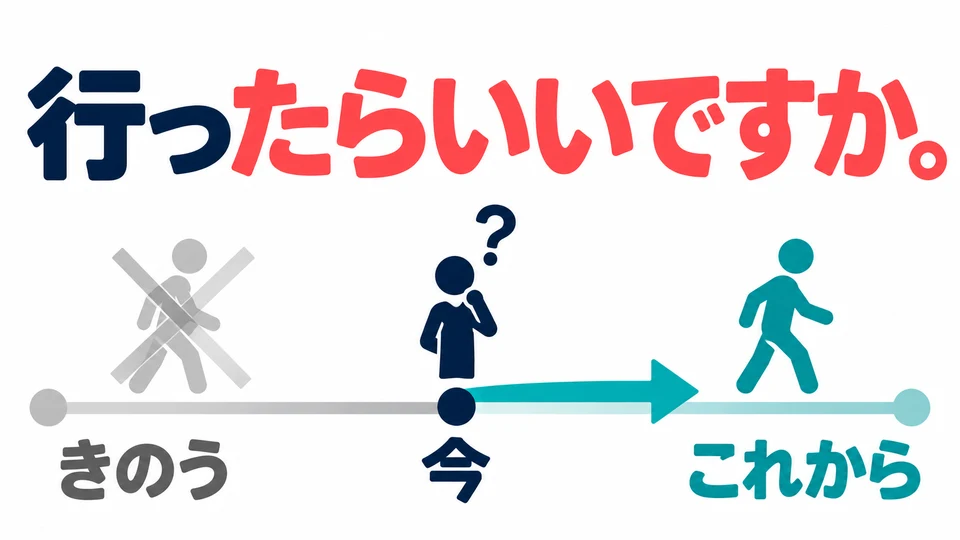
  6. Although this uses the た-form, you're asking what to do next, not about something you already did.
    Although this uses the た-form, you're asking what to do next, not about something you already did.

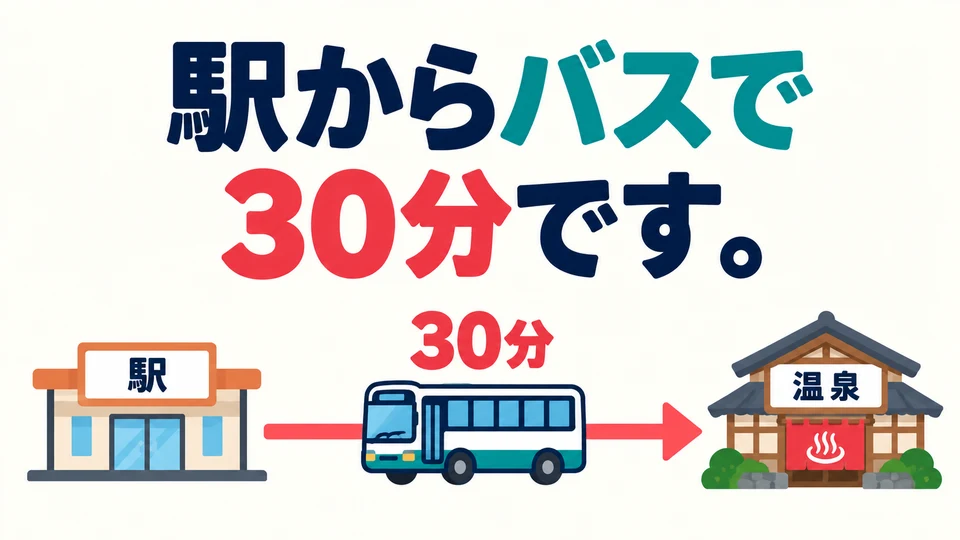
  7. The reply can give a specific way to go directly. In the picture, 「駅からバスで30分です」 explains the route.

    The reply can give a specific way to go directly. In the picture, 「駅からバスで30分です」 explains the route.

Example sentences

  • どうdouやっyattてte行ったらいったらittaraいいですiidesuかka

    How should I go there?

  • 車くるまkurumaをoどこdokoにni

In a conversation

  • A
    すみません、すみませんこの町まちの名所めいしょはわどこで見たらみたらいいですか。か

    A: Excuse me, where should I go to see the sights in this town?

  • B
    名所めいしょなら、なら

Check yourself

  1. Level 1 · Recognise

    Which sentence is correct?

  2. Level 1 · Recognise

    Listen and choose the meaning

  3. Level 2 · Build

    Put the words in order

    Where should I go for the tourist information center?

  4. Level 3 · Use

    What goes in the blank?

    どうやって ですか。

    How should I go there?

More grammar in this theme

  • 〜たらいいですかasking what one should do

More JLPT N4 grammar

Keep practising

Test your Japanese vocabulary12 adaptive questions, freeCheck your pronunciationRead aloud and get a scorePractise verb forms10-question conjugation quizSee the whole courseGrammar, vocabulary and quizzes by theme
停めたらとめたら
tometara
いいですiidesu
かka

Where should I park my car?

郊外こうがい
の
温泉おんせん
地ち
が
おすすめ
です。です

B: If it's sights, I recommend the hot spring resort in the suburbs.

  • A
    どうやって行ったらいったらいいですか。か

    A: How should I get there?

  • B
    駅えきからバスばすで で30 さんじゅう分ぷんです。です案内所あんないしょで時間じかんを確認かくにんしてください。ください

    B: It's 30 minutes by bus from the station. Please check the times at the information center.

  • Beginner 3
    Introducing a City
    More quizzesOpen this lesson’s quizzes in the course
    〜んですがsoft opening to a request
    〜なら、〜picking up a topic
    〜といいですgentle advice
    〜までにdeadline; by a time
    〜と、〜がありますroute and predictable result
    〜じゃなくて、〜rejecting one option; offering another
    Previous〜なら、〜
    Next〜といいです
    See all 138
    〜かどうかwhether or not
    〜するためにpurpose; in order to
    〜んですかfollow-up explanation question
    〜なければなりませんobligation; must do
    〜てしまいましたregret: ended up doing
    〜かもしれませんpossibility: might be
    〜たあとで、〜after doing, then
    〜ていただけませんかvery polite request