JPEdLab iconJPEdLab
Save history

Create an account and play

Explore first, then save your progress whenever you are ready. No email address is required.

Start free
  1. Japanese grammar
  2. JLPT N4 grammar
  3. 〜かもしれません

〜かもしれません~kamo shiremasen

Kamo shiremasen (〜かもしれません) means “possibility: might be”.

パスポートぱすぽーとpasupootoをoなくしたnakushitaかkaもmoしれません。しれませんshiremasen

I might have lost my passport.

Use 〜かもしれません to express an unconfirmed possibility about the past, present, or future.

In the course›

How it works

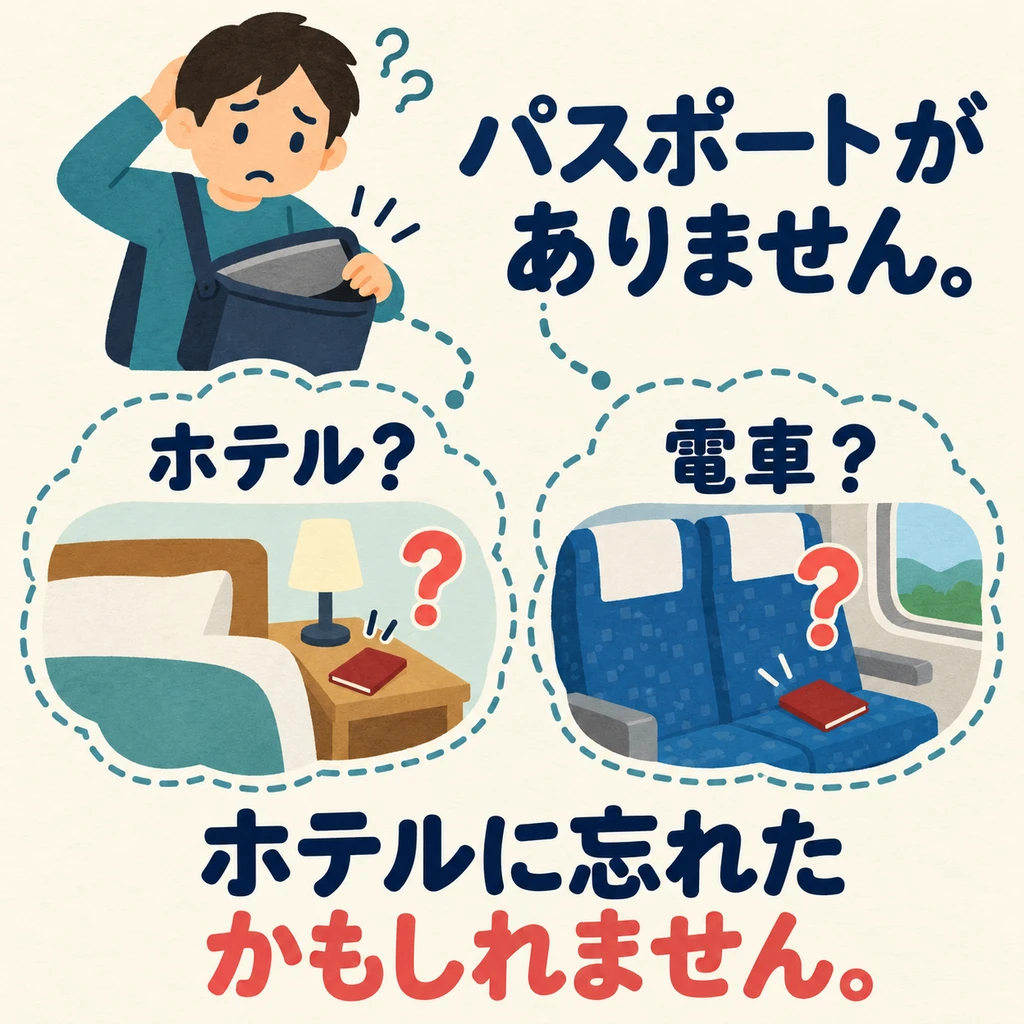
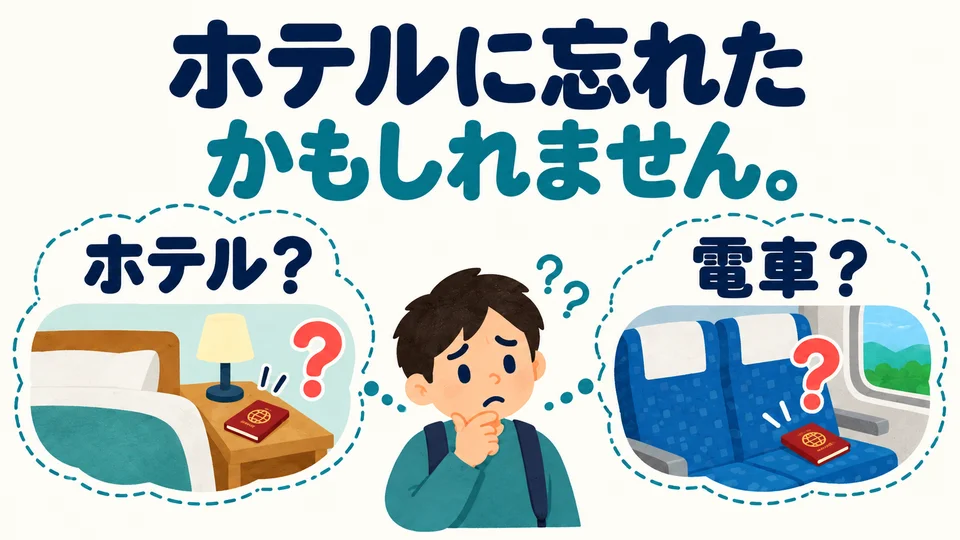
  1. The passport is missing. Look at the picture: can we be sure it is at the hotel or on the train?
    The passport is missing. Look at the picture: can we be sure it is at the hotel or on the train?

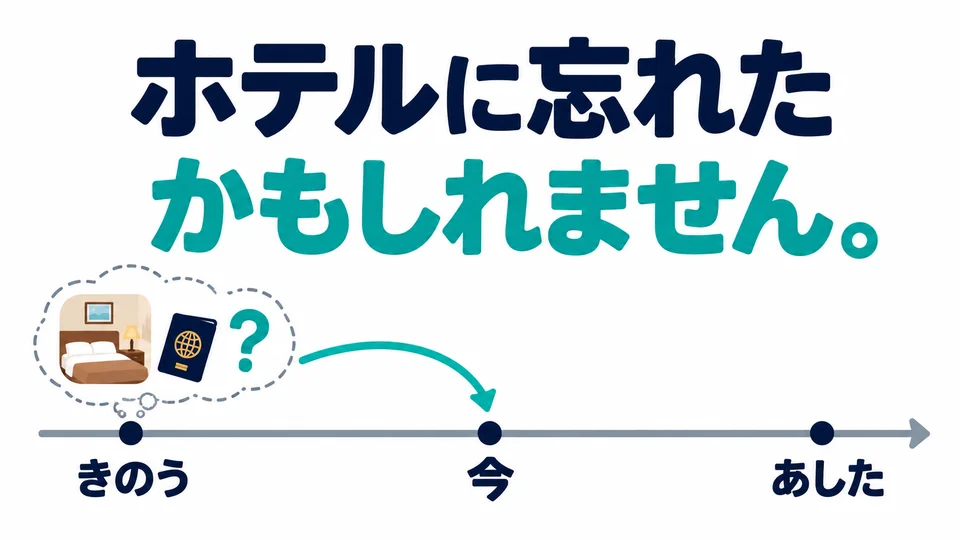
  2. 「忘れたかもしれません」 expresses a possibility about something that already happened: I may have left it at the hotel.
    「忘れたかもしれません」 expresses a possibility about something that already happened: I may have left it at the hotel.

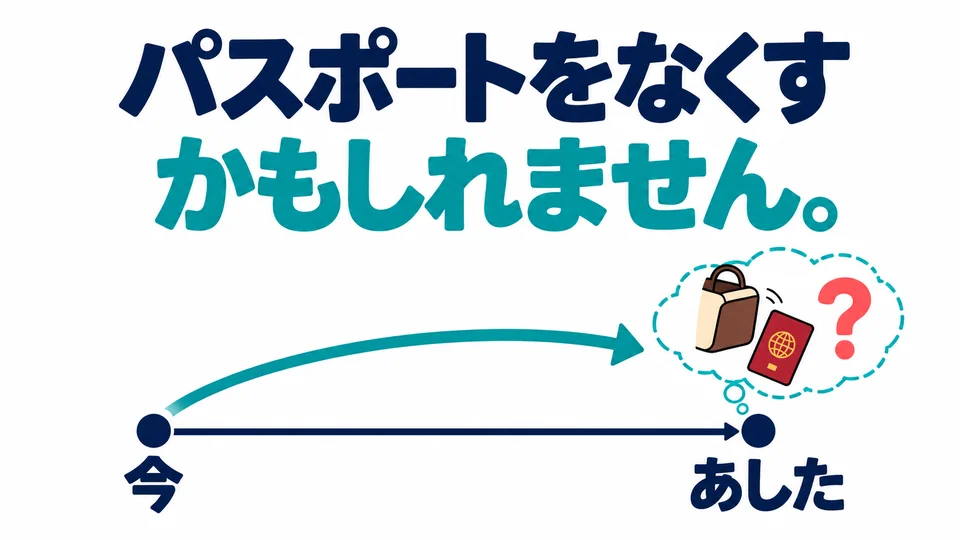
  3. 「なくすかもしれません」 can express a future possibility too: I might lose my passport.
    「なくすかもしれません」 can express a future possibility too: I might lose my passport.

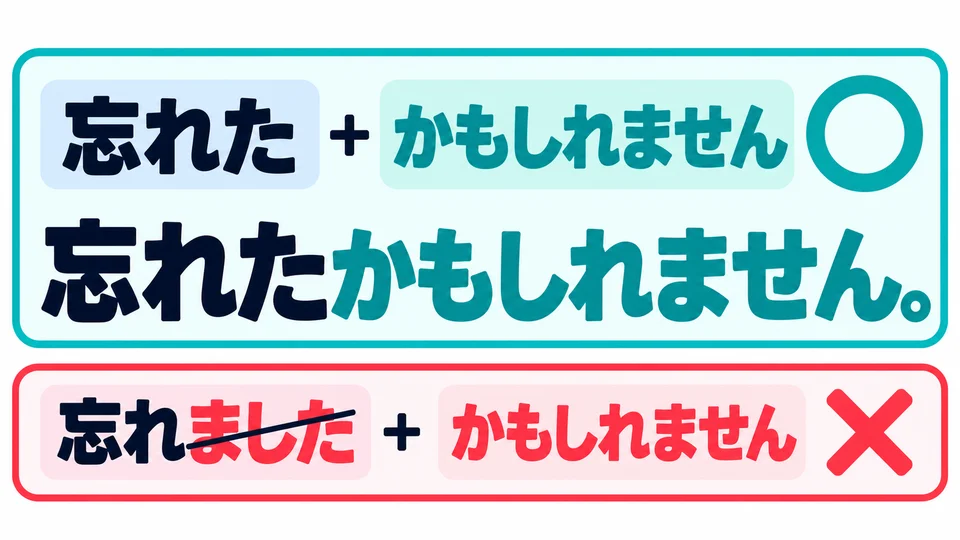
  4. Attach 「かもしれません」 to a verb in plain form, such as 「忘れた」, rather than 「忘れました」.
    Attach 「かもしれません」 to a verb in plain form, such as 「忘れた」, rather than 「忘れました」.

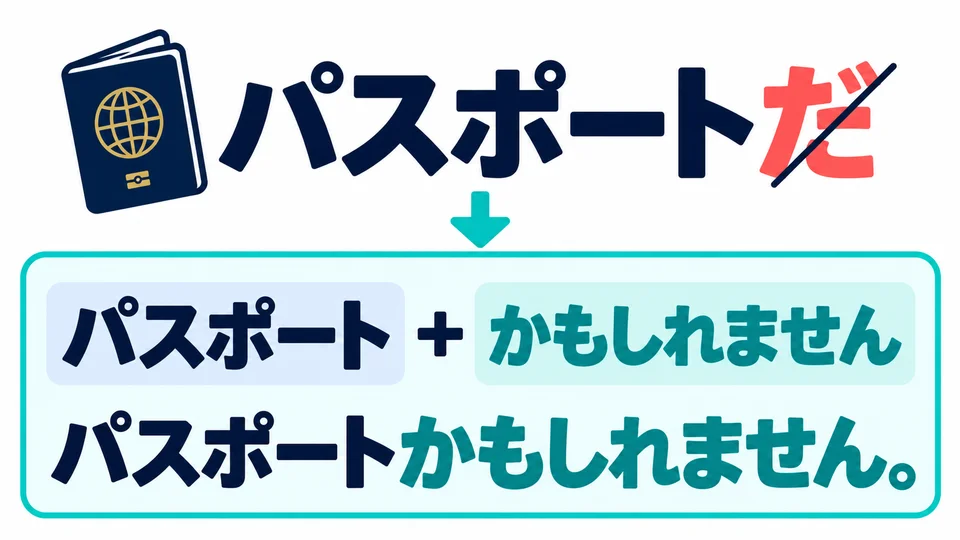
  5. For an affirmative noun in the present, attach it directly: 「パスポートかもしれません」. Do not add 「だ」.
    For an affirmative noun in the present, attach it directly: 「パスポートかもしれません」. Do not add 「だ」.

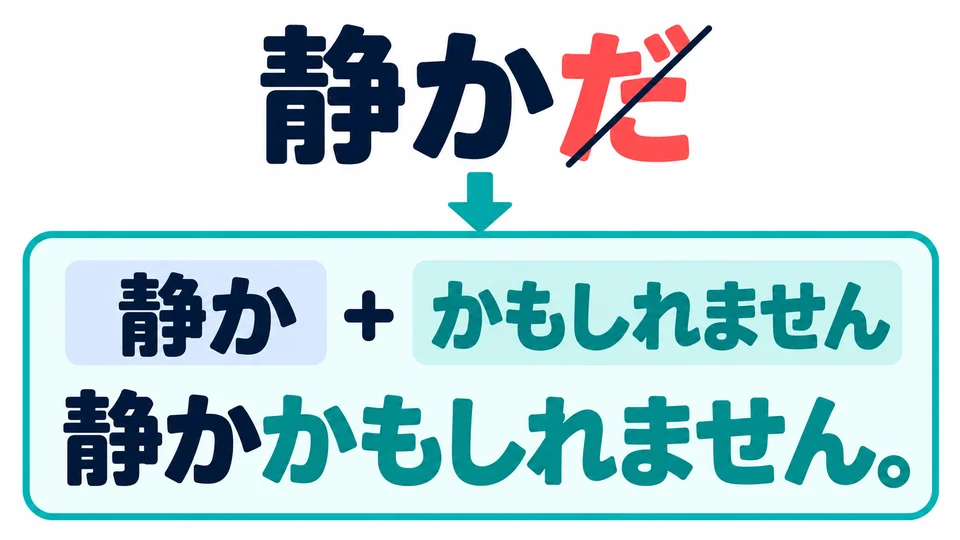
  6. For a な-adjective in the present affirmative, also remove 「だ」 before adding 「かもしれません」.
    For a な-adjective in the present affirmative, also remove 「だ」 before adding 「かもしれません」.

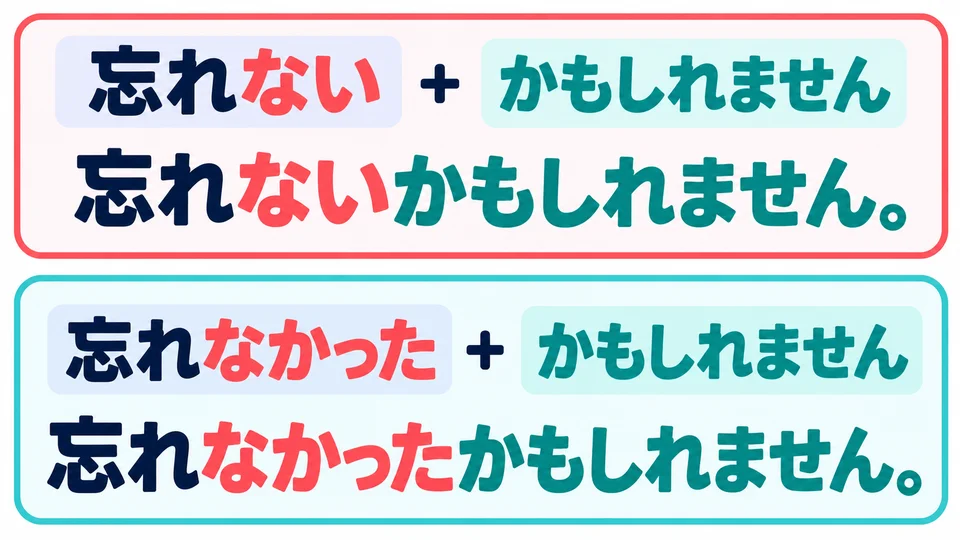
  7. For a possibility expressed in the negative, keep the plain-form 「ない/なかった」 and then add this expression.
    For a possibility expressed in the negative, keep the plain-form 「ない/なかった」 and then add this expression.

  8. Saying “I may have left it at the hotel” still leaves the train as a possibility. This expression does not mean it is confirmed.

    Saying “I may have left it at the hotel” still leaves the train as a possibility. This expression does not mean it is confirmed.

Example sentences

  • パスポートぱすぽーとpasupootoをoなくしたnakushitaかkaもmoしれません。しれませんshiremasen

    I might have lost my passport.

  • 電車でんしゃdenshaにni忘れたわすれたwasuretaか

In a conversation

  • A
    パスポートぱすぽーとが見み当たりませんあたりませんね。ね

    A: I can't find the passport anywhere.

  • B
    ええ、ええホテルほてるに忘れたわすれたかもしれません。しれません

    B: Yes, I might have left it at the hotel.

Check yourself

  1. Level 1 · Recognise

    Which sentence is correct?

  2. Level 1 · Recognise

    Listen and choose the meaning

  3. Level 2 · Build

    Put the words in order

    I might have lost my passport.

  4. Level 3 · Use

    What goes in the blank?

    パスポートを (なくす・丁寧に)。

    I might have lost my passport.

More grammar in this theme

  • 〜かもしれませんpossibility: might be

More JLPT N4 grammar

Keep practising

Test your Japanese vocabulary12 adaptive questions, freeCheck your pronunciationRead aloud and get a scorePractise verb forms10-question conjugation quizSee the whole courseGrammar, vocabulary and quizzes by theme
ka
もmo
しれません。しれませんshiremasen

I might have left it on the train.

  • A
    念ねんのために、に駅えきにも連絡れんらくしてみましょうか。か

    A: Just to be safe, shall we contact the station too?

  • B
    そうですね。ね電車でんしゃに落としたおとしたかもしれませんから。から

    B: Yes. Because I might have dropped it on the train.

  • Beginner 3
    Unexpected Events
    More quizzesOpen this lesson’s quizzes in the course
    〜てしまいましたregret: ended up doing
    〜たあとで、〜after doing, then
    〜ていただけませんかvery polite request
    〜て、〜/〜で、〜cause and result
    〜たら、〜たdiscovery after an action
    Previous〜てしまいました
    Next〜たあとで、〜
    See all 138
    〜といいですgentle advice
    〜までにdeadline; by a time
    〜と、〜がありますroute and predictable result
    〜じゃなくて、〜rejecting one option; offering another
    〜そうですprediction from signs
    〜ておきますprepare in advance
    〜てありますpreparation already complete
    召し上がります・おっしゃいますspecial honorific verbs