JPEDLAB iconJPEDLAB
Save history

Create an account and play

Explore first, then save your progress whenever you are ready. No email address is required.

Start free
Read as articleCards
See the whole course›Beginner 3›Travel Plans

Japanese grammar · ≈ JLPT N4 · Beginner 3

〜そうです~sou desu

prediction from signs

Use verb or adjective 〜そうです to predict what seems likely from current signs.

Start the interactive lessonIllustrated cards, audio and speaking practiceTake the quiz
Pattern
〜そうです
Romaji
~sou desu
JLPT (approx.)
≈ N4
Course level
Beginner 3
Theme
Travel Plans

How it works

  1. Look at the dark clouds: it is not raining yet. What do you think will happen next? Use what you see as clues for your prediction.
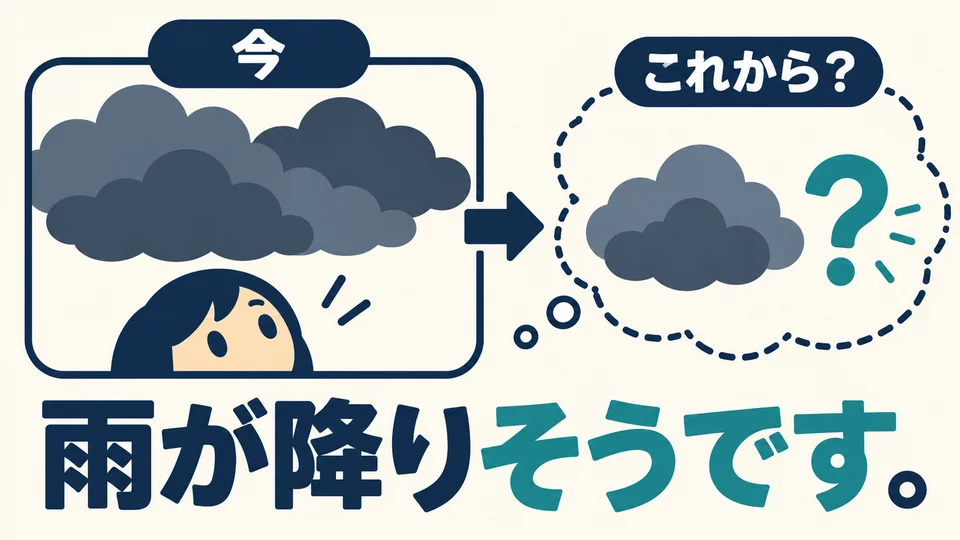
    Look at the dark clouds: it is not raining yet. What do you think will happen next? Use what you see as clues for your prediction.

  2. 「そうです」expresses a prediction about what may happen next, based on the current situation or appearance.
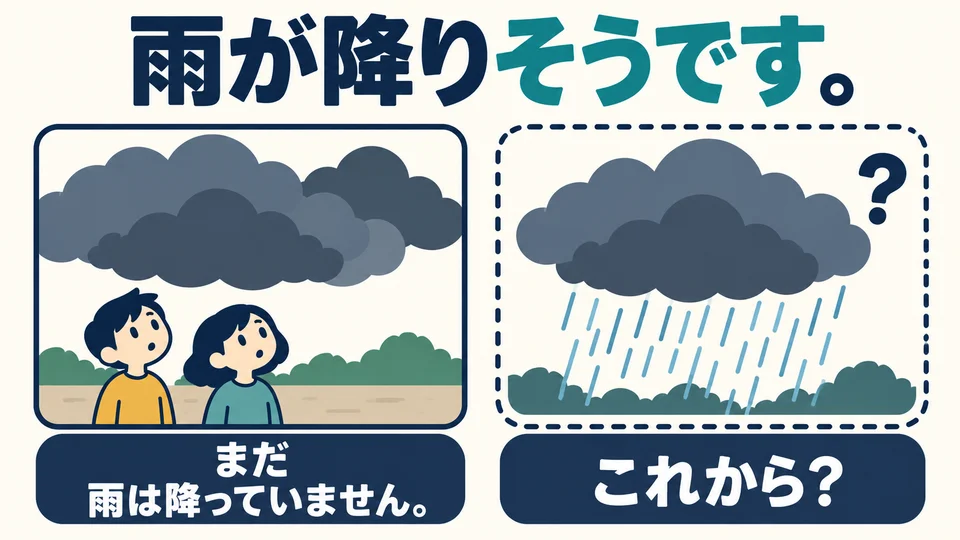
    「そうです」expresses a prediction about what may happen next, based on the current situation or appearance.

  3. 「雨が降りそうです」is a prediction. It has not started raining, and the speaker is not saying it definitely will.
    「雨が降りそうです」is a prediction. It has not started raining, and the speaker is not saying it definitely will.

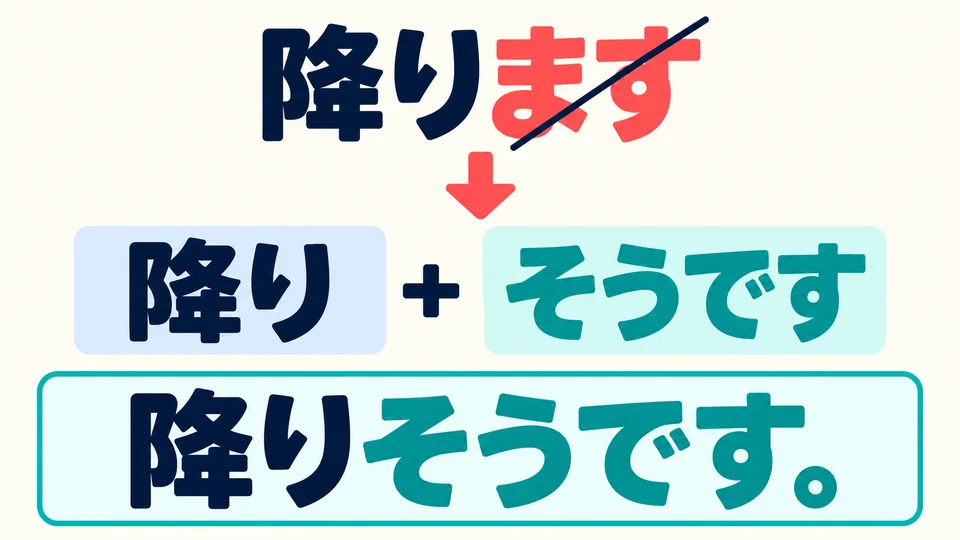
  4. Remove 「ます」from the verb and add 「そうです」: 降ります→降りそうです.
    Remove 「ます」from the verb and add 「そうです」: 降ります→降りそうです.

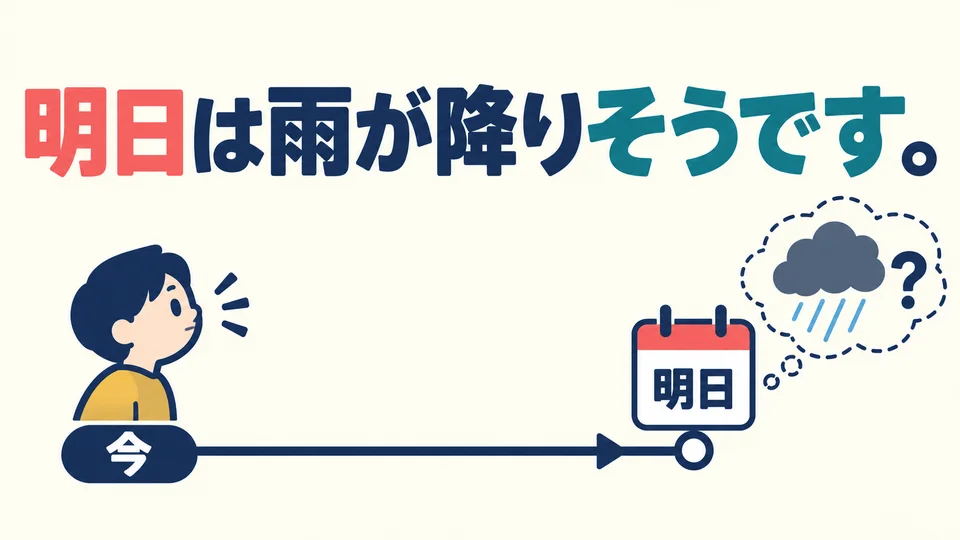
  5. 「明日は雨が降りそうです」predicts tomorrow’s weather. A prediction can refer to more than just the next moment.
    「明日は雨が降りそうです」predicts tomorrow’s weather. A prediction can refer to more than just the next moment.

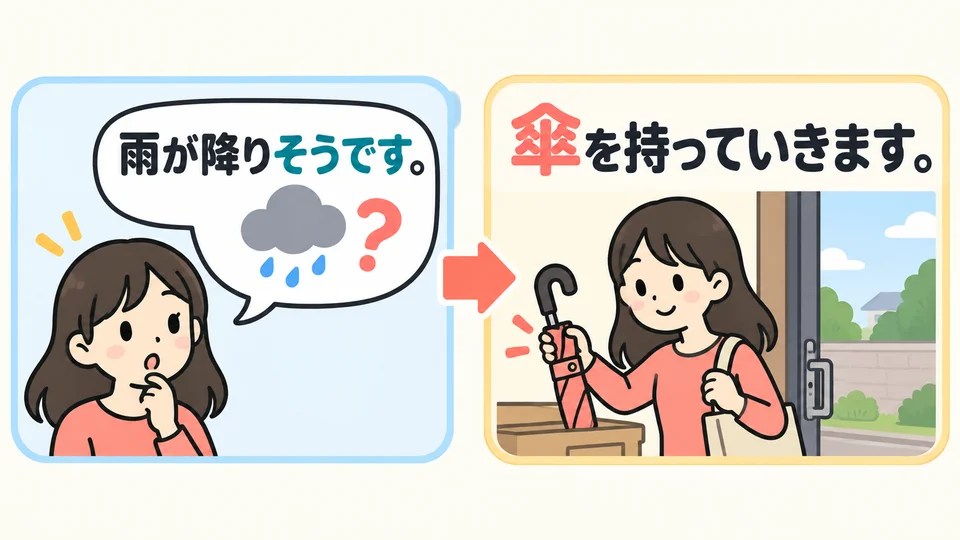
  6. On hearing that it may rain, you take an umbrella. 「傘を持っていきます」expresses a preparation made based on that prediction.
    On hearing that it may rain, you take an umbrella. 「傘を持っていきます」expresses a preparation made based on that prediction.

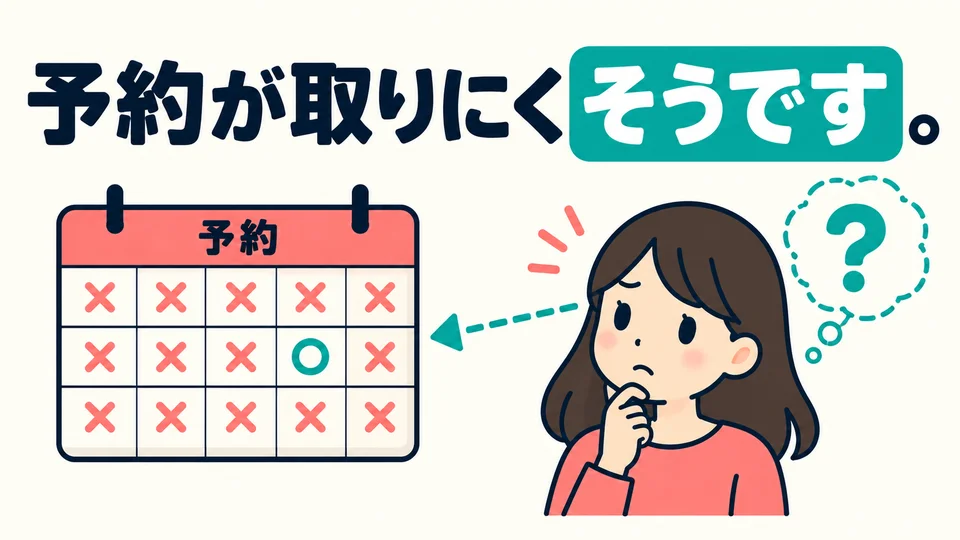
  7. 「予約が取りにくそうです」means it looks hard to make a reservation. It is not yet a result from actually trying to book.
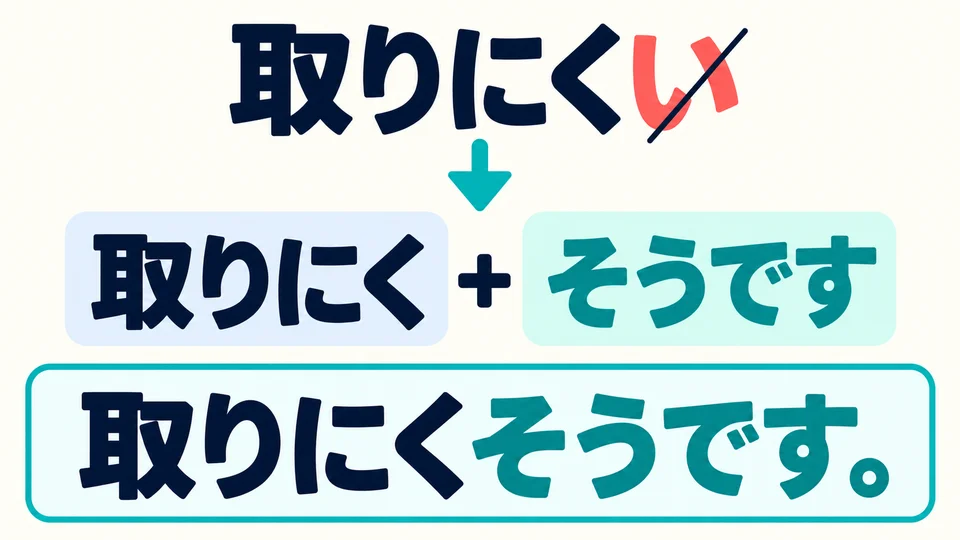
    「予約が取りにくそうです」means it looks hard to make a reservation. It is not yet a result from actually trying to book.

  8. Remove the final 「い」from 「取りにくい」and add 「そうです」: 取りにくそうです.
    Remove the final 「い」from 「取りにくい」and add 「そうです」: 取りにくそうです.

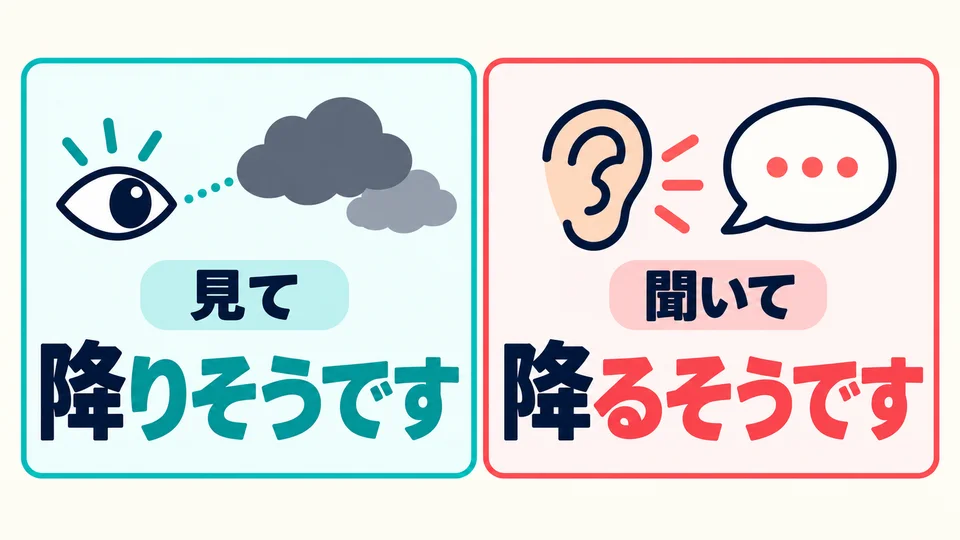
  9. Notice the difference: 「降りそうです」is a prediction based on signs; 「降るそうです」reports information you have heard.

    Notice the difference: 「降りそうです」is a prediction based on signs; 「降るそうです」reports information you have heard.

Example sentences

  • 明日あすasuはわwa雨あめameがga降りふりfuriそうです。そうですsoudesu

    It looks like it will rain tomorrow.

  • 予約よやくyoyakuがga取りにくとりにくtoriniku

In a conversation

  • A
    明日あすの天気てんきはわどうですか。か

    A: What is the weather like tomorrow?

  • B
    明日あすはわ雨あめが降りふりそうです

Check yourself

  1. Which sentence is correct?

    1. 明日は雨が降りそうです。
    2. 明日は雨が降りそうます。
    3. 明日は雨が降りますそうです。
    4. 明日は雨が降りそうですを。
    Show answer

    Answer: A 明日は雨が降りそうです。

  2. Which sentence is correct?

    1. 預け荷物は重そうです。
    2. 預け荷物は重いですそうです。
    3. 預け荷物は重そです。
    4. 預け荷物は重いそうです。
    Show answer

    Answer: A 預け荷物は重そうです。

  3. Which sentence is correct?

    1. ガイドマップは便利そうです。
    2. ガイドマップは便利ですそうです。
    3. ガイドマップは便利にそうです。
    4. ガイドマップは便利そうます。
    Show answer

    Answer: A ガイドマップは便利そうです。

More grammar in this theme

  • 〜そうですprediction from signs

Keep practising

Test your Japanese vocabulary12 adaptive questions, freeCheck your pronunciationRead aloud and get a scorePractise verb forms10-question conjugation quizSee the whole courseGrammar, vocabulary and quizzes by theme
そうです。そうですsoudesu

It seems hard to make a reservation.

よ。よ

B: It looks like it will rain tomorrow.

  • A
    そうですか。かじゃ、じゃ傘かさを持っもっていきます。いきます

    A: I see. Then I'll bring an umbrella.

  • Take the quiz
    〜ましょうかsuggestion or offer
    〜し、〜adding reasons or features
    〜のは、〜ですhighlighting or evaluating
    〜ておきますprepare in advance
    〜てありますpreparation already complete
    Previous〜のは、〜です
    Next〜ておきます