JPEdLab iconJPEdLab
Save history

Create an account and play

Explore first, then save your progress whenever you are ready. No email address is required.

Start free
  1. Japanese grammar
  2. JLPT N3 grammar
  3. 〜し、〜

〜し、〜~shi, ~

Shi, (〜し、〜) means “adding reasons or features”.

このkonoホテルほてるhoteruはわwa駅えきekiにni近いちかいchikaiし、しshi交通こうつうkoutsuu手段しゅだんshudanもmo便利べんりbenriです。ですdesu

This hotel is close to the station, and transportation is convenient too.

Use 〜し to list features or give a reason for a suggestion or judgment.

In the course›

How it works

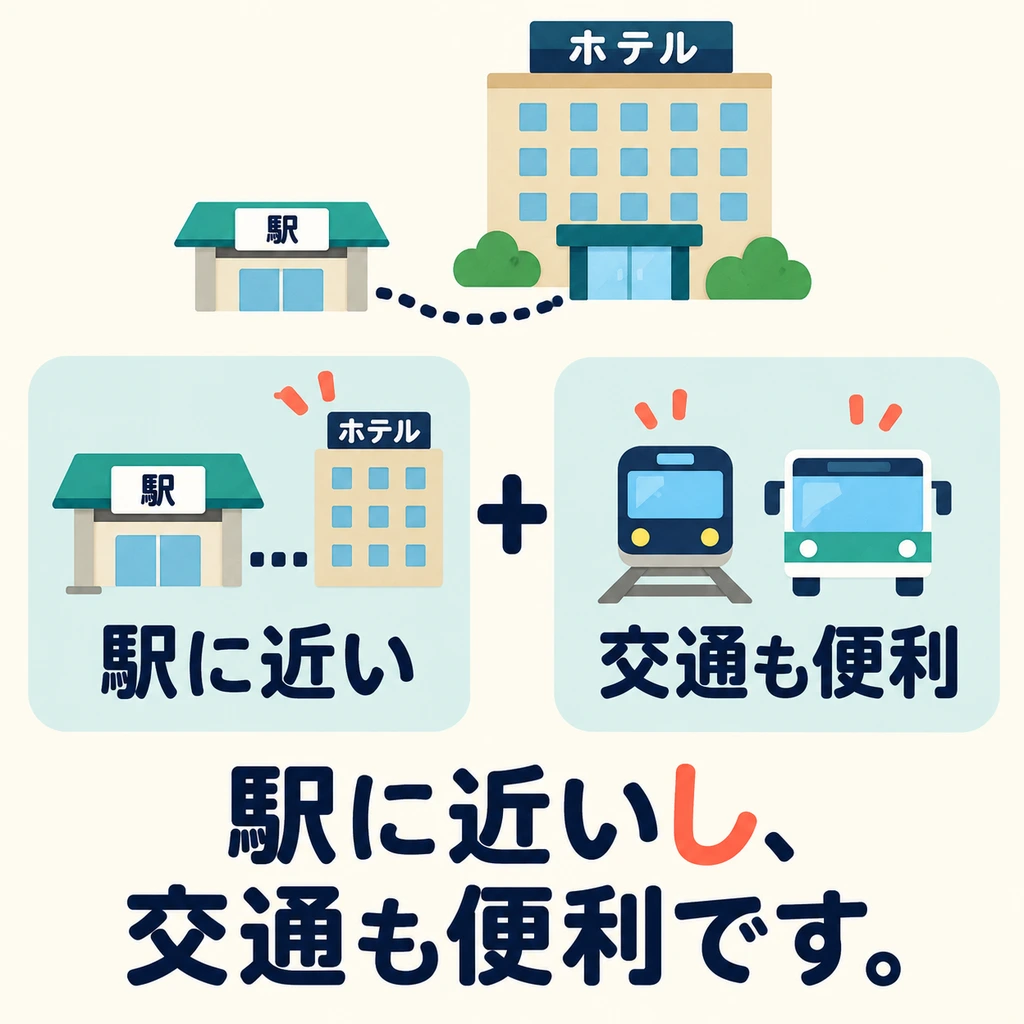
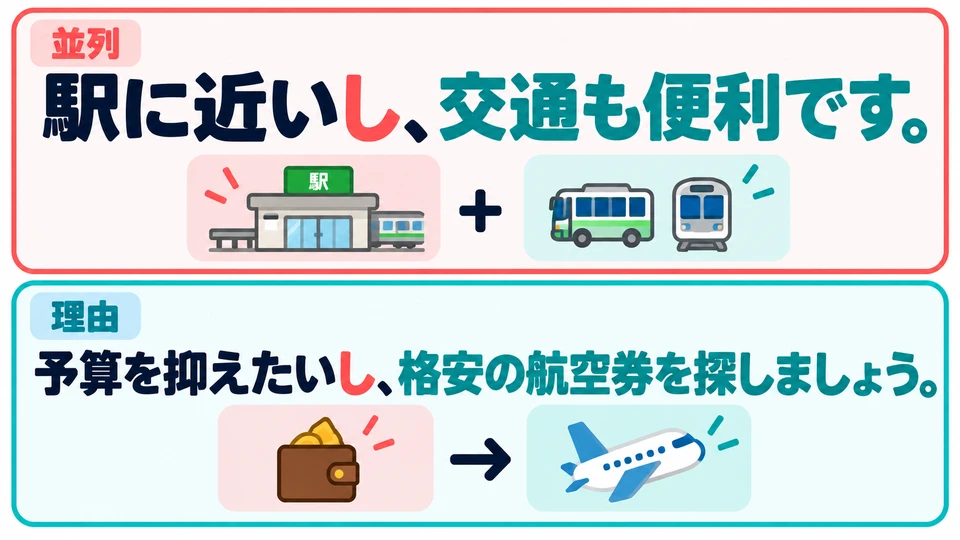
  1. What two advantages does this hotel have? 「し」 adds features side by side, meaning “and also.”
    What two advantages does this hotel have? 「し」 adds features side by side, meaning “and also.”

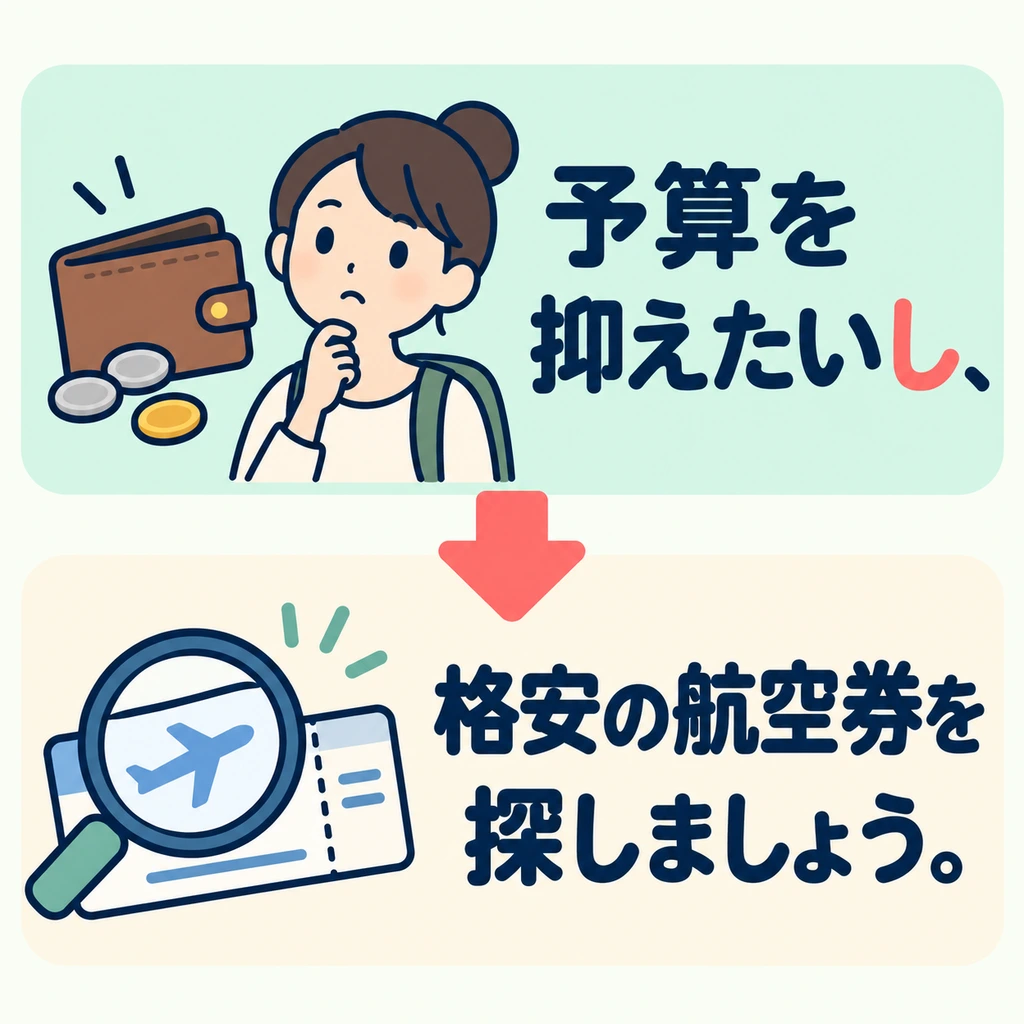
  2. The traveler wants to keep costs down, so suggests looking for cheap flights. 「し」 can link a reason to a suggestion.
    The traveler wants to keep costs down, so suggests looking for cheap flights. 「し」 can link a reason to a suggestion.

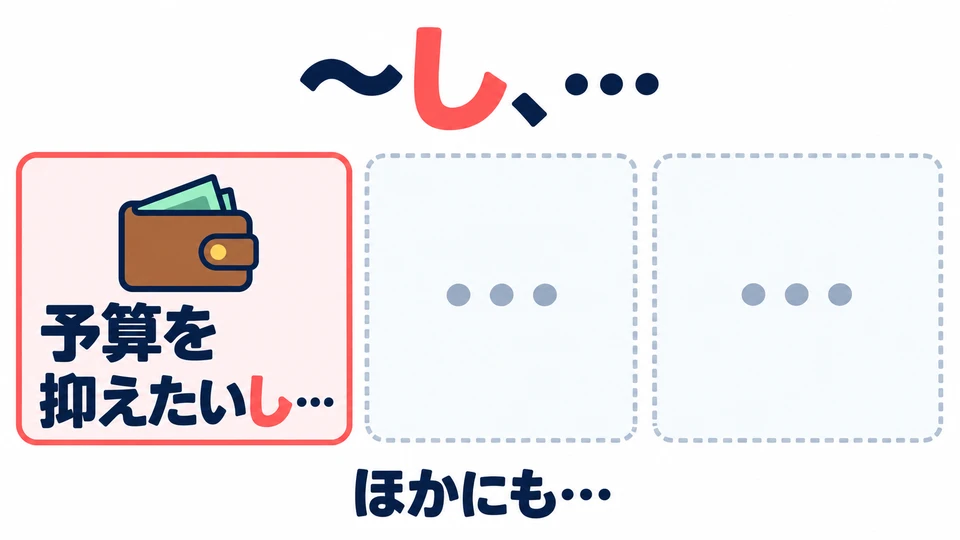
  3. Giving just the reason 「予算を抑えたいし」 can also imply that there are other reasons.
    Giving just the reason 「予算を抑えたいし」 can also imply that there are other reasons.

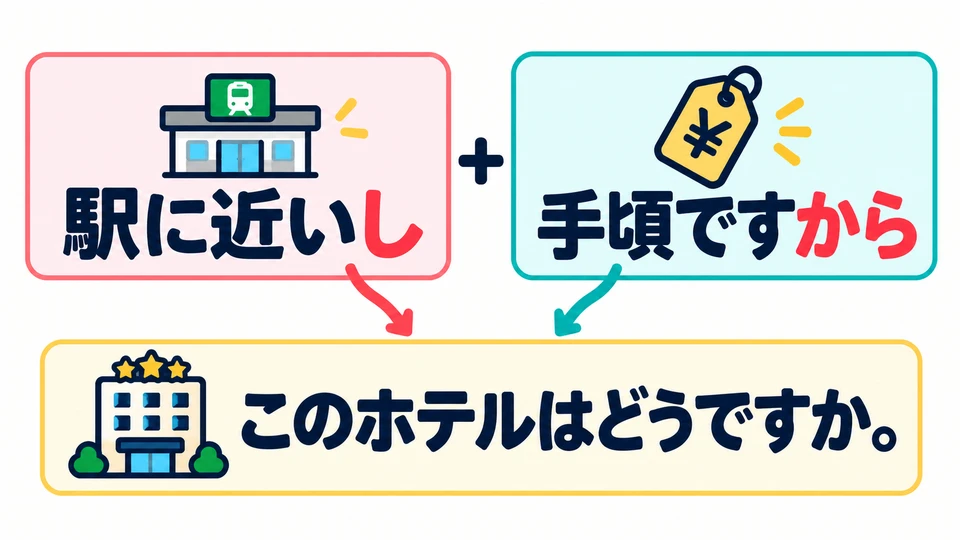
  4. 「駅に近いし、手頃ですから」 gives two reasons, explaining why the hotel is recommended.
    「駅に近いし、手頃ですから」 gives two reasons, explaining why the hotel is recommended.

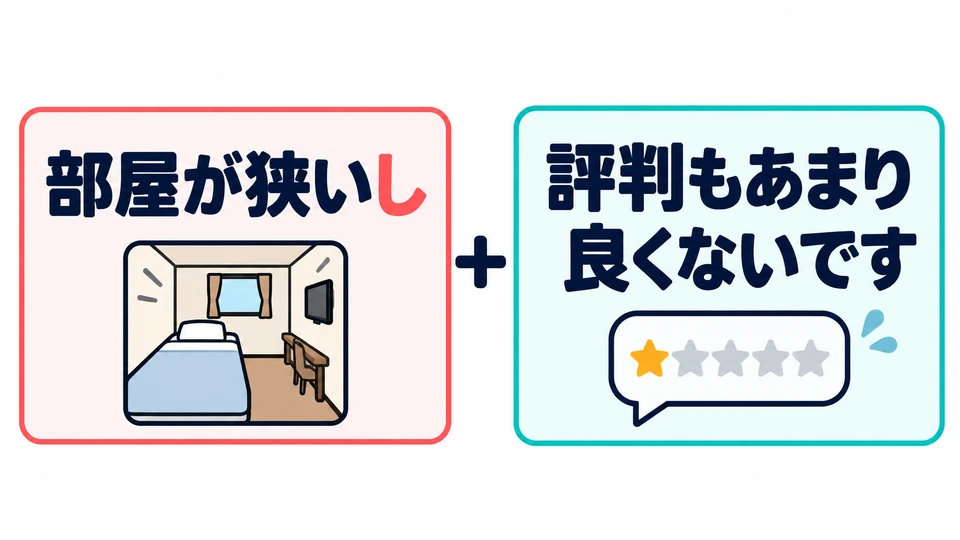
  5. After 「部屋が狭いし」, add that the reviews are poor. You can list drawbacks too.
    After 「部屋が狭いし」, add that the reviews are poor. You can list drawbacks too.

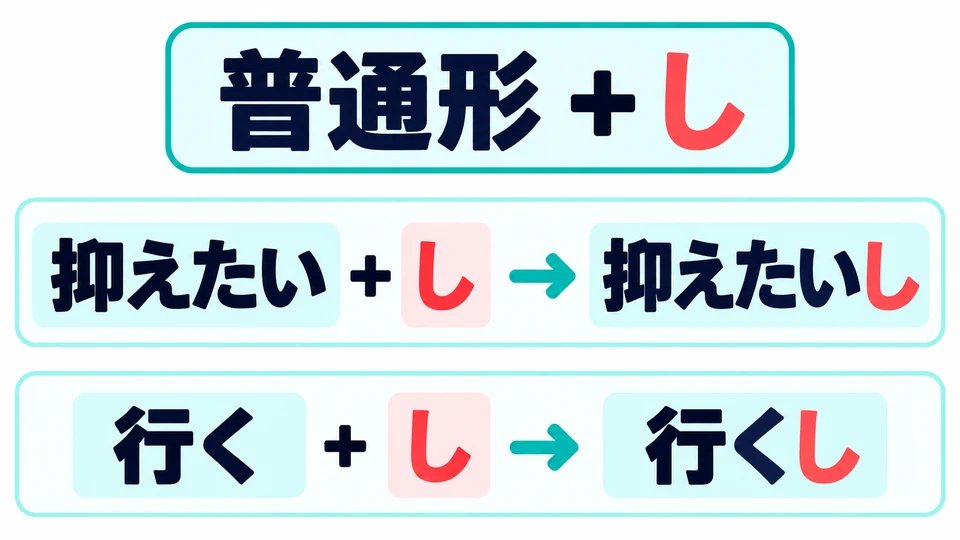
  6. Verbs usually take 「し」 directly after the plain form, as in 「抑えたいし」.
    Verbs usually take 「し」 directly after the plain form, as in 「抑えたいし」.

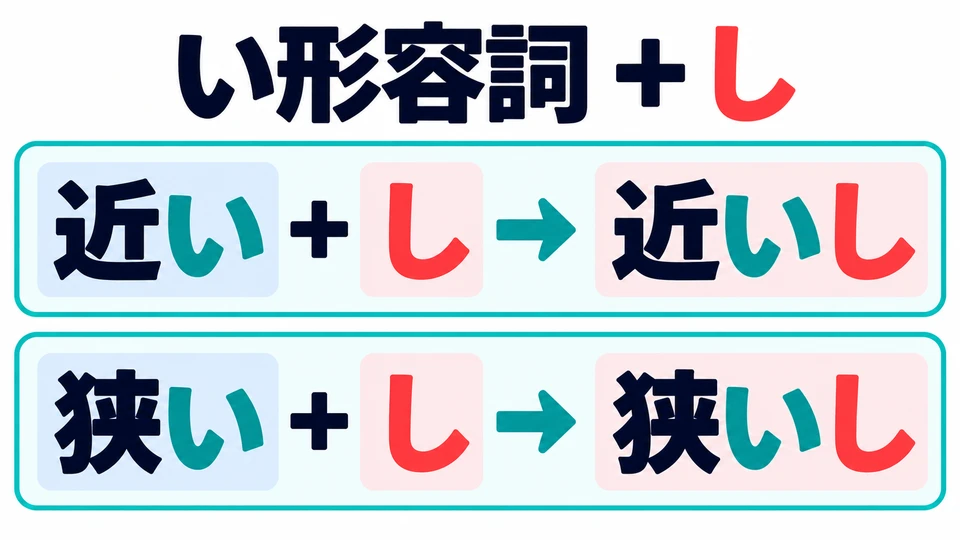
  7. い-adjectives take 「し」 after the plain form. Keep 「い」 in 「近いし」 and 「狭いし」.
    い-adjectives take 「し」 after the plain form. Keep 「い」 in 「近いし」 and 「狭いし」.

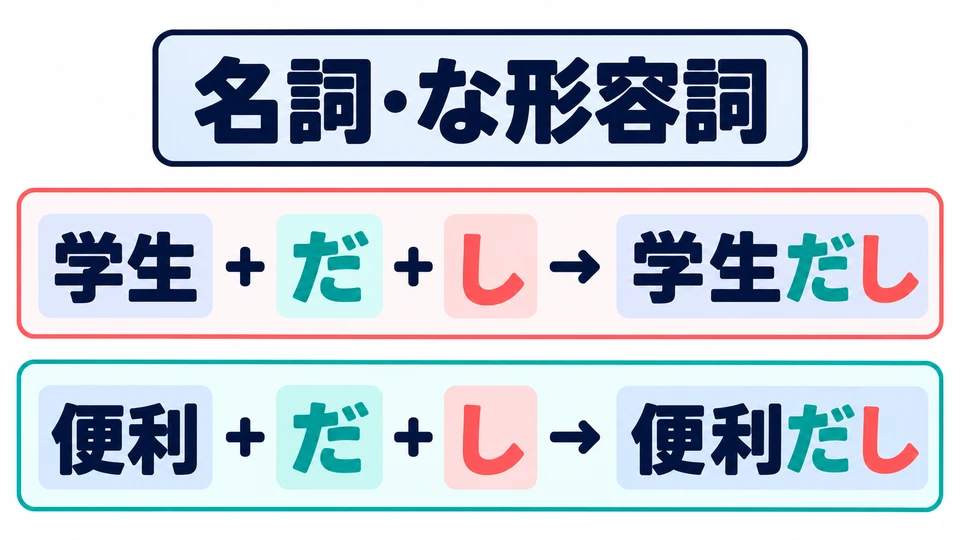
  8. For nouns and な-adjectives in the present affirmative, add 「だ」 before 「し」, as in 「便利だし」.
    For nouns and な-adjectives in the present affirmative, add 「だ」 before 「し」, as in 「便利だし」.

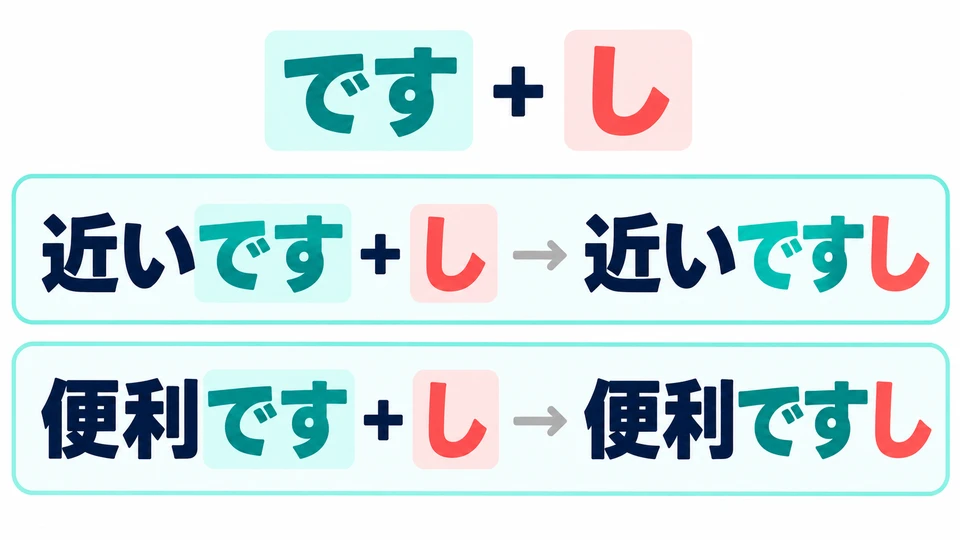
  9. Polite forms can take 「し」 too: both 「近いですし」 and 「便利ですし」 work.
    Polite forms can take 「し」 too: both 「近いですし」 and 「便利ですし」 work.

  10. Look at the second half: adding a feature is a list; if it gives an action or judgment, the first half often gives a reason.

Example sentences

  • このkonoホテルほてるhoteruはわwa駅えきekiにni近いちかいchikaiし、しshi交通こうつうkoutsuu手段しゅだんshudanもmo便利べんりbenri

In a conversation

  • A
    どこのホテルほてるがいいですか。か

    A: Which hotel would be good?

  • B
    このホテルほてるはわどうですか。か駅えきに近い

Check yourself

  1. Level 1 · Recognise

    Which sentence is correct?

  2. Level 1 · Recognise

    Listen and choose the meaning

  3. Level 2 · Build

    Put the words in order

    This hotel is close to the station, and transportation is convenient.

  4. Level 3 · Use

    What goes in the blank?

    このホテルは 場所もいいです。

    This hotel is cheap, and the location is good.

More grammar in this theme

  • 〜し、〜adding reasons or features

More JLPT N3 grammar

Keep practising

Test your Japanese vocabulary12 adaptive questions, freeCheck your pronunciationRead aloud and get a scorePractise verb forms10-question conjugation quizSee the whole courseGrammar, vocabulary and quizzes by theme

Look at the second half: adding a feature is a list; if it gives an action or judgment, the first half often gives a reason.

です。です
desu

This hotel is close to the station, and transportation is convenient too.

  • 予算よさんyosanをo抑えたいおさえたいosaetaiし、しshi格安かくやすkakuyasuのno航空こうくうkoukuu券けんkenをo探しましょう。さがしましょうsagashimashou

    I want to keep the budget down, so let's look for cheap airline tickets.

  • ちかい
    し、し
    手頃ですてごろです
    から。から

    B: How about this hotel? It's close to the station and affordable.

  • A
    でも、も部屋へやが狭いせまいし、し評判ひょうばんもあまり良くよくないですよ。よ

    A: But the rooms are small, and the reviews aren't very good.

  • B
    じゃ、じゃ別べつな所なところを探しましょうさがしましょうか。か

    B: Then, shall we look for another place?

  • Beginner 3
    Travel Plans
    More quizzesOpen this lesson’s quizzes in the course
    〜ましょうかsuggestion or offer
    〜のは、〜ですhighlighting or evaluating
    〜そうですprediction from signs
    〜ておきますprepare in advance
    〜てありますpreparation already complete
    Previous〜ましょうか
    Next〜のは、〜です
    See all 114
    〜ことになっていますestablished rule or convention
    〜ことになっていますsettled plan or assignment
    〜のにunexpected contrast, despite
    〜ようですinference from clues
    〜ことにしますdecide to do
    〜ないことにしますdecide not to do
    Nばかり/Vてばかりいますkeep doing the same thing
    〜させられますbe made to do