
〜のに~noni
Noni (〜のに) means “unexpected contrast, despite”.
Connect a known fact to an outcome that goes against expectations with 「〜のに」, often showing surprise or disappointment.
In the courseBeginner 3Travel Mishaps
How it works
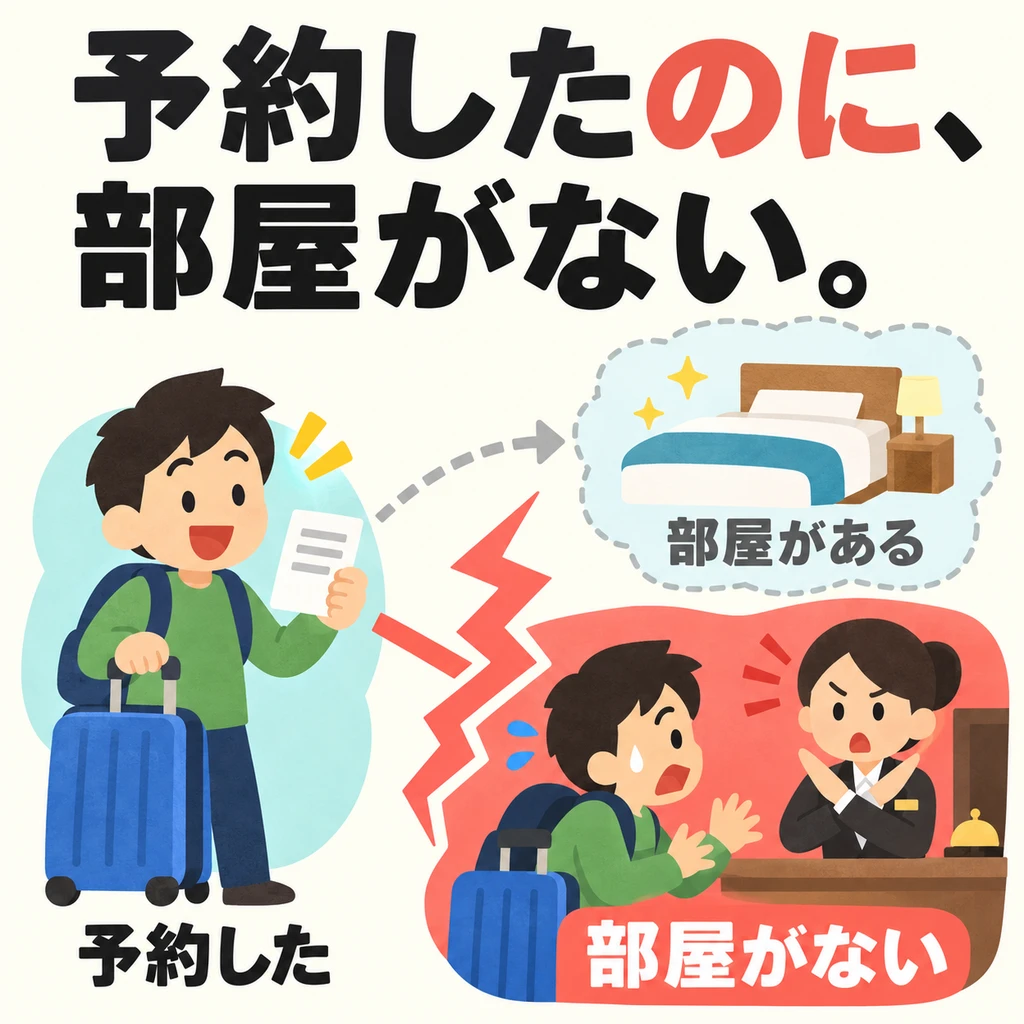
A room was booked, so you expected one to be available, but there is none. Which side of the picture shows what actually happened?
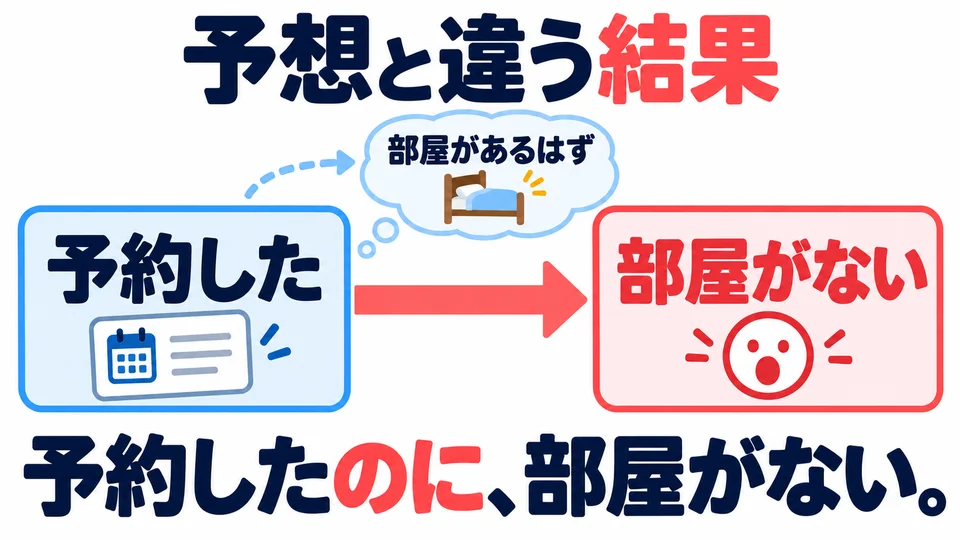
「のに」 links two situations: the first creates an expectation, but the second goes against it.
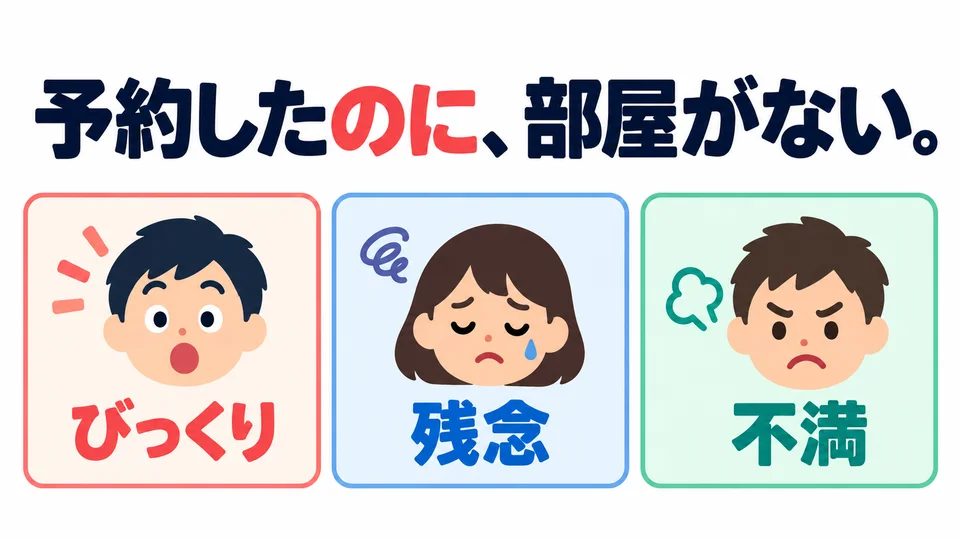
「のに」 often conveys surprise, disappointment, or dissatisfaction. You can hear how the speaker feels.
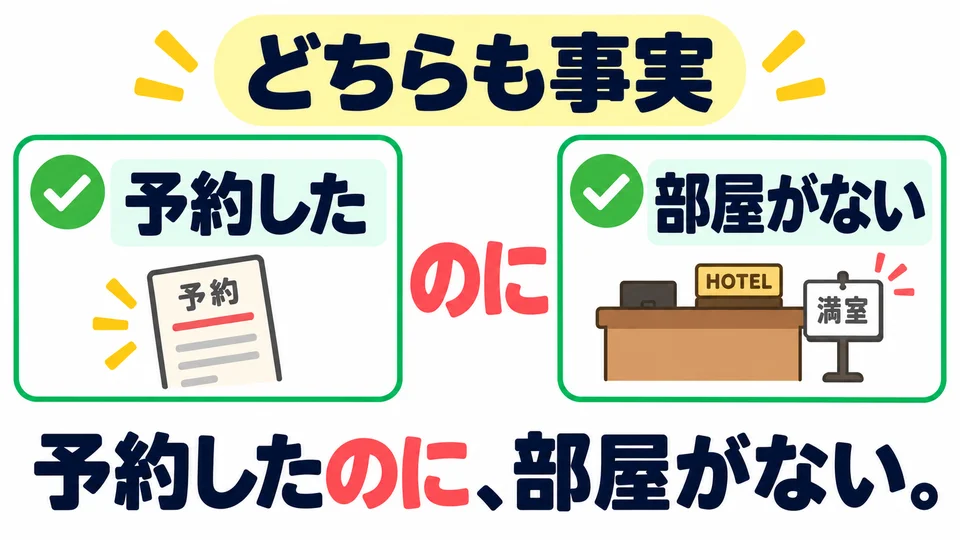
The first part is a known fact, and the second is the actual situation. It does not mean the first event never happened.
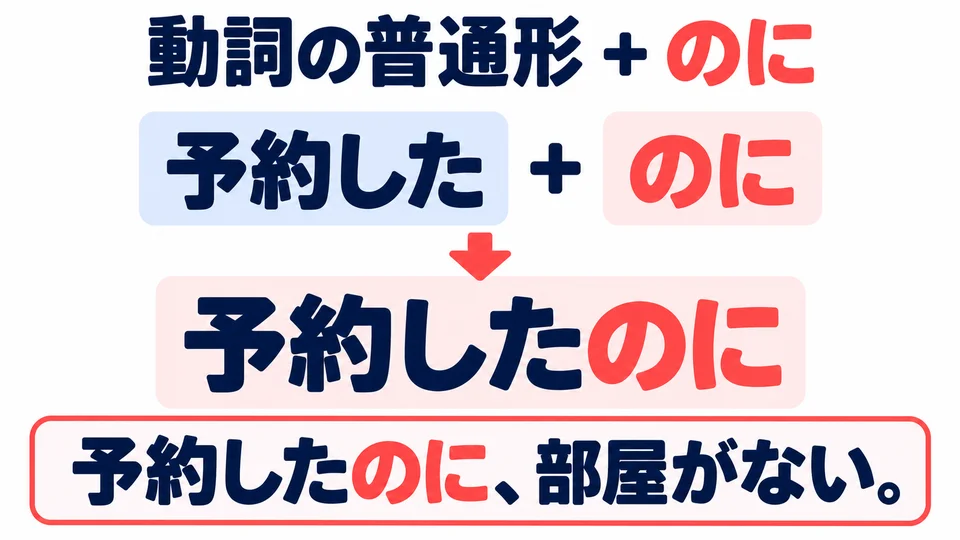
Attach 「のに」 to a verb in the plain form. 「予約したのに」 means “even though I had already booked.”
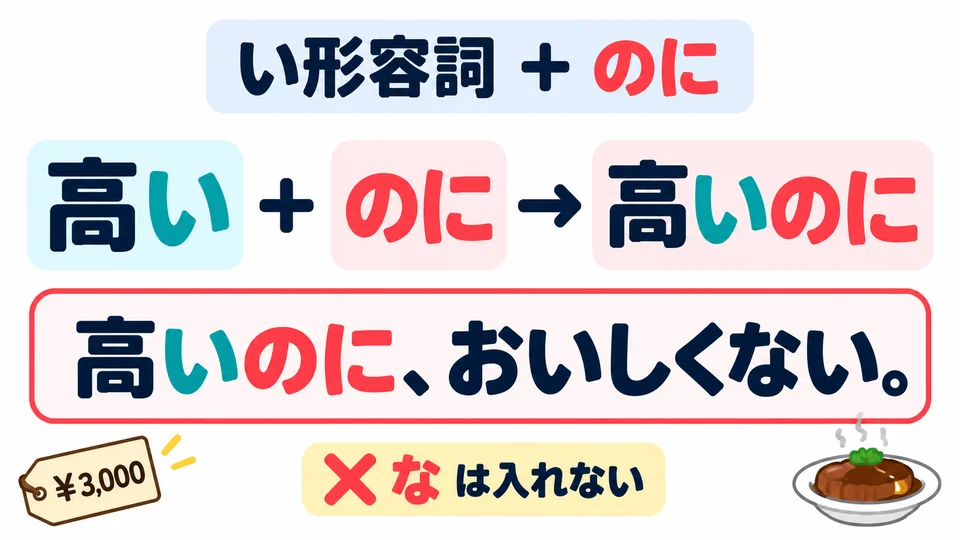
い-adjectives also take 「のに」 after the plain form. Keep the adjective ending; there is no need to add 「な」.
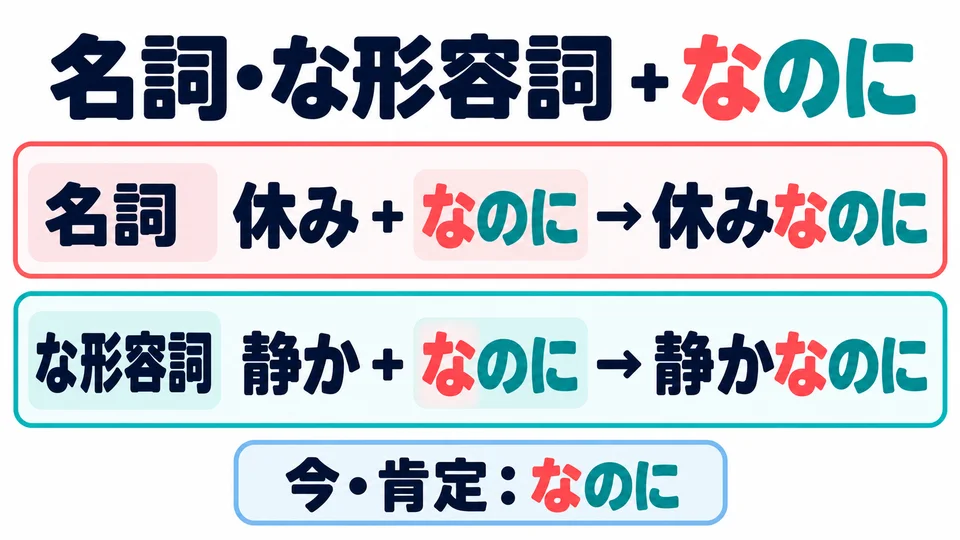
For nouns and な-adjectives in the present affirmative, use 「なのに」. Do not attach 「のに」 directly.
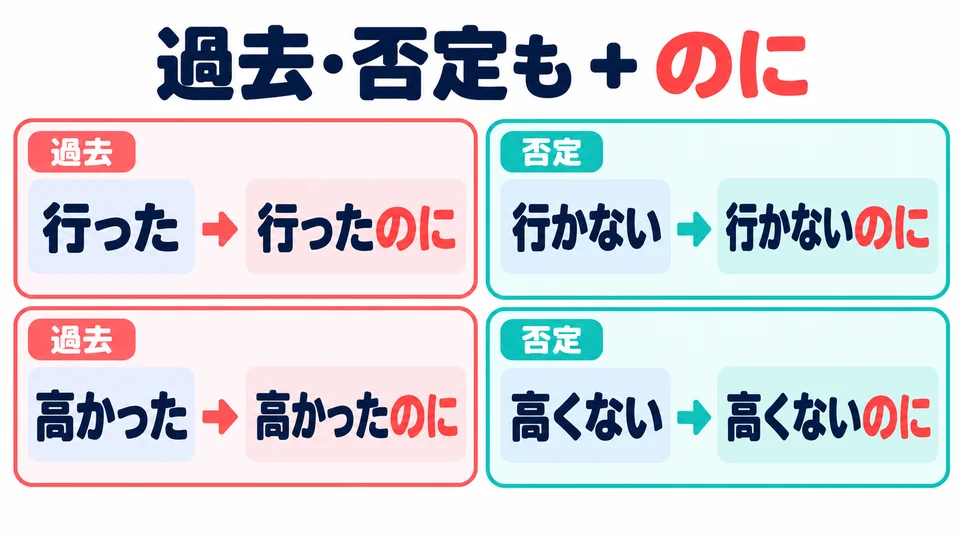
Past and negative forms can also take 「のに」. Put them in the plain form first to express the same unexpected contrast.
In a conversation

- Aどうしましたか?困った顔をしていますね。
A: What's wrong? You look worried.
- B予約したのに、部屋
Check yourself
Level 1 · Recognise
Which sentence is correct?
Level 1 · Recognise
Listen and choose the meaning
Level 2 · Build
Put the words in order
Even though I made a reservation, there is no room.
Level 3 · Use
What goes in the blank?
予約した 部屋がありませんでした。
Even though I made a reservation, there was no room.
More grammar in this theme
- 〜のにunexpected contrast, despite