
〜みたいです~mitai desu
Mitai desu (〜みたいです) means “seems, based on clues”.
Use 「〜みたいです」 to infer from clues when the facts are not confirmed; the inferred event may already have happened.
In the courseBeginner 3Travel Mishaps
How it works
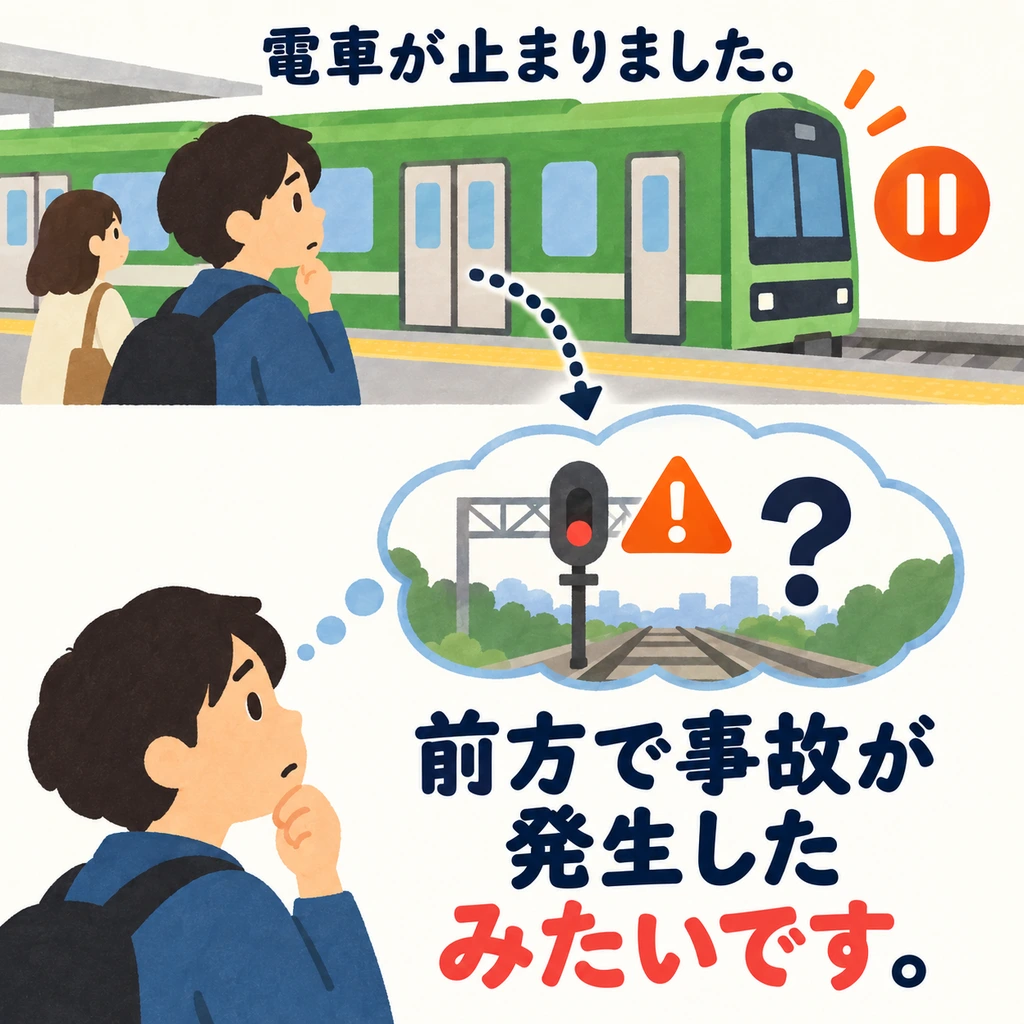
The train has stopped. What happened ahead? Use 「みたいです」 to infer from the clues in front of you.
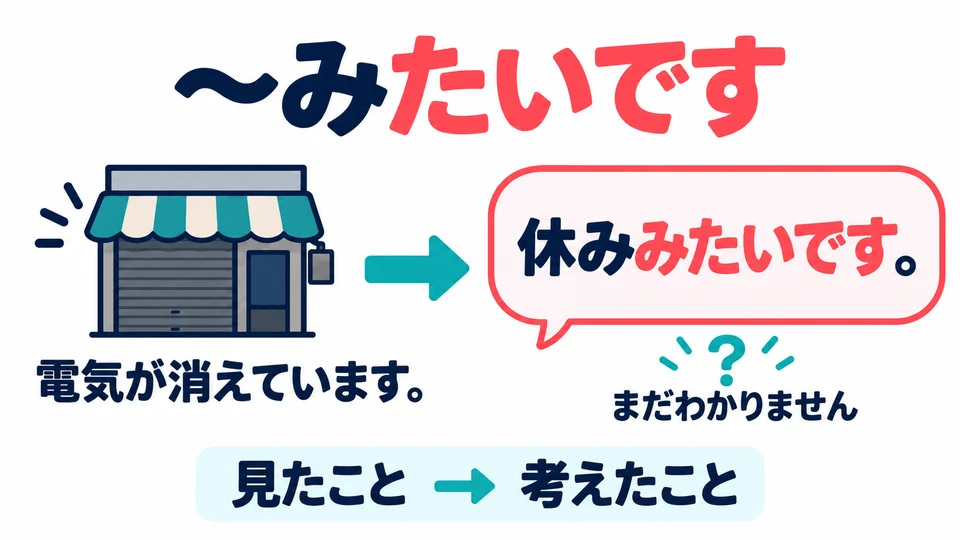
It means “it looks like” or “it seems.” This is a judgment based on clues; the facts are not yet confirmed.
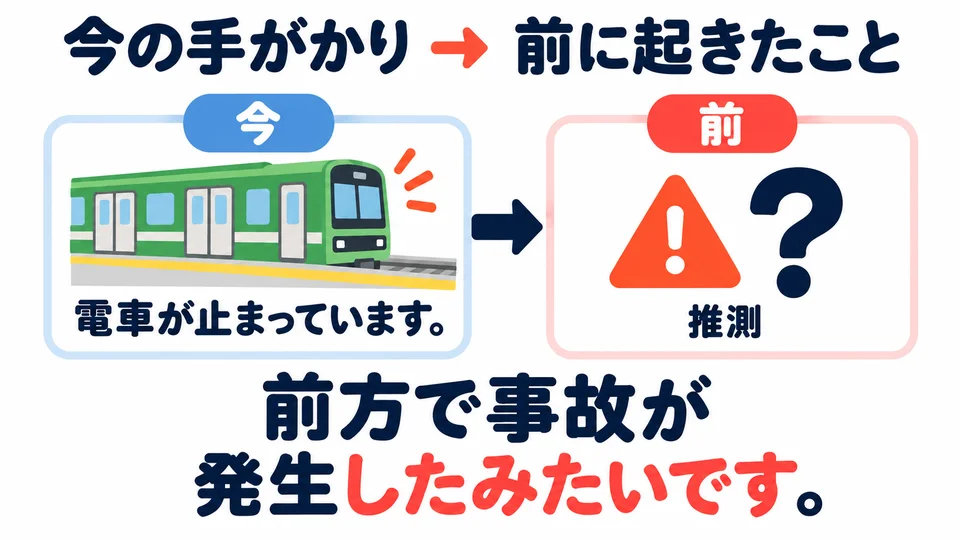
The clues are visible now, but the event you infer may already have happened. That is why we say 「発生したみたいです」.
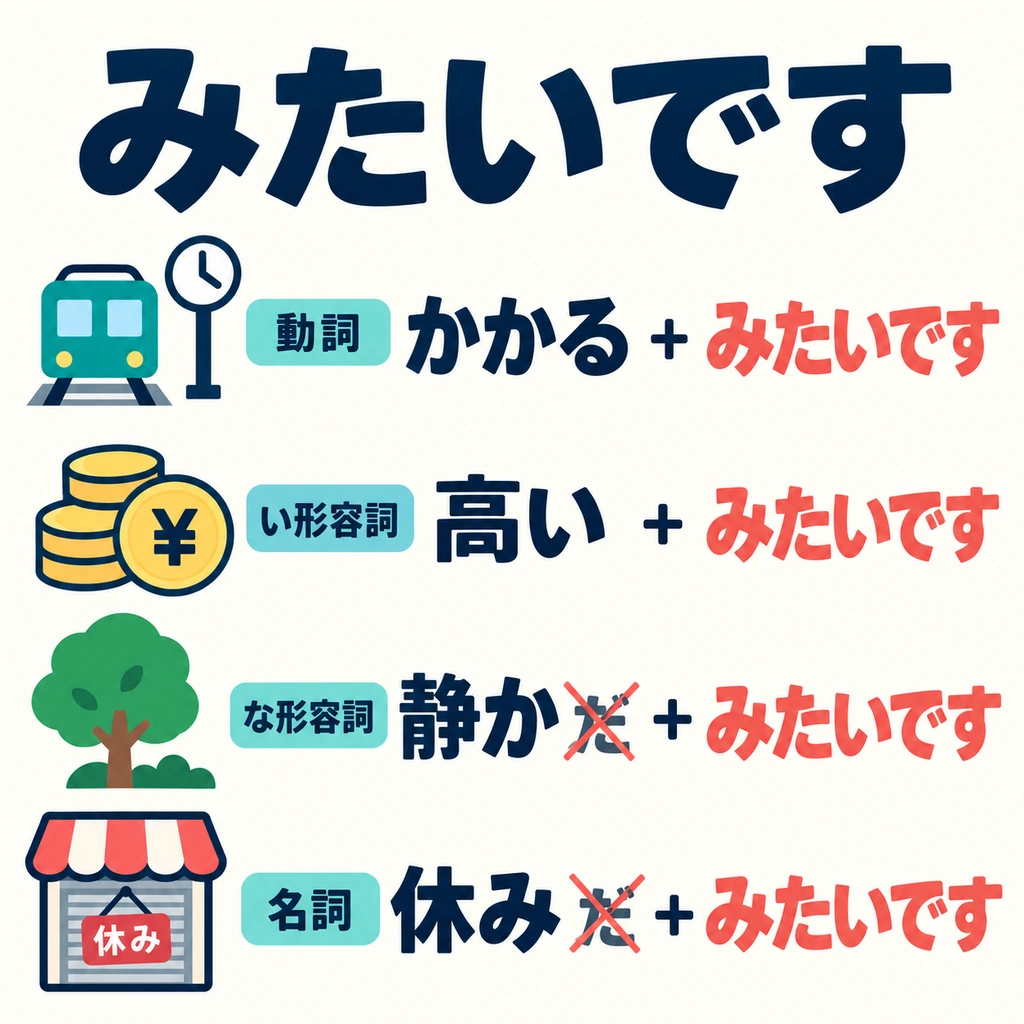
Use the plain form of a verb or い-adjective, such as 「かかる」 or 「高い」, then add 「みたいです」.
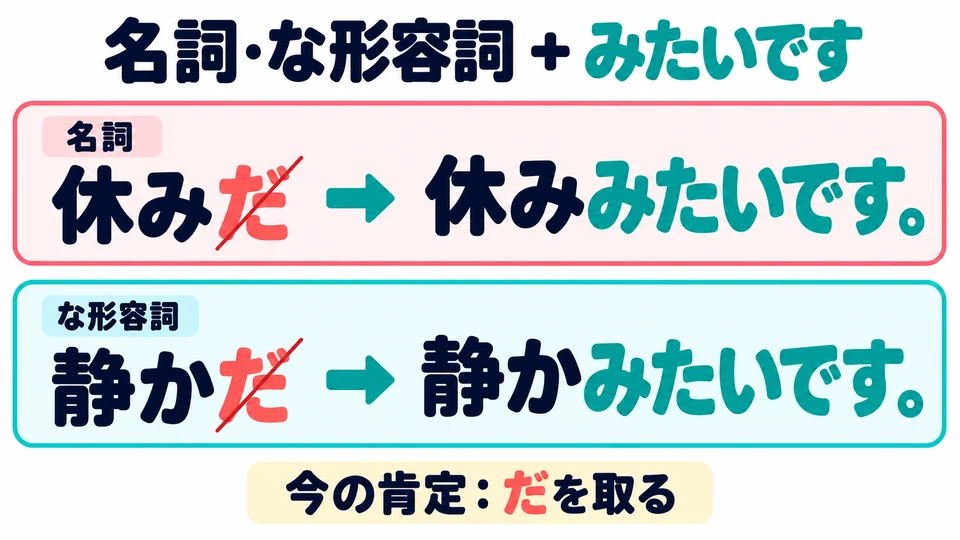
For nouns and な-adjectives in the present affirmative, drop 「だ」. In the picture, attach it directly to 「休み」 and 「静か」.
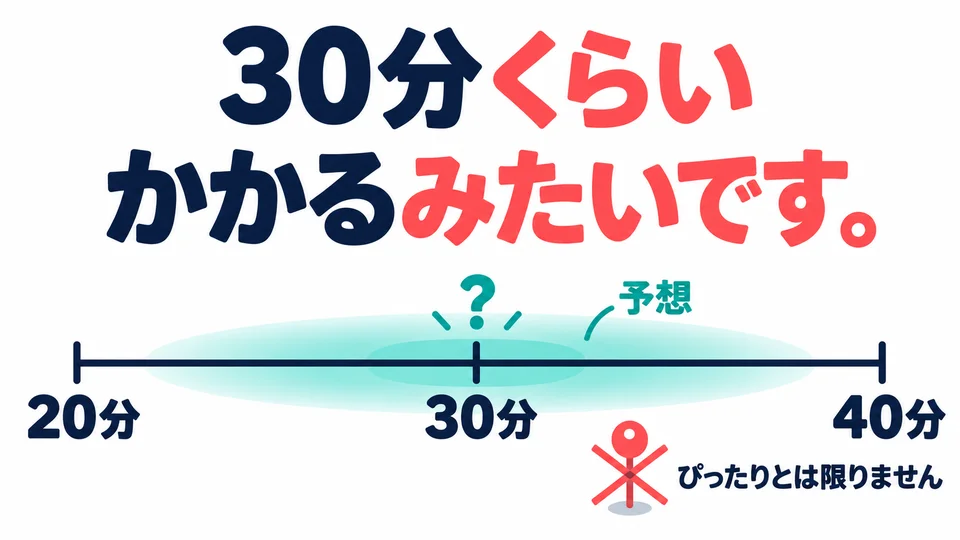
「30分くらいかかるみたいです」 estimates the time needed. It does not guarantee a wait of exactly thirty minutes.
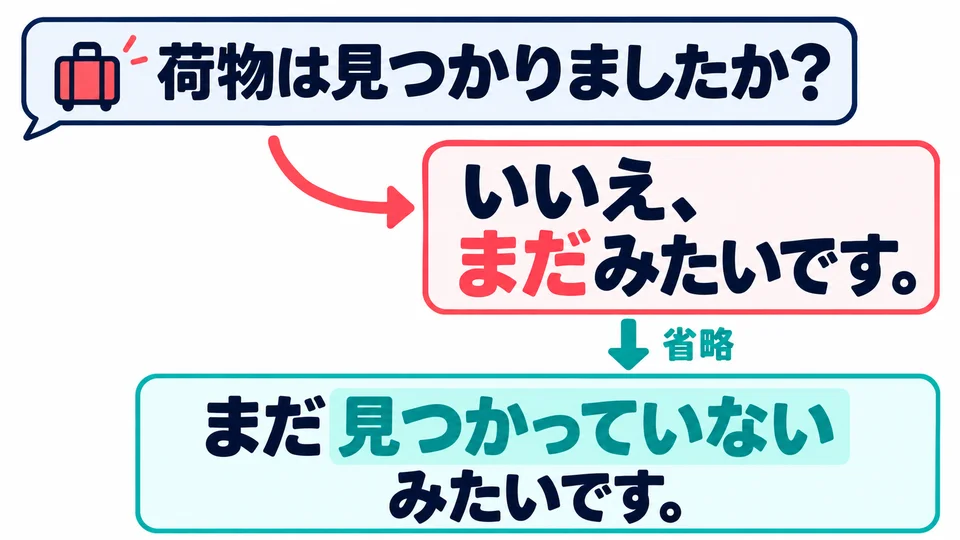
In the luggage dialogue, 「まだみたいです」 leaves out “has not been found.” Read it in light of the preceding question.
In a conversation

- A電車が止まりましたね。
A: The train has stopped.
- B前方で事故が発生したみたいです。
B: It seems there was an accident ahead.
Check yourself
Level 1 · Recognise
Which sentence is correct?
Level 1 · Recognise
Listen and choose the meaning
Level 2 · Build
Put the words in order
It seems like an accident has occurred ahead.
Level 3 · Use
What goes in the blank?
彼が財布を (落とす)。
It seems like he lost his wallet.
More grammar in this theme
- 〜みたいですseems, based on clues