
Japanese grammar · ≈ JLPT N4 · Beginner 3
〜てしまいました~te shimaimashita
completely finished
Use past 「〜てしまいました」 to emphasize that an action or change is fully complete; it need not express regret.
How it works
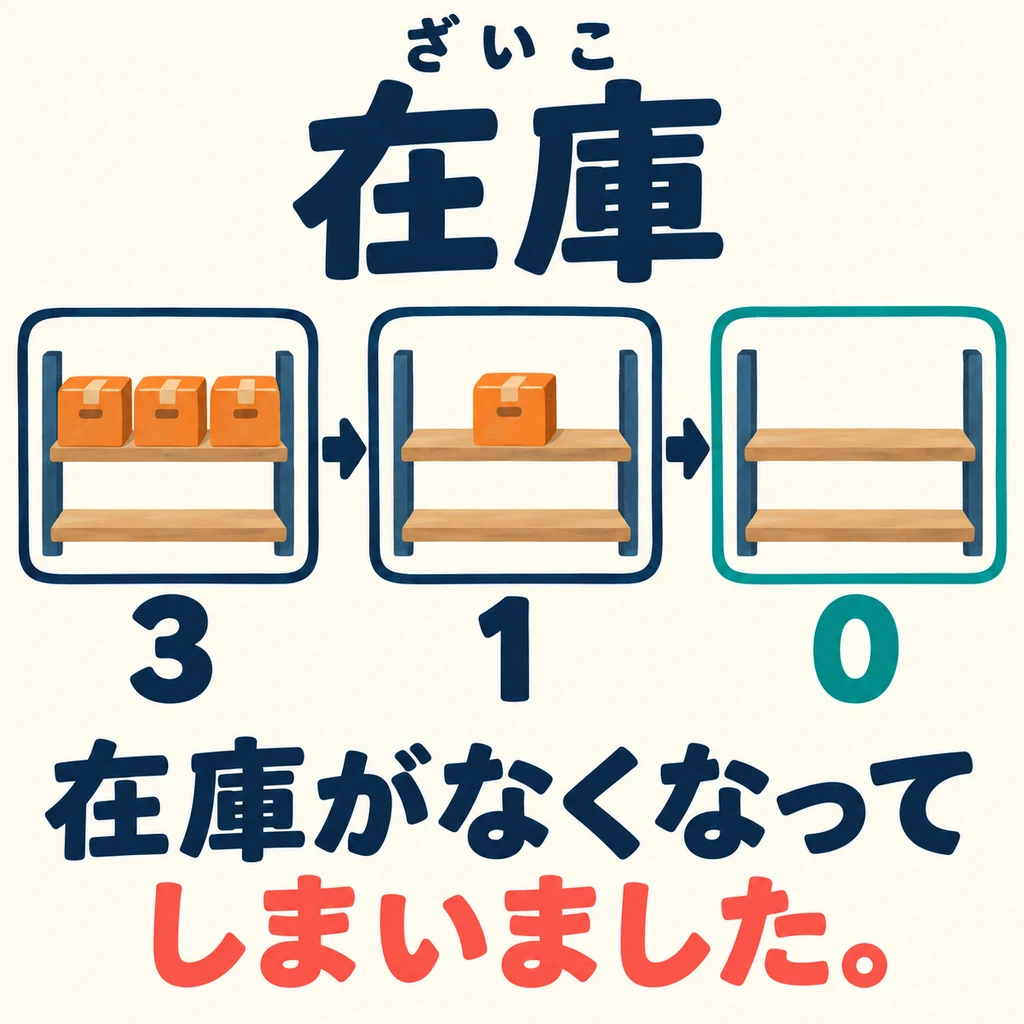
Look at the shelves: even the last item is gone. The focus here is that the stock has completely run out.

Use this when an action is finished or a change of state is complete. The key idea is “fully completed.”
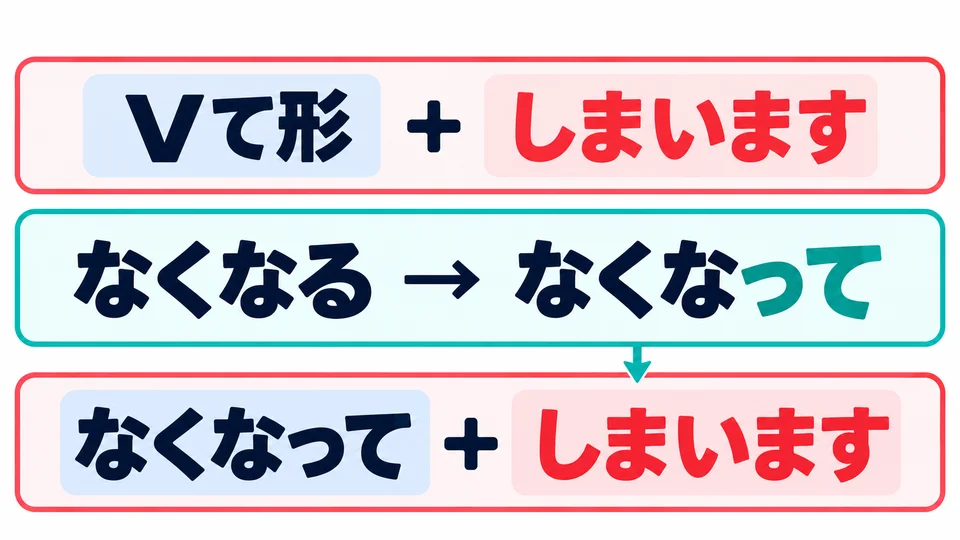
Attach it to the verb’s て-form: なくなる → なくなって + しまいます.
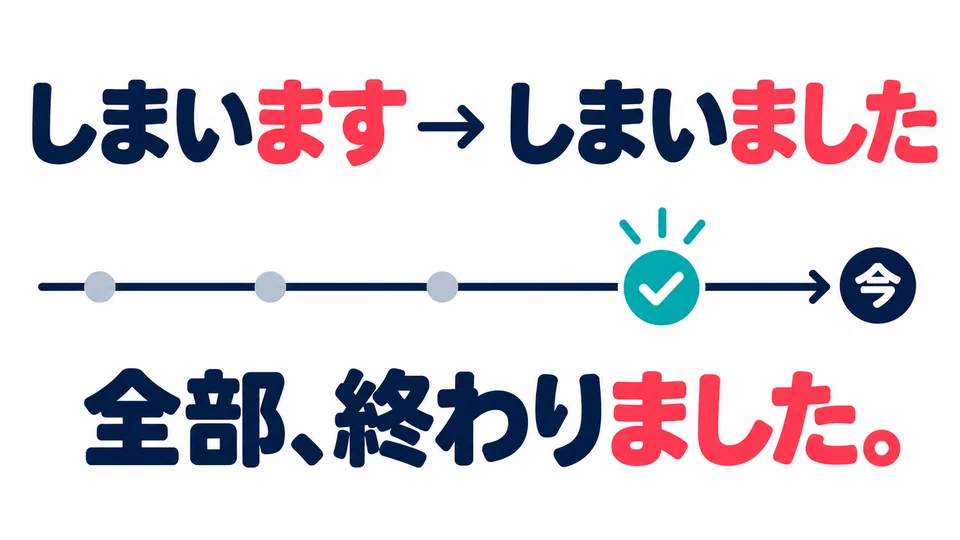
For something already completed, use the past form 「しまいました」 to show that it has finished completely.
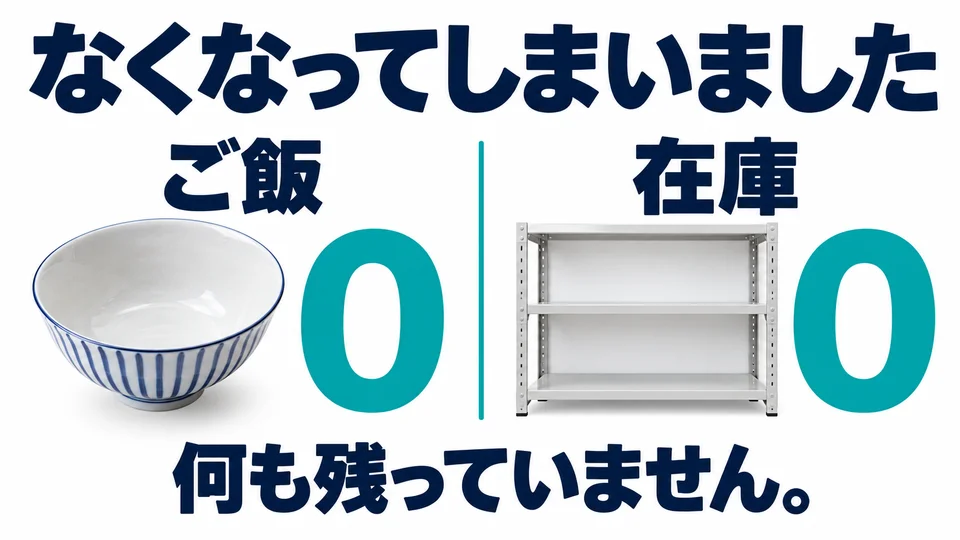
In both sentences, 「なくなってしまいました」 emphasizes that nothing is left, rather than just that the amount has decreased.
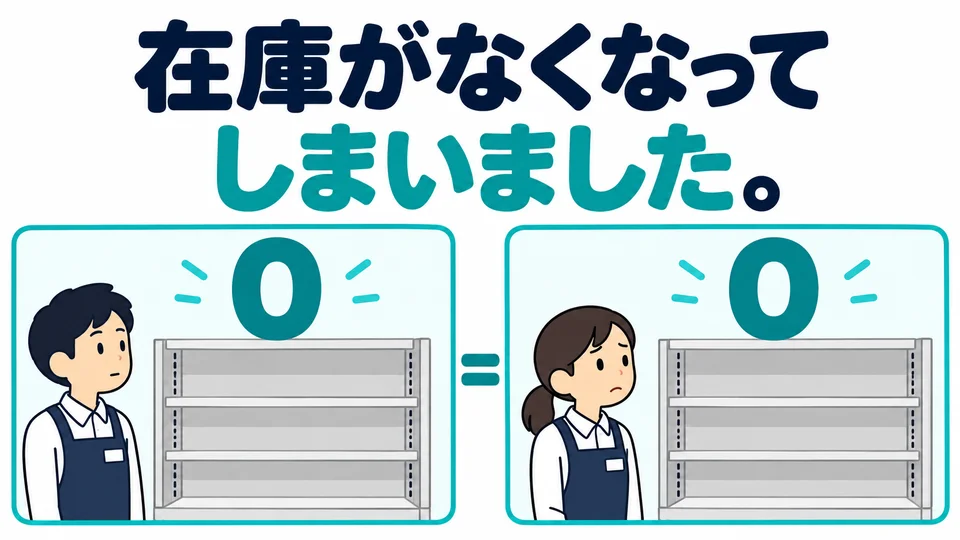
「しまいました」 does not always express regret. In these two sentences, the main point is that everything has run out.
Example sentences
- ご飯gohanがgaなくなっnakunatてteしまいました。shimaimashita
We've run out of rice.
- 在庫zaikoがgaなくなっnakunat
In a conversation

- A大変です。在庫がなくなってしまいました。
A: It's a problem. We've run out of stock.
- Bええ?いつですか。
B: What? When did that happen?
- A
Check yourself
Level 1 · Recognise
Which sentence is correct?
Level 1 · Recognise
Listen and choose the meaning
Level 2 · Build
Put the words in order
Unfortunately, all the popular products have sold out.
Level 3 · Use
What goes in the blank?
ご飯がなくな ました。
The rice has run out.
More grammar in this theme
- 〜てしまいましたcompletely finished