
Japanese grammar · ≈ JLPT N3 · Beginner 3
〜ことになっています~koto ni natte imasu
settled plan or assignment
Use 「〜ことになっています」 with a dictionary-form verb for a plan or assigned duty that has already been settled.
How it works
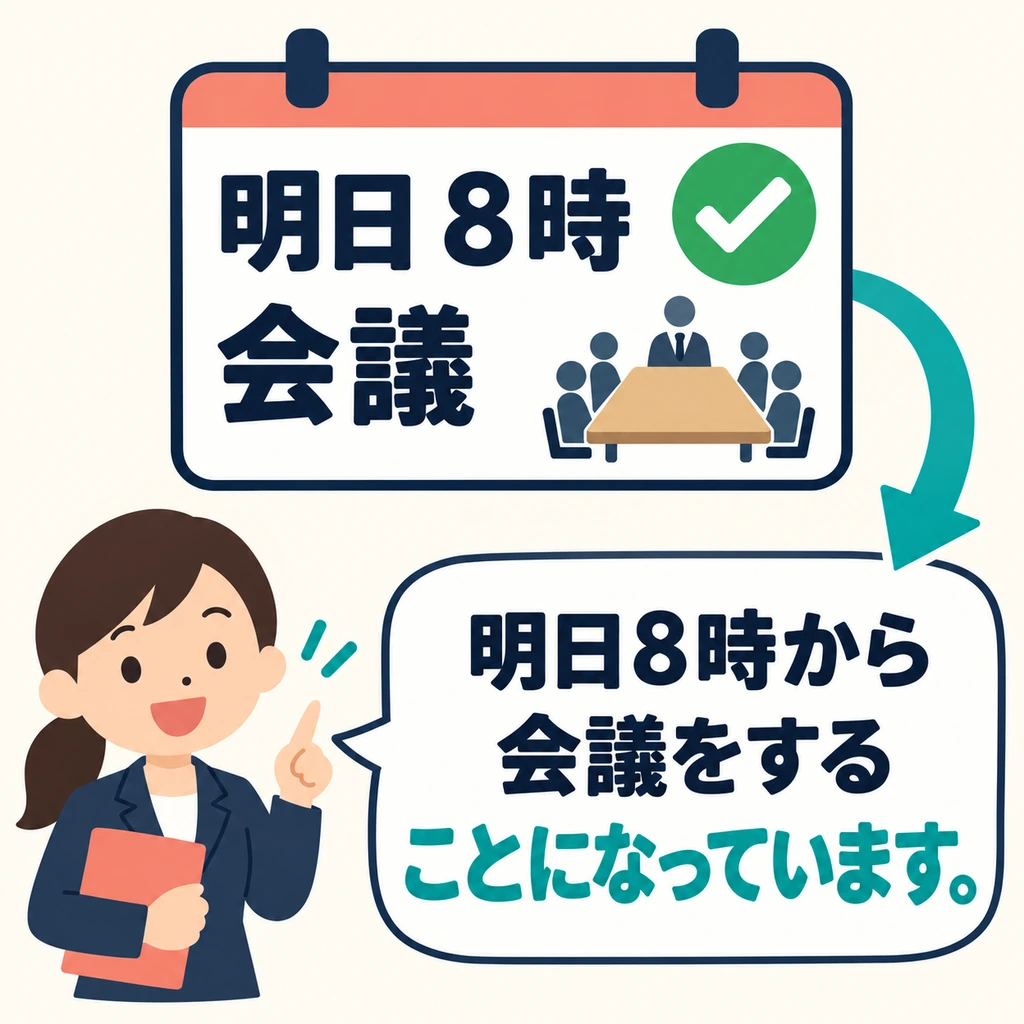
Look at the checked meeting schedule: has tomorrow’s start time already been decided?
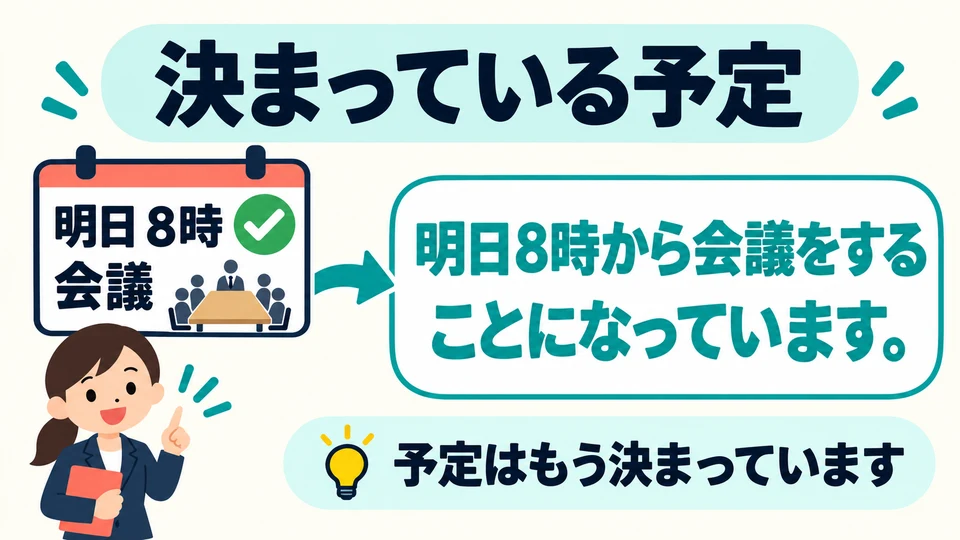
Use 「ことになっています」 to describe plans or assigned duties that have already been decided.
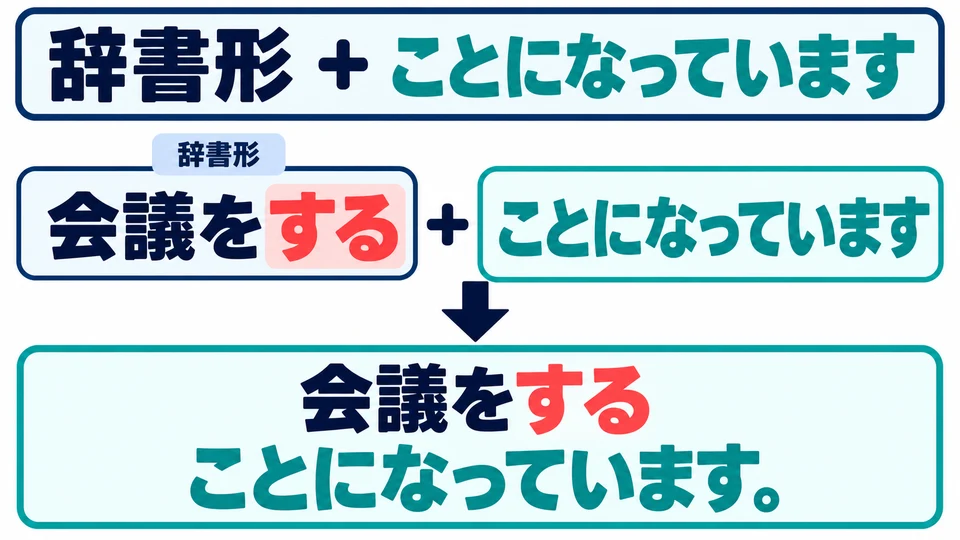
Attach it to the verb’s dictionary form: 会議をする+ことになっています.
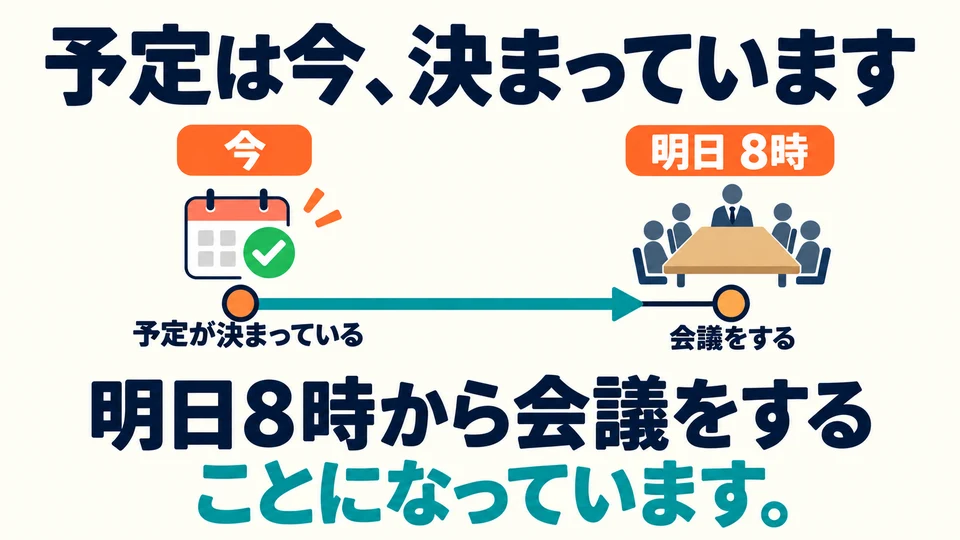
Here, 「ています」 means the arrangement is settled; the event itself can still be in the future.
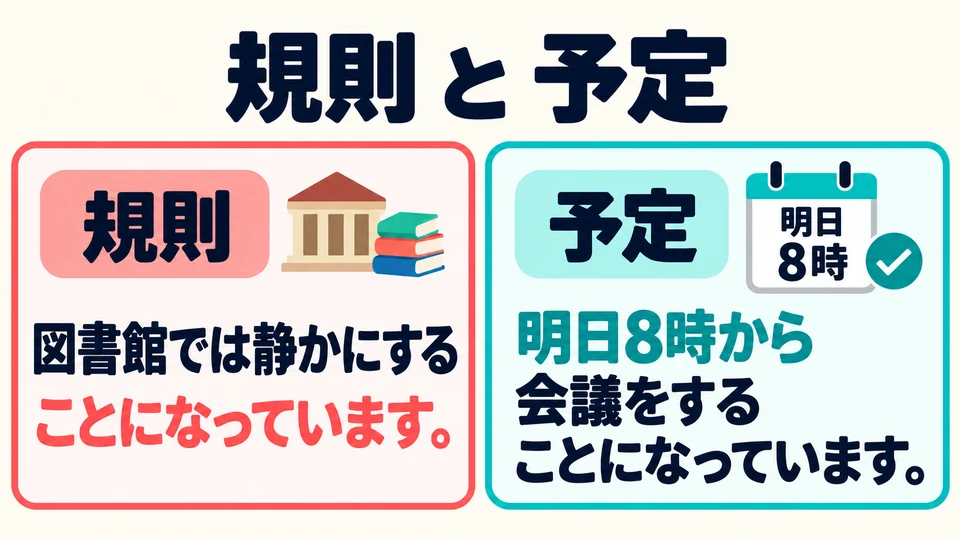
You learned its use for rules earlier. Here, time words like “tomorrow” and “today” help describe specific arrangements.
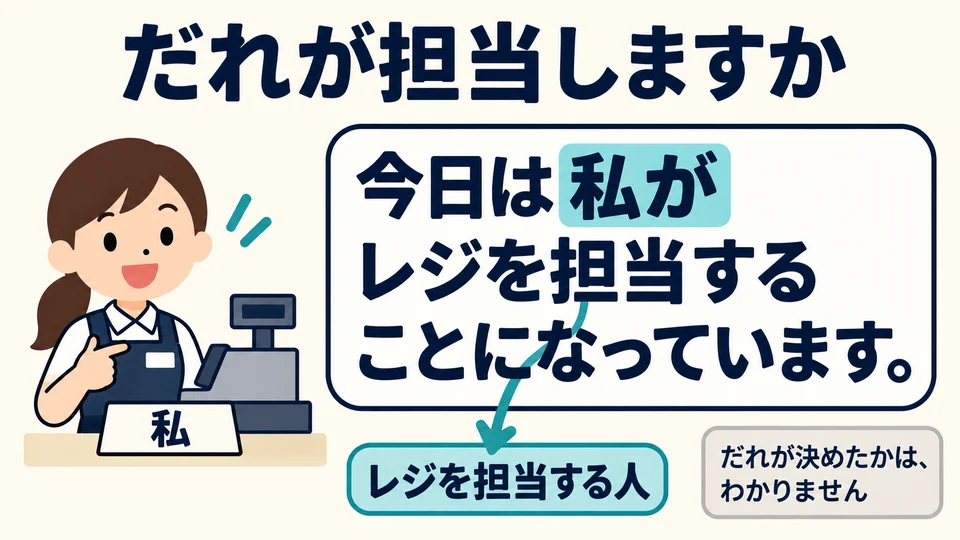
In the cash register example, 「私が」 identifies who is responsible; it does not say who decided on the arrangement.
Example sentences
- 今日kyouはwa私watashiがgaレジrejiをo担当tantouするsuruことkotoにniなっnaて
In a conversation

Check yourself
Level 1 · Recognise
Which sentence is correct?
Level 1 · Recognise
Listen and choose the meaning
Level 2 · Build
Put the words in order
I'm supposed to be in charge of the register today.
Level 3 · Use
What goes in the blank?
今日は私がレジを担当する 。
I'm scheduled to handle the cash register today.
More grammar in this theme
- 〜ことになっていますsettled plan or assignment