JPEdLab iconJPEdLab
Save history

Create an account and play

Explore first, then save your progress whenever you are ready. No email address is required.

Start free
  1. Japanese grammar
  2. JLPT N3 grammar
  3. 〜ことになっています

〜ことになっています~koto ni natte imasu

Koto ni natte imasu (〜ことになっています) means “established rule or convention”.

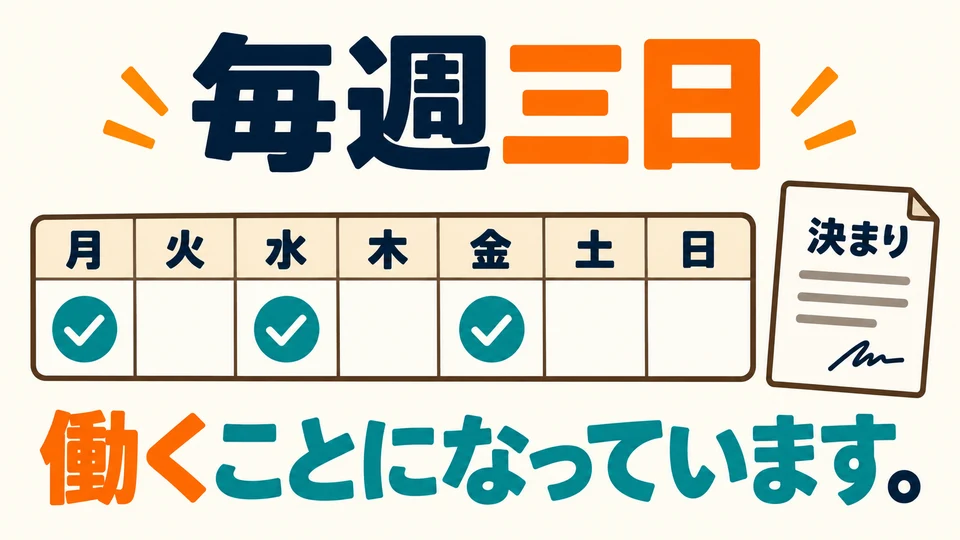
毎週まいしゅうmaishuu三日、みっかmikka働くはたらくhatarakuことkotoにniなっnaてteいます。いますimasu

It's the rule that I work three days a week.

Use 「〜ことになっています」 with a dictionary-form verb for a rule or convention already in effect.

In the course›

How it works

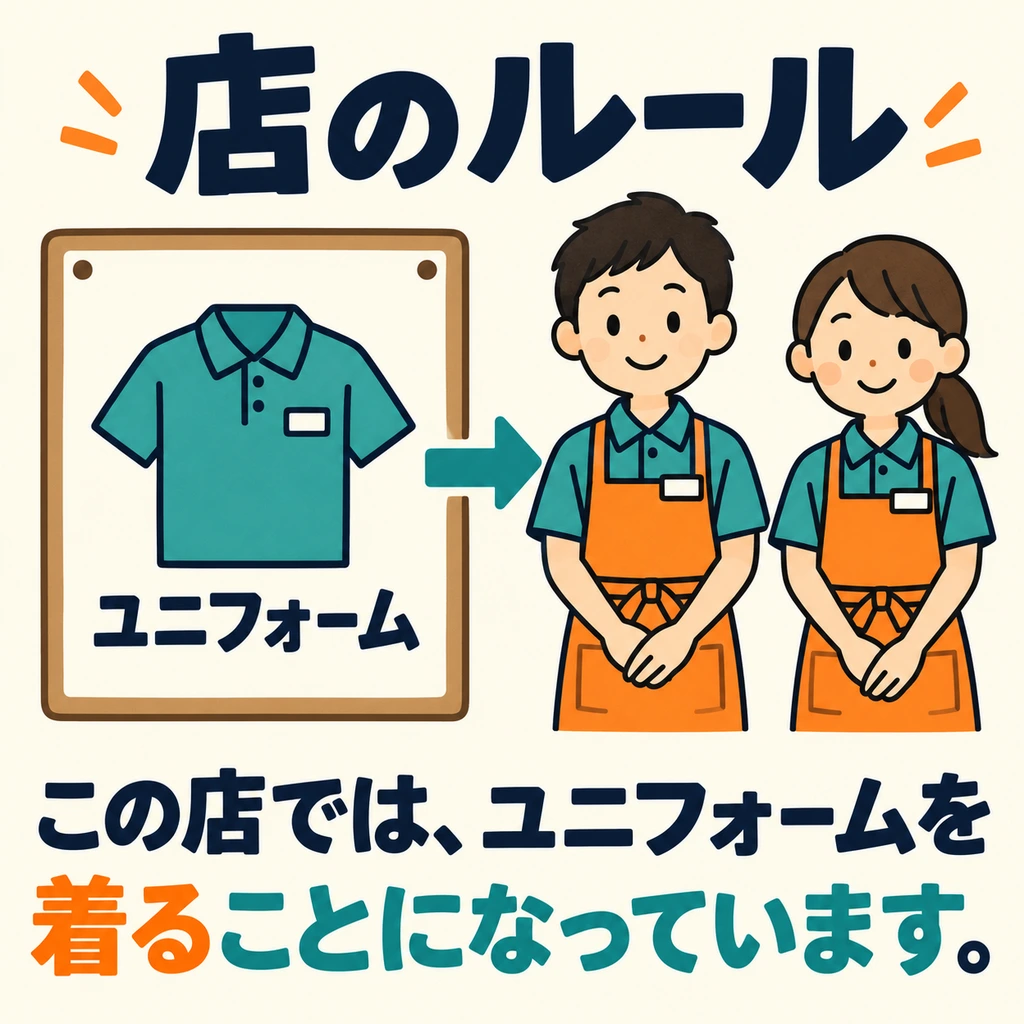
  1. Why are the two people wearing the same clothes? Look at the notice to find what the shop requires.
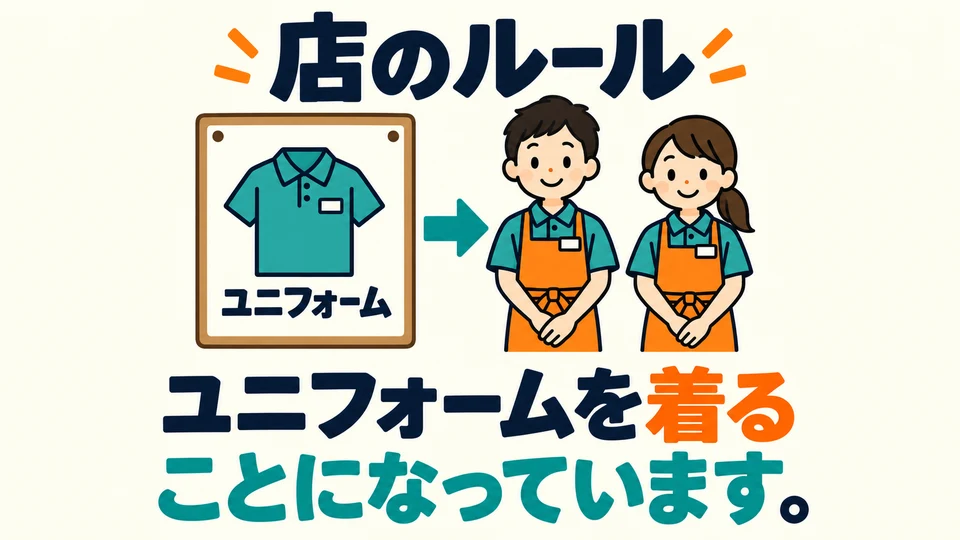
    Why are the two people wearing the same clothes? Look at the notice to find what the shop requires.

  2. 「ことになっています」 describes an established rule. Wearing a uniform is a rule the shop has already set.
    「ことになっています」 describes an established rule. Wearing a uniform is a rule the shop has already set.

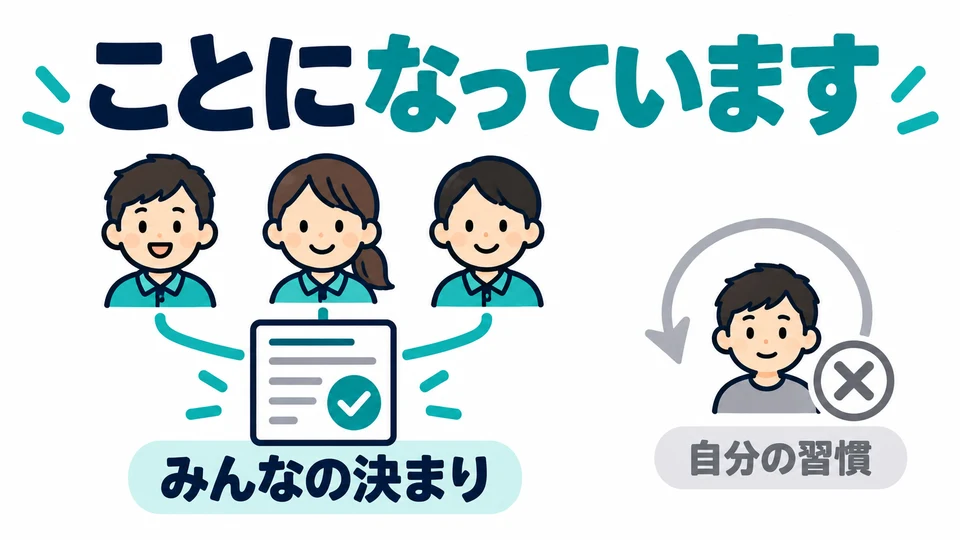
  3. It can also describe an established customary practice. The point is an existing convention, not just a personal habit.
    It can also describe an established customary practice. The point is an existing convention, not just a personal habit.

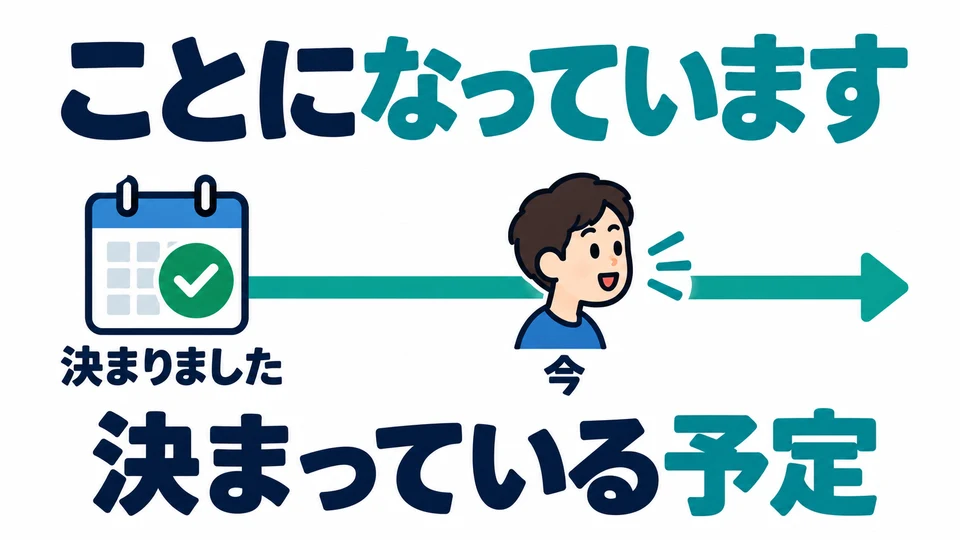
  4. It can also describe an arrangement fixed by a plan. The arrangement is already decided when you speak.
    It can also describe an arrangement fixed by a plan. The arrangement is already decided when you speak.

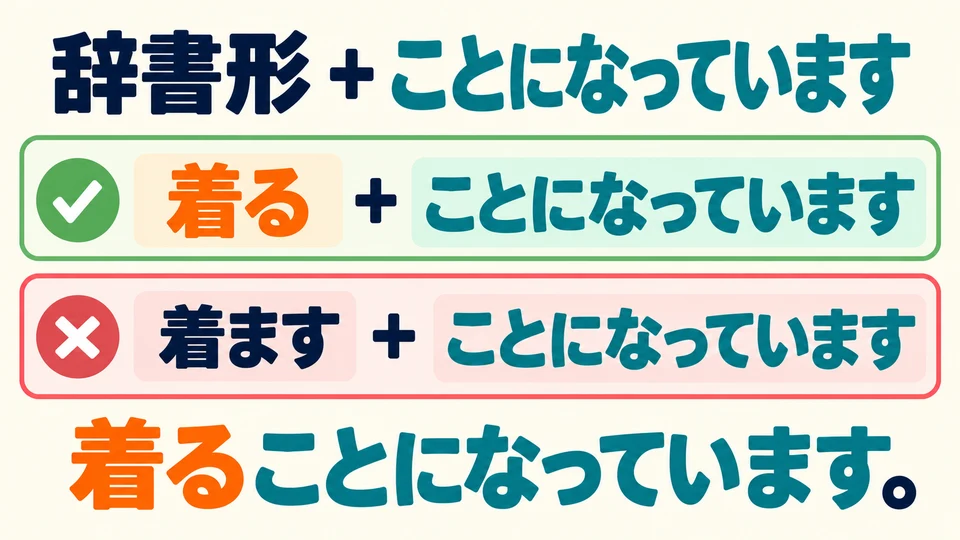
  5. Use the verb’s dictionary form: 「着る」 + 「ことになっています」, not 「着ます」.
    Use the verb’s dictionary form: 「着る」 + 「ことになっています」, not 「着ます」.

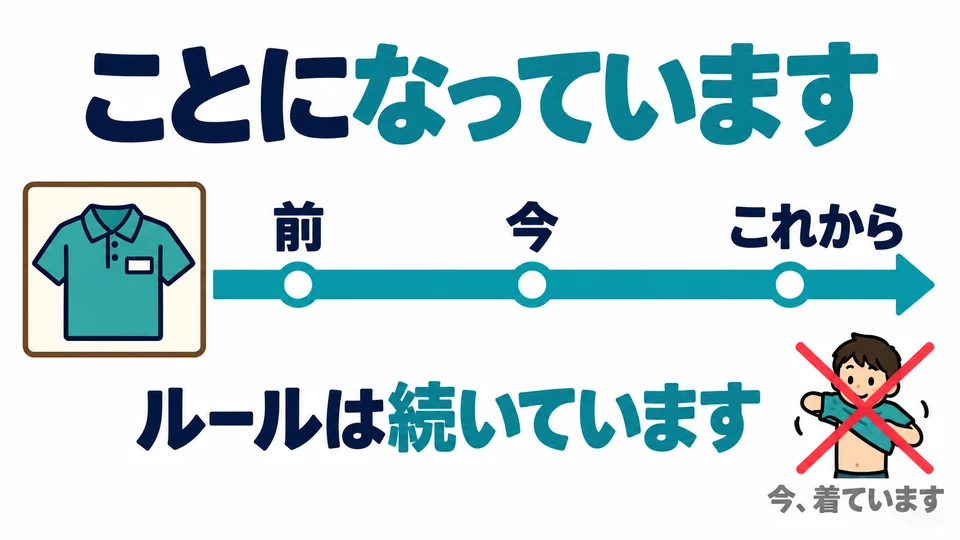
  6. Here, 「ています」 means the rule is still in effect. It does not mean the action is happening right now.
    Here, 「ています」 means the rule is still in effect. It does not mean the action is happening right now.

  7. In the example, “three days a week” is an agreed work schedule. It does not simply mean that this is what the person often does.

    In the example, “three days a week” is an agreed work schedule. It does not simply mean that this is what the person often does.

Example sentences

  • 毎週まいしゅうmaishuu三日、みっかmikka働くはたらくhatarakuことkotoにniなっnaてteいます。いますimasu

    It's the rule that I work three days a week.

  • このkono店

In a conversation

  • A
    アルバイトあるばいとのルールるーるを教えおしえてください。ください

    A: Please tell me the rules for the part-time job.

  • B
    はい、はいまず就業しゅうぎょう時間じかんは わ9 く

Check yourself

  1. Level 1 · Recognise

    Which sentence is correct?

  2. Level 1 · Recognise

    Listen and choose the meaning

  3. Level 2 · Build

    Put the words in order

    At the part-time job, it's a rule to observe the working hours.

  4. Level 3 · Use

    What goes in the blank?

    この店ではユニフォームを着る なっています。

    It is the rule at this shop to wear a uniform.

More grammar in this theme

  • 〜ことになっていますestablished rule or convention

More JLPT N3 grammar

Keep practising

Test your Japanese vocabulary12 adaptive questions, freeCheck your pronunciationRead aloud and get a scorePractise verb forms10-question conjugation quizSee the whole courseGrammar, vocabulary and quizzes by theme
みせ
mise
でde
はわwa
ユニフォームゆにふぉーむyunifoomu
をo
着るきるkiru
ことkoto
にni
なっna
てte
います。いますimasu

It's the rule at this shop to wear a uniform.

時じ
から から
17 じゅうなな
時じ
に
なっ
て
います。います

B: Sure, first, the working hours are from 9 to 17.

  • A
    制服せいふくはわありますか。か

    A: Is there a uniform?

  • B
    はい、はいこの店みせではわユニフォームゆにふぉーむを着るきることになっています。います

    B: Yes, it's the rule at this shop to wear a uniform.

Beginner 3
Social Life
More quizzesOpen this lesson’s quizzes in the course
〜ように、〜action toward a desired result
〜ようにしてくださいgentle request to make sure
お〜ください/ご〜くださいformal polite instruction
〜そうです(様態)looks about to happen
〜ておきますleave in a state
〜てしまいましたcompletely finished
〜ことになっていますsettled plan or assignment
Next〜ように、〜
See all 114
〜し、〜adding reasons or features
〜のは、〜ですhighlighting or evaluating
〜のにunexpected contrast, despite
〜ようですinference from clues
〜ことにしますdecide to do
〜ないことにしますdecide not to do
Nばかり/Vてばかりいますkeep doing the same thing
〜させられますbe made to do