JPEdLab iconJPEdLab
Save history

Create an account and play

Explore first, then save your progress whenever you are ready. No email address is required.

Start free
  1. Japanese grammar
  2. JLPT N4 grammar
  3. 〜ようにしてください

〜ようにしてください~you ni shite kudasai

You ni shite kudasai (〜ようにしてください) means “gentle request to make sure”.

遅れないおくれないokurenaiようにyouniしshiてteください。くださいkudasai

Please make sure not to be late.

Use 「〜ようにしてください」 to gently ask someone to make an effort to do something or ensure it does not happen.

In the course›

How it works

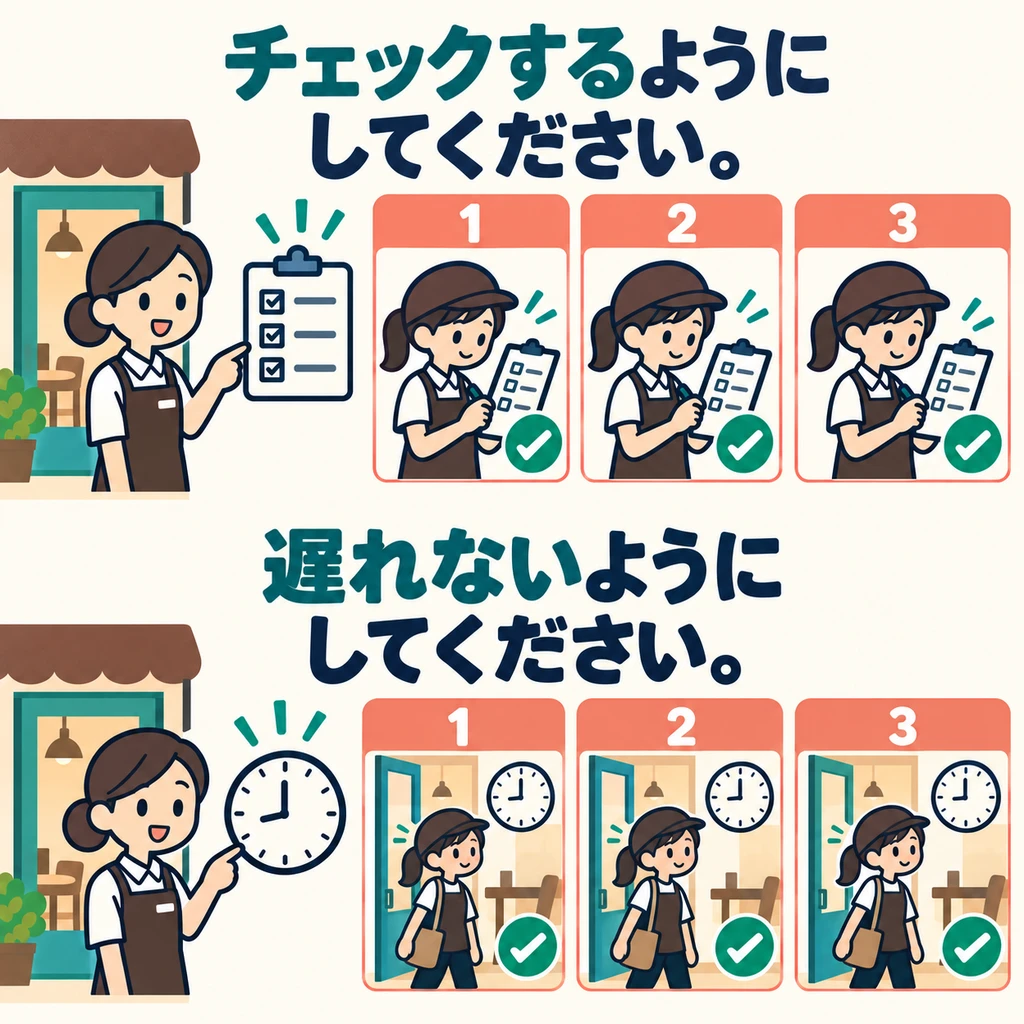
  1. A new coworker starts a part-time job. The manager reminds them to check carefully and arrive on time from now on.
    A new coworker starts a part-time job. The manager reminds them to check carefully and arrive on time from now on.

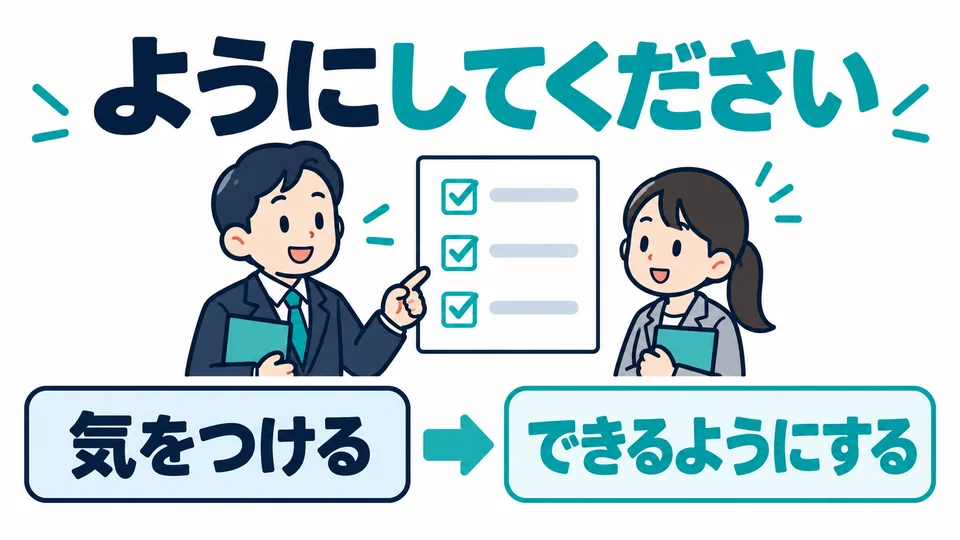
  2. This is a gentle reminder or request: you want the other person to pay attention and make an effort to do something.
    This is a gentle reminder or request: you want the other person to pay attention and make an effort to do something.

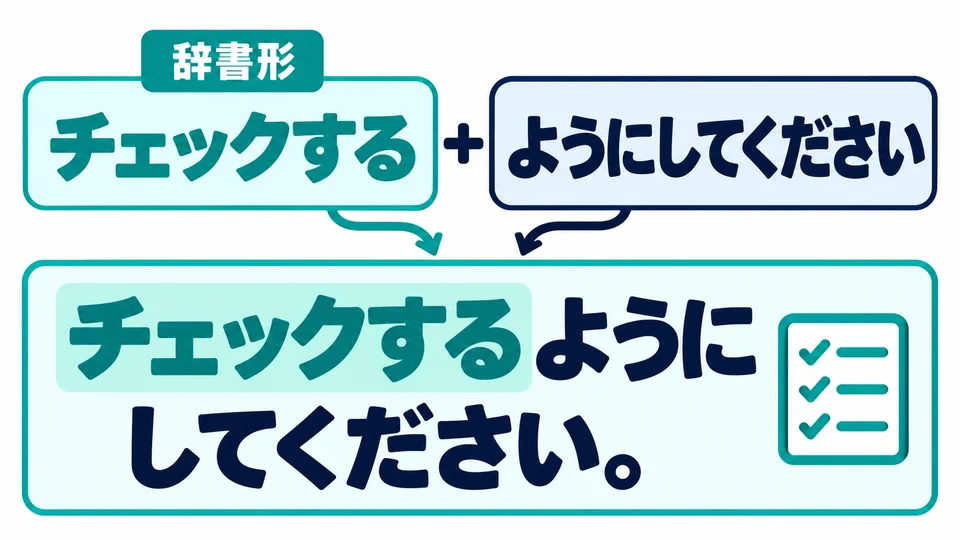
  3. To ask someone to do something, use the dictionary form before ようにしてください, as in 「チェックするようにしてください」.
    To ask someone to do something, use the dictionary form before ようにしてください, as in 「チェックするようにしてください」.

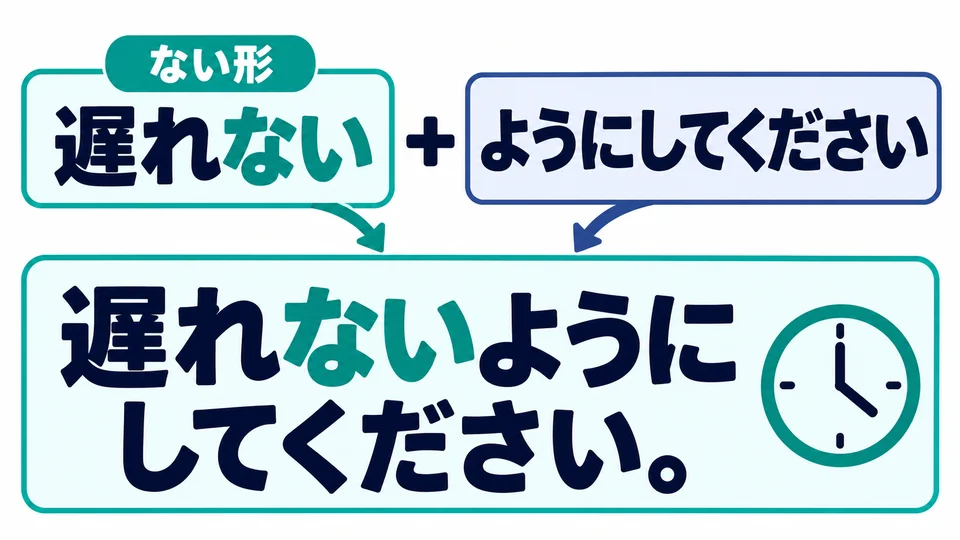
  4. To ask someone to make sure something does not happen, use the ない form, as in 「遅れないようにしてください」.

    To ask someone to make sure something does not happen, use the ない form, as in 「遅れないようにしてください」.
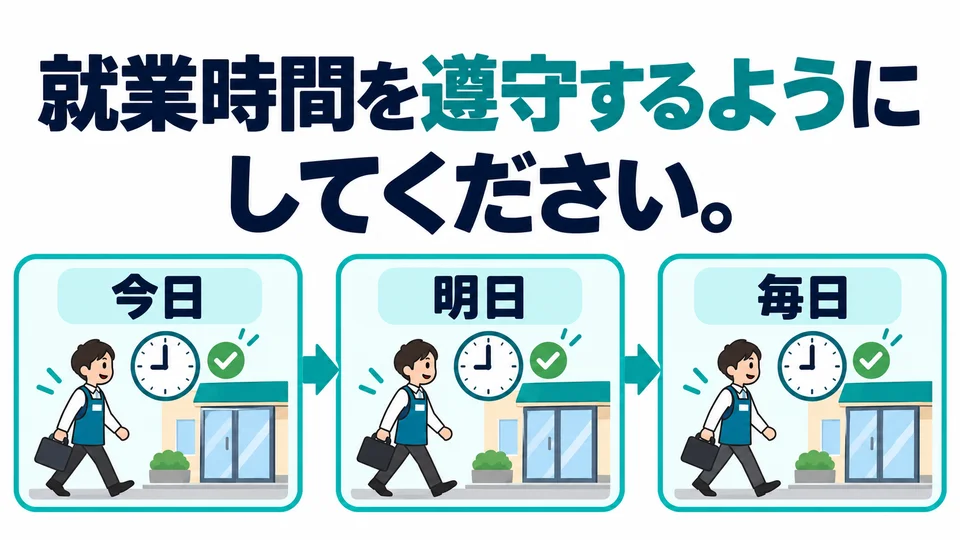
  5. Keeping to the work schedule is an ongoing expectation. The reminder asks the person to stay mindful and make it a habit.
    Keeping to the work schedule is an ongoing expectation. The reminder asks the person to stay mindful and make it a habit.

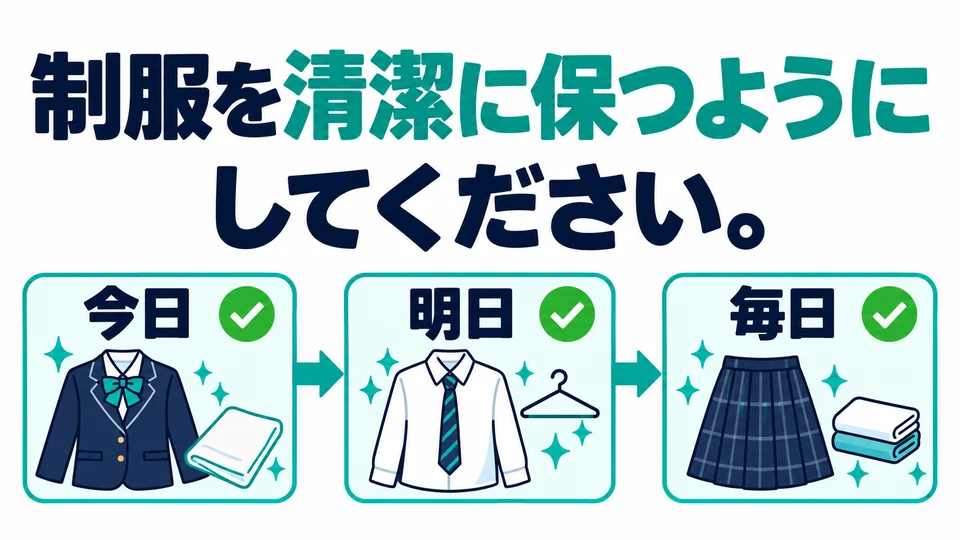
  6. Keeping the uniform clean focuses on maintaining a condition. It reminds the person to care for cleanliness and neatness day to day.
    Keeping the uniform clean focuses on maintaining a condition. It reminds the person to care for cleanliness and neatness day to day.

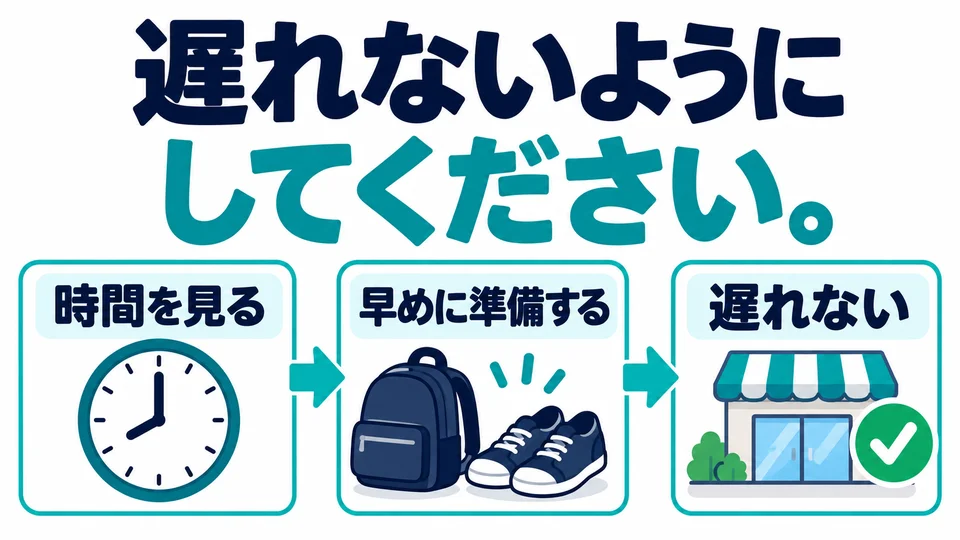
  7. 「遅れない」 emphasizes watching the time and preparing ahead so you can avoid being late.
    「遅れない」 emphasizes watching the time and preparing ahead so you can avoid being late.

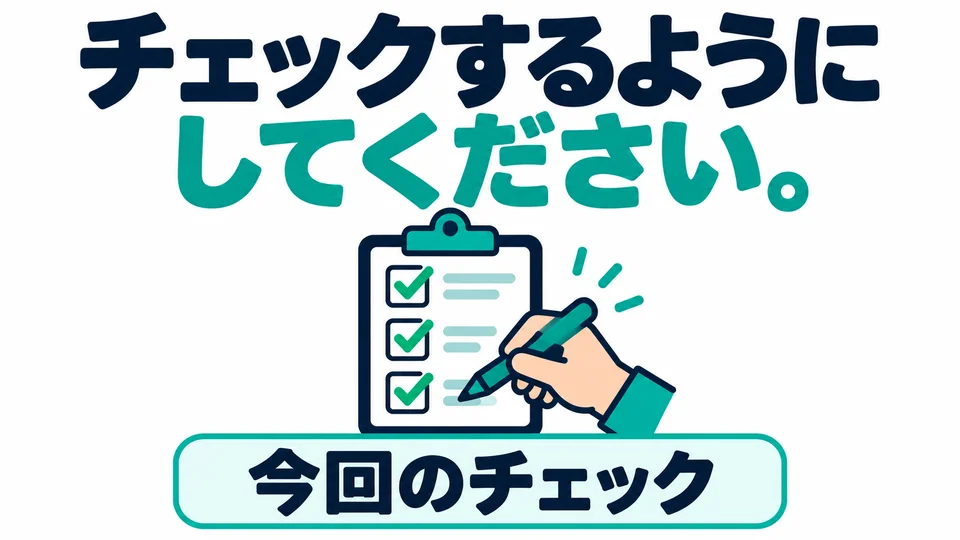
  8. 「チェックする」 emphasizes making sure to check carefully. It can also remind someone about a single important check.

    「チェックする」 emphasizes making sure to check carefully. It can also remind someone about a single important check.

Example sentences

  • 遅れないおくれないokurenaiようにyouniしshiてteください。くださいkudasai

    Please make sure not to be late.

  • チェックちぇっくchekkuするsuruようにyouniしshiてte

In a conversation

  • A
    明日あすから新しくあたらしくアルバイトあるばいとを始めます。はじめます

    A: I'm starting a new part-time job from tomorrow.

  • B
    そうですか。か就業しゅうぎょう時間じかんを遵守じゅんしゅ

Check yourself

  1. Level 1 · Recognise

    Which sentence is correct?

  2. Level 1 · Recognise

    Listen and choose the meaning

  3. Level 2 · Build

    Put the words in order

    Please make sure to observe the working hours.

  4. Level 3 · Use

    What goes in the blank?

    遅れ してください。

    Please make sure not to be late.

More grammar in this theme

  • 〜ようにしてくださいgentle request to make sure

More JLPT N4 grammar

Keep practising

Test your Japanese vocabulary12 adaptive questions, freeCheck your pronunciationRead aloud and get a scorePractise verb forms10-question conjugation quizSee the whole courseGrammar, vocabulary and quizzes by theme
ください。くださいkudasai

Please make sure to check.

する
ように
し
て
ください。ください

B: I see. Please make sure to observe the working hours.

  • A
    はい、はい分かりました。わかりました

    A: Yes, I understand.

  • B
    それから、から身だしなみみだしなみも大切なたいせつなので、で制服せいふくを清潔せいけつに保つにたもつようにしてください。ください

    B: Also, appearance is important, so please make sure to keep your uniform clean.

Beginner 3
Social Life
More quizzesOpen this lesson’s quizzes in the course
〜ことになっていますestablished rule or convention
〜ように、〜action toward a desired result
お〜ください/ご〜くださいformal polite instruction
〜そうです(様態)looks about to happen
〜ておきますleave in a state
〜てしまいましたcompletely finished
〜ことになっていますsettled plan or assignment
Previous〜ように、〜
Nextお〜ください/ご〜ください
See all 138
Nをいただきますhumbly receive something
Nをくださいますsomeone respectfully gives me something
〜ていただきますhumbly receive someone’s help
〜てくださいましたrespectful help received
受身形passive voice, receiver in focus
〜みたいですseems, based on clues
〜ところですaction stage right now
〜てきますgradual approach or appearance