
Japanese grammar · ≈ JLPT N4 · Beginner 3
〜ていただきます~te itadakimasu
humbly receive someone’s help
Use 「〜ていただきます」 for help received from someone you respect, expressing humility and gratitude.
- Pattern
- 〜ていただきます
- Romaji
- ~te itadakimasu
- JLPT (approx.)
- ≈ N4
- Course level
- Beginner 3
- Theme
- Helping Each Other
How it works
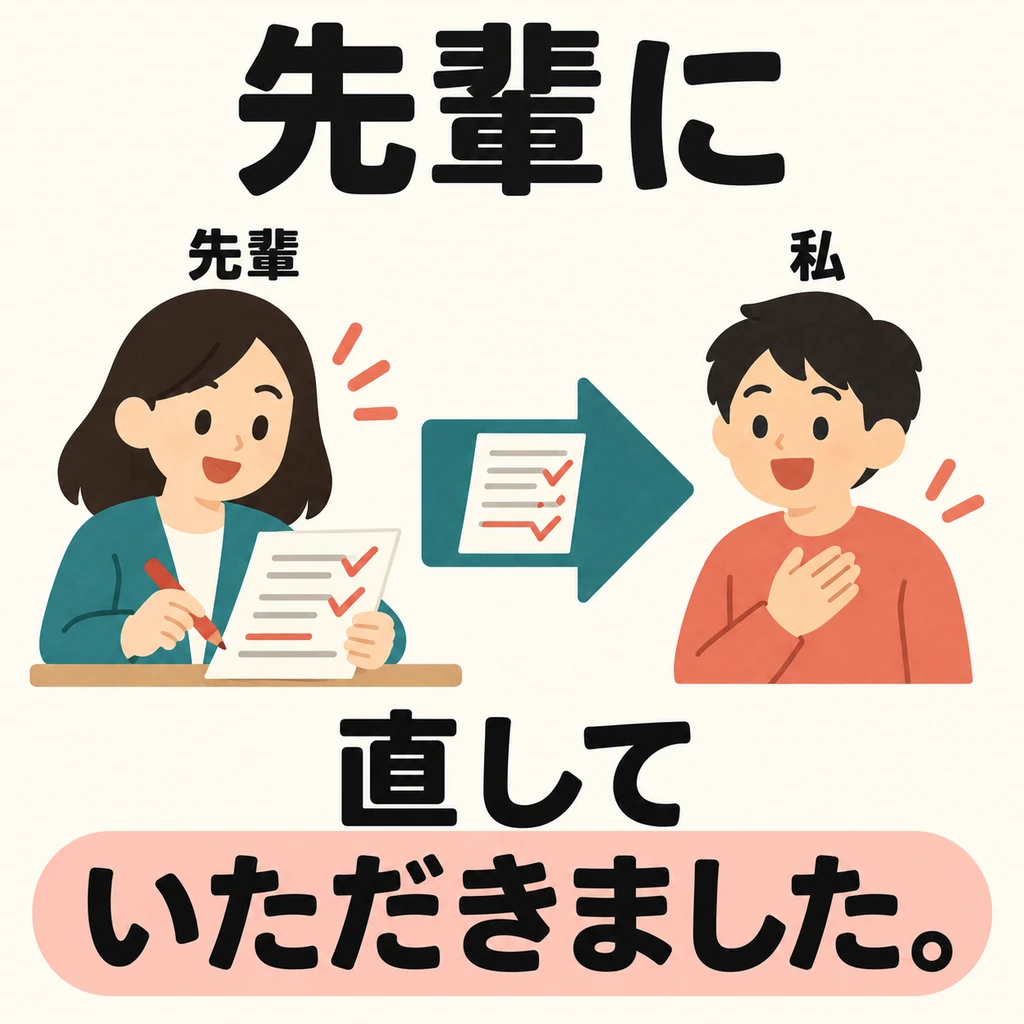
Who corrected the report? My senior did, and I received the help. The arrow points toward me, the beneficiary.
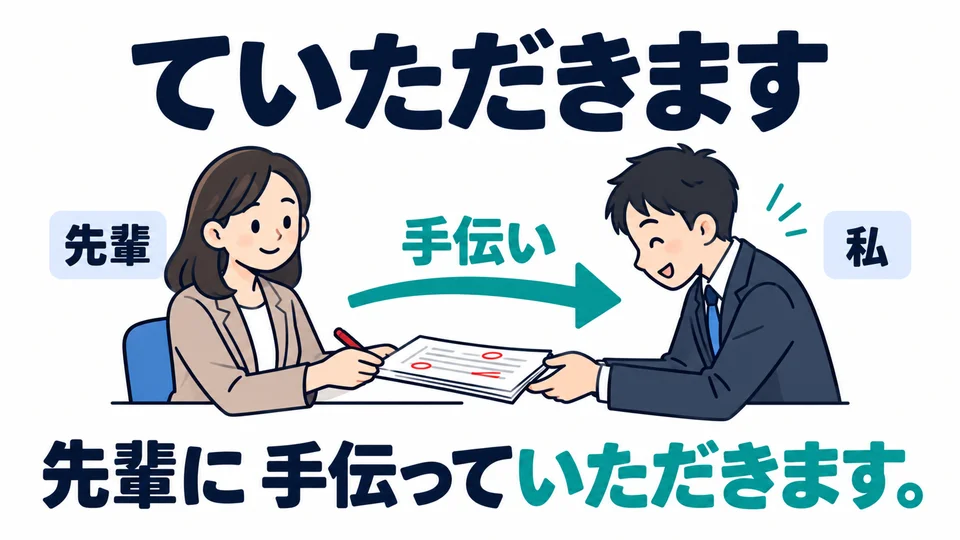
Use this humble expression when talking about help received from an elder, a superior, or someone you wish to show respect to.
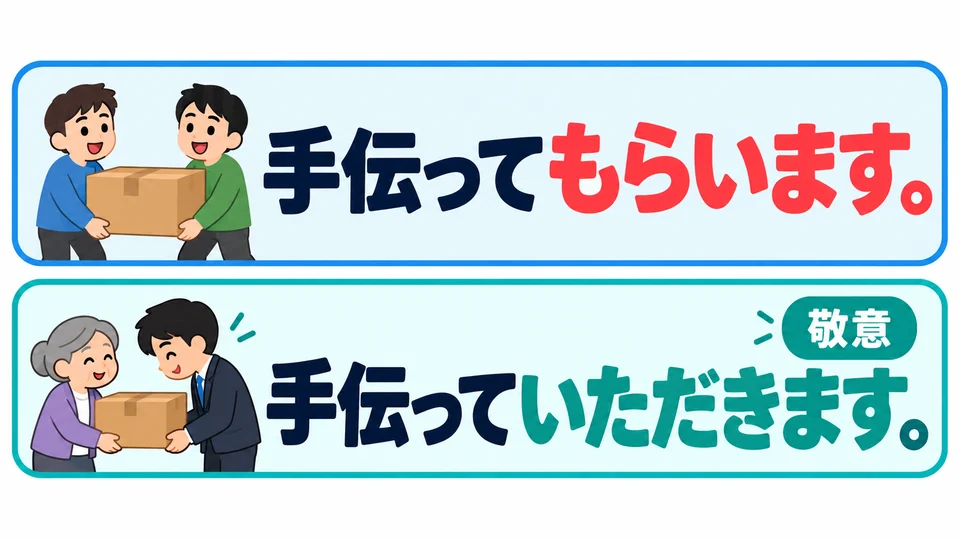
「てもらいます」 also means receiving help. Using 「ていただきます」 shows greater respect for the person helping you.
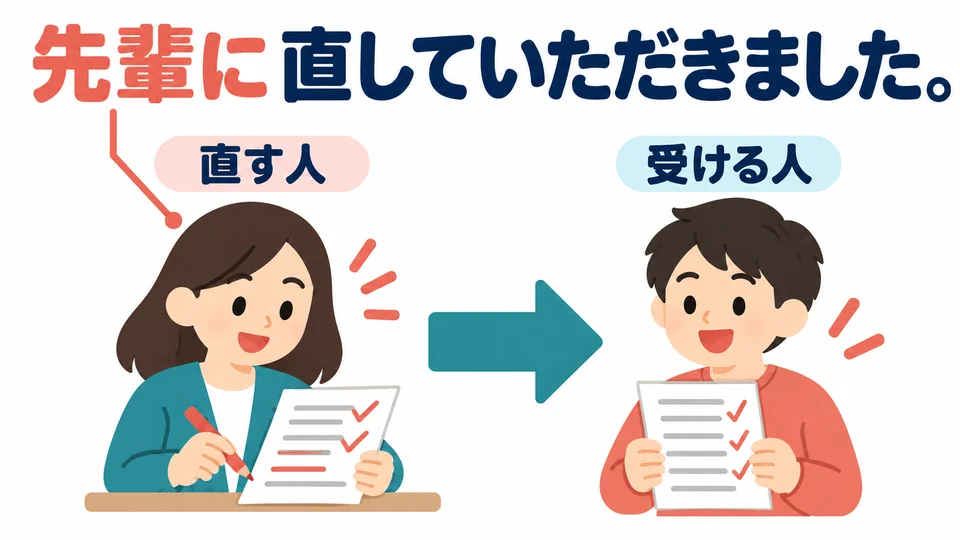
「先輩に」 identifies the person who helped me. It was my senior who actually corrected the report.
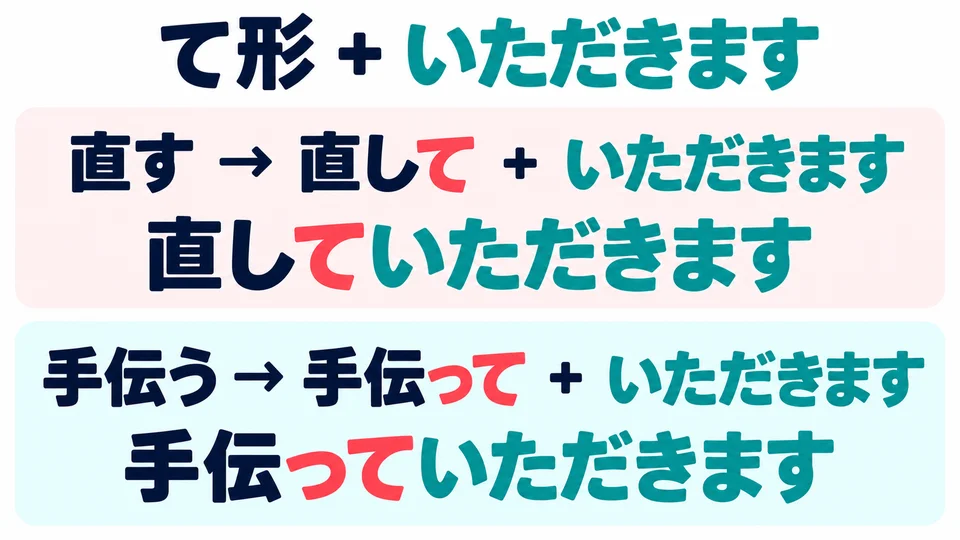
Use the verb’s て-form: 直す→直して, 手伝う→手伝って. Then add いただきます.
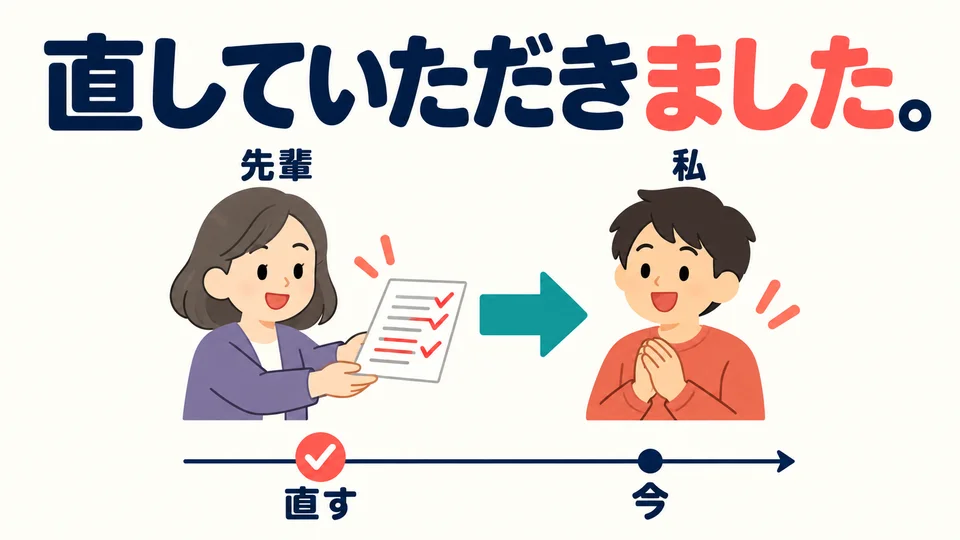
For help already received, say 「ていただきました」. In the picture, the report has already been corrected.
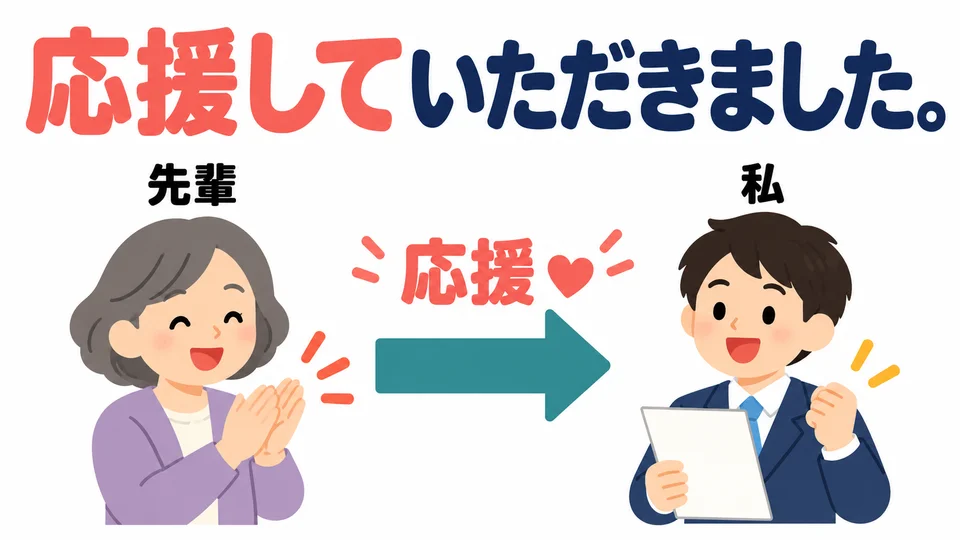
Help can also be emotional support. 「応援していただきました」 means that someone encouraged or supported you.
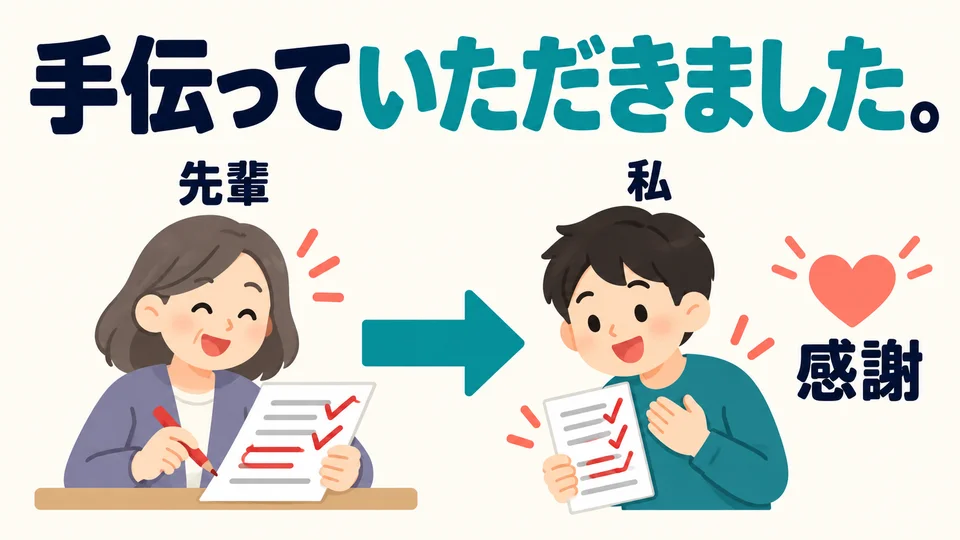
This sentence explains that the speaker received help. It also carries a sense of gratitude.
Example sentences
- 手伝っtetsudatてteいただきました。itadakimashita
I had someone help me.
- 応援ouenしshiてteいただきました。itadakimashita
I received encouragement from others.
In a conversation
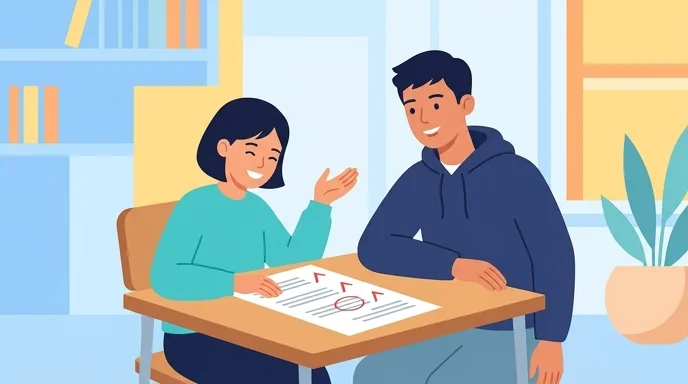
- Aレポート、もう出しましたか。
A: Have you submitted the report yet?
- Bはい、先輩に直していただきました。
B: Yes, I had my senior review and correct it for me.
- A
Check yourself
Which sentence is correct?
- 先生に推薦状を書いていただきました。
- 先生に推薦状を書くていただきました。
- 先生に推薦状を書かっていただきました。
- 先生に推薦状を書いていただきましたました。
Show answer
Answer: A 先生に推薦状を書いていただきました。
Which sentence is correct?
- 先輩にレポートを直していただきました。
- 先輩にレポートを直していただいた。
- 先輩にレポートを直さしていただきました。
- 先輩にレポートを直ししていただきました。
Show answer
Answer: A 先輩にレポートを直していただきました。
Which sentence is correct?
- お世話になった方に報告をしていただきました。
- お世話になった方に報告をしたいただきました。
- お世話になった方が報告をしていただきました。
- お世話になった人に報告をしていただきましたました。
Show answer
Answer: A お世話になった方に報告をしていただきました。
More grammar in this theme
- 〜ていただきますhumbly receive someone’s help