
〜てあげます~te agemasu
Te agemasu (〜てあげます) means “do something to help someone”.
I'll carry it for you
Use 「〜てあげます」 when you do something to help or benefit another person, often someone close.
In the course
How it works
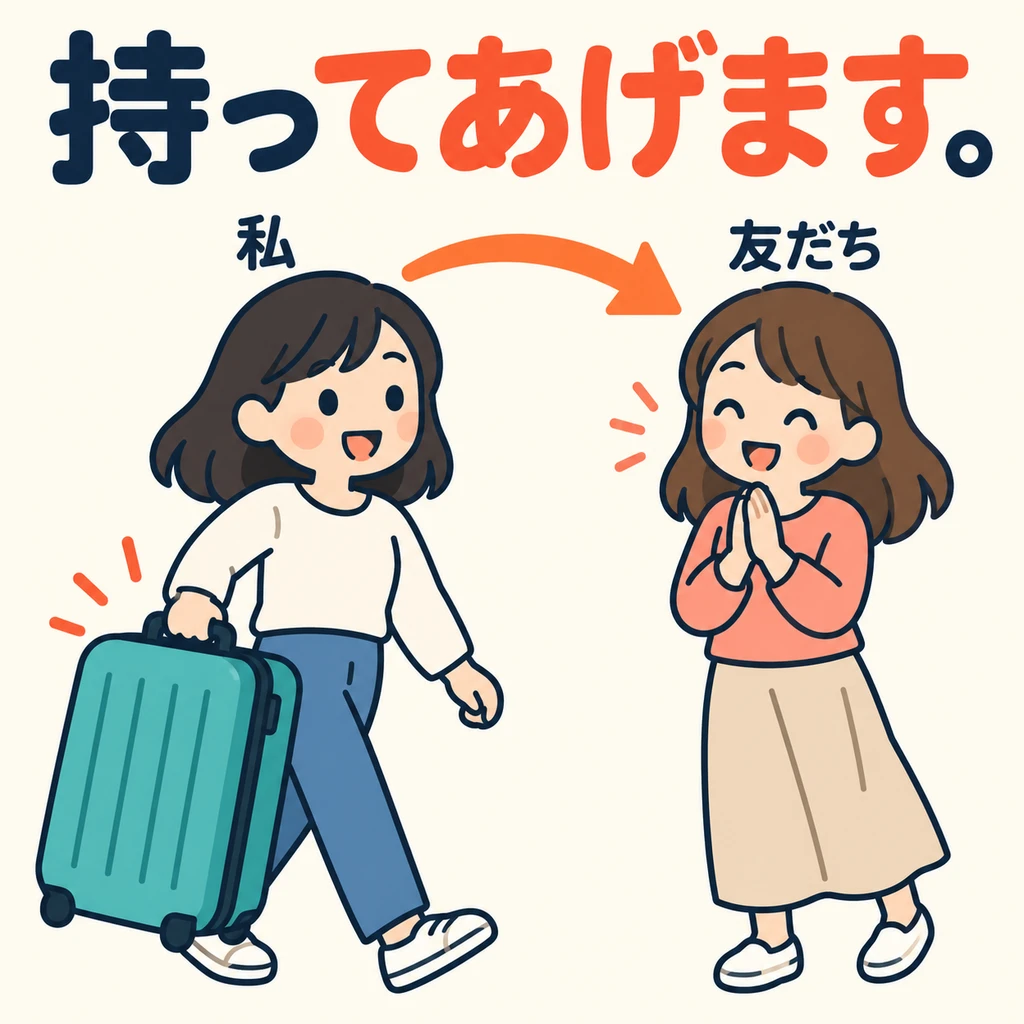
Your friend’s luggage is heavy, so you carry it for her. Who is doing the action in the picture, and who gets help?
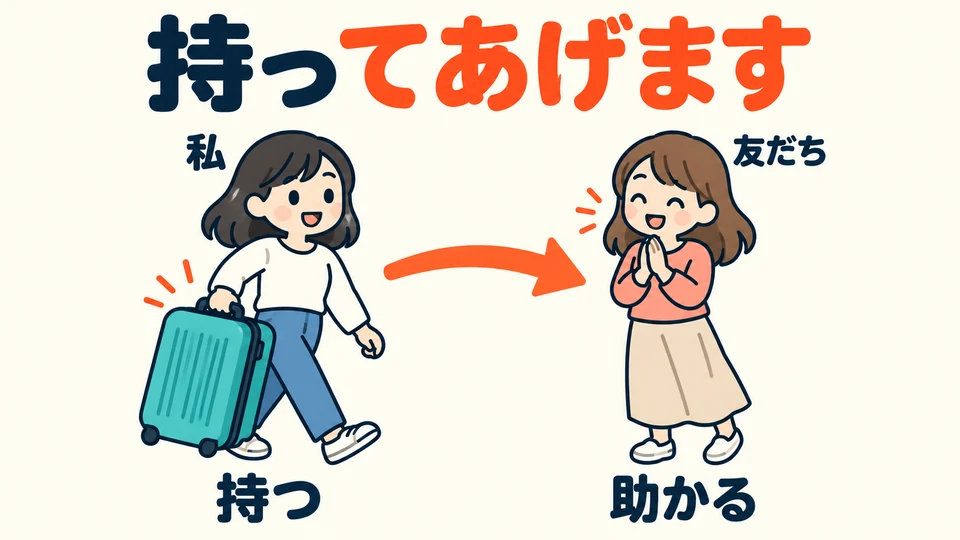
The arrow points from the helper to the friend: I do this action to help or benefit the other person.
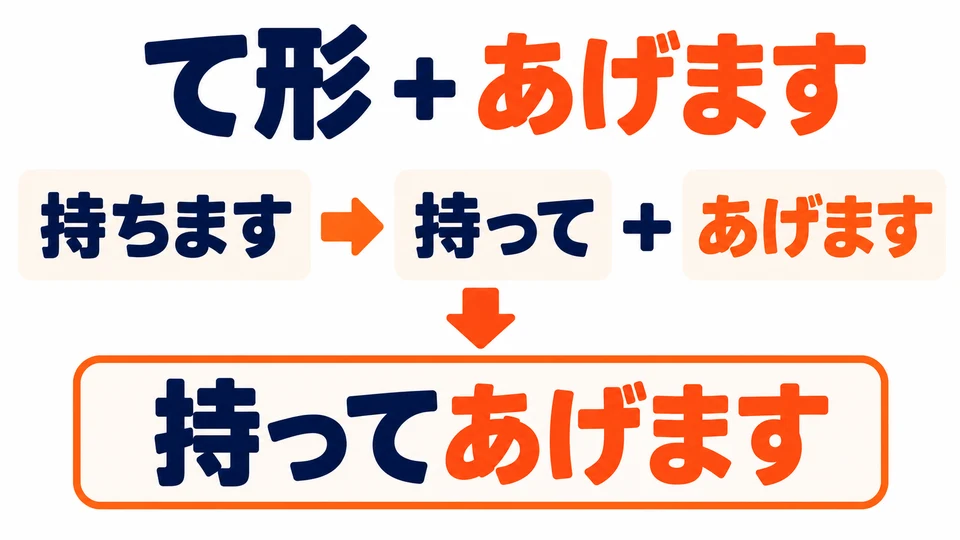
Verb て-form + あげます. 「持ちます」 becomes 「持ってあげます」.
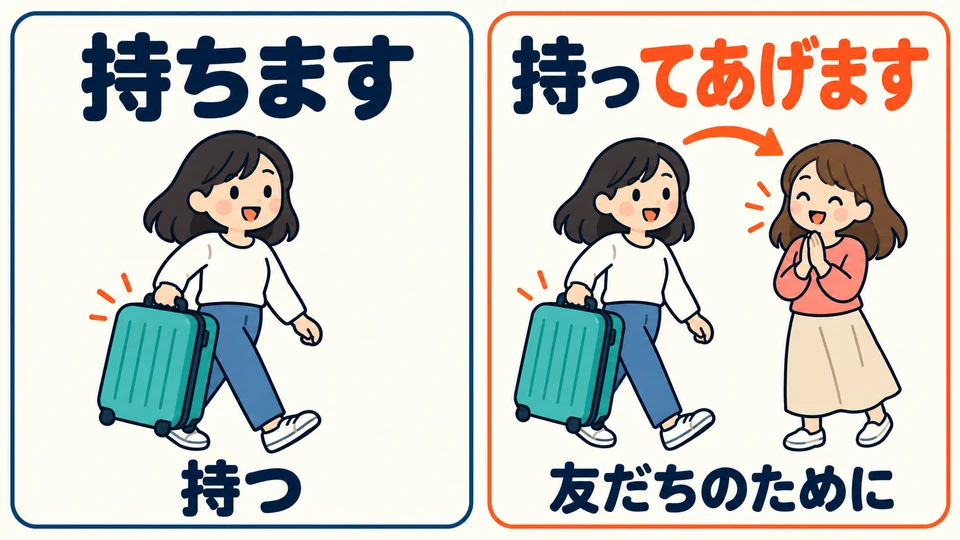
「持ちます」 simply says you carry the luggage. Adding 「てあげます」 emphasizes that you do it for someone else.
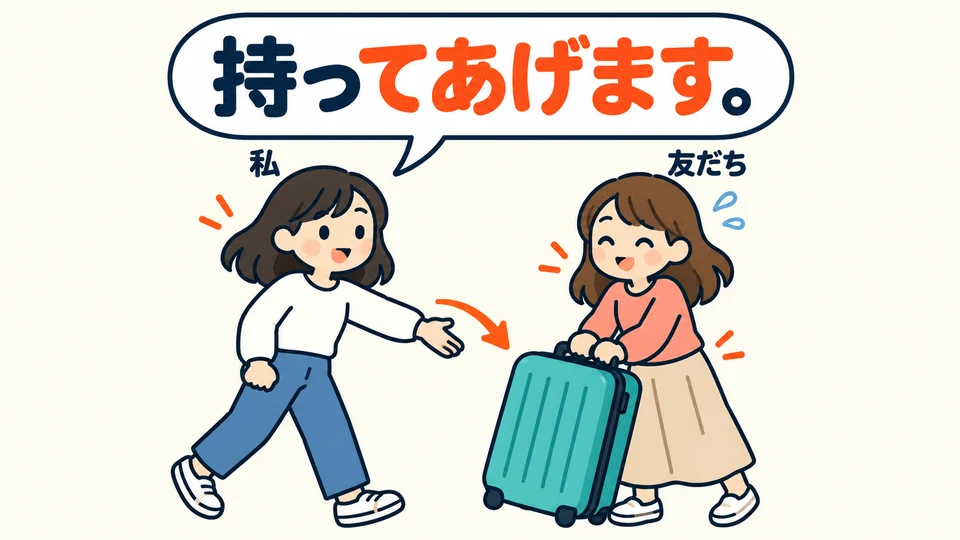
When you see that a friend needs help, you can use 「持ってあげます」 to offer to carry it for them.
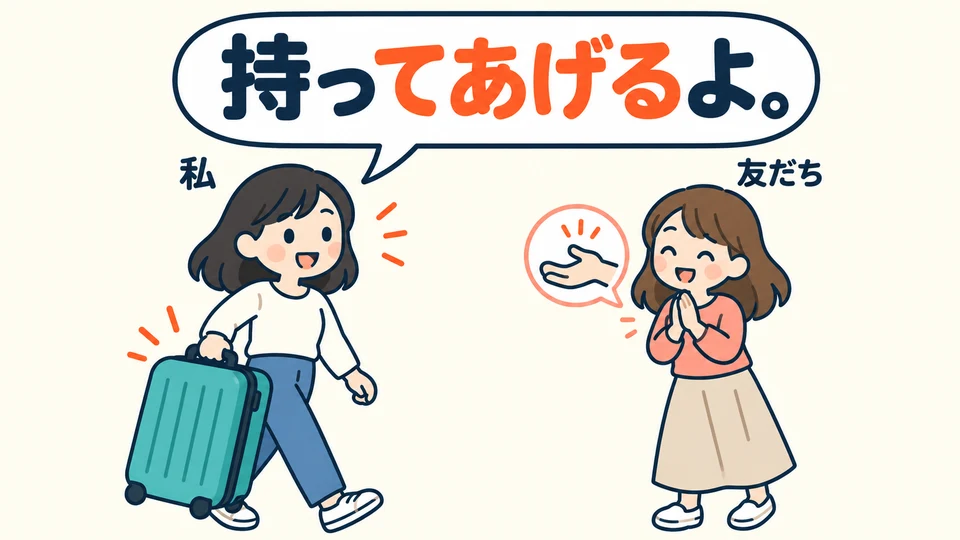
When a friend asks for help, you can also reply 「持ってあげるよ」 to say you’re willing to carry it for her.
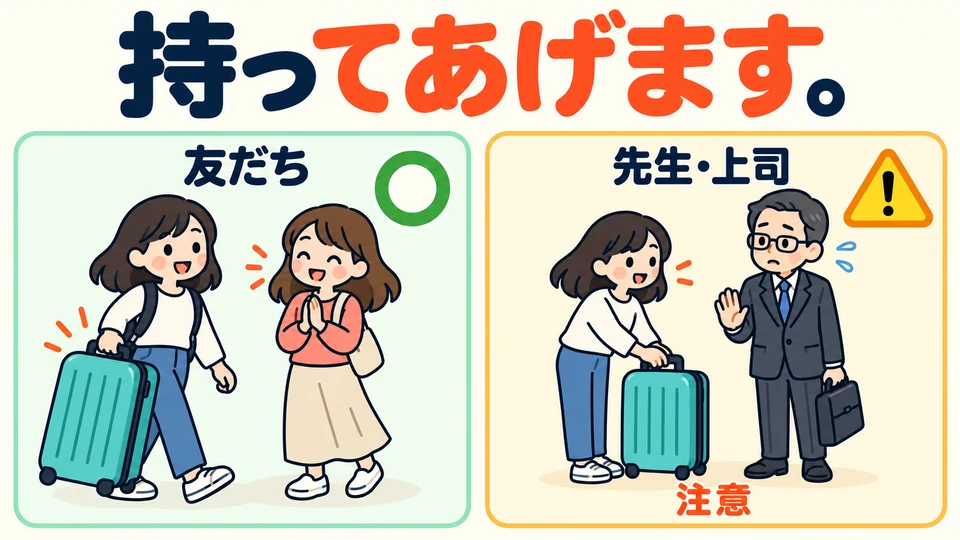
This expression carries the sense of “I’m doing you a favor.” Saying it directly to an elder or your boss may sound impolite.
Example sentences
- 持っmotてteあげますagemasu
I'll carry it for you
- 荷物nimotsuがga重omoそうなsounaのnoで、de持っ
In a conversation

- Aねえ、これ持ってくれる?
A: Hey, can you hold this for me?
- Bうん、持ってあげるよ。重いね。
B: Sure, I'll carry it for you. It's heavy.
Check yourself
Level 1 · Recognise
Which sentence is correct?
Level 1 · Recognise
Listen and choose the meaning
Level 2 · Build
Put the words in order
The luggage looks heavy, so I'll carry it for you.
Level 3 · Use
What goes in the blank?
友達が困っているので、手伝っ ます。
My friend seems to be in trouble, so I'll help them out.
More grammar in this theme
- 〜てあげますdo something to help someone