
Japanese grammar · ≈ JLPT N4 · Beginner 3
〜ている間に~te iru aida ni
during an ongoing action
Use 「〜ている間に」 for a second action that happens within the time an ongoing action continues.
How it works
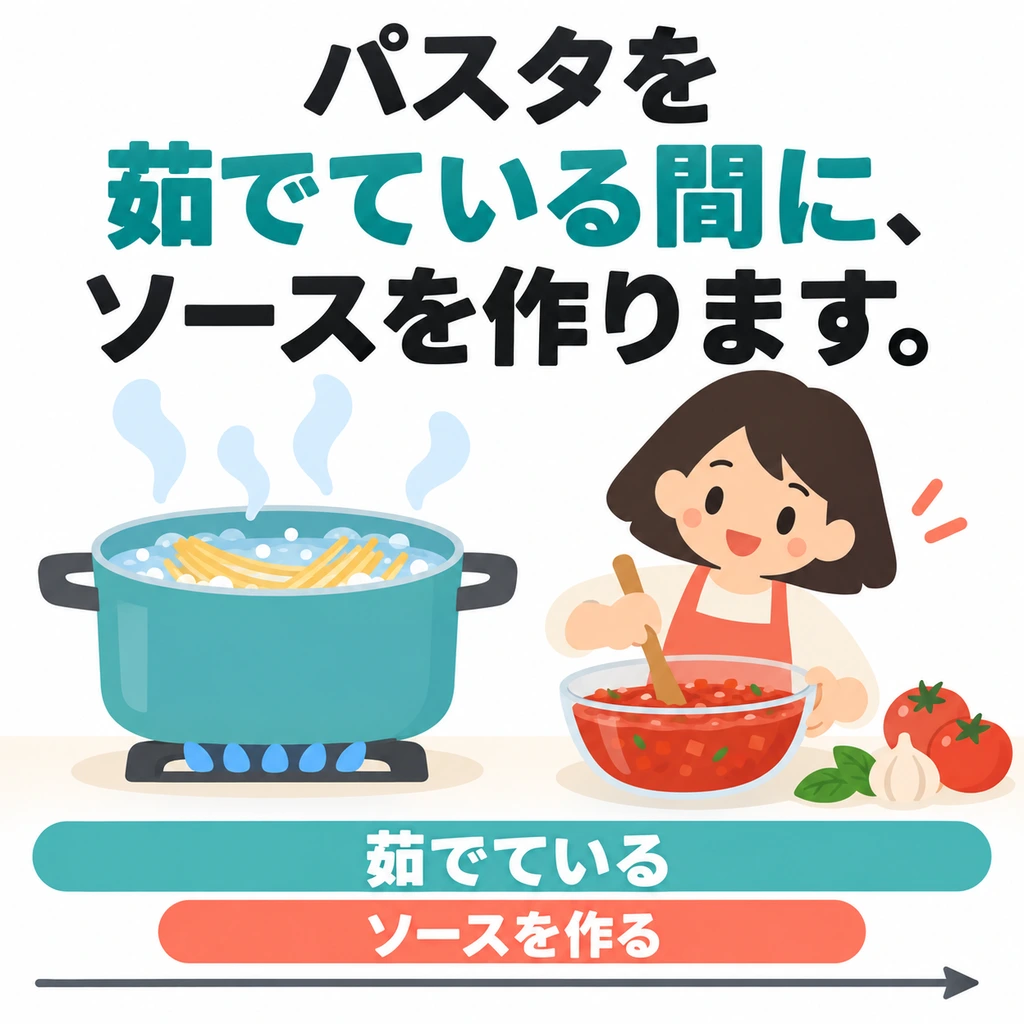
You can make the sauce while the pasta is boiling. Look at the picture: how are the two tasks timed?
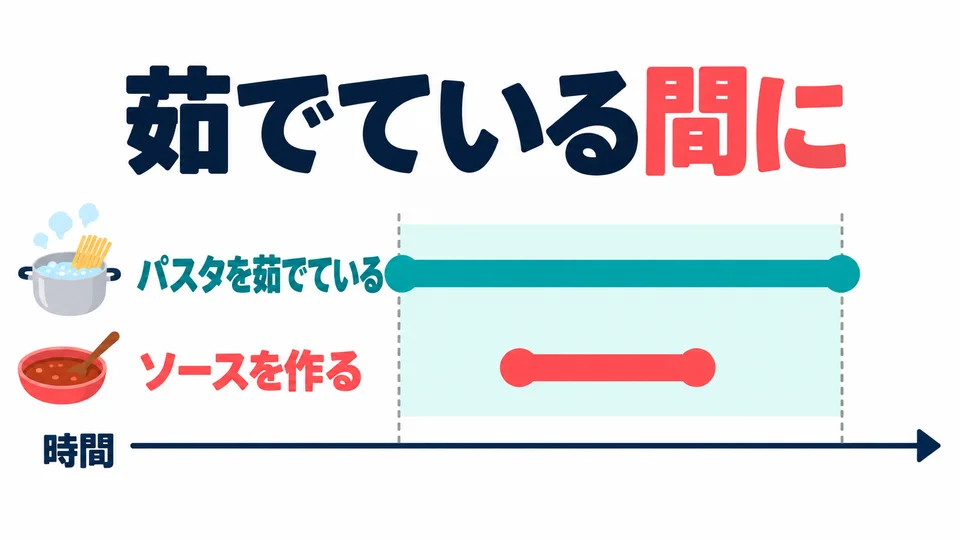
The first action continues for a period of time. The second action takes place within that period.
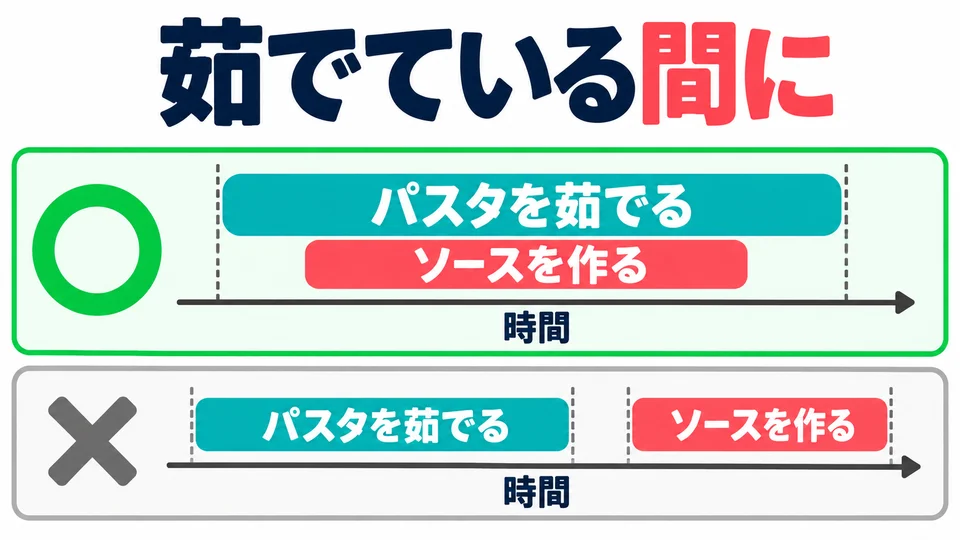
The sauce is made while the pasta is boiling, rather than waiting until the pasta is cooked.
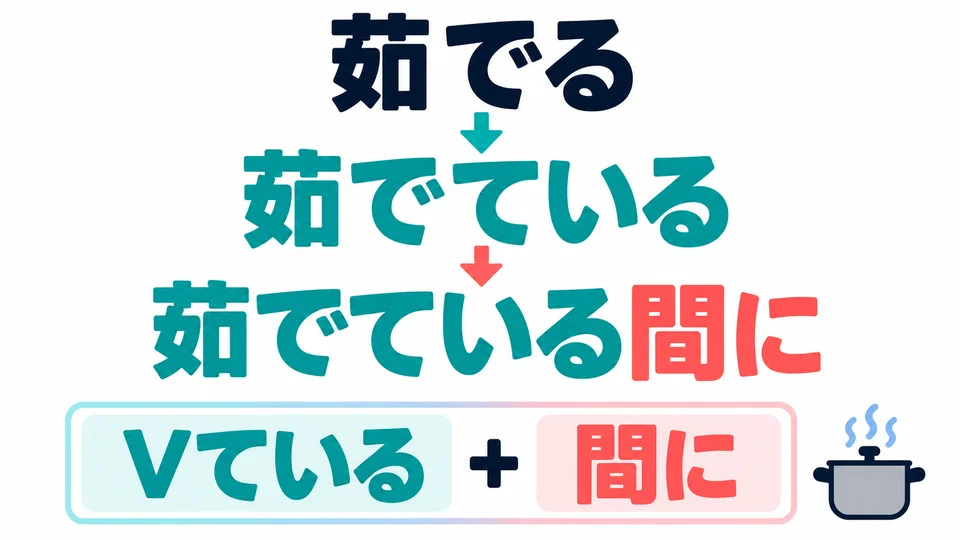
Use the verb’s 「ている」 form, then add 「間に」, as in 「茹でている間に」.
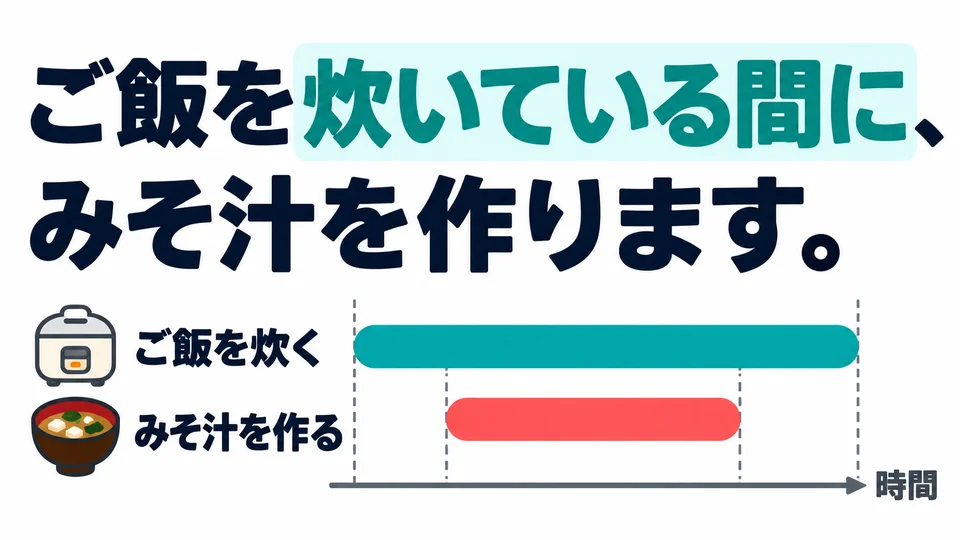
You can use this pattern for making miso soup while rice is cooking, too: another task is done during the rice-cooking time.
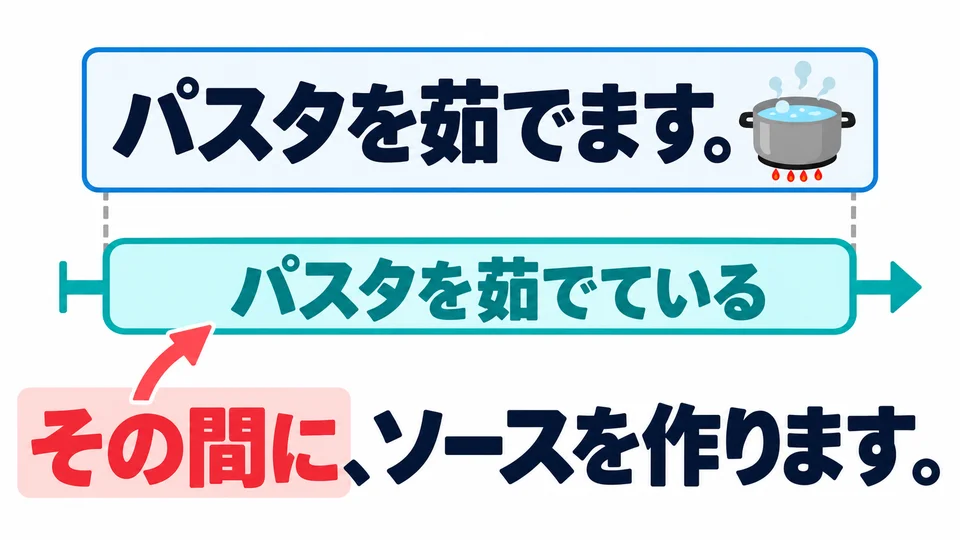
After mentioning that the pasta is boiling, you can use 「その間に」. 「その」 refers to the time period just mentioned.
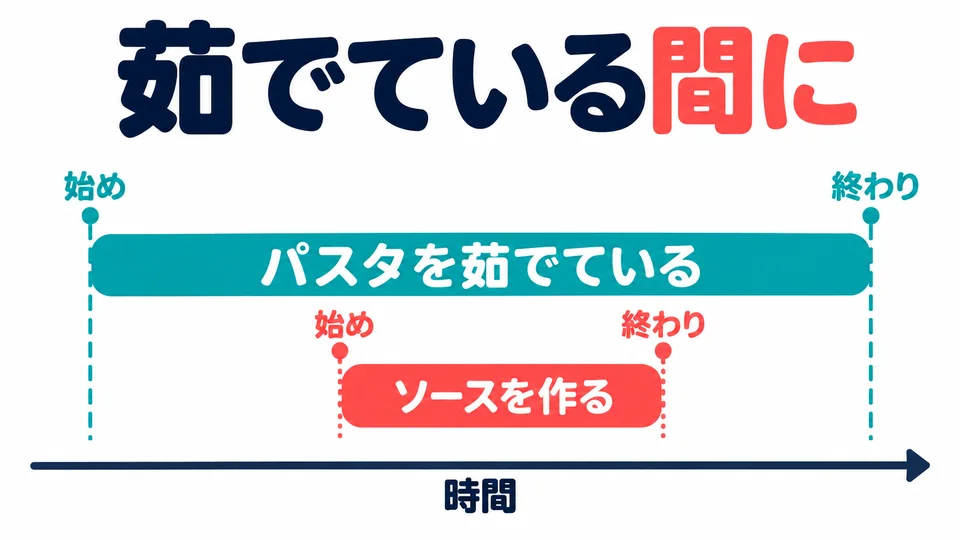
Notice 「間に」: it tells us what was done within that period. The two tasks do not have to start and end together.
Example sentences
- 茹でyudeてteいるiru間aidaに、niソースsoosuをo作ります。tsukurimasu
While it is boiling, make the sauce.
In a conversation
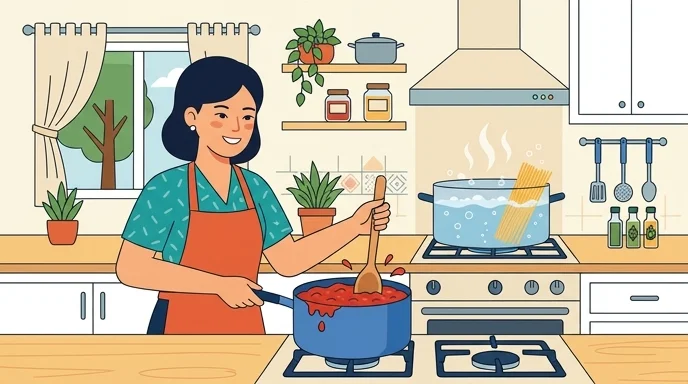
- Aパスタはどうやって作りますか。
A: How do you make pasta?
- Bパスタを茹でます。その間に、
Check yourself
Level 1 · Recognise
Which sentence is correct?
Level 1 · Recognise
Listen and choose the meaning
Level 2 · Build
Put the words in order
I make the sauce while it is boiling.
Level 3 · Use
What goes in the blank?
ご飯を炊いて みそ汁を作ります。
While cooking rice, I will make miso soup.
More grammar in this theme
- 〜ている間にduring an ongoing action