JPEdLab iconJPEdLab
Save history

Create an account and play

Explore first, then save your progress whenever you are ready. No email address is required.

Start free
  1. Japanese grammar
  2. JLPT N4 grammar
  3. お〜になります/ご〜になります

お〜になります/ご〜になりますo~ ni narimasu / go~ ni narimasu

O ni narimasu (お〜になります) means “honorific action form”.

お取りおとりotoriにniなりますnarimasu

To take (Honorific)

Use 「お〜になります/ご〜になります」 for another person’s actions, choosing お or ご to fit the word.

In the course›

How it works

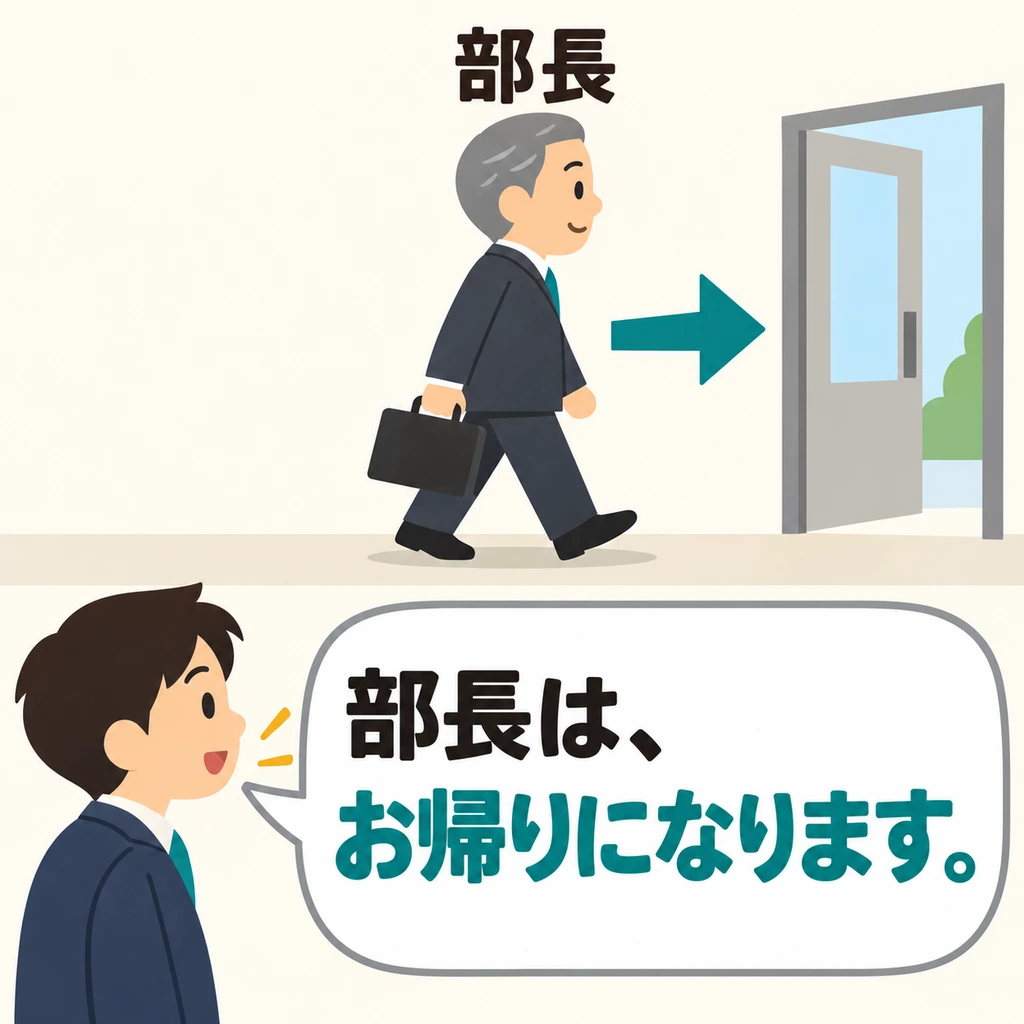
  1. Look at who is going home. The colleague uses honorific language to show respect for the department head’s action.
    Look at who is going home. The colleague uses honorific language to show respect for the department head’s action.

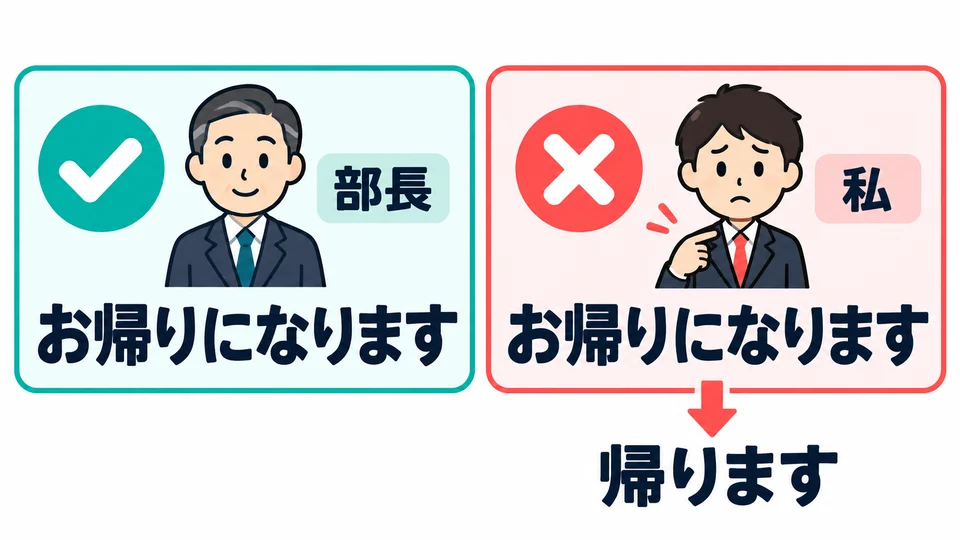
  2. First check who performs the action: use this form for the department head’s actions, but not for your own.
    First check who performs the action: use this form for the department head’s actions, but not for your own.

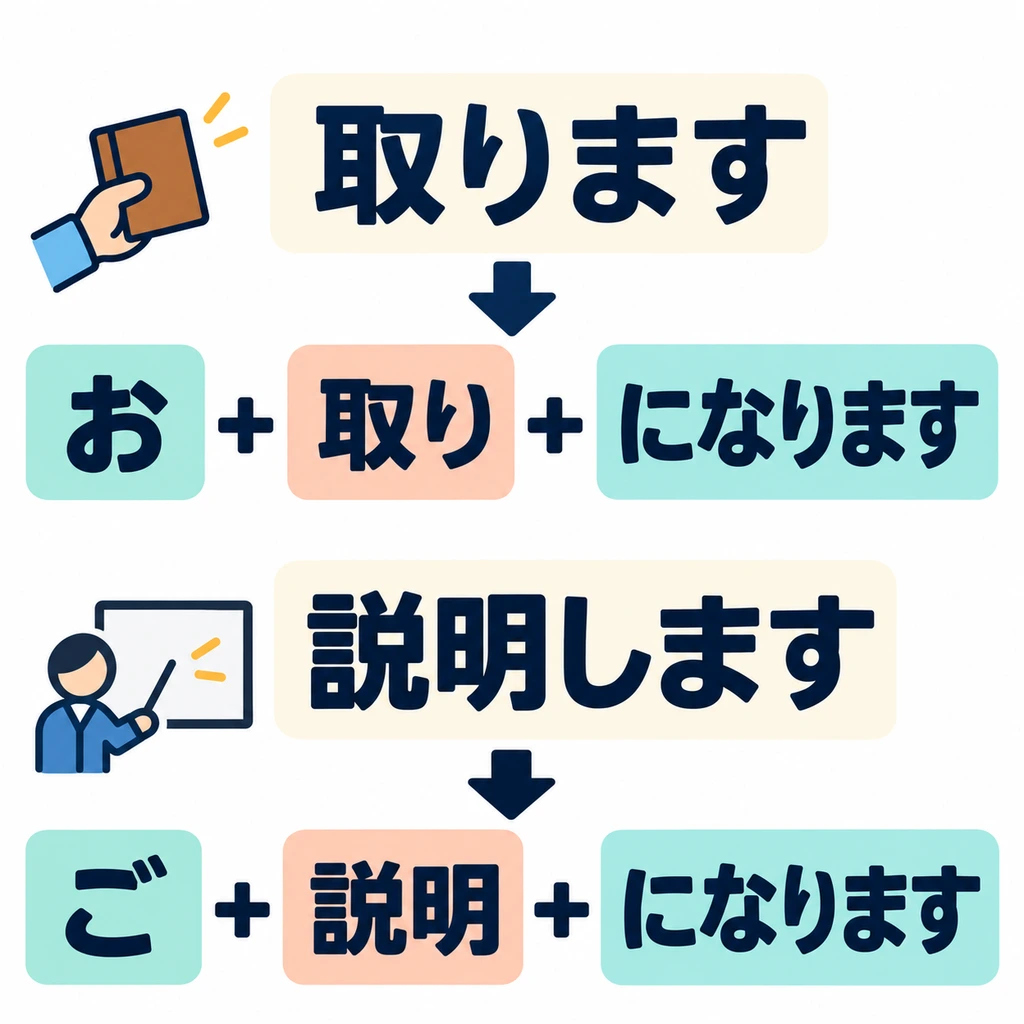
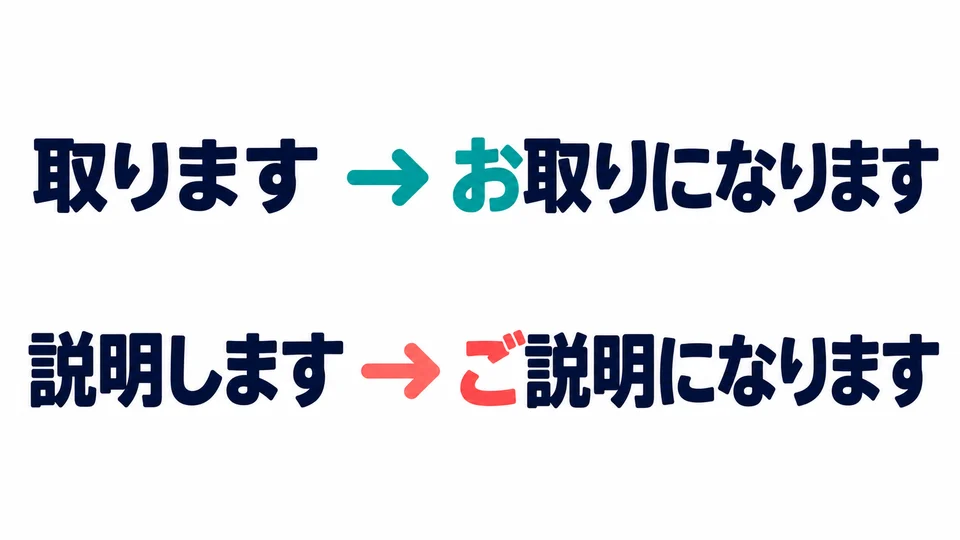
  3. Look at the two sets of blocks: 取ります takes お, and 説明します takes ご. Both end with になります.
    Look at the two sets of blocks: 取ります takes お, and 説明します takes ご. Both end with になります.

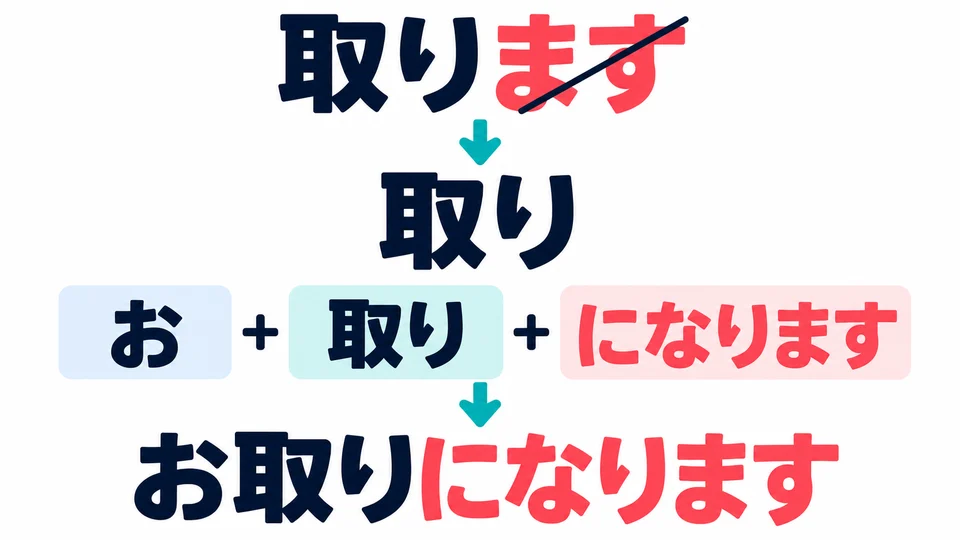
  4. For an ordinary verb, first remove ます: 取ります leaves 取り, giving お取りになります.
    For an ordinary verb, first remove ます: 取ります leaves 取り, giving お取りになります.

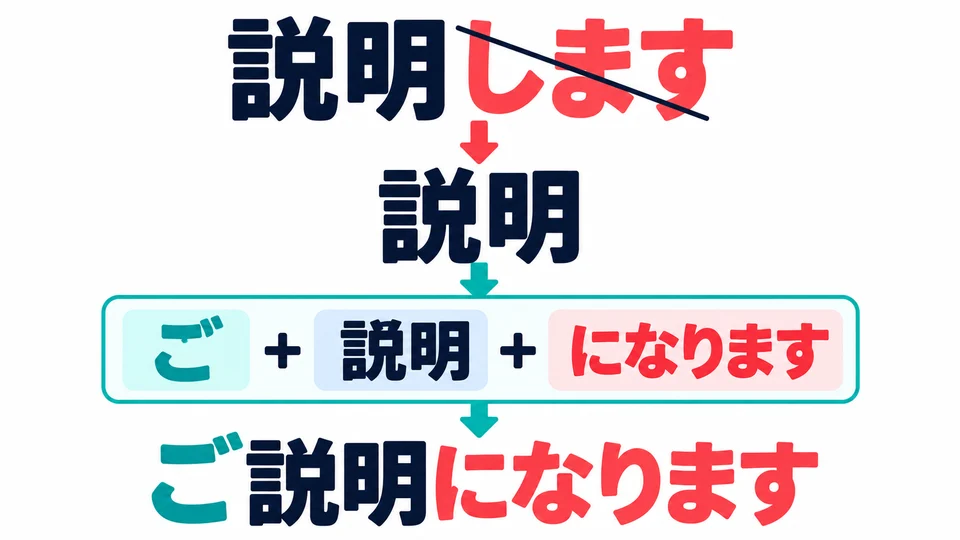
  5. Remove the whole します from 説明します. This leaves 説明, giving ご説明になります.
    Remove the whole します from 説明します. This leaves 説明, giving ご説明になります.

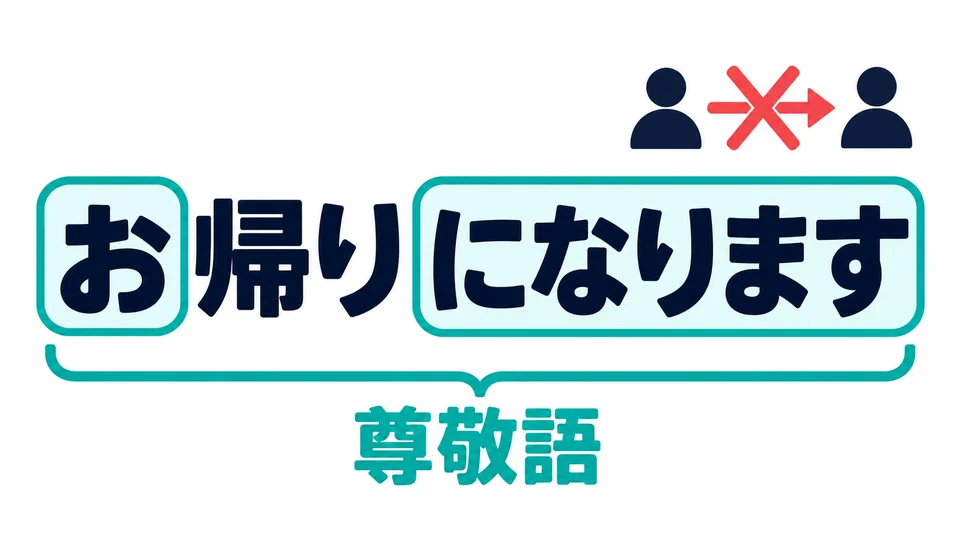
  6. Here, になります is simply part of the honorific form. It does not mean becoming something or changing state.
    Here, になります is simply part of the honorific form. It does not mean becoming something or changing state.

  7. お and ご are not freely interchangeable. Ordinary verbs usually take お; Sino-Japanese words like 説明 usually take ご.
    お and ご are not freely interchangeable. Ordinary verbs usually take お; Sino-Japanese words like 説明 usually take ご.

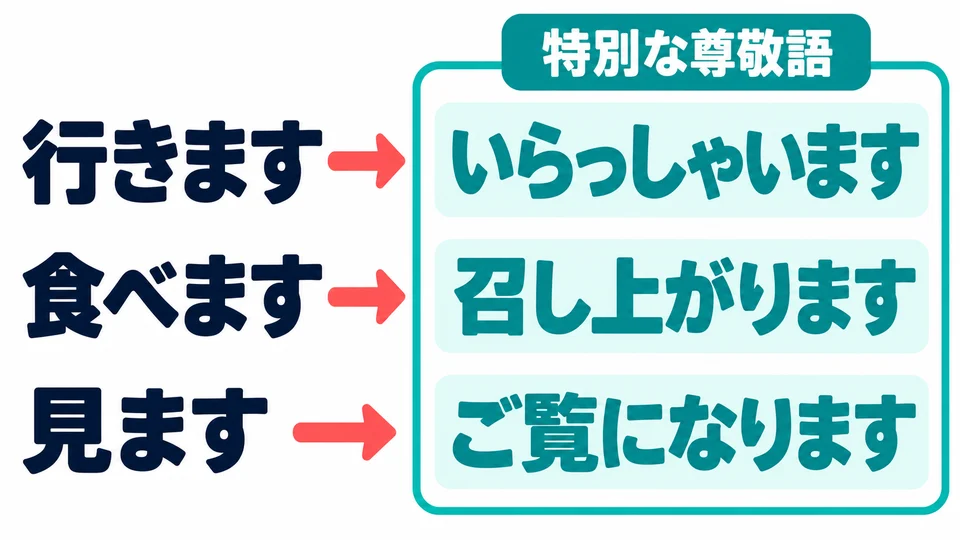
  8. This pattern does not work for every verb. For verbs with a special honorific form, learn that special form.
    This pattern does not work for every verb. For verbs with a special honorific form, learn that special form.

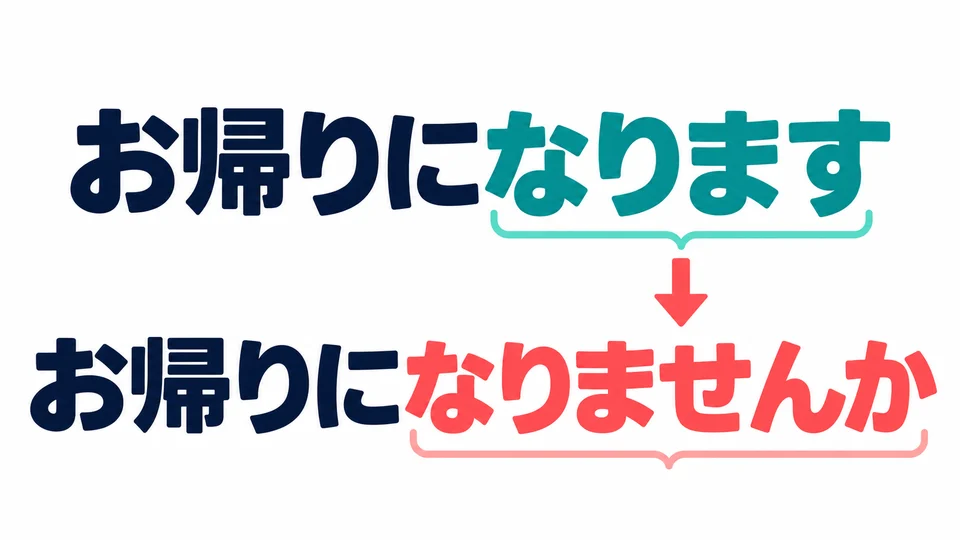
  9. To ask whether the department head is not going home yet, use お帰りになりませんか. The negative ending comes at the end.

Example sentences

  • お取りおとりotoriにniなりますnarimasu

    To take (Honorific)

  • ご説明ごせつめいgosetsumeiにniなりますnarimasu

    To explain (Honorific)

In a conversation

  • A
    部長ぶちょうはわまだお帰りおかえりになりませんか。か

    A: Has the manager not returned yet?

  • B
    いいえ、いいえもうすぐお帰りおかえりになると

Check yourself

  1. Level 0 · Conjugate

    Use お〜になります / ご〜になります to show respect. お/ご〜になる(尊敬)

    社長は午後からお客様の会社へ(出かけますでかけます)。

  2. Level 1 · Recognise

    Which sentence is correct?

  3. Level 1 · Recognise

    Listen and choose the meaning

  4. Level 2 · Build

    Put the words in order

    The president takes the documents.

  5. Level 3 · Use

    What goes in the blank?

    社長は資料 になります。

    The president will take the documents.

More grammar in this theme

  • お〜になります/ご〜になりますhonorific action form

More JLPT N4 grammar

Keep practising

Test your Japanese vocabulary12 adaptive questions, freeCheck your pronunciationRead aloud and get a scorePractise verb forms10-question conjugation quizSee the whole courseGrammar, vocabulary and quizzes by theme

To ask whether the department head is not going home yet, use お帰りになりませんか. The negative ending comes at the end.

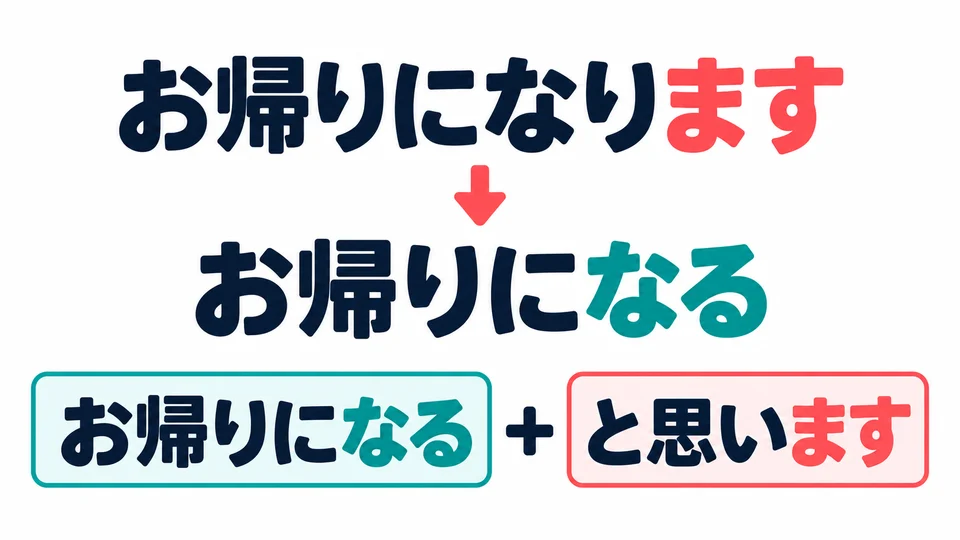
  • When adding と思います in conversation, use the plain form お帰りになる. It still expresses respect.

    When adding と思います in conversation, use the plain form お帰りになる. It still expresses respect.

  • 思います。おもいます

    B: No, I think he will be returning soon.

  • A
    そうですか。かありがとうございました。ございました

    A: I see. Thank you very much.

  • Beginner 3
    Visiting Someone's Home
    More quizzesOpen this lesson’s quizzes in the course
    召し上がります・おっしゃいますspecial honorific verbs
    お〜します/ご〜しますhumble action for others
    〜く/〜に+動詞describe how an action is done
    〜ている間にduring an ongoing action
    〜くします/〜にしますmake something a certain way
    Previous召し上がります・おっしゃいます
    Nextお〜します/ご〜します
    See all 138
    〜たら、〜たdiscovery after an action
    〜そうですprediction from signs
    〜ておきますprepare in advance
    〜てありますpreparation already complete
    〜てあげますdo something to help someone
    〜てもらいますreceive someone’s help
    〜てくれますsomeone does something for me
    Nをいただきますhumbly receive something