
〜てもらいます~te moraimasu
Te moraimasu (〜てもらいます) means “receive someone’s help”.
get someone to help
Use 「〜てもらいます」 from the receiver’s viewpoint when someone helps you, whether you ask or they offer.
In the course
How it works
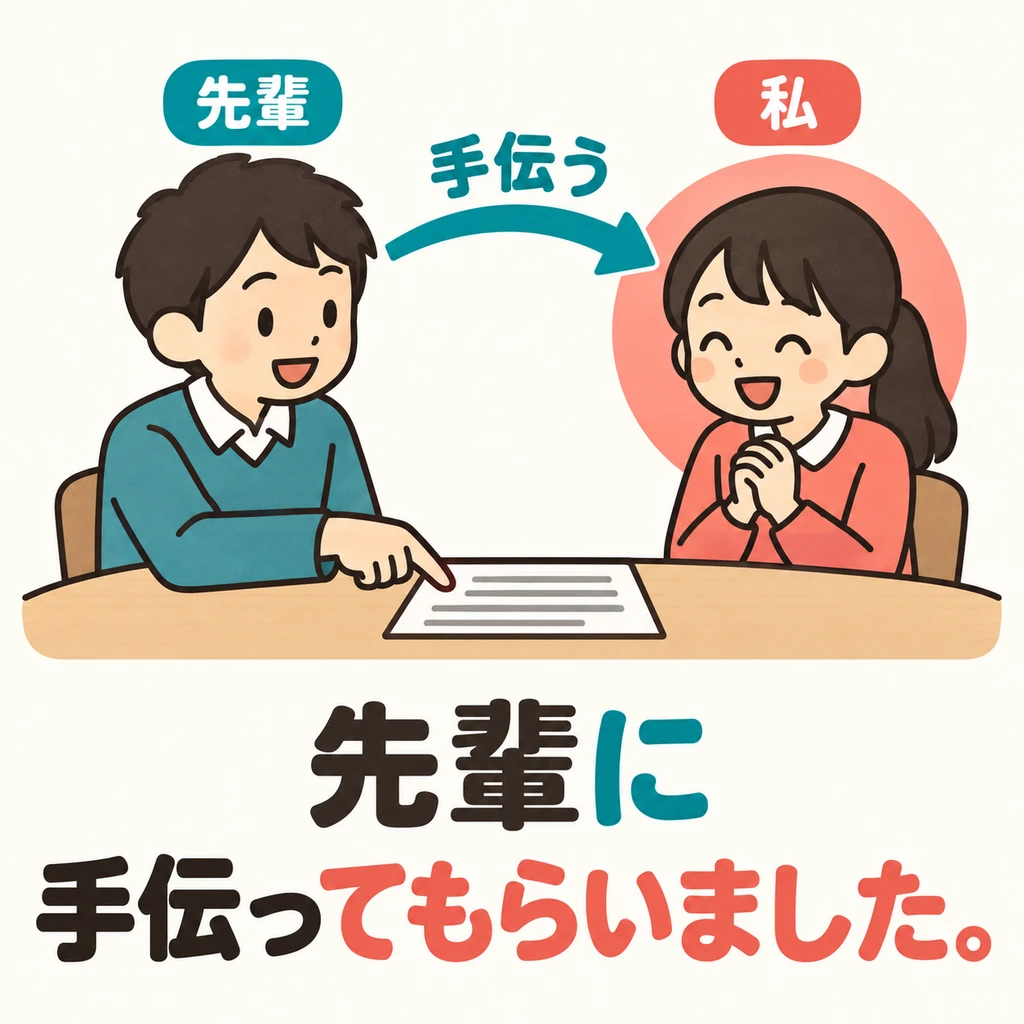
Who helps, and who benefits in the picture? 「てもらいます」 expresses the action from the receiver’s point of view.
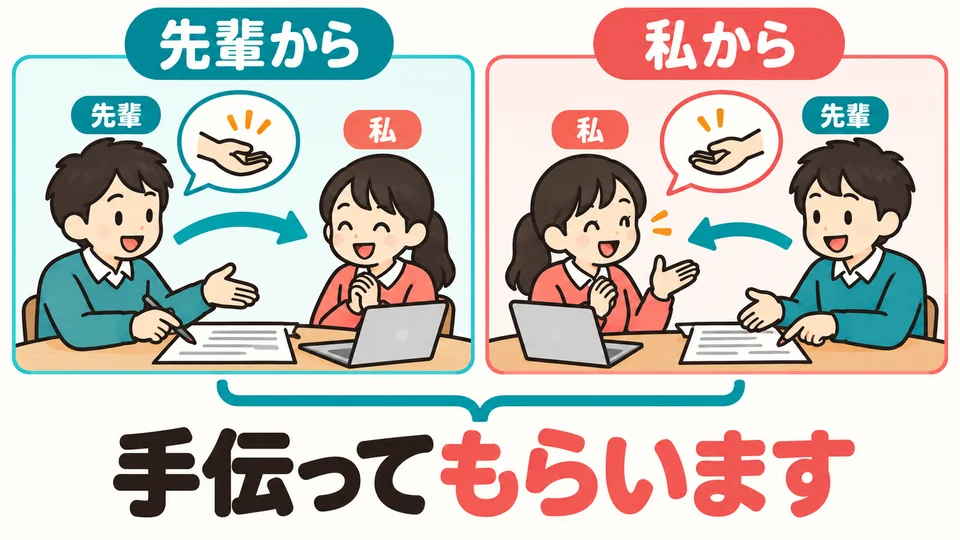
You can use this expression when someone offers help or when you ask them to help.
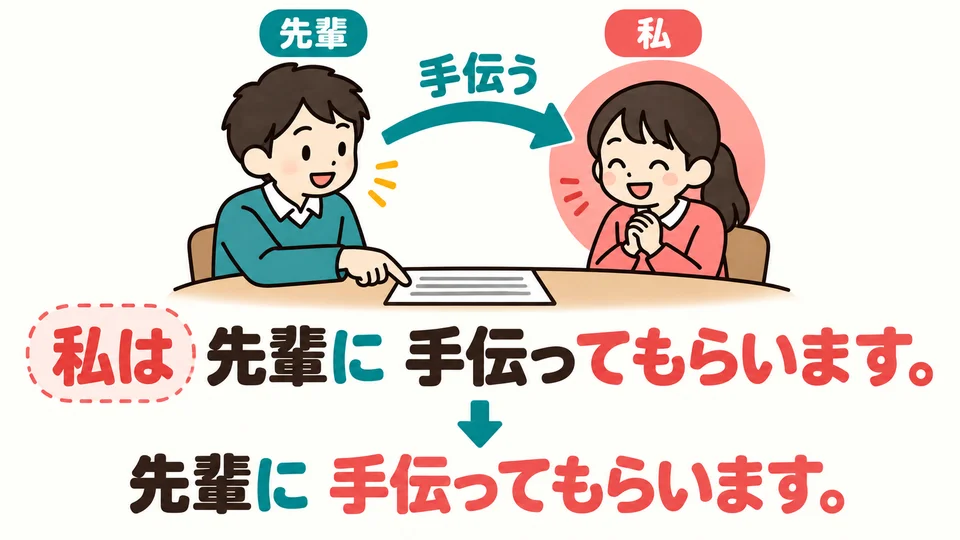
「私」 is the person receiving help, not the helper. When talking about yourself, 「私は」 is often omitted.
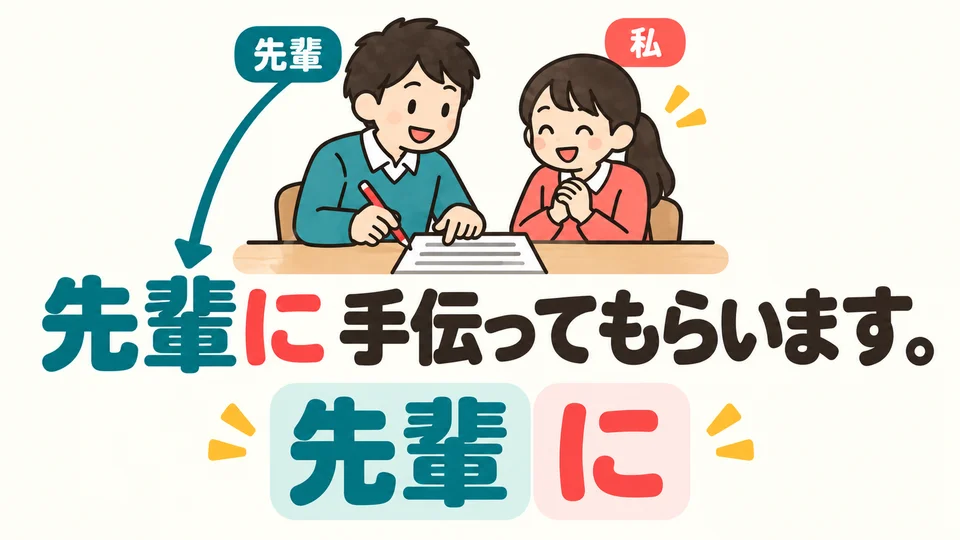
Who helps? Put 「に」 after the helper: here, 「先輩に」.
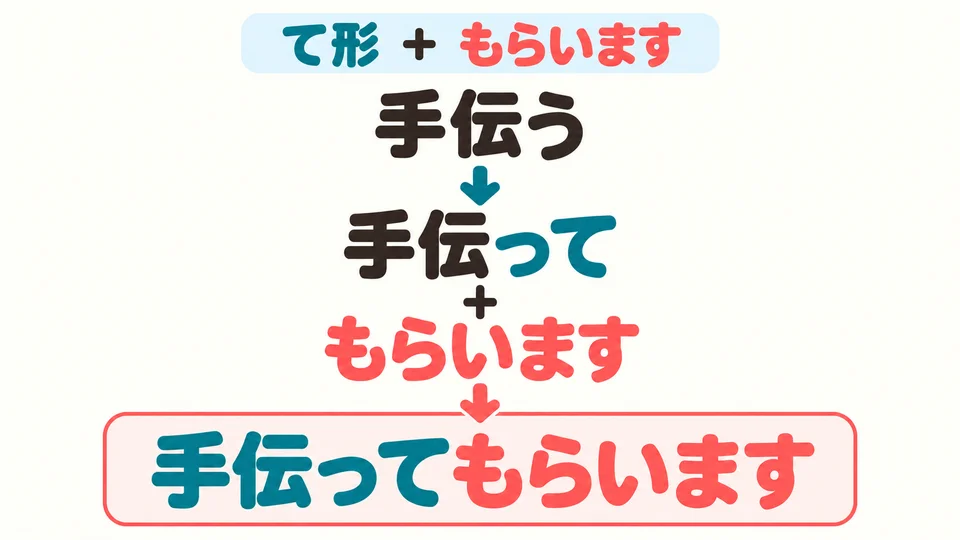
Use the verb’s て-form, then add 「もらいます」: 手伝う→手伝ってもらいます.
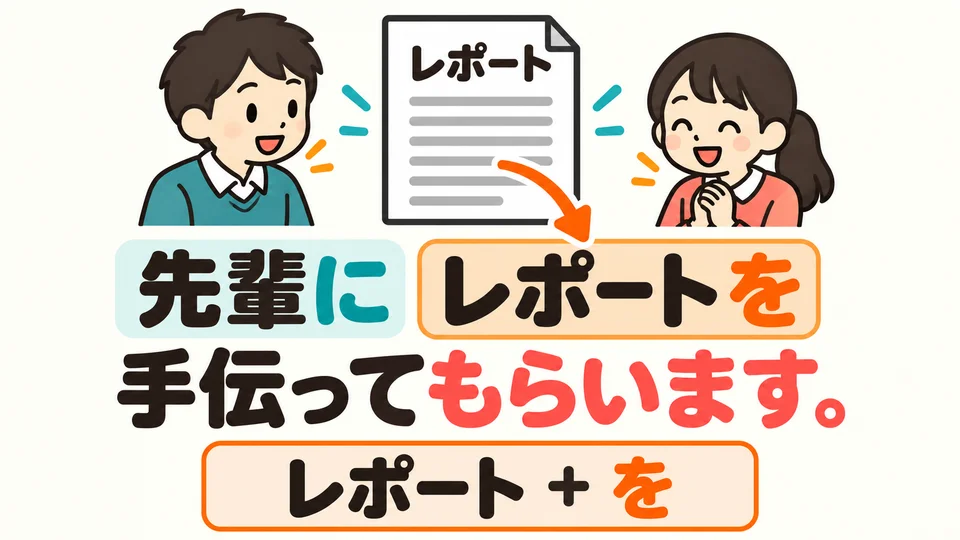
Help with what? 「レポートを」 tells us what the help is with: 先輩にレポートを手伝ってもらいます.
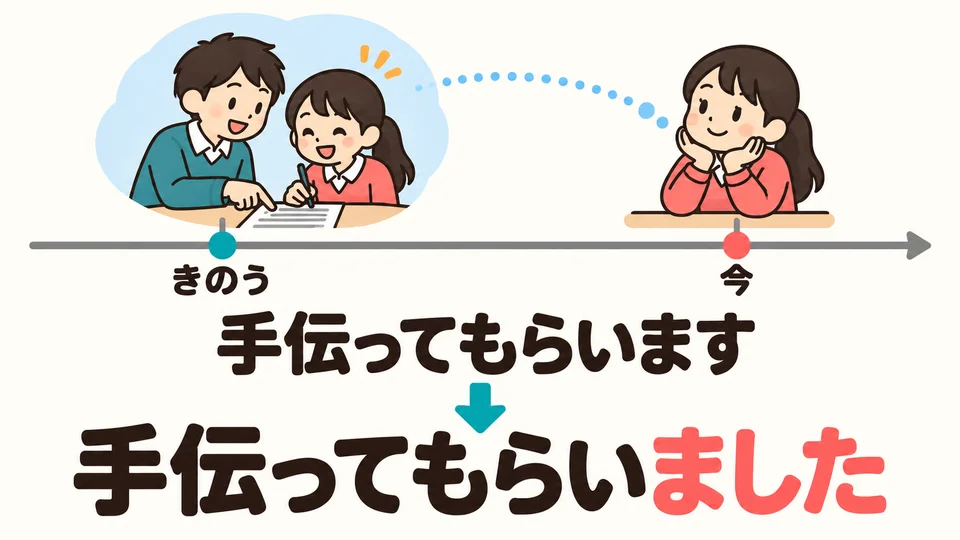
Use 「てもらいました」 for help already received. The example looks back on the senior student’s help.
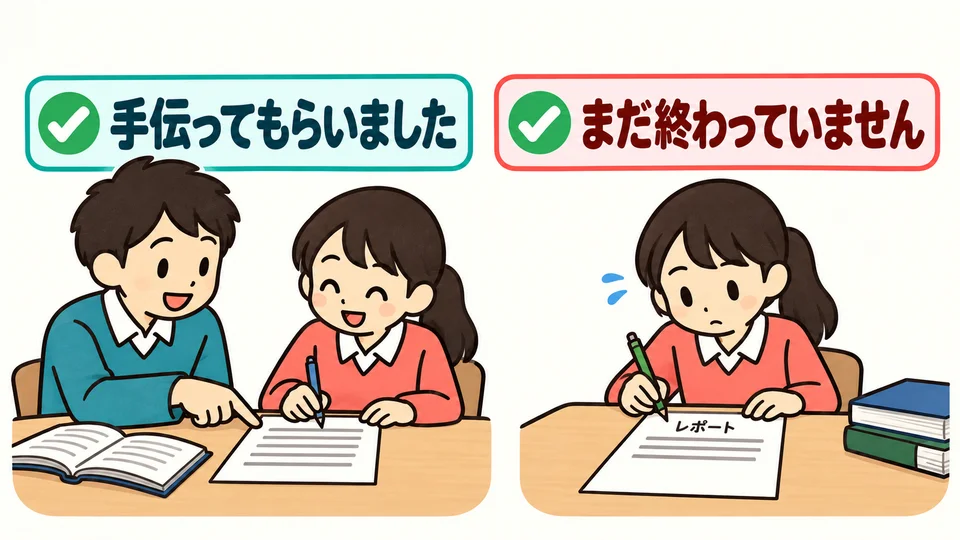
Receiving help does not mean the task is finished. In the original dialogue, the report is still unfinished, but the speaker has already had a senior student help.
Example sentences
- 手伝っtetsudatてteもらいますmoraimasu
get someone to help
- 先輩senpaiにniレポートrepootoをo手伝っtetsudatてteもらいました。
In a conversation

- Aレポート、終わりましたか?
A: Is the report done?
- Bううん、先輩に手伝ってもらいました。
B: Not yet, I had a senior student help me.
- A
Check yourself
Level 0 · Conjugate
Use 〜てもらいます: someone does it for you. て形
駅の人に道を(教える)もらいました。
Level 1 · Recognise
Which sentence is correct?
Level 1 · Recognise
Listen and choose the meaning
Level 2 · Build
Put the words in order
I had my senior help me with my report.
Level 3 · Use
What goes in the blank?
先輩にレポートを (手伝う・丁寧形・過去形)。
My senior helped me with the report.
More grammar in this theme
- 〜てもらいますreceive someone’s help