
Japanese grammar · ≈ JLPT N4 · Beginner 3
〜く/〜に+動詞~ku / ~ni + doushi
describe how an action is done
Put 「〜く/〜に+動詞」 before a verb to say how an action is done, using the adjective’s form.
- Pattern
- 〜く/〜に+動詞
- Romaji
- ~ku / ~ni + doushi
- JLPT (approx.)
- ≈ N4
- Course level
- Beginner 3
- Theme
- Visiting Someone's Home
How it works
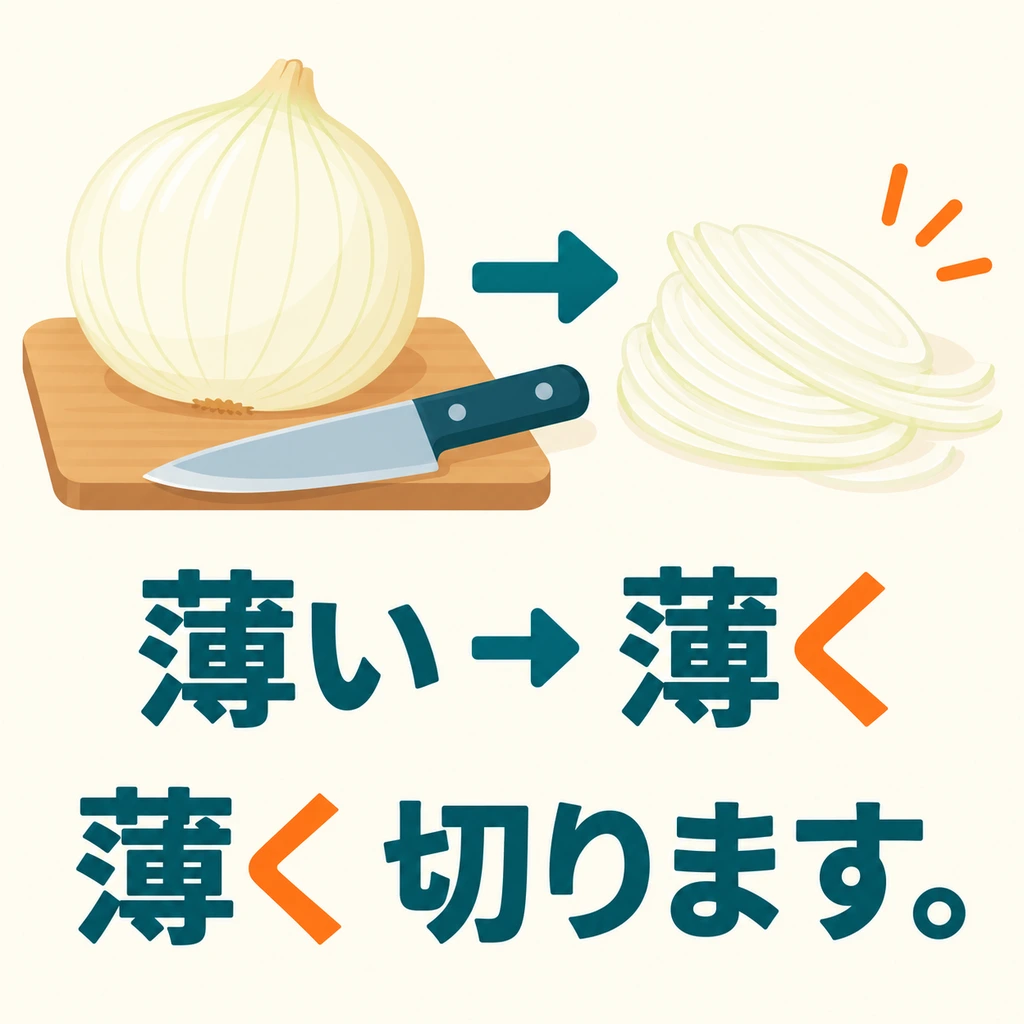
How should the onion be cut? 「薄く切ります」 means cutting it into thin slices.
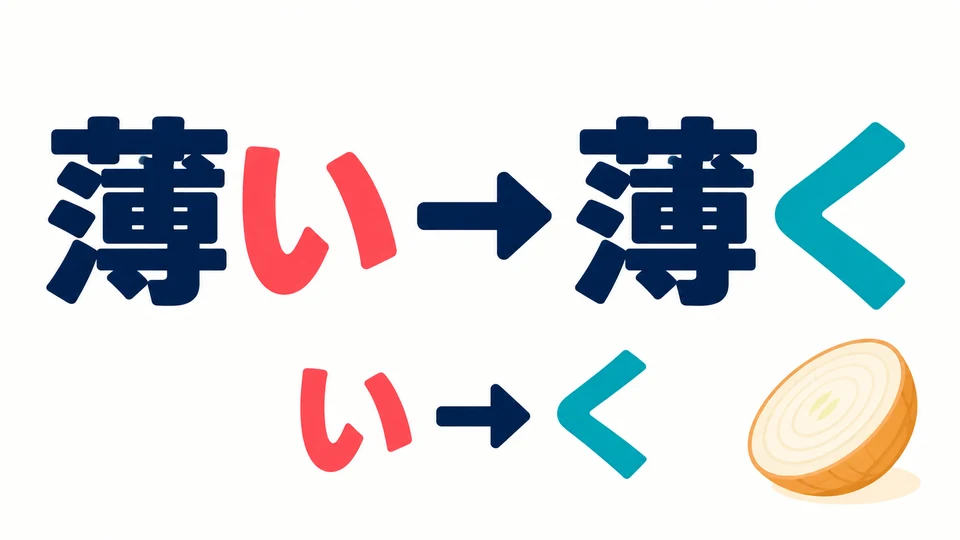
When an い-adjective describes an action, its final 「い」 changes to 「く」: 薄い→薄く.
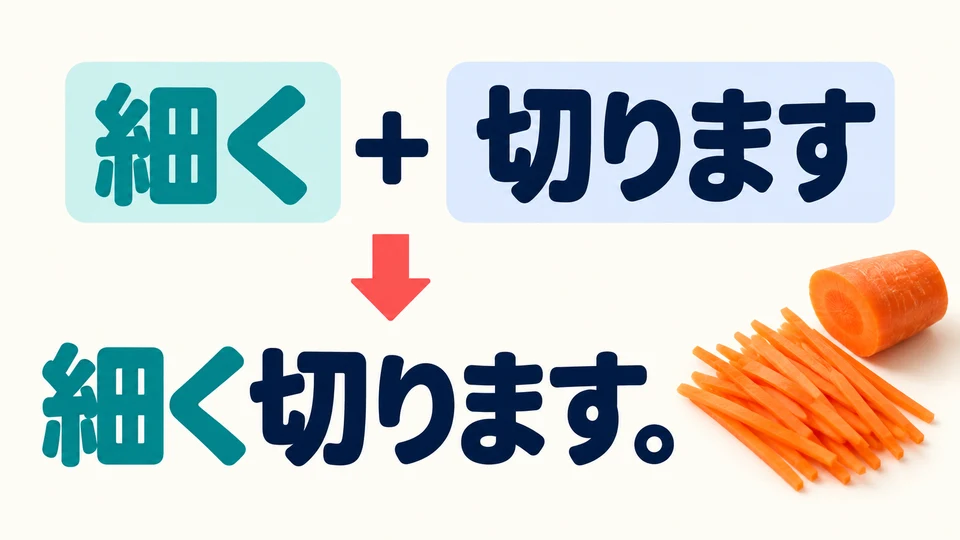
Put the changed form before the verb. 「細く切ります」 means cutting the carrot into thin strips.
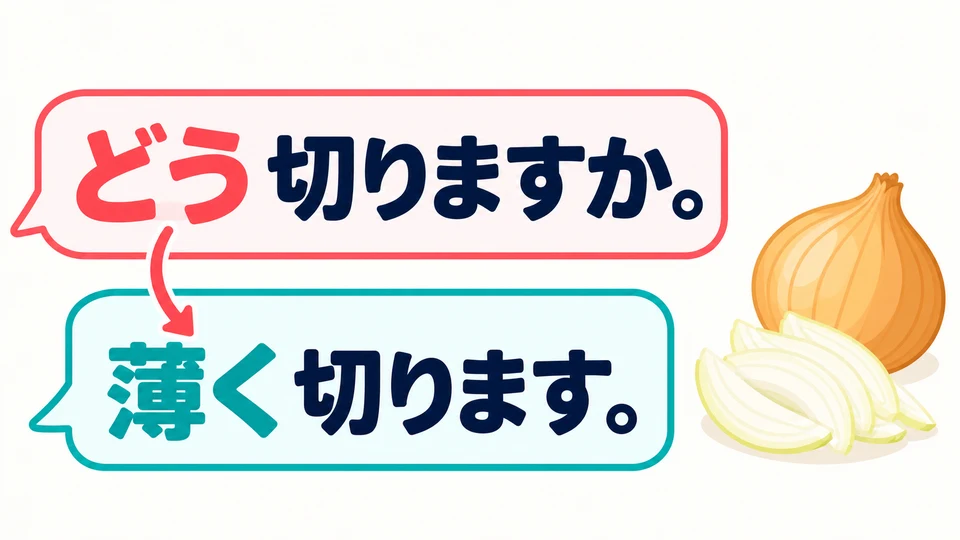
Answer 「どう切りますか」 with 「薄く切ります」 to specify how you cut it.
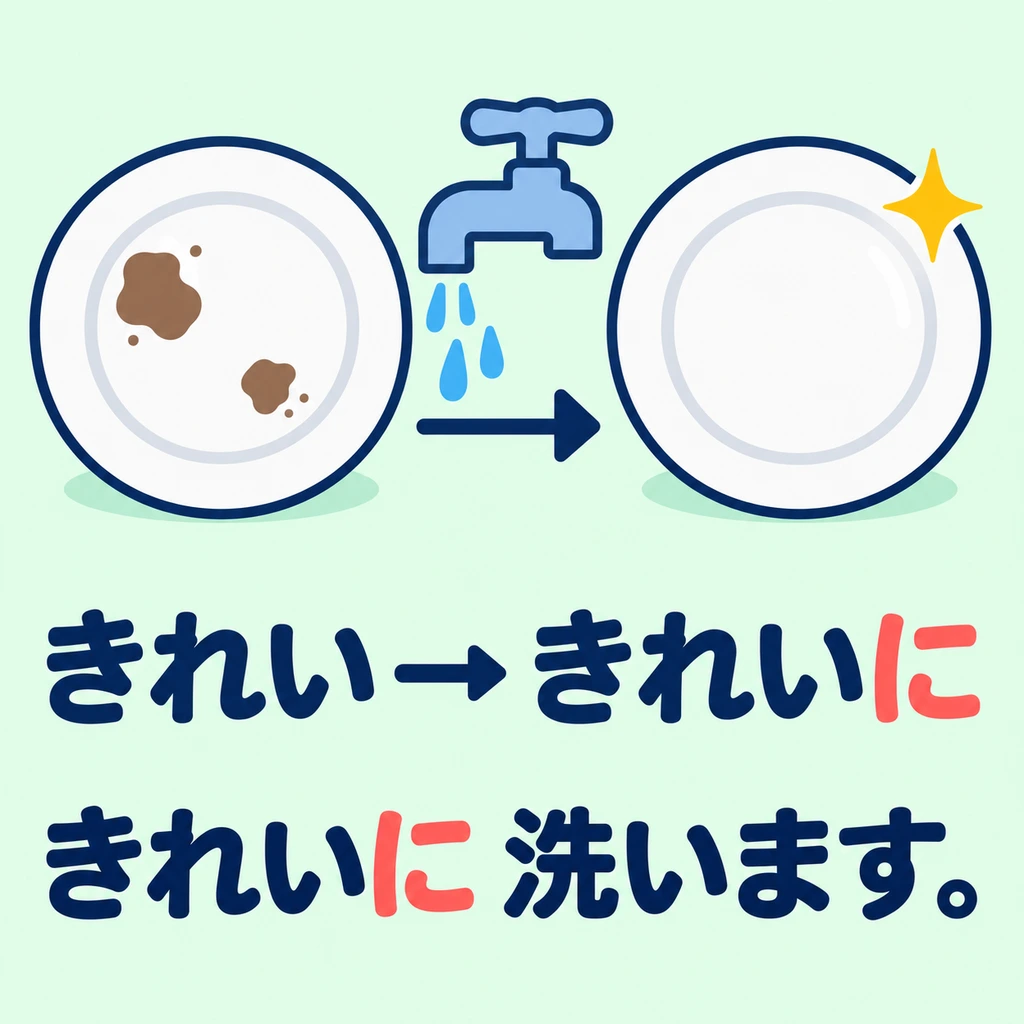
Look at the plate after washing. 「きれいに洗います」 means washing the plate clean.
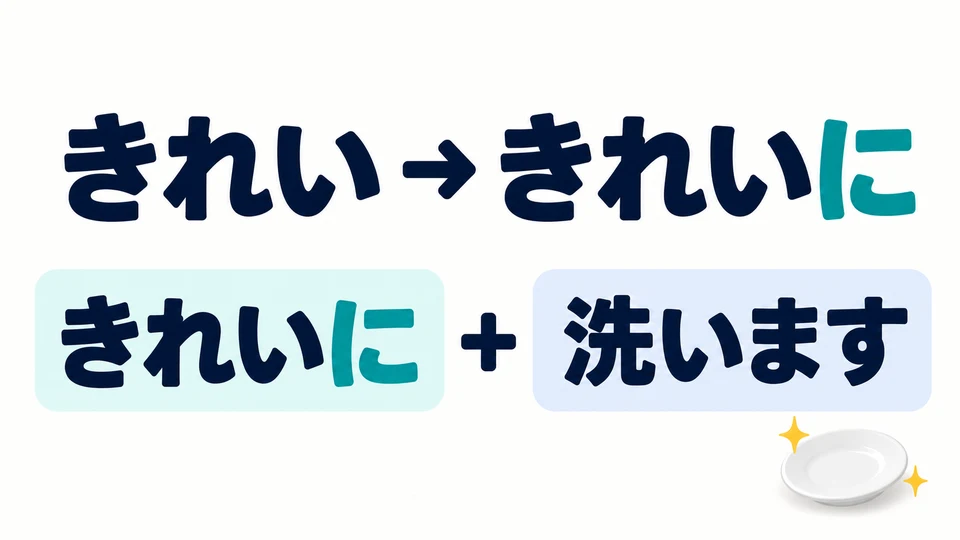
When a な-adjective modifies a verb, add 「に」 to its stem: きれい→きれいに.
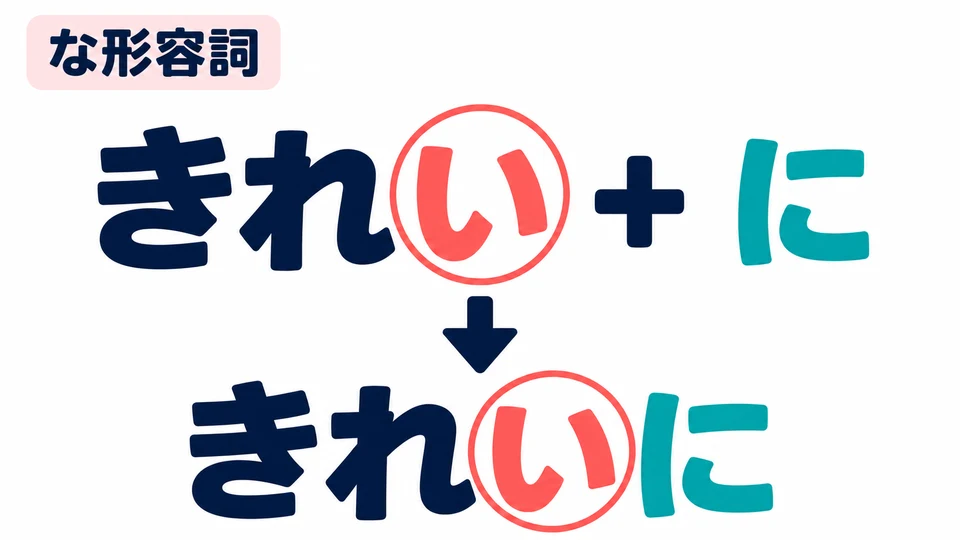
Although 「きれい」 ends in い, it is a な-adjective. Keep the い; do not change it to く.
Example sentences
- きれいにkireini洗いますaraimasu
Wash it clean.
- 玉ねぎtamanegiをo薄くusuku切ります。kirimasu
Slice the onion thinly.
In a conversation
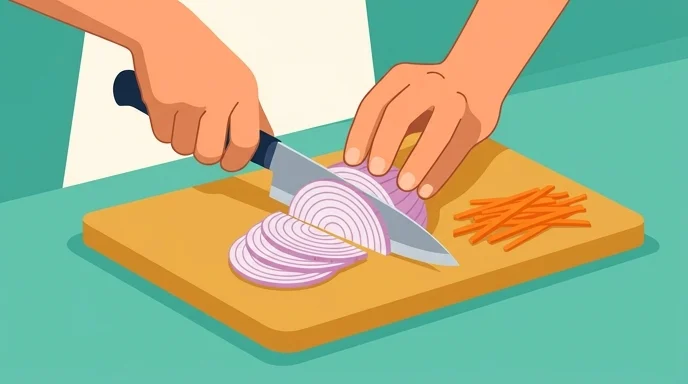
- A玉ねぎをどう切りますか。
A: How do you cut the onion?
- B薄く切ります。
B: I slice it thinly.
- A人参は
Check yourself
Which sentence is correct?
- 玉ねぎを薄く切ります。
- 玉ねぎを薄い切ります。
- 玉ねぎを薄くに切ります。
- 玉ねぎを薄いで切ります。
Show answer
Answer: A 玉ねぎを薄く切ります。
Which sentence is correct?
- じゃがいもを大きく切ります。
- じゃがいもを大きいに切ります。
- じゃがいもを大きくの切ります。
- じゃがいもを大きくに切ります。
Show answer
Answer: A じゃがいもを大きく切ります。
Which sentence is correct?
- 野菜をきれいに洗います。
- 野菜をきれいく洗います。
- 野菜をきれい洗います。
- 野菜をきれいの洗います。
Show answer
Answer: A 野菜をきれいに洗います。
More grammar in this theme
- 〜く/〜に+動詞describe how an action is done