Lesson notes · ≈ JLPT N4 · Beginner 3
〜く/〜に+動詞~ku / ~ni + doushi
describe how an action is done
Put 「〜く/〜に+動詞」 before a verb to say how an action is done, using the adjective’s form.
How it works
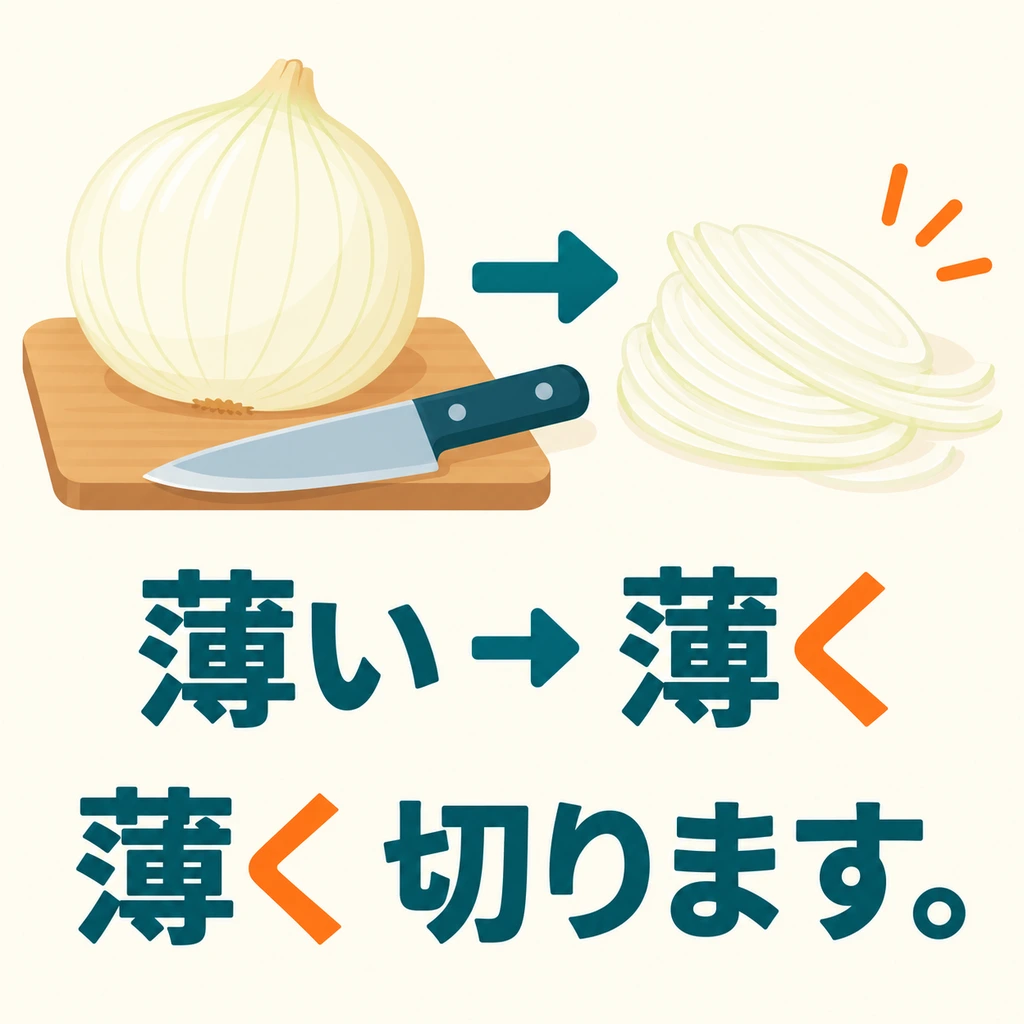
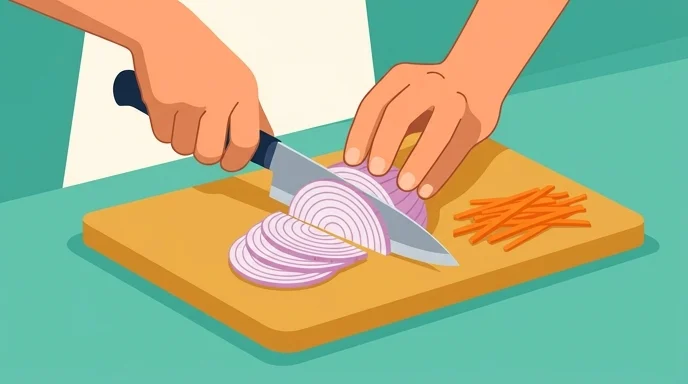
How should the onion be cut? 「薄く切ります」 means cutting it into thin slices.
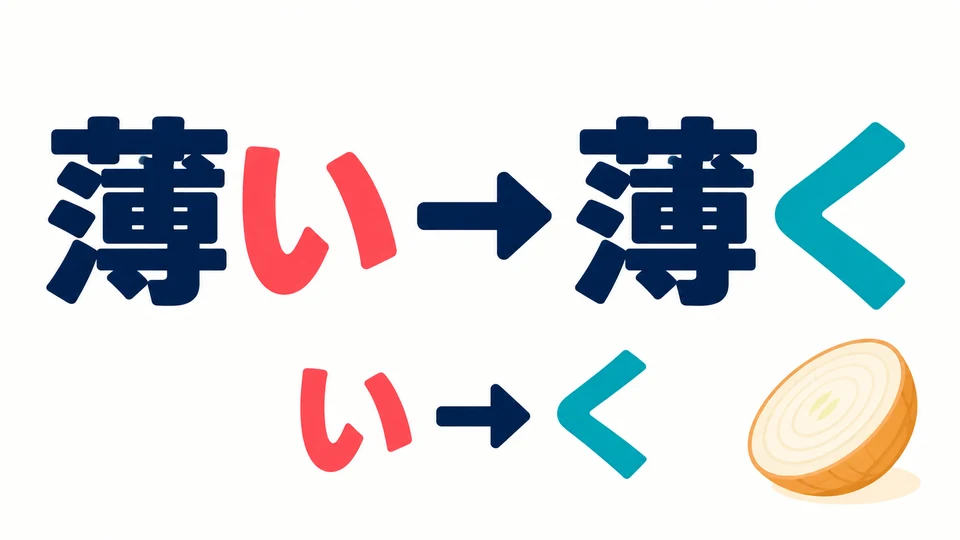
When an い-adjective describes an action, its final 「い」 changes to 「く」: 薄い→薄く.
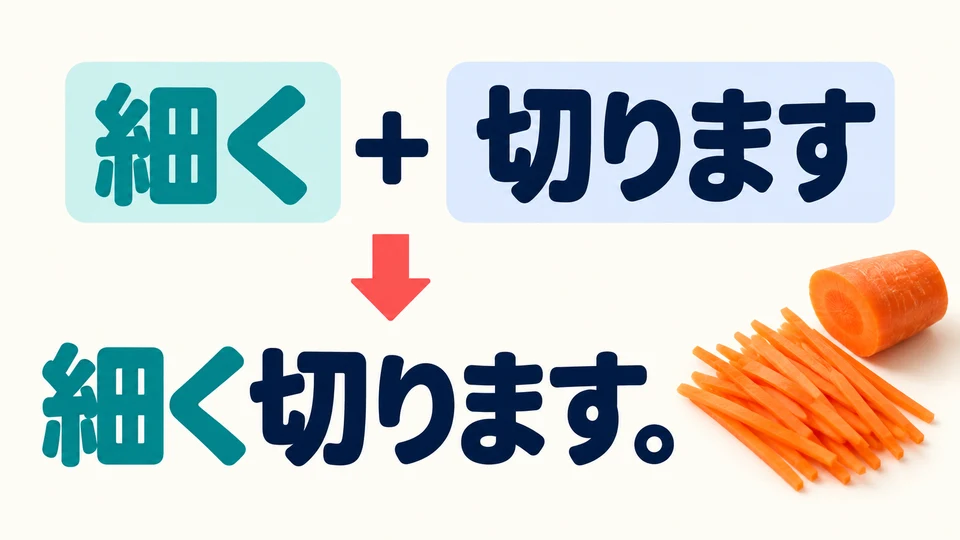
Put the changed form before the verb. 「細く切ります」 means cutting the carrot into thin strips.
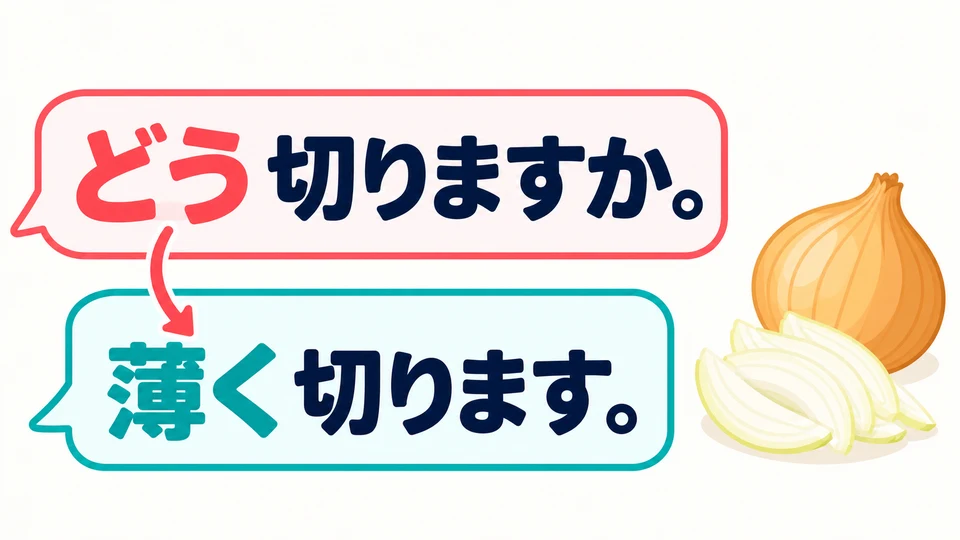
Answer 「どう切りますか」 with 「薄く切ります」 to specify how you cut it.
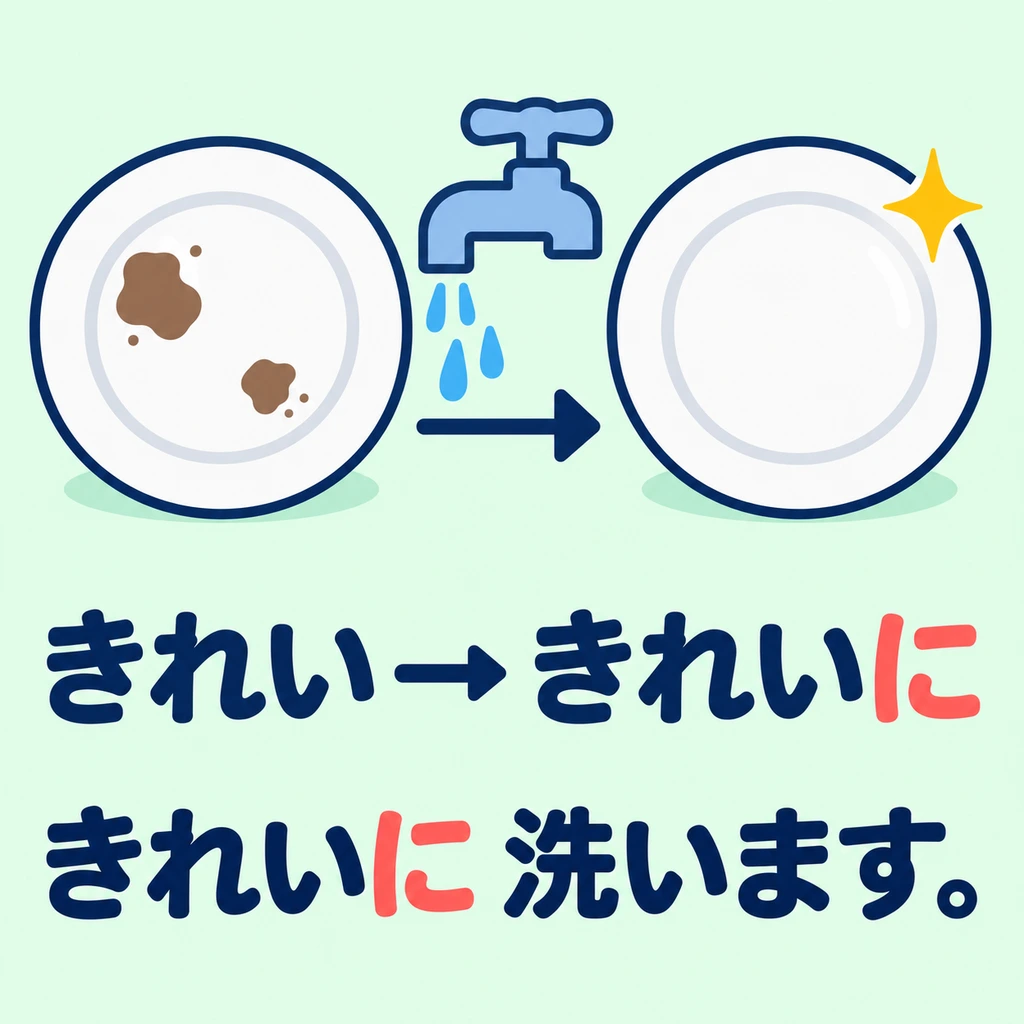
Look at the plate after washing. 「きれいに洗います」 means washing the plate clean.
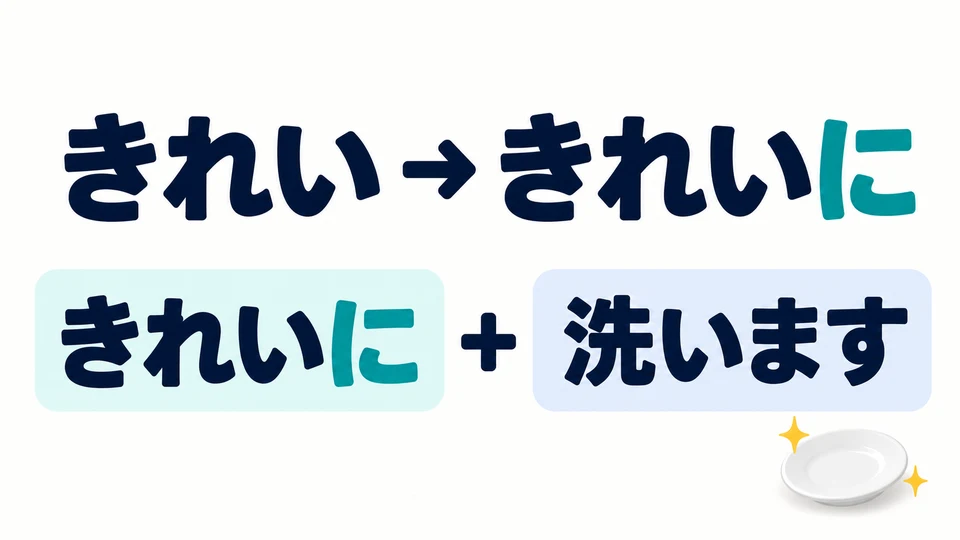
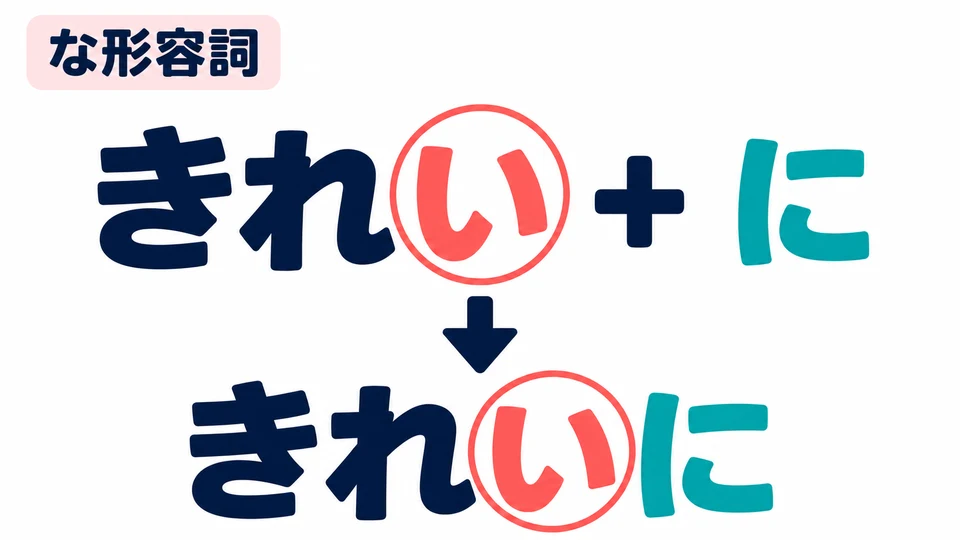
When a な-adjective modifies a verb, add 「に」 to its stem: きれい→きれいに.