JPEDLAB iconJPEDLAB
Save history

Create an account and play

Explore first, then save your progress whenever you are ready. No email address is required.

Start free
Read as articleCards
See the whole course›Beginner 3›Visiting Someone's Home

Japanese grammar · ≈ JLPT N4 · Beginner 3

〜くします/〜にします~ku shimasu / ~ni shimasu

make something a certain way

Use 「〜くします/〜にします」 when someone changes an object or situation to a desired state.

Start the interactive lessonIllustrated cards, audio and speaking practiceTake the quiz
Pattern
〜くします/〜にします
Romaji
~ku shimasu / ~ni shimasu
JLPT (approx.)
≈ N4
Course level
Beginner 3
Theme
Visiting Someone's Home

How it works

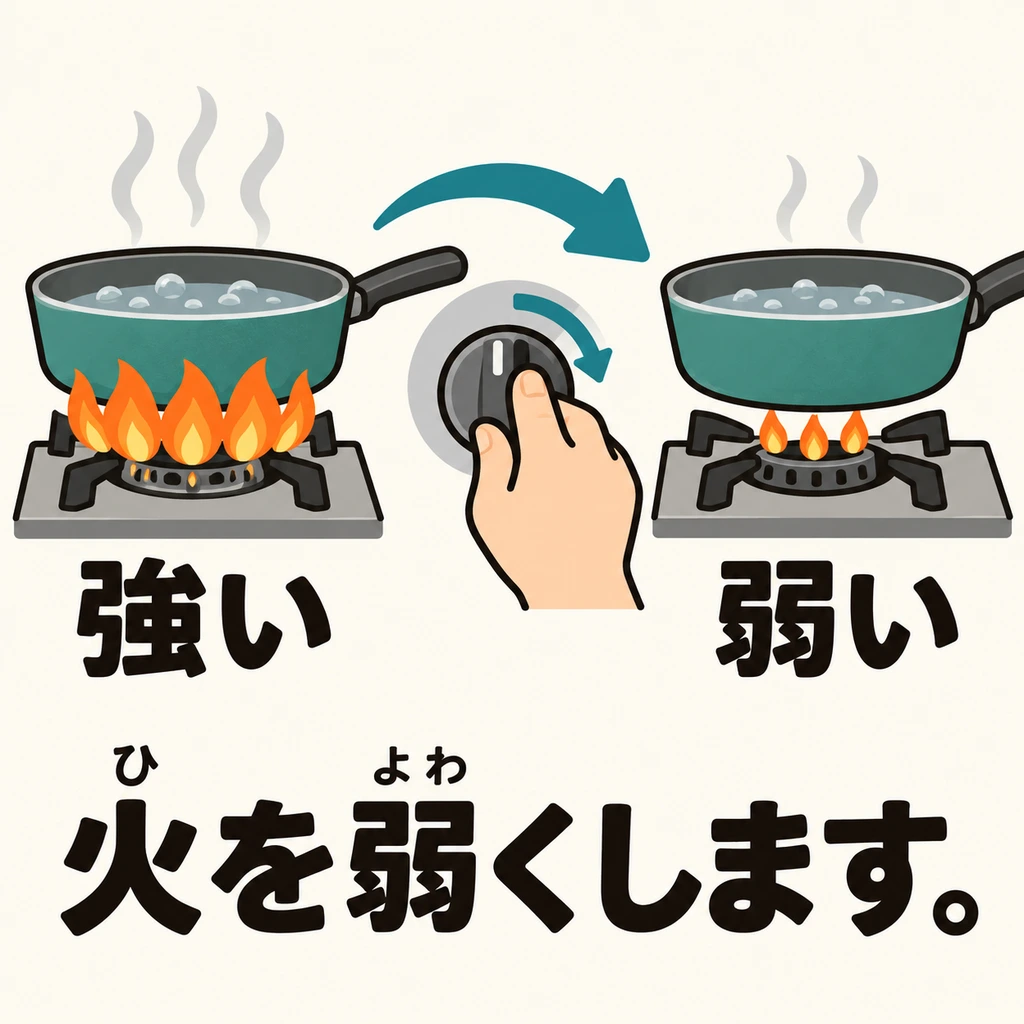
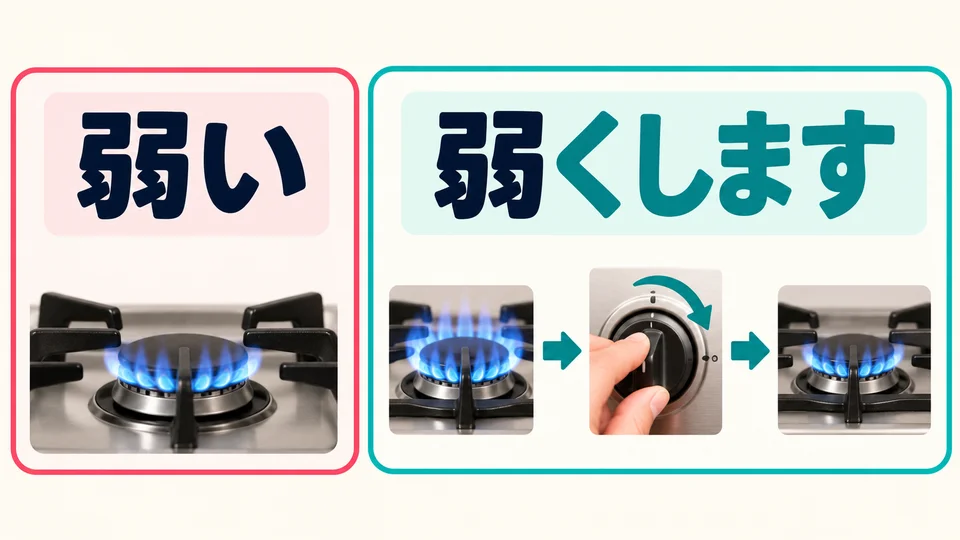
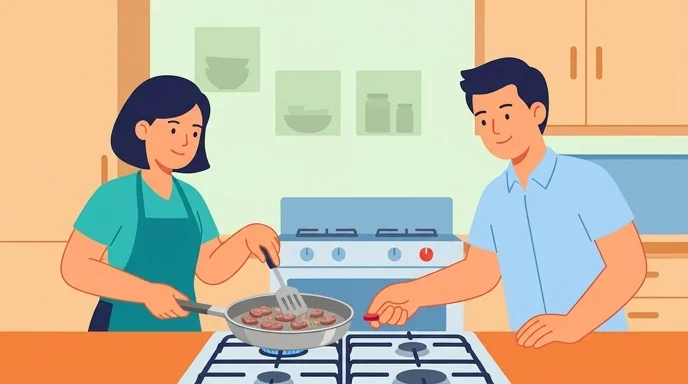
  1. Look at the picture: the flame gets smaller. Who turned the knob in the middle? This sentence says someone turns down the heat.
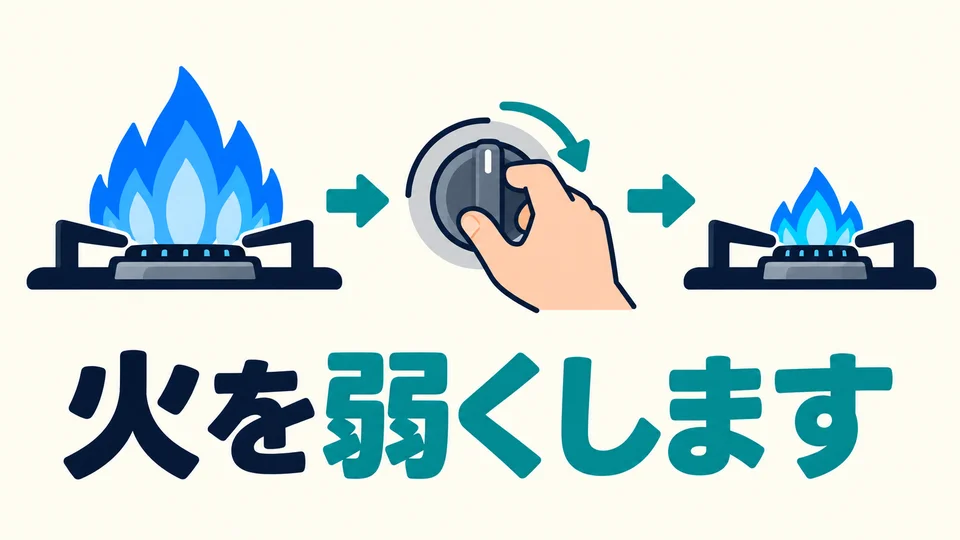
    Look at the picture: the flame gets smaller. Who turned the knob in the middle? This sentence says someone turns down the heat.

  2. This expression says someone acts to bring something into a desired state. The focus is on a change caused by a person.
    This expression says someone acts to bring something into a desired state. The focus is on a change caused by a person.

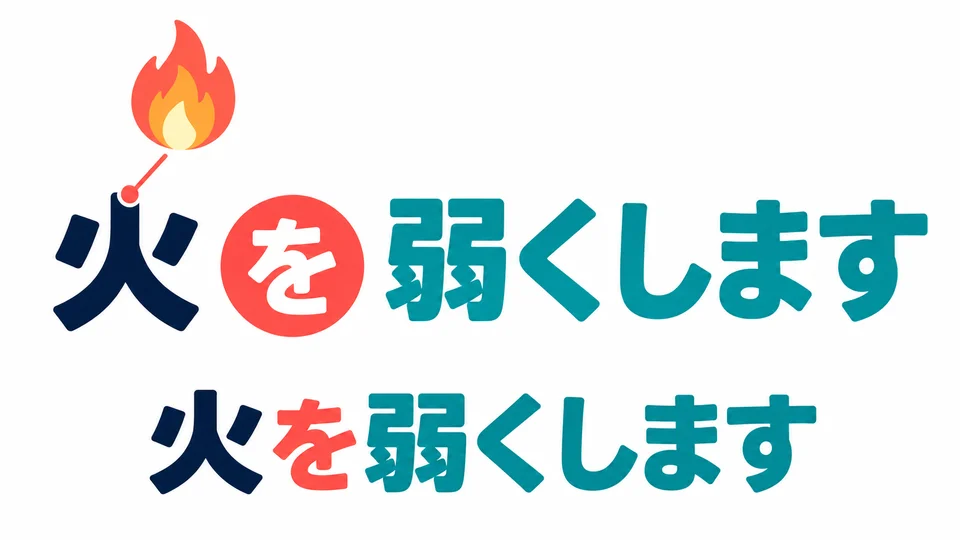
  3. Mark the thing being changed with 「を」. 「火を弱くします」 means “turn down the heat.”
    Mark the thing being changed with 「を」. 「火を弱くします」 means “turn down the heat.”

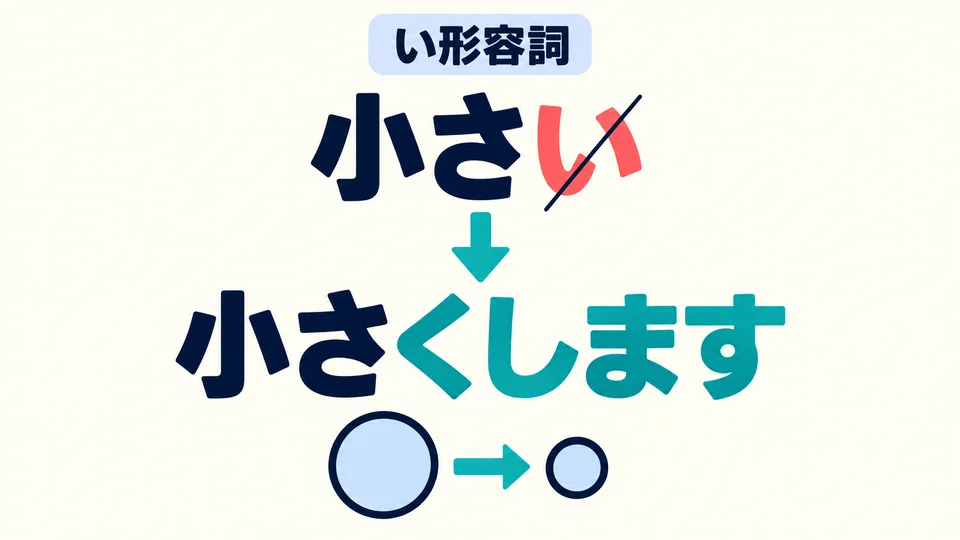
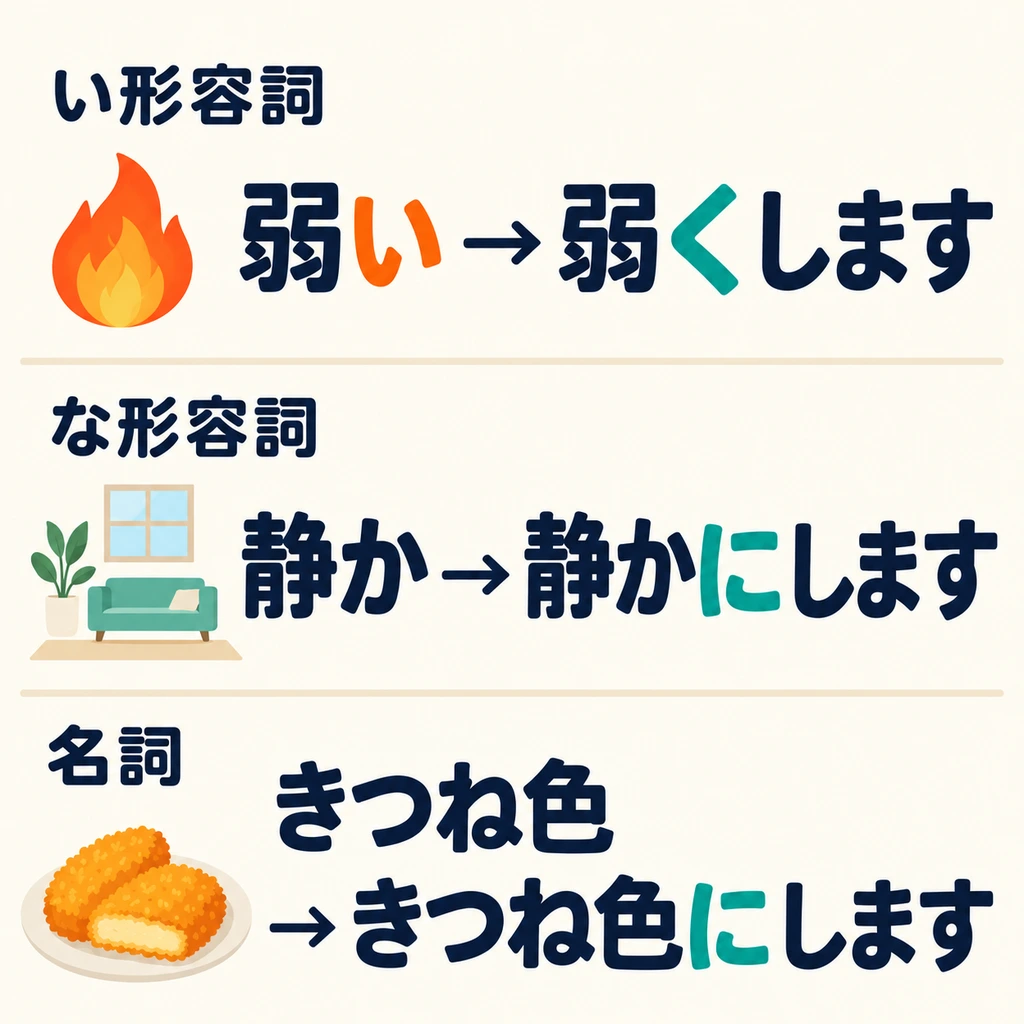
  4. For an い-adjective, remove 「い」 and add 「くします」. For example: 「小さい→小さくします」.
    For an い-adjective, remove 「い」 and add 「くします」. For example: 「小さい→小さくします」.

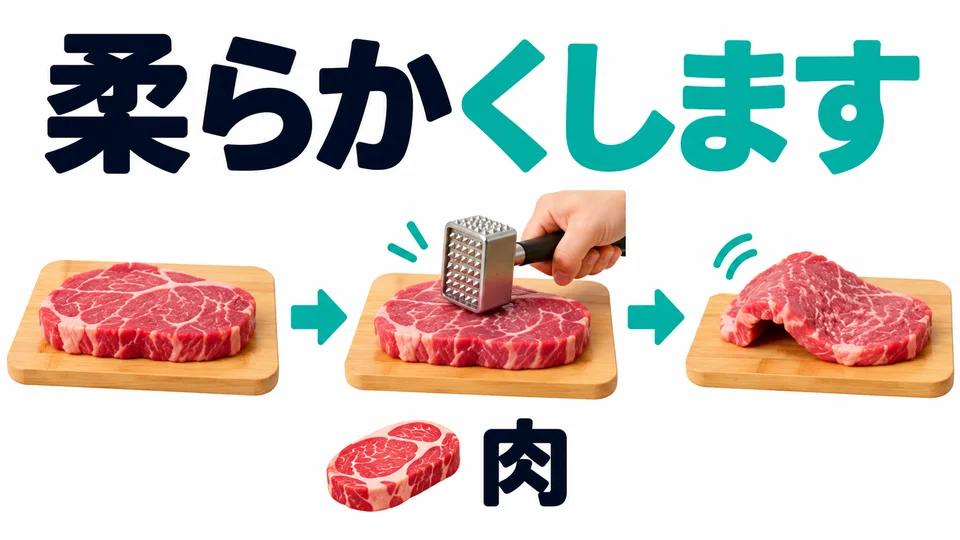
  5. How do you prepare the meat? Answer with 「柔らかくします」 to say you make the meat tender.
    How do you prepare the meat? Answer with 「柔らかくします」 to say you make the meat tender.

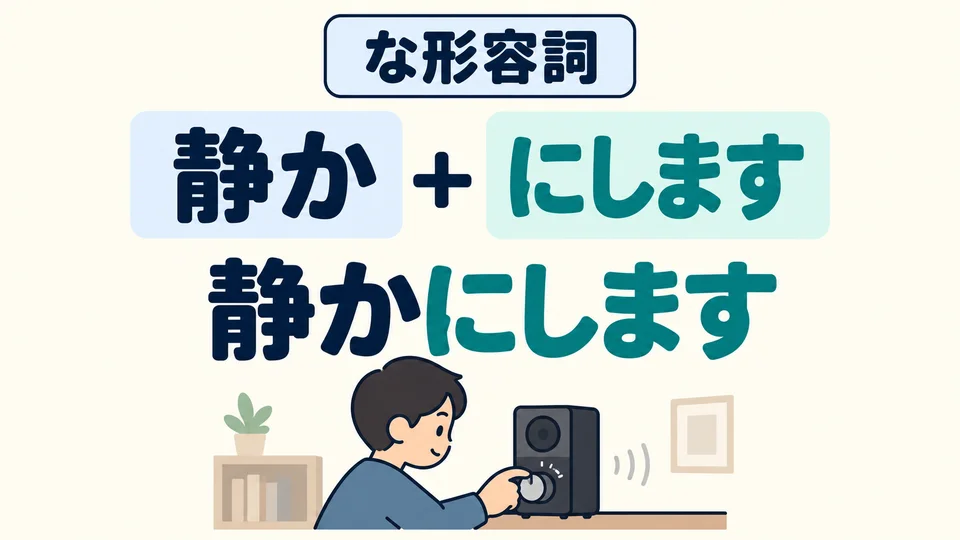
  6. Add 「にします」 directly to a な-adjective stem. For example, 「静かにします」 means to make the surroundings quiet.
    Add 「にします」 directly to a な-adjective stem. For example, 「静かにします」 means to make the surroundings quiet.

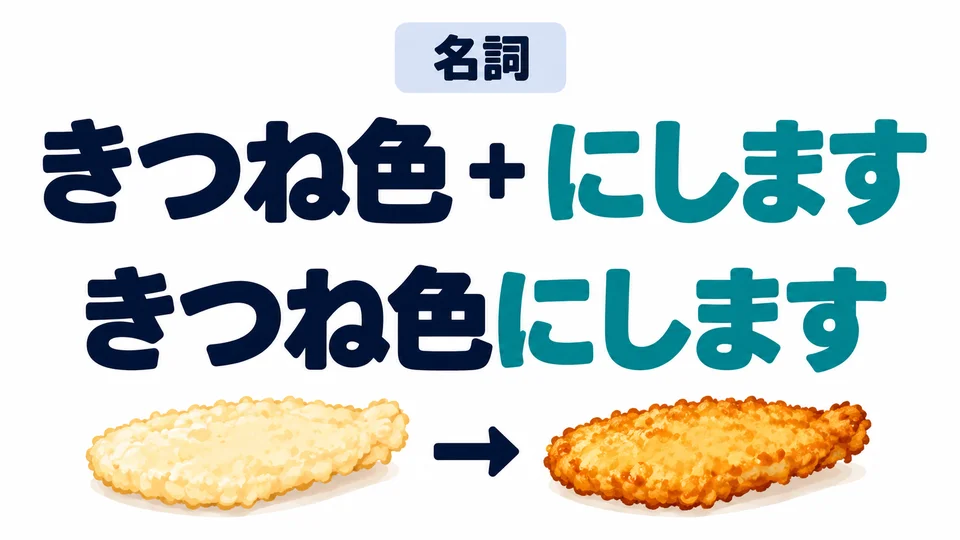
  7. Add 「にします」 after a noun. 「きつね色にします」 means to fry food until golden brown.
    Add 「にします」 after a noun. 「きつね色にします」 means to fry food until golden brown.

  8. 「弱い」 only describes the flame as low. 「弱くします」 says someone adjusts the heat to make it lower.

    「弱い」 only describes the flame as low. 「弱くします」 says someone adjusts the heat to make it lower.

Example sentences

  • 小さくちいさくchiisakuしますshimasu

    Make it smaller.

  • きつねkitsune色いろiroにniしますshimasu

    Cook it until it turns golden brown.

In a conversation
  • A
    肉にくをどうしますか。か

    A: How do you prepare the meat?

  • B
    柔らかくやわらかくします。します

    B: I make it tender.

  • A
    火ひはわどう

Check yourself

  1. Which sentence is correct?

    1. 玉ねぎを小さくします。
    2. 玉ねぎを小さいします。
    3. 玉ねぎを小さくにします。
    4. 玉ねぎを小さいにします。
    Show answer

    Answer: A 玉ねぎを小さくします。

  2. Which sentence is correct?

    1. 色をきつね色にします。
    2. 色をきつね色くします。
    3. 色をきつね色にしますします。
    4. 色をきつね色しにます。
    Show answer

    Answer: A 色をきつね色にします。

  3. Which sentence is correct?

    1. 火を弱くします。
    2. 火を弱いします。
    3. 火を弱くにします。
    4. 火を弱いでします。
    Show answer

    Answer: A 火を弱くします。

More grammar in this theme

  • 〜くします/〜にしますmake something a certain way
Keep practising

Test your Japanese vocabulary12 adaptive questions, freeCheck your pronunciationRead aloud and get a scorePractise verb forms10-question conjugation quizSee the whole courseGrammar, vocabulary and quizzes by theme
  • Look back at the three rows. What word class describes the resulting state? Identify the word class first, then choose 「く」 or 「に」.

    Look back at the three rows. What word class describes the resulting state? Identify the word class first, then choose 「く」 or 「に」.

  • します
    か。か

    A: How about the heat?

  • B
    弱くよわくします。します

    B: I lower it.

  • Take the quiz
    召し上がります・おっしゃいますspecial honorific verbs
    お〜になります/ご〜になりますhonorific action form
    お〜します/ご〜しますhumble action for others
    〜く/〜に+動詞describe how an action is done
    〜ている間にduring an ongoing action
    Previous〜ている間に