JPEdLab iconJPEdLab
Save history

Create an account and play

Explore first, then save your progress whenever you are ready. No email address is required.

Start free
  1. Japanese grammar
  2. JLPT N4 grammar
  3. 召し上がります・おっしゃいます

召し上がります・おっしゃいますmeshiagarimasu / osshaimasu

Meshiagarimasu / osshaimasu (召し上がります・おっしゃいます) means “special honorific verbs”.

召し上がります(めしあがりますmeshiagarimasu食べます・たべますtabemasu飲みます)のみますnomimasu

To eat/drink (Honorific)

Use 「召し上がります・おっしゃいます」 for another person’s eating, drinking, or speaking respectfully.

In the course›

How it works

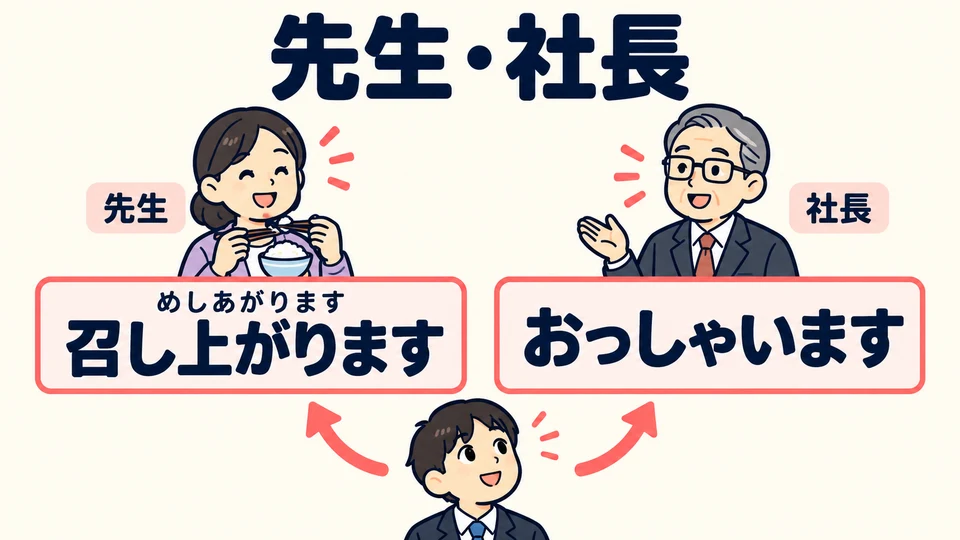
  1. When describing the actions of a teacher, a superior, or someone similar, use special verbs to show respect for the person doing the action.
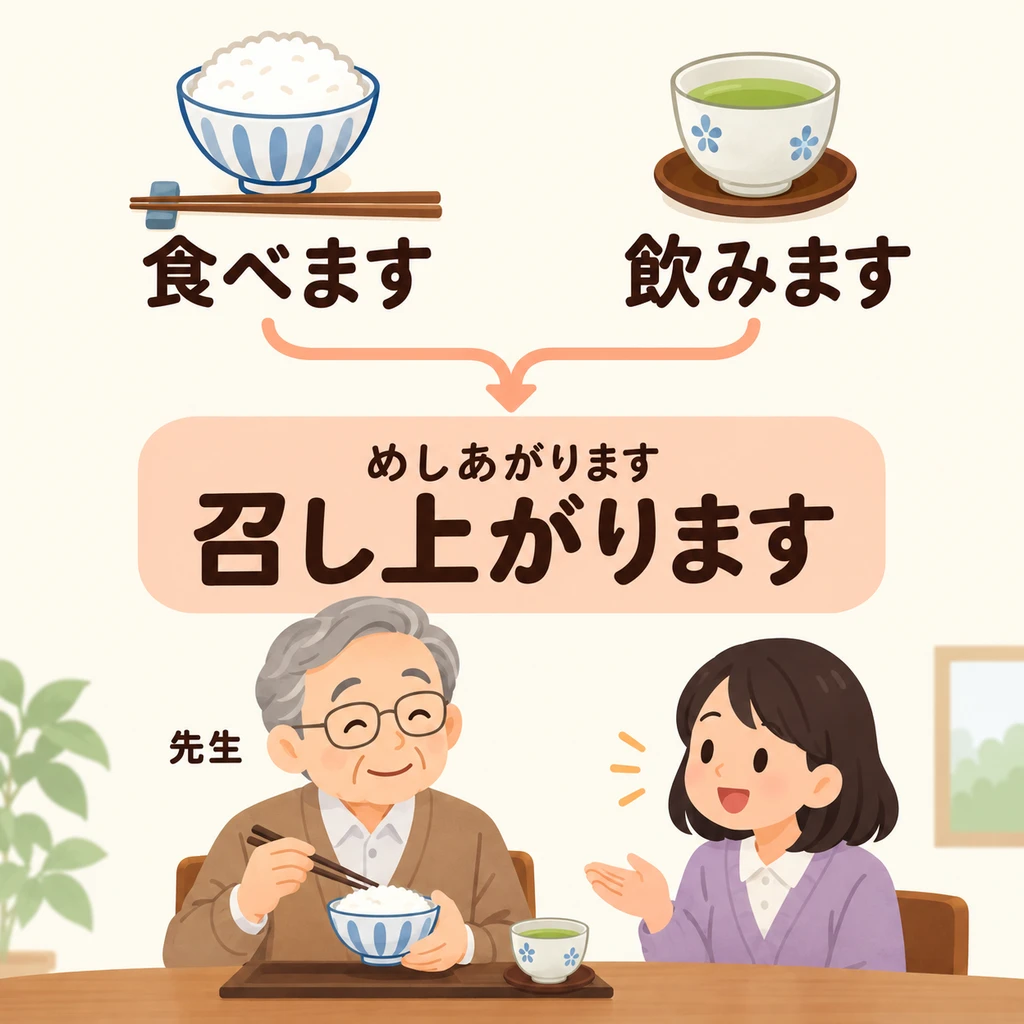
    When describing the actions of a teacher, a superior, or someone similar, use special verbs to show respect for the person doing the action.

  2. The teacher in the picture is eating or drinking tea. Both actions can be expressed with 「召し上がります」.
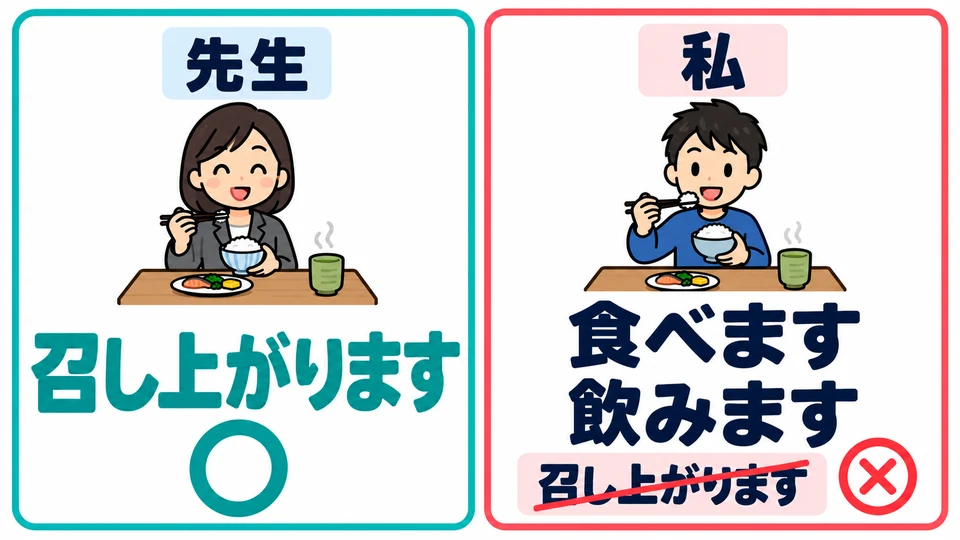
    The teacher in the picture is eating or drinking tea. Both actions can be expressed with 「召し上がります」.

  3. First check who is eating or drinking. Do not use 「召し上がります」 for your own actions.
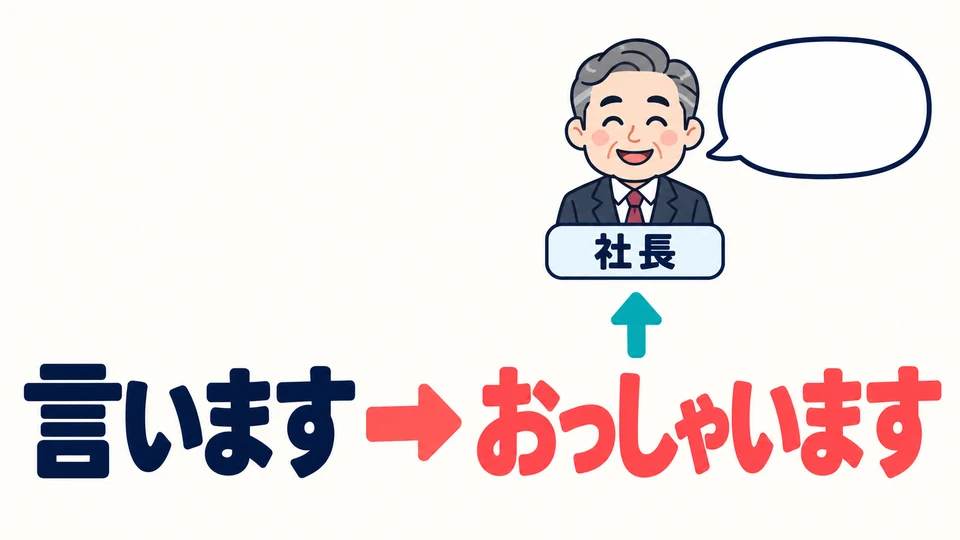
    First check who is eating or drinking. Do not use 「召し上がります」 for your own actions.

  4. To say respectfully that someone else says something, replace 「言います」 with 「おっしゃいます」.
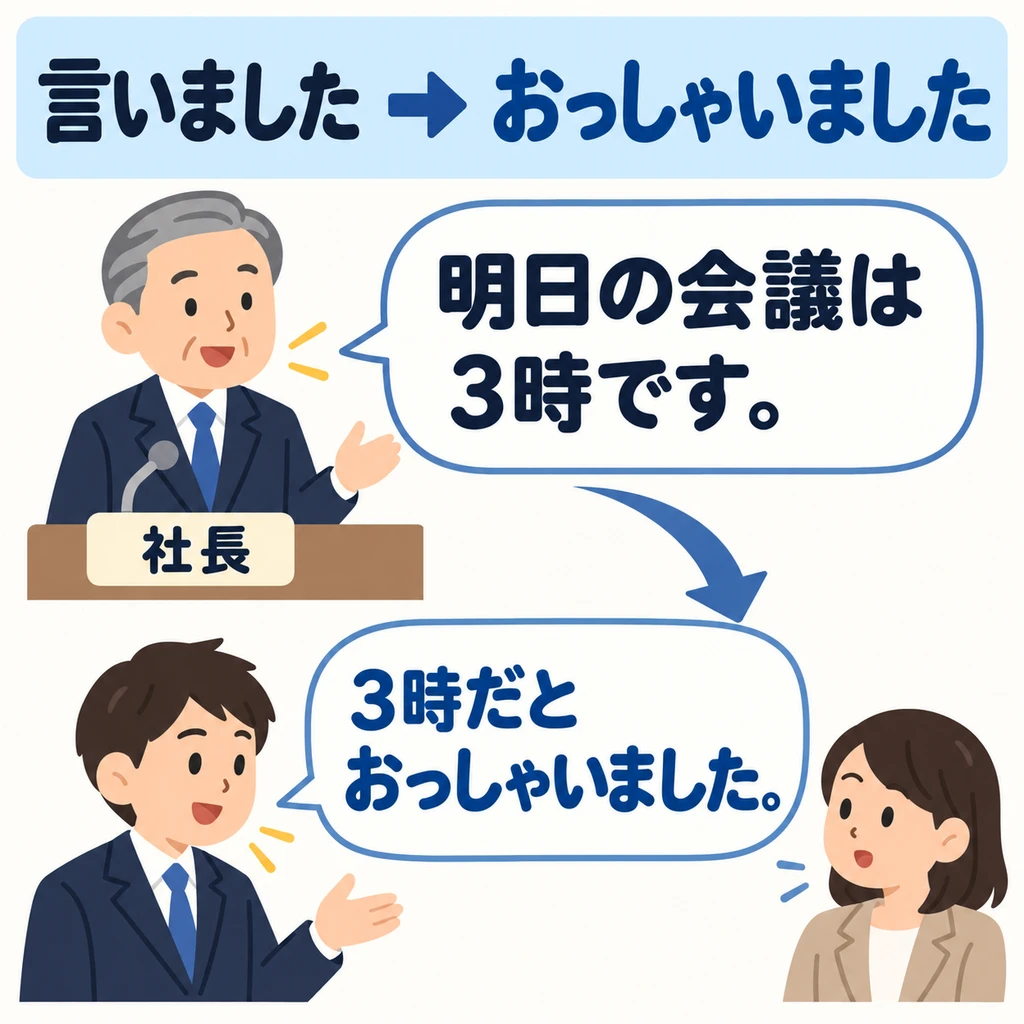
    To say respectfully that someone else says something, replace 「言います」 with 「おっしゃいます」.

  5. The employee still uses honorific language when reporting the company president’s words. The respect is for the president who originally spoke.
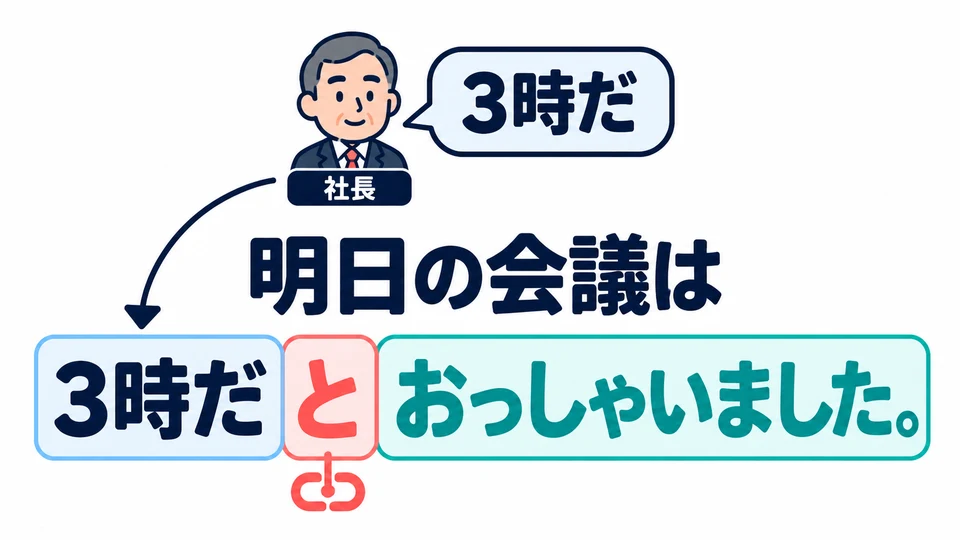
    The employee still uses honorific language when reporting the company president’s words. The respect is for the president who originally spoke.

  6. 「3時だと」 introduces what the president said. 「と」 links that content to the act of saying it.
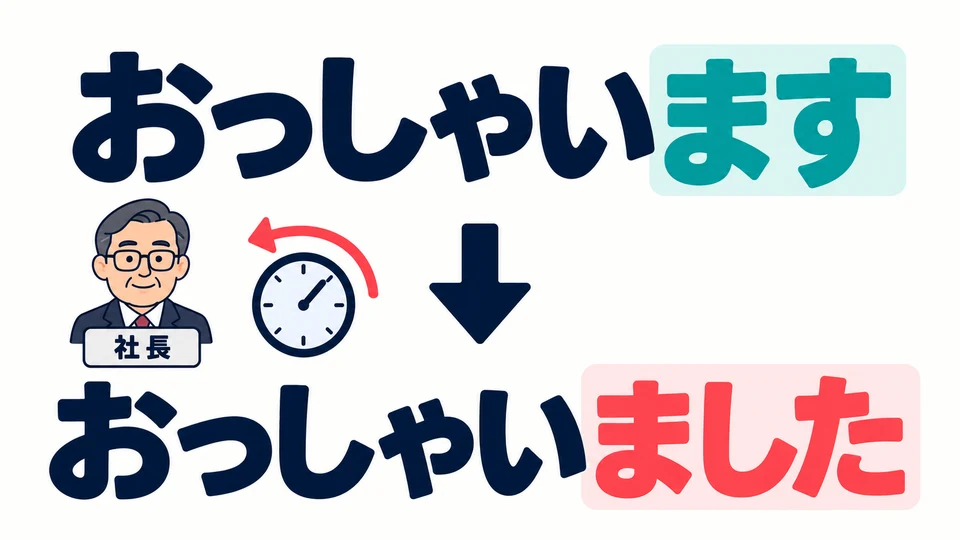
    「3時だと」 introduces what the president said. 「と」 links that content to the act of saying it.

  7. For something the president has already said, use 「おっしゃいました」. The past-tense ending becomes 「ました」.

    For something the president has already said, use 「おっしゃいました」. The past-tense ending becomes 「ました」.

Example sentences

  • 召し上がります(めしあがりますmeshiagarimasu食べます・たべますtabemasu飲みます)のみますnomimasu

    To eat/drink (Honorific)

  • おっしゃいます(おっしゃいますosshaimasu言います)いいますiimasu

    To say (Honorific)

In a conversation

  • A
    社長しゃちょうはわ何なんとおっしゃいましたか。か

    A: What did the president say?

  • B
    明日あすの会議かいぎは わ3 さん時じだ

Check yourself

  1. Level 0 · Conjugate

    Change to the special honorific verb to show respect. 特別な尊敬語

    先生は昼食を(食べますたべます)。

  2. Level 1 · Recognise

    Which sentence is correct?

  3. Level 1 · Recognise

    Listen and choose the meaning

  4. Level 2 · Build

    Put the words in order

    The president had Chinese food.

  5. Level 3 · Use

    What goes in the blank?

    社長は中華料理を (召し上がる・丁寧に・過去)。

    The president had Chinese cuisine.

More grammar in this theme

  • 召し上がります・おっしゃいますspecial honorific verbs

More JLPT N4 grammar

Keep practising

Test your Japanese vocabulary12 adaptive questions, freeCheck your pronunciationRead aloud and get a scorePractise verb forms10-question conjugation quizSee the whole courseGrammar, vocabulary and quizzes by theme
と
おっしゃいました。おっしゃいました

B: He said that tomorrow's meeting is at 3 o'clock.

  • A
    そうですか。かありがとうございます。ございます

    A: I see. Thank you.

  • Beginner 3
    Visiting Someone's Home
    More quizzesOpen this lesson’s quizzes in the course
    お〜になります/ご〜になりますhonorific action form
    お〜します/ご〜しますhumble action for others
    〜く/〜に+動詞describe how an action is done
    〜ている間にduring an ongoing action
    〜くします/〜にしますmake something a certain way
    Nextお〜になります/ご〜になります
    See all 138
    〜たら、〜たdiscovery after an action
    〜そうですprediction from signs
    〜ておきますprepare in advance
    〜てありますpreparation already complete
    〜てあげますdo something to help someone
    〜てもらいますreceive someone’s help
    〜てくれますsomeone does something for me
    Nをいただきますhumbly receive something