JPEdLab iconJPEdLab
Save history

Create an account and play

Explore first, then save your progress whenever you are ready. No email address is required.

Start free
  1. Japanese grammar
  2. JLPT N4 grammar
  3. 〜てくれます

〜てくれます~te kuremasu

Te kuremasu (〜てくれます) means “someone does something for me”.

作っつくっtsukuてteくれましたkuremashita

made it for me

Use 「〜てくれます」 when someone does something kind for you or your family, expressing gratitude.

In the course›

How it works

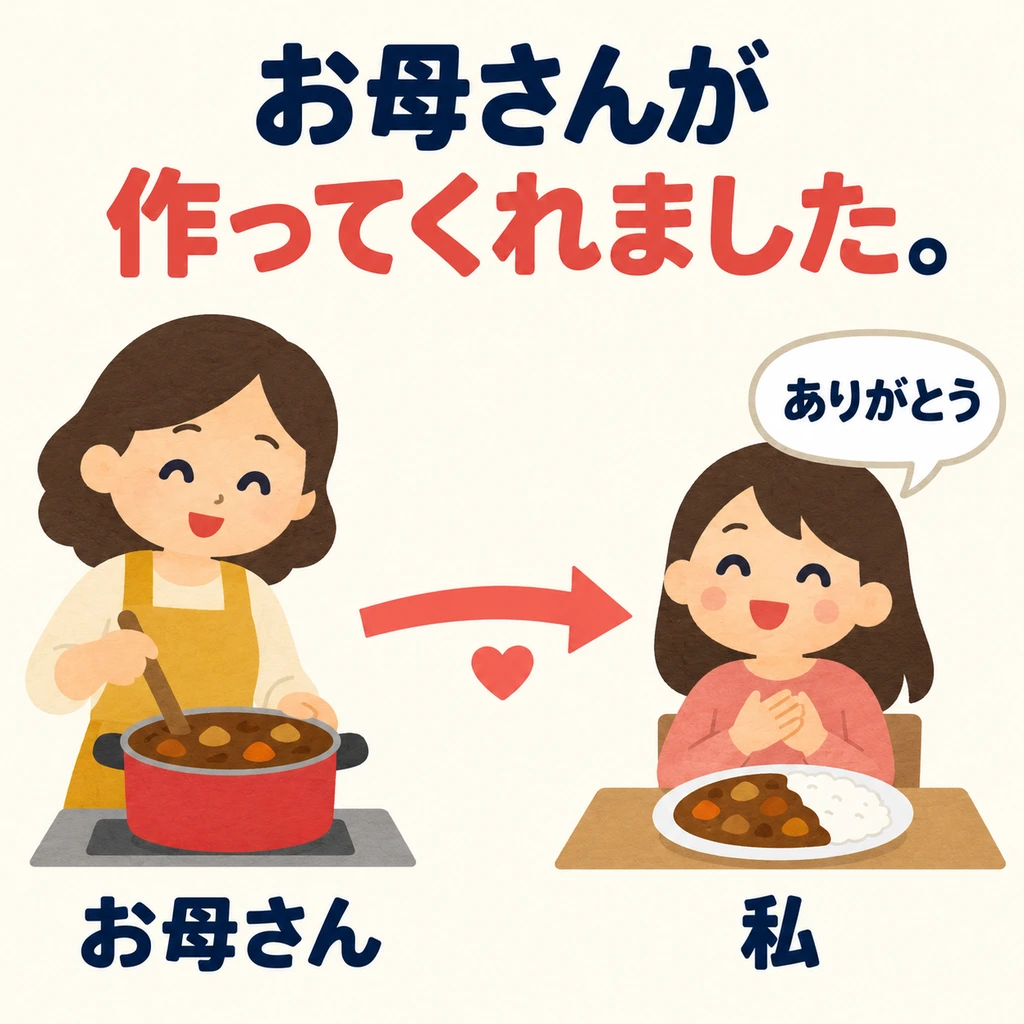
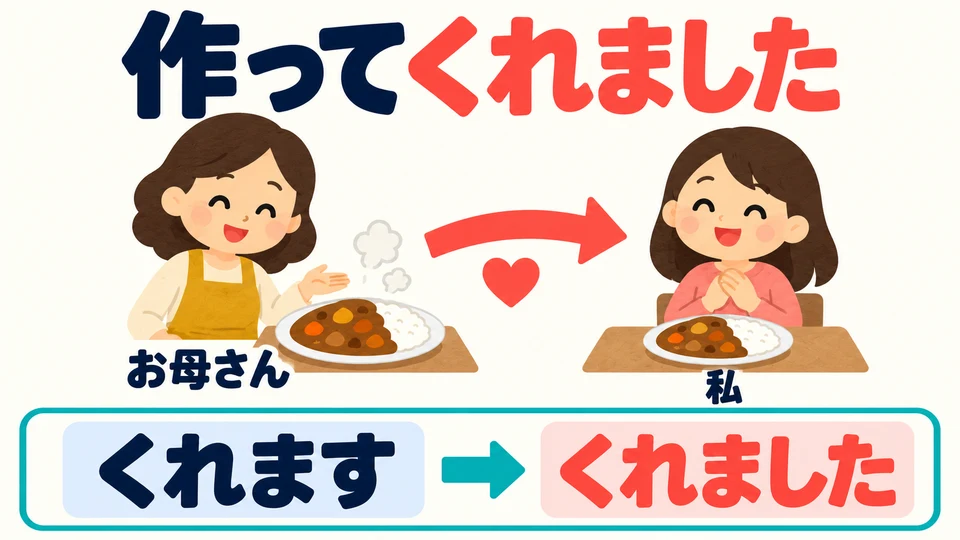
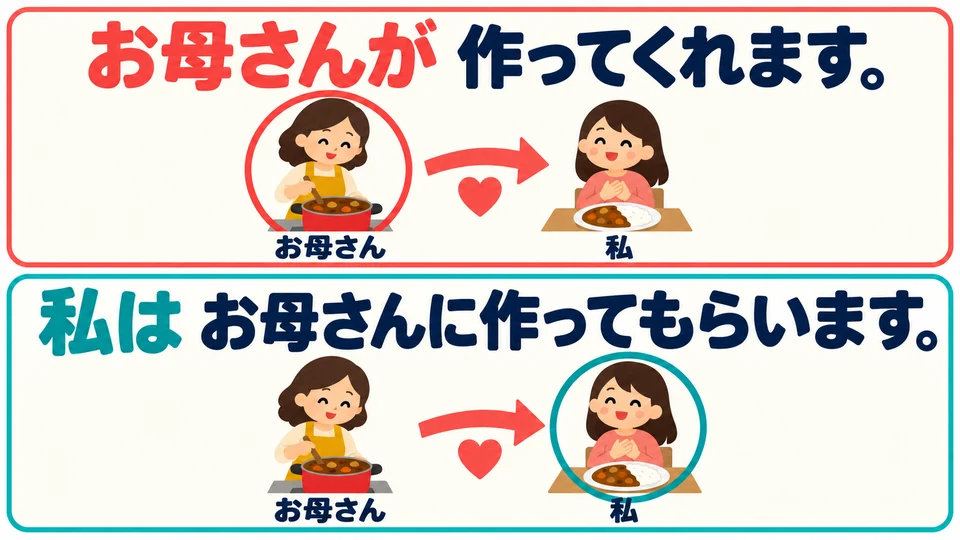
  1. Mom makes curry, and I benefit from her kindness. The arrow shows someone doing something for me.
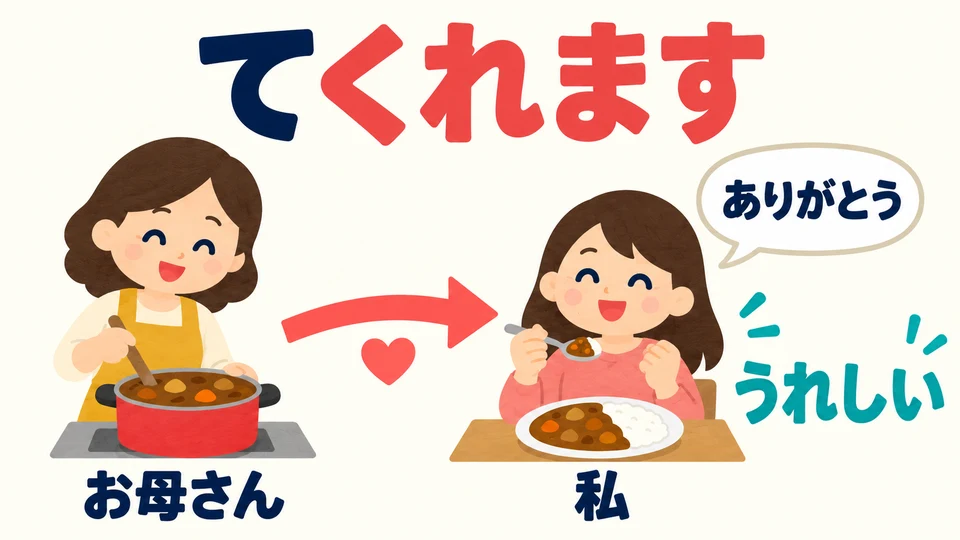
    Mom makes curry, and I benefit from her kindness. The arrow shows someone doing something for me.

  2. Use 「てくれます」 to describe someone doing something for you. It also conveys your happiness and gratitude.
    Use 「てくれます」 to describe someone doing something for you. It also conveys your happiness and gratitude.

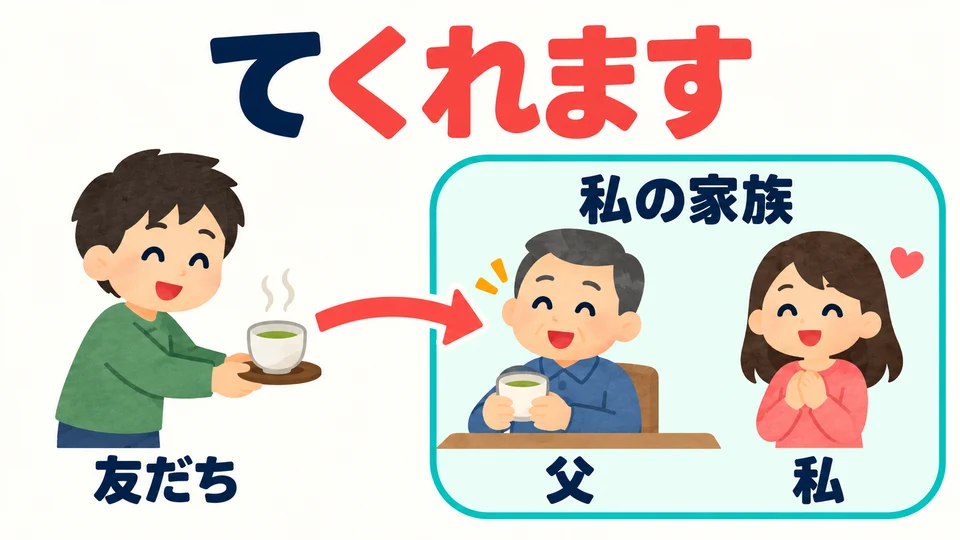
  3. The person who benefits can also be someone in my family. I can use this form when someone does something kind for them.
    The person who benefits can also be someone in my family. I can use this form when someone does something kind for them.

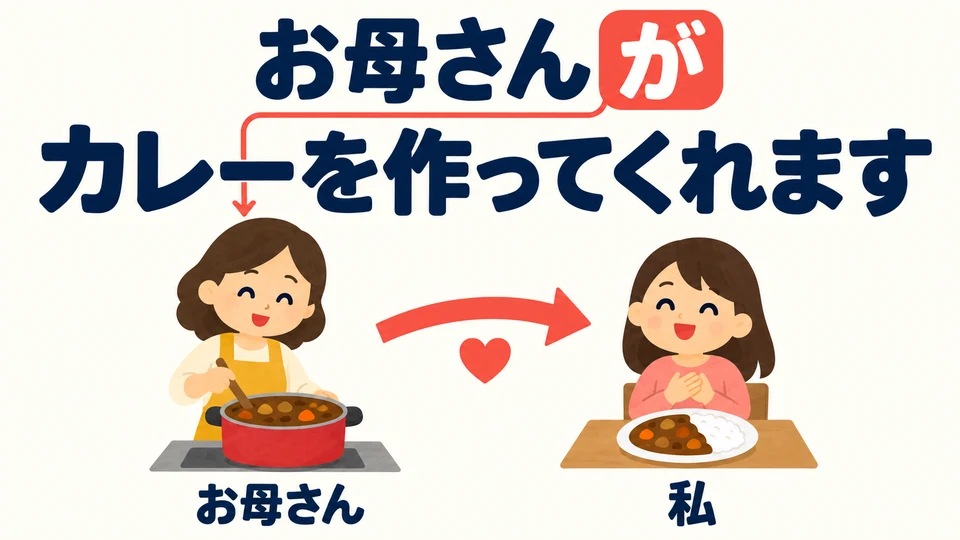
  4. The person doing the action is the subject, marked with 「が」. Who makes the curry in the picture? Mom does.
    The person doing the action is the subject, marked with 「が」. Who makes the curry in the picture? Mom does.

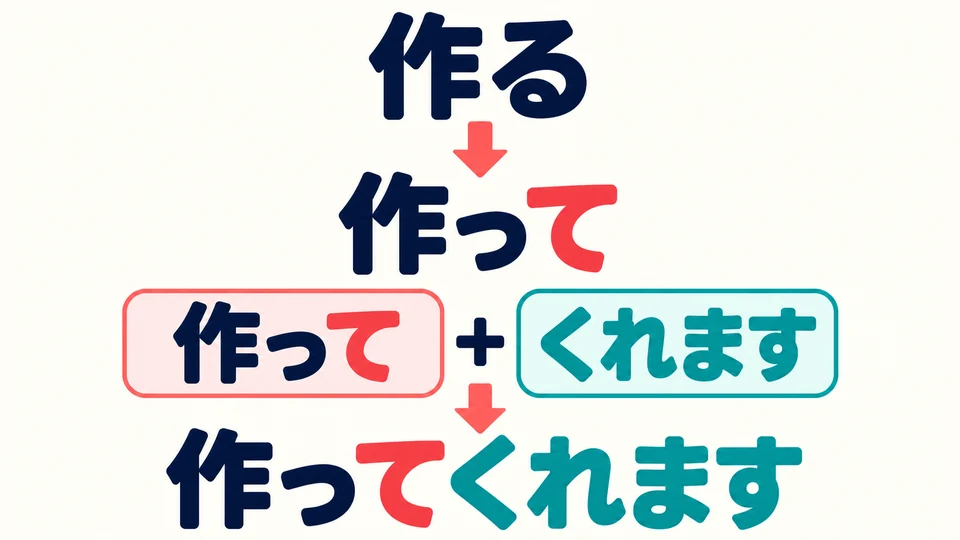
  5. Add 「くれます」 after the verb’s て-form. 「作る」 becomes 「作ってくれます」.
    Add 「くれます」 after the verb’s て-form. 「作る」 becomes 「作ってくれます」.

  6. Use 「くれました」 for a kind action that has already happened. In the picture, Mom has finished making the curry.
    Use 「くれました」 for a kind action that has already happened. In the picture, Mom has finished making the curry.

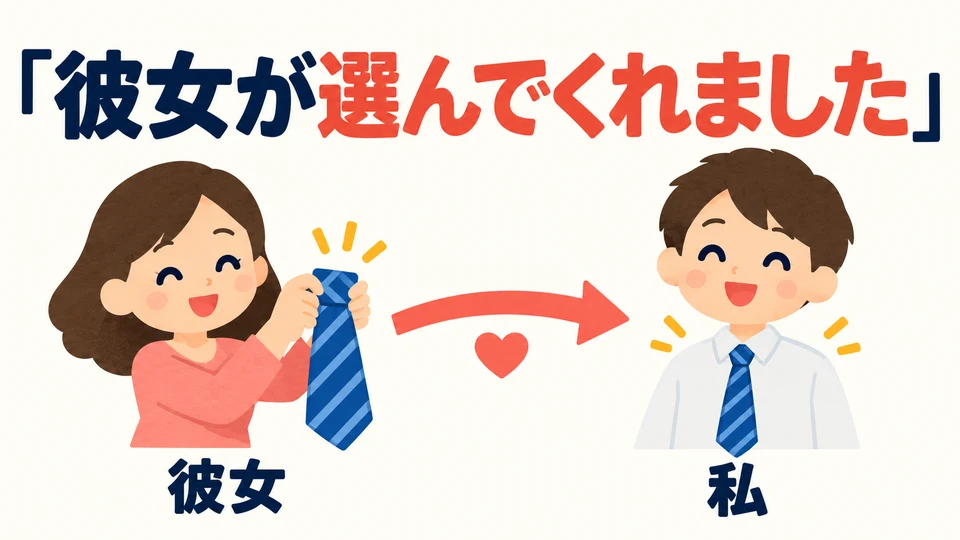
  7. When someone compliments your tie, say 「彼女が選んでくれました」 to share that she kindly chose it for you.
    When someone compliments your tie, say 「彼女が選んでくれました」 to share that she kindly chose it for you.

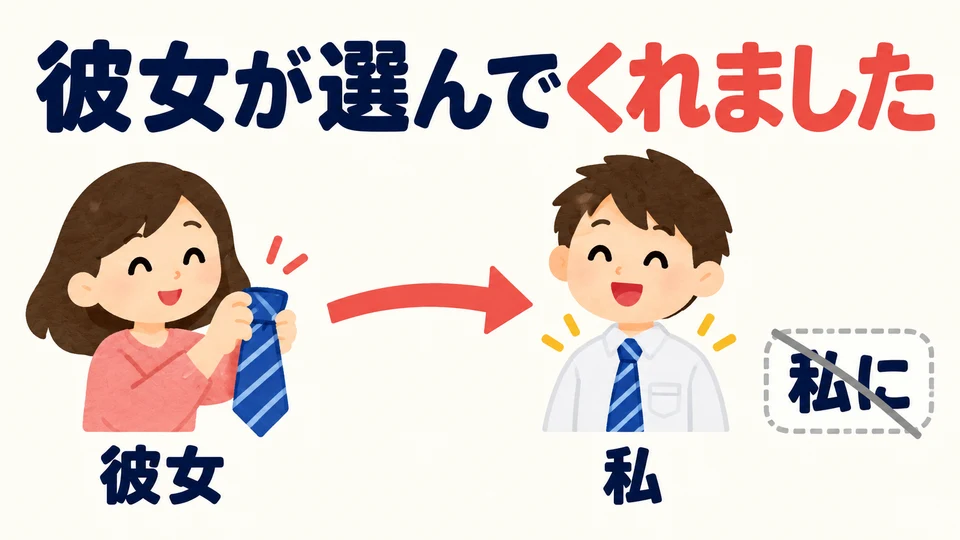
  8. When it is clear who benefits, “for me” is often left out. In the tie conversation, the listener still knows who received the favor.
    When it is clear who benefits, “for me” is often left out. In the tie conversation, the listener still knows who received the favor.

  9. Compare this with 「てもらいます」, which you already learned: its subject is the person who benefits. With 「てくれます」, the subject is the person doing the action.

Example sentences

  • 作っつくっtsukuてteくれましたkuremashita

    made it for me

  • お母さんおかあさんokaasanがgaおいしいoishiiカレーかれーkareeをo作っつくっtsuku

In a conversation

  • A
    いいネクタイねくたいですね。ね

    A: That's a nice tie.

  • B
    これ?これ彼女かのじょが選んえらんでくれました。くれました

    B: This? She picked it out for me.

  • A

Check yourself

  1. Level 0 · Conjugate

    Change to 〜てくれました: someone did it for you. 〜てくれました

    昨日、妹が宿題を(教えるおしえる)。

  2. Level 1 · Recognise

    Which sentence is correct?

  3. Level 1 · Recognise

    Listen and choose the meaning

  4. Level 2 · Build

    Put the words in order

    My mother made a delicious curry for me.

  5. Level 3 · Use

    What goes in the blank?

    妹が宿題を教え (丁寧な過去形)。

    My younger sister helped me with my homework.

More grammar in this theme

  • 〜てくれますsomeone does something for me

More JLPT N4 grammar

Keep practising

Test your Japanese vocabulary12 adaptive questions, freeCheck your pronunciationRead aloud and get a scorePractise verb forms10-question conjugation quizSee the whole courseGrammar, vocabulary and quizzes by theme

Compare this with 「てもらいます」, which you already learned: its subject is the person who benefits. With 「てくれます」, the subject is the person doing the action.

てte
くれましたkuremashita

My mother made delicious curry for me.

すてきです
ね。ね

A: How lovely.

Beginner 3
Helping Each Other
More quizzesOpen this lesson’s quizzes in the course
〜てあげますdo something to help someone
〜てもらいますreceive someone’s help
Nをいただきますhumbly receive something
Nをくださいますsomeone respectfully gives me something
〜ていただきますhumbly receive someone’s help
〜てくださいましたrespectful help received
Previous〜てもらいます
NextNをいただきます
See all 138
お〜します/ご〜しますhumble action for others
〜く/〜に+動詞describe how an action is done
〜ている間にduring an ongoing action
〜くします/〜にしますmake something a certain way
〜ように、〜action toward a desired result
〜ようにしてくださいgentle request to make sure
お〜ください/ご〜くださいformal polite instruction
〜そうです(様態)looks about to happen