
Japanese grammar · ≈ JLPT N4 · Beginner 3
〜そうです(様態)~sou desu
looks about to happen
Attach 「〜そうです」 to a verb stem to predict an imminent change from visible signs, without certainty.
How it works
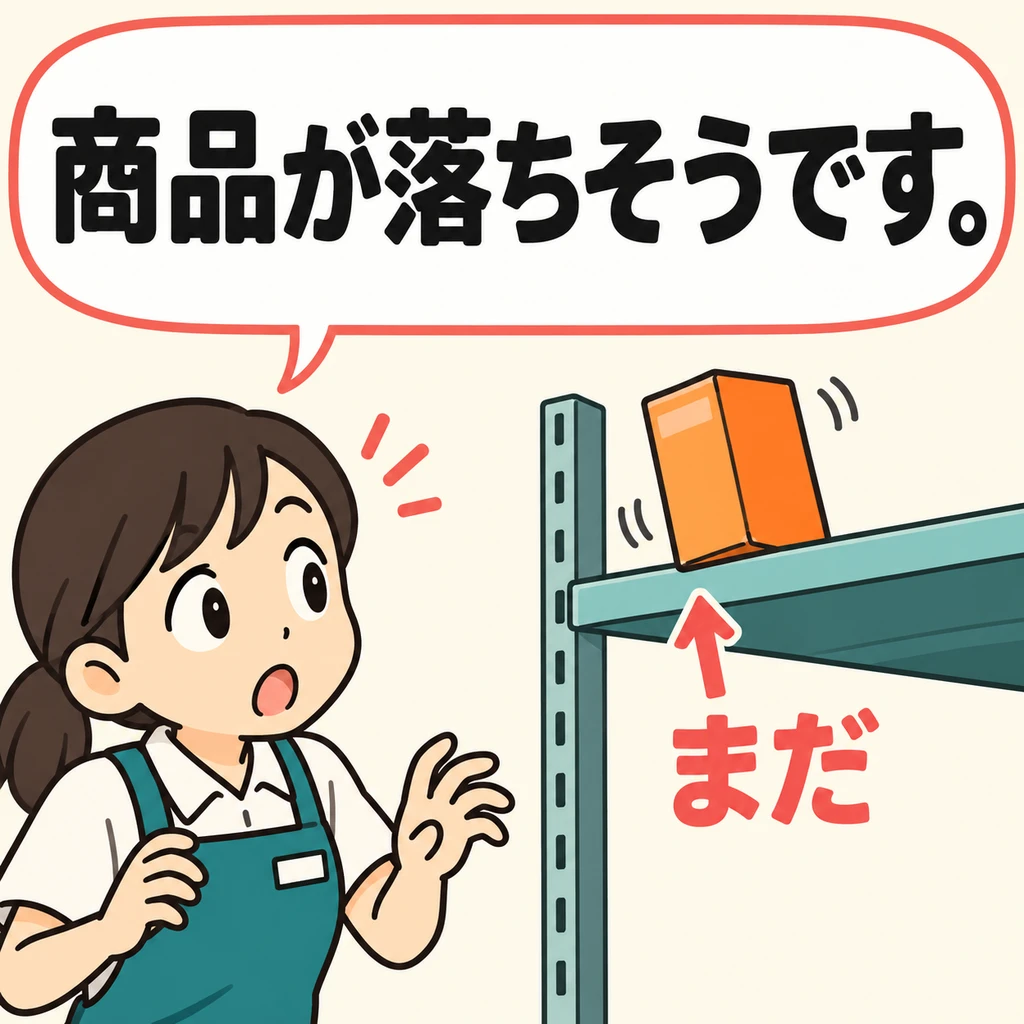
Look at the shaking shelf. The product is still on it—what do you think will happen next?
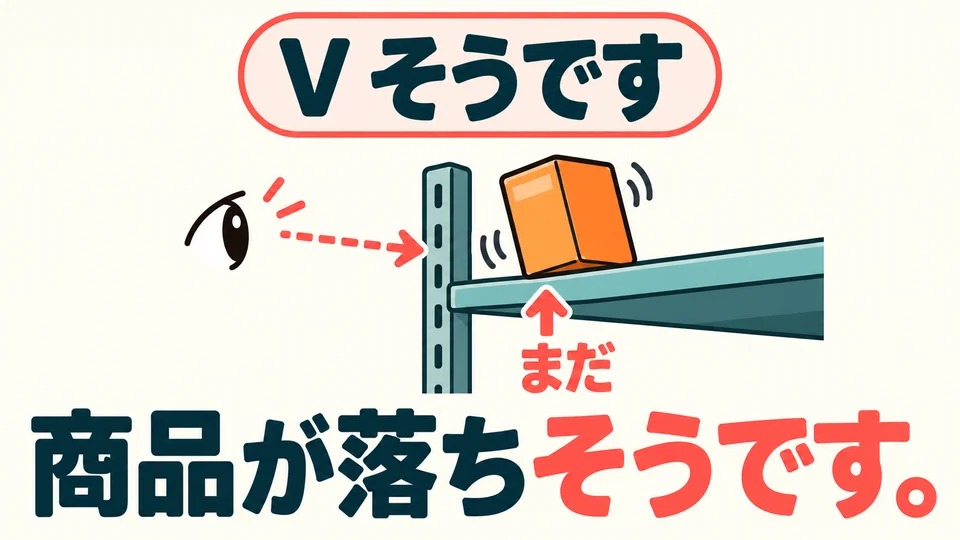
Use “verb + そうです” when visible signs suggest that a change is about to happen.
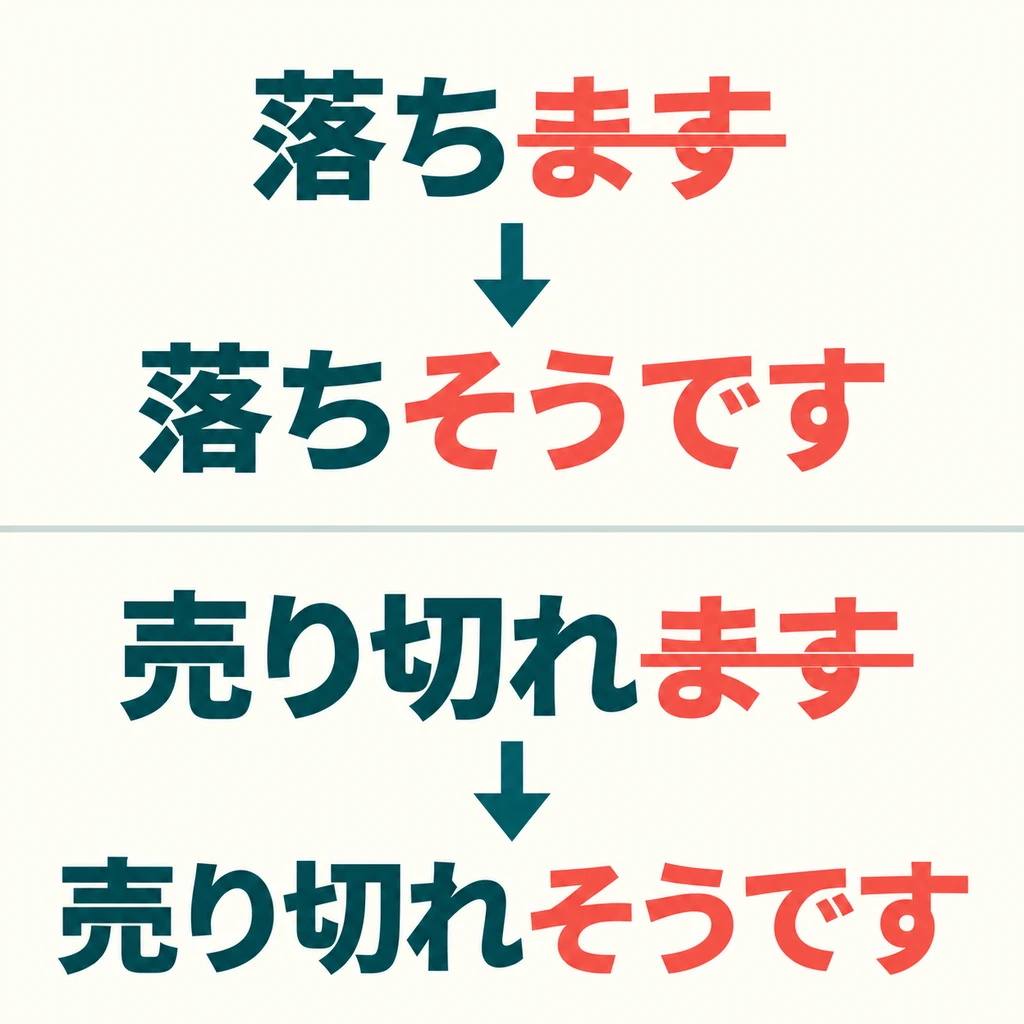
Remove 「ます」 from the verb’s ます form, then add 「そうです」. Do not attach it to the dictionary form.
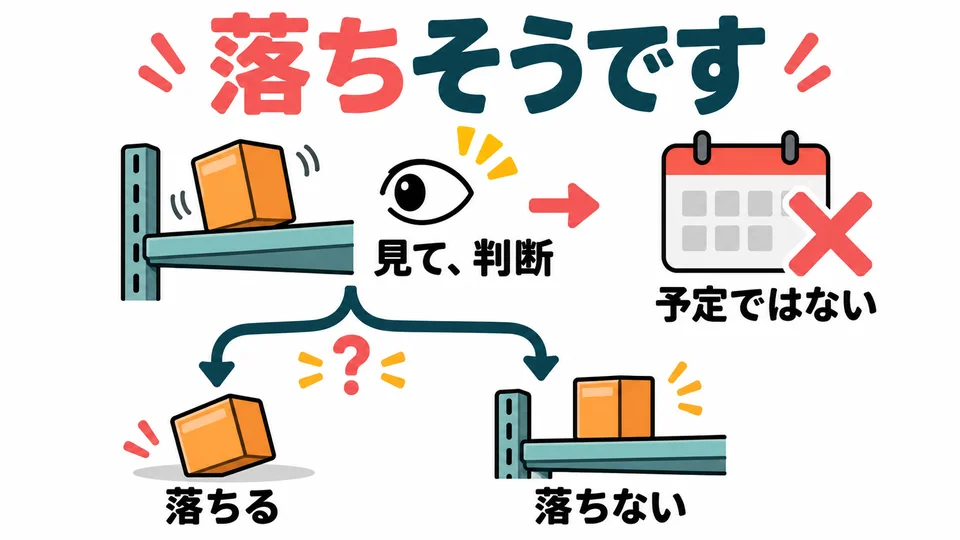
This expresses a judgment based on signs, not your own plan. It does not guarantee that the event will happen.
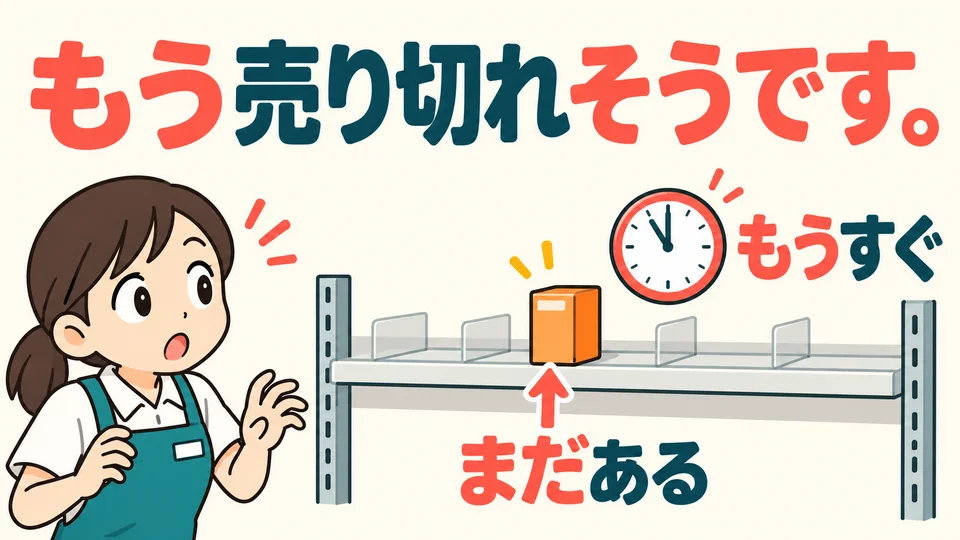
In the example, 「もう」 emphasizes that the product is nearly sold out. 「売り切れそう」 still predicts this before it has sold out.
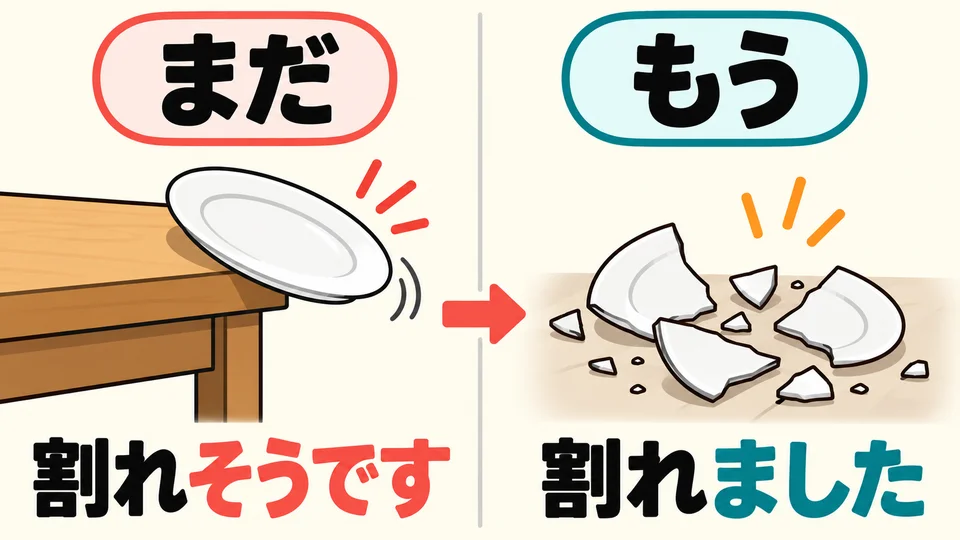
If the plate has not broken yet, use 「割れそうです」. If it has already broken, say 「割れました」.
Example sentences
- お皿osaraがga割れwareそうです。soudesu
It looks like the plate is going to break.
- このkono商品、shouhinもうmou売りuri
In a conversation

- Aあれ、棚が揺れていませんか。
A: Huh, isn't the shelf shaking?
- B本当だ。商品が落ちそうです。
B: You're right. The products look like they're about to fall.
Check yourself
Level 1 · Recognise
Which sentence is correct?
Level 1 · Recognise
Listen and choose the meaning
Level 2 · Build
Put the words in order
The plate looks like it's about to break.
Level 3 · Use
What goes in the blank?
お皿が です。
It looks like the plate is about to break.
More grammar in this theme
- 〜そうです(様態)looks about to happen