JPEDLAB iconJPEDLAB
Save history

Create an account and play

Explore first, then save your progress whenever you are ready. No email address is required.

Start free
Read as articleCards
See the whole course›Beginner 3›Social Life

Japanese grammar · ≈ JLPT N4 · Beginner 3

〜ておきます~te okimasu

leave in a state

Use 「〜ておきます」 to deliberately leave something in the state created by an action for a while.

Start the interactive lessonIllustrated cards, audio and speaking practice

How it works

  1. After the key is put down, it stays in the same place even after some time. Look at the picture to see what maintaining a state means.
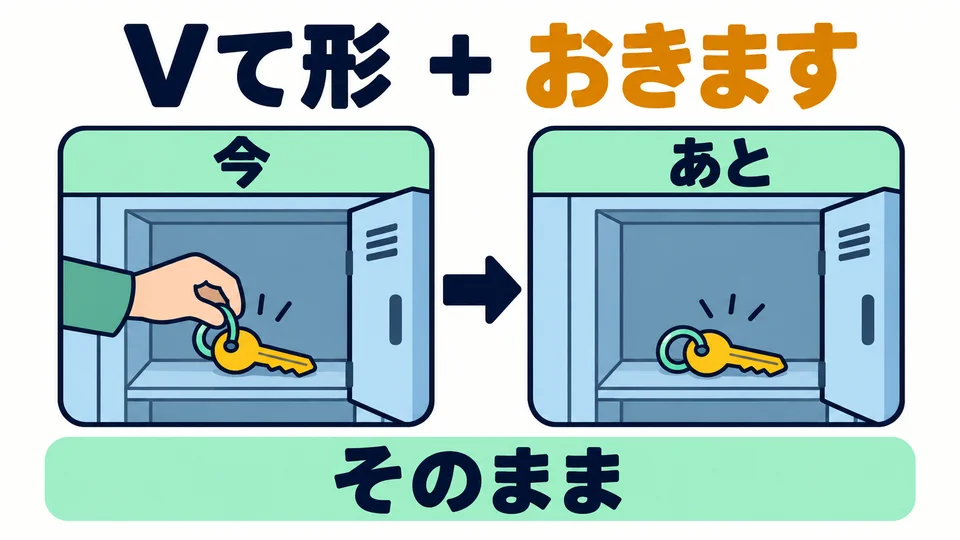
    After the key is put down, it stays in the same place even after some time. Look at the picture to see what maintaining a state means.

  2. Add 「おきます」 to a verb’s て-form to show that you keep the resulting state unchanged for a while.
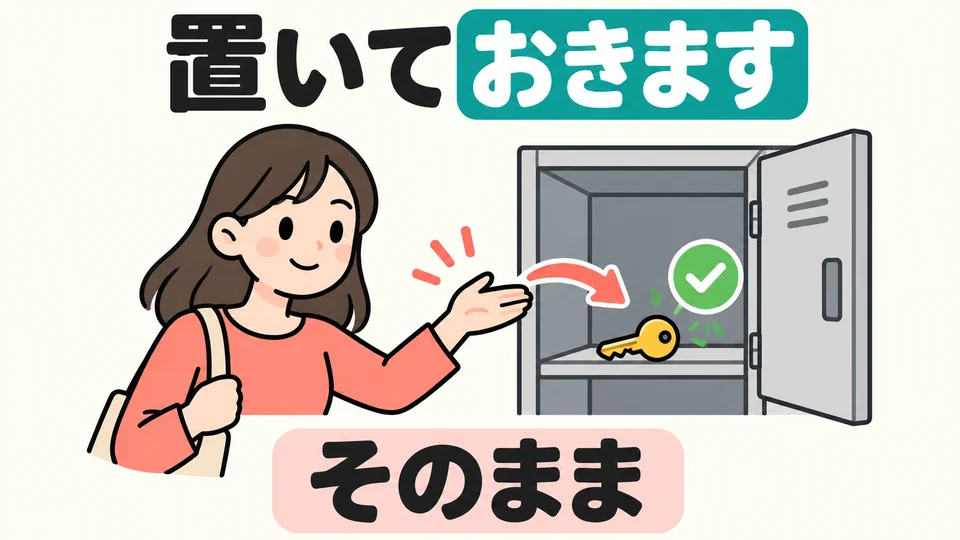
    Add 「おきます」 to a verb’s て-form to show that you keep the resulting state unchanged for a while.

  3. Here, you deliberately leave something as it is. It does not necessarily imply carelessness or neglect.
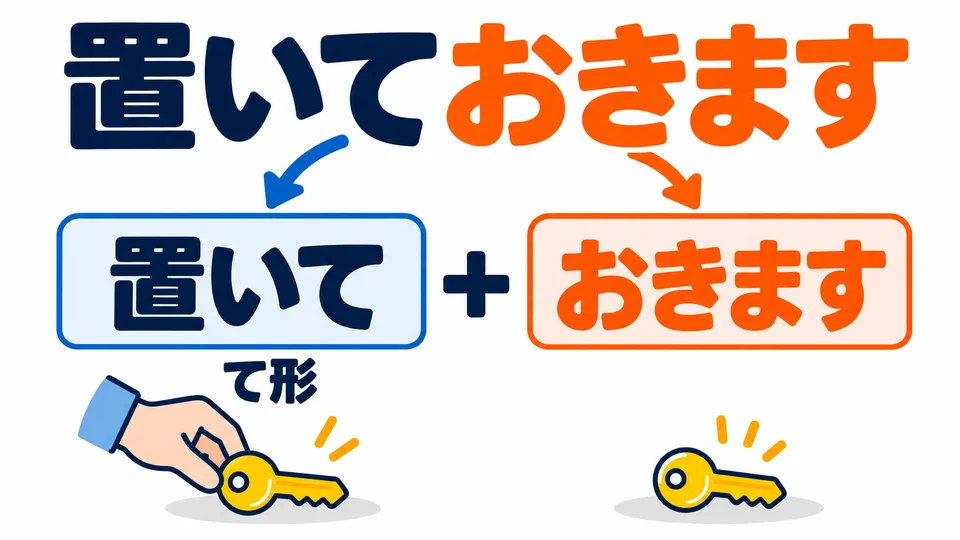
    Here, you deliberately leave something as it is. It does not necessarily imply carelessness or neglect.

  4. In the example 「置いておきます」, the first part, 「置いて」, is the て-form of the verb meaning “to put.”
    In the example 「置いておきます」, the first part, 「置いて」, is the て-form of the verb meaning “to put.”

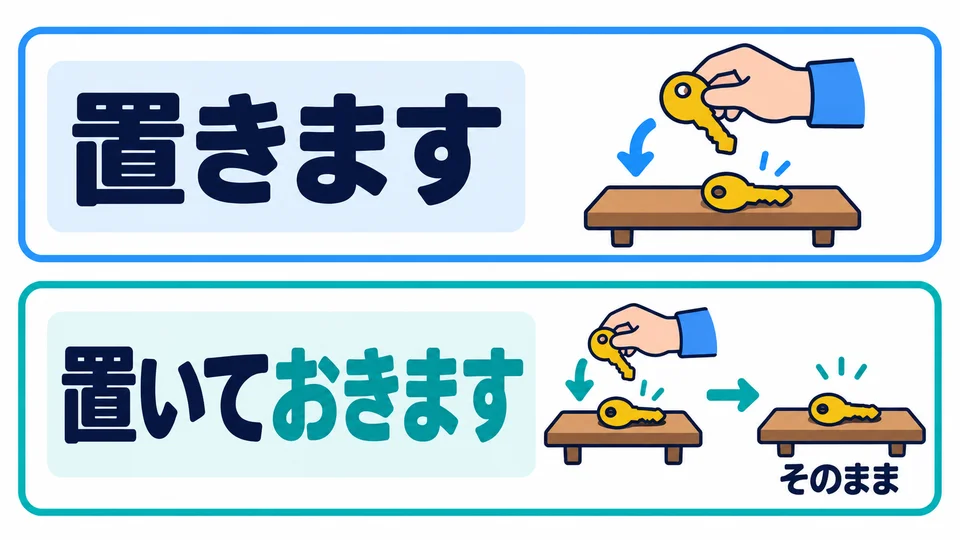
  5. 「置きます」 focuses on the action of putting something down. 「置いておきます」 also means leaving it there.

    「置きます」 focuses on the action of putting something down. 「置いておきます」 also means leaving it there.

Example sentences

  • ここkokoにni置いおいoiてteおきます。おきますokimasu

    I'll leave it here.

  • 休憩室きゅうけいしつkyuukeishitsuのno鍵かぎkagi

In a conversation

  • A
    午後ごごの会議かいぎの準備じゅんびはわできましたか。か

    A: Are you ready for this afternoon's meeting?

  • B
    はい、はい資料しりょうはわ会議室かいぎしつに

Check yourself

  1. Level 1 · Recognise

    Which sentence is correct?

  2. Level 1 · Recognise

    Listen and choose the meaning

  3. Level 2 · Build

    Put the words in order

    I'll prepare the materials for tomorrow's meeting in the conference room.

  4. Level 3 · Use

    What goes in the blank?

    荷物はここに置い 。

    I'll leave the luggage here.

More grammar in this theme

  • 〜ておきますleave in a state

Keep practising

Test your Japanese vocabulary12 adaptive questions, freeCheck your pronunciationRead aloud and get a scorePractise verb forms10-question conjugation quizSee the whole courseGrammar, vocabulary and quizzes by theme
をo
ロッカーろっかーrokkaa
にni
置いおいoi
てte
おきますokimasu

I'll leave the break room key in the locker.

置いおい
て
おきました。おきました

B: Yes, I've left the materials in the meeting room.

  • A
    ありがとうございます。ございます鍵かぎはわどうしますか。か

    A: Thank you. What about the key?

  • B
    ロッカーろっかーに返しかえしておきます。おきます

    B: I'll put it back in the locker.

  • A
    分かりました。わかりましたよろしくお願いおねがいします。します

    A: Understood. Thanks for your help.

  • 〜ことになっていますestablished rule or convention
    〜ように、〜action toward a desired result
    〜ようにしてくださいgentle request to make sure
    お〜ください/ご〜くださいformal polite instruction
    〜そうです(様態)looks about to happen
    〜てしまいましたcompletely finished
    〜ことになっていますsettled plan or assignment
    Previous〜そうです(様態)
    Next〜てしまいました