JPEDLAB iconJPEDLAB
Save history

Create an account and play

Explore first, then save your progress whenever you are ready. No email address is required.

Start free
Read as articleCards
See the whole course›Beginner 3›Helping Each Other

Japanese grammar · ≈ JLPT N4 · Beginner 3

〜てくださいました~te kudasaimashita

respectful help received

Use 「〜てくださいました」 to respectfully describe help an elder or superior gave you and express gratitude.

Start the interactive lessonIllustrated cards, audio and speaking practiceTake the quiz
Pattern
〜てくださいました
Romaji
~te kudasaimashita
JLPT (approx.)
≈ N4
Course level
Beginner 3
Theme
Helping Each Other

How it works

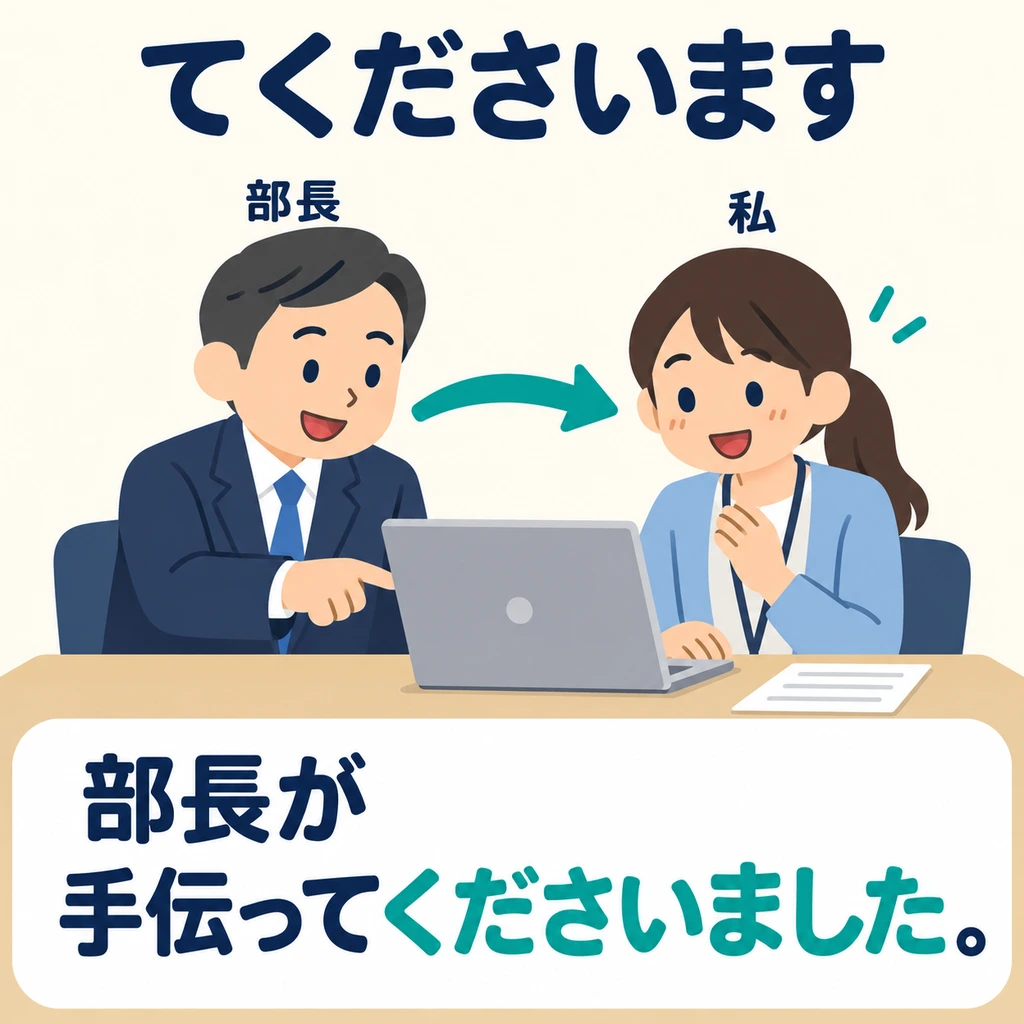
  1. The manager helps me with my work. Look at the arrow: who gives the help, and who benefits from it?
    The manager helps me with my work. Look at the arrow: who gives the help, and who benefits from it?

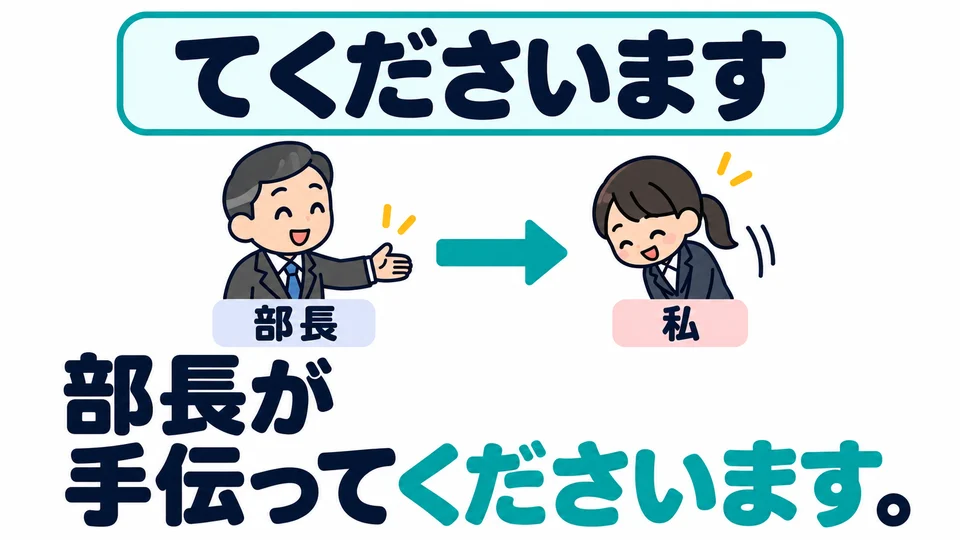
  2. When an elder or superior does something for me, 「てくださいます」 shows respect for the person helping.
    When an elder or superior does something for me, 「てくださいます」 shows respect for the person helping.

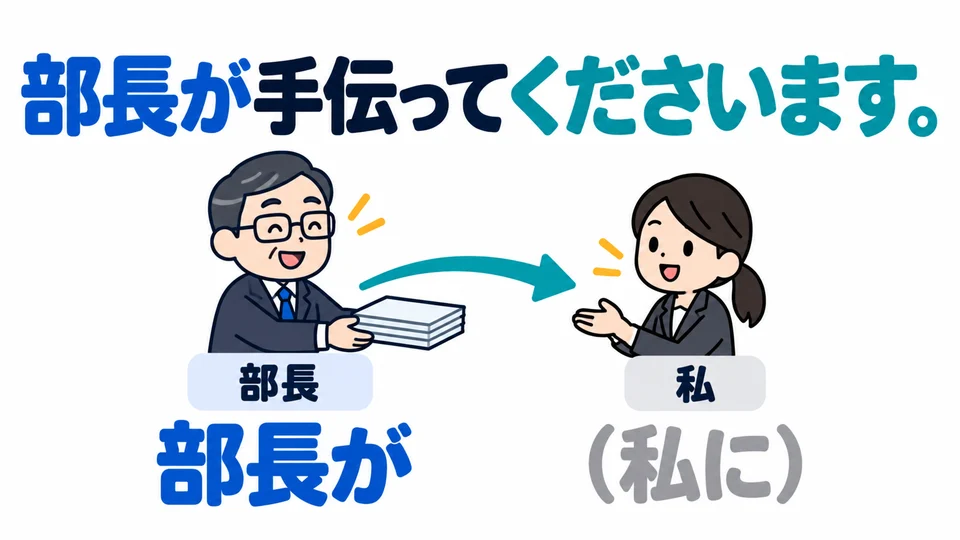
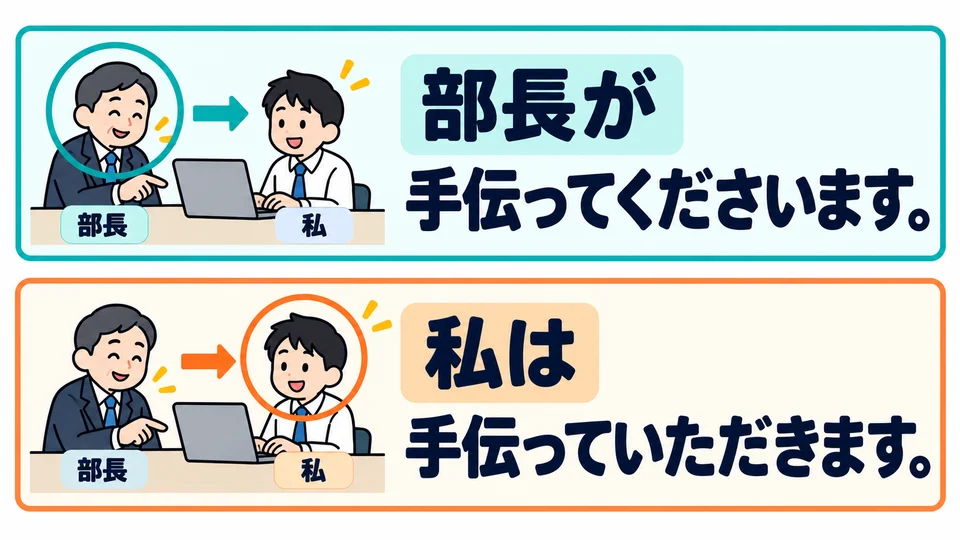
  3. 「部長が」 identifies the person doing the action. I receive the benefit, and 「私に」 is often left out.
    「部長が」 identifies the person doing the action. I receive the benefit, and 「私に」 is often left out.

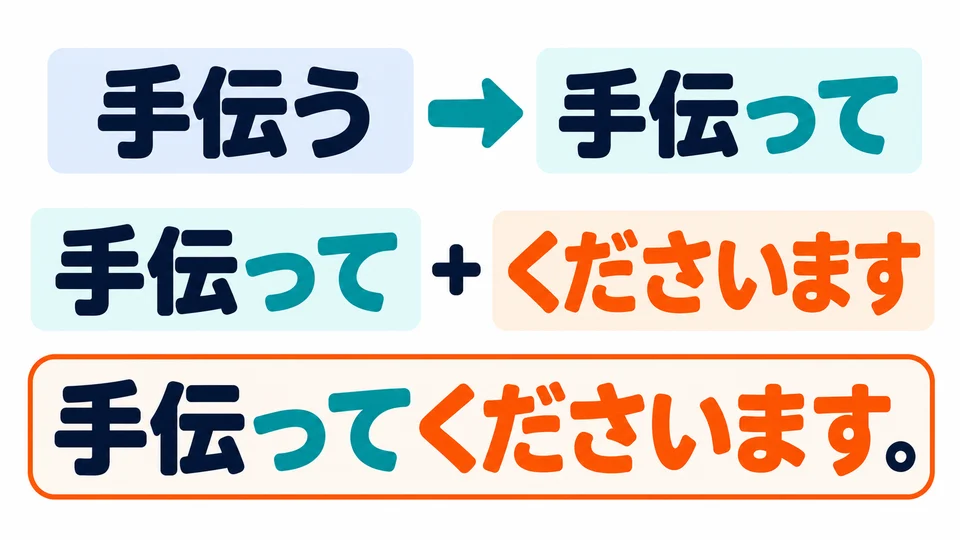
  4. First put the action verb in the て-form, then add 「くださいます」: 手伝う→手伝って.
    First put the action verb in the て-form, then add 「くださいます」: 手伝う→手伝って.

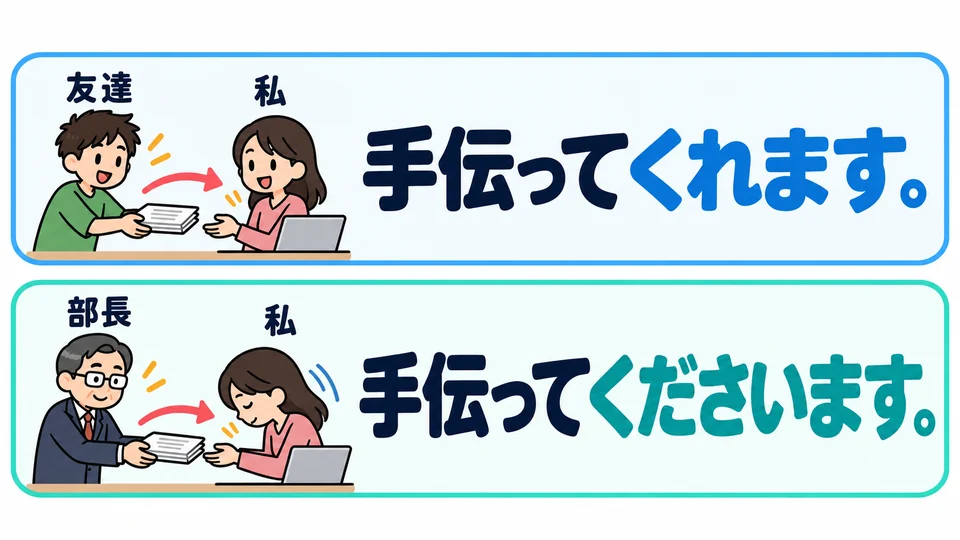
  5. 「てくれます」 also means someone does something for me. 「てくださいます」 shows greater respect for that person.
    「てくれます」 also means someone does something for me. 「てくださいます」 shows greater respect for that person.

  6. Compare the subjects: 部長が手伝ってくださいます/私は手伝っていただきます.
    Compare the subjects: 部長が手伝ってくださいます/私は手伝っていただきます.

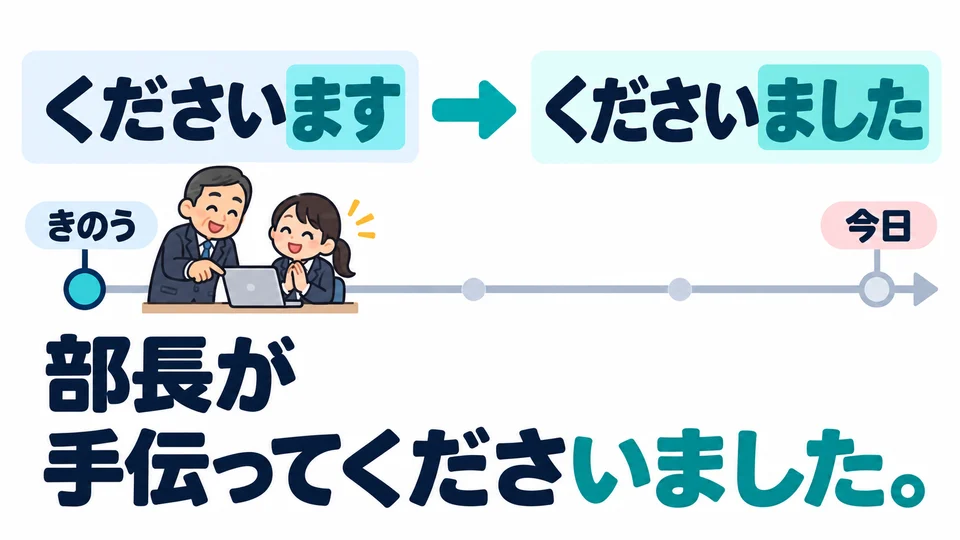
  7. The help in the example has already happened, so the past form 「くださいました」 is used, expressing gratitude.
    The help in the example has already happened, so the past form 「くださいました」 is used, expressing gratitude.

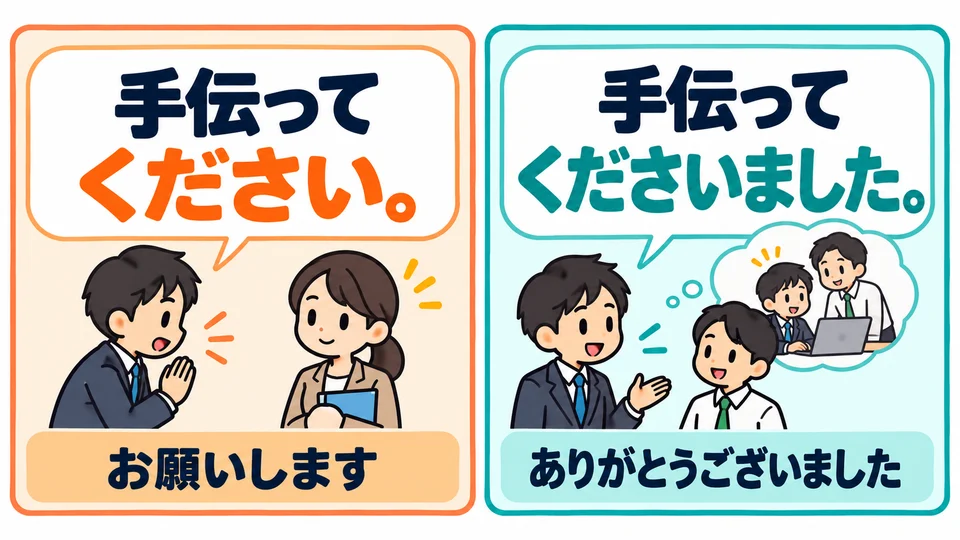
  8. 「手伝ってください」 is a request. In the example, 「手伝ってくださいました」 describes help that was given.

    「手伝ってください」 is a request. In the example, 「手伝ってくださいました」 describes help that was given.

Example sentences

  • 部長ぶちょうbuchouがga手伝ってつだっtetsudaてteくださいました。くださいましたkudasaimashita

    The manager helped me out.

In a conversation

  • A
    部長さん、ぶちょうさんお忙しいおいそがしいんですか。か

    A: Is the manager very busy?

  • B
    はい、はいでも私わたしのプロジェクトぷろじぇくとを手伝ってつだっ

Check yourself

  1. Which sentence is correct?

    1. 先生が推薦状を書いてくださいました。
    2. 先生が推薦状を書くてくださいました。
    3. 先生は推薦状を書いてくださいましたました。
    4. 先生が推薦状を書いてくださいた。
    Show answer

    Answer: A 先生が推薦状を書いてくださいました。

  2. Which sentence is correct?

    1. 社長が記念品を贈ってくださいました。
    2. 社長が記念品を贈るてくださいました。
    3. 社長は記念品を贈ってくださいましたました。
    4. 社長が記念品を贈ってくだざいました。
    Show answer

    Answer: A 社長が記念品を贈ってくださいました。

  3. Which sentence is correct?

    1. 入院中に見舞いに来てくださいました。
    2. 入院中に見舞いにきてくださいました。
    3. 入院中に見舞いにこてくださいました。
    4. 入院中に見舞いに来てくださいましたでした。
    Show answer

    Answer: A 入院中に見舞いに来てくださいました。

More grammar in this theme

  • 〜てくださいましたrespectful help received

Keep practising

Test your Japanese vocabulary12 adaptive questions, freeCheck your pronunciationRead aloud and get a scorePractise verb forms10-question conjugation quizSee the whole courseGrammar, vocabulary and quizzes by theme
て
くださいました。くださいました

B: Yes, but he still helped me with my project.

  • A
    そうですか。か部長ぶちょうが直接ちょくせつ手伝ってつだってくれるなんて、なんてすばらしいですね。ね

    A: I see. It's amazing that the manager helped directly.

  • Take the quiz
    〜てあげますdo something to help someone
    〜てもらいますreceive someone’s help
    〜てくれますsomeone does something for me
    Nをいただきますhumbly receive something
    Nをくださいますsomeone respectfully gives me something
    〜ていただきますhumbly receive someone’s help
    Previous〜ていただきます