
Japanese grammar · ≈ JLPT N4 · Beginner 3
NをくださいますN o kudasaimasu
someone respectfully gives me something
Use 「Nをくださいます」 to honor a teacher, elder, or superior who gives something to you.
How it works
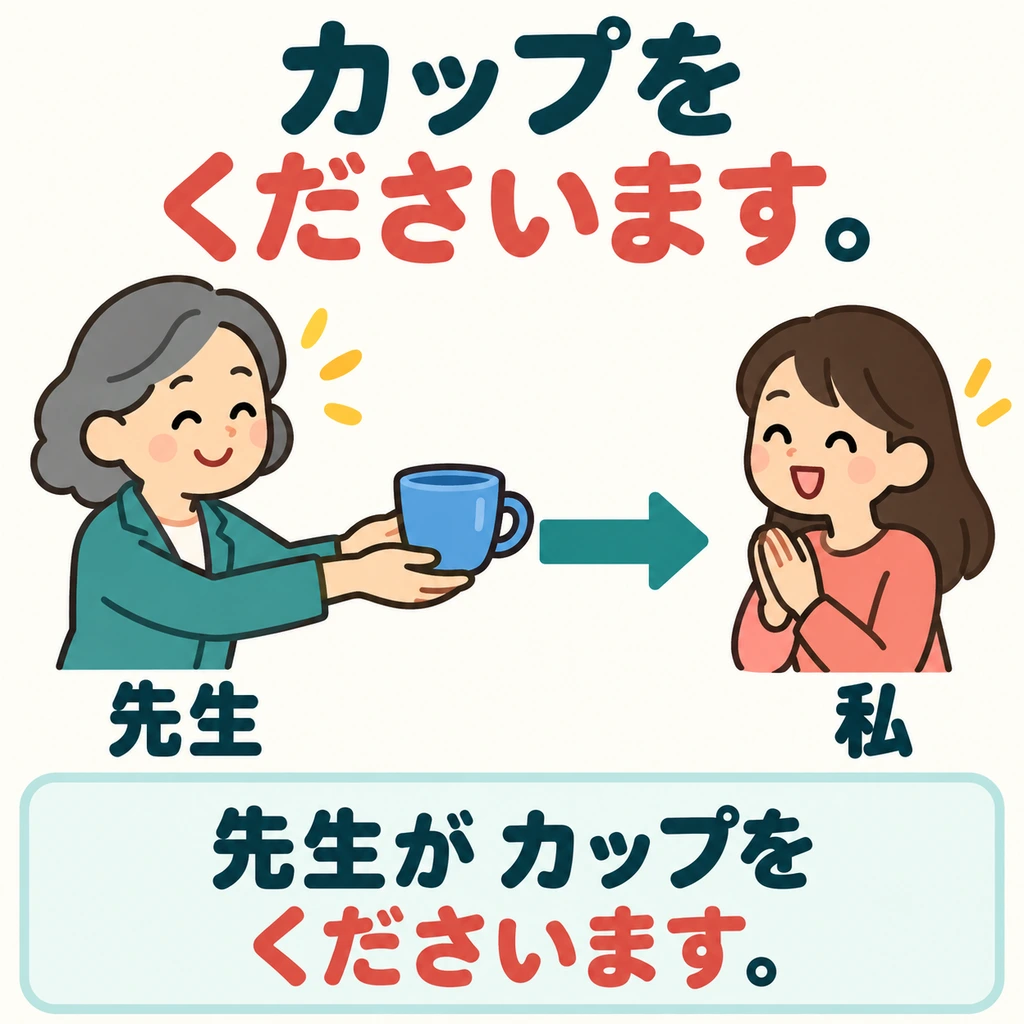
Look at the arrow: the cup goes from the teacher to me. This expression describes someone giving me something.
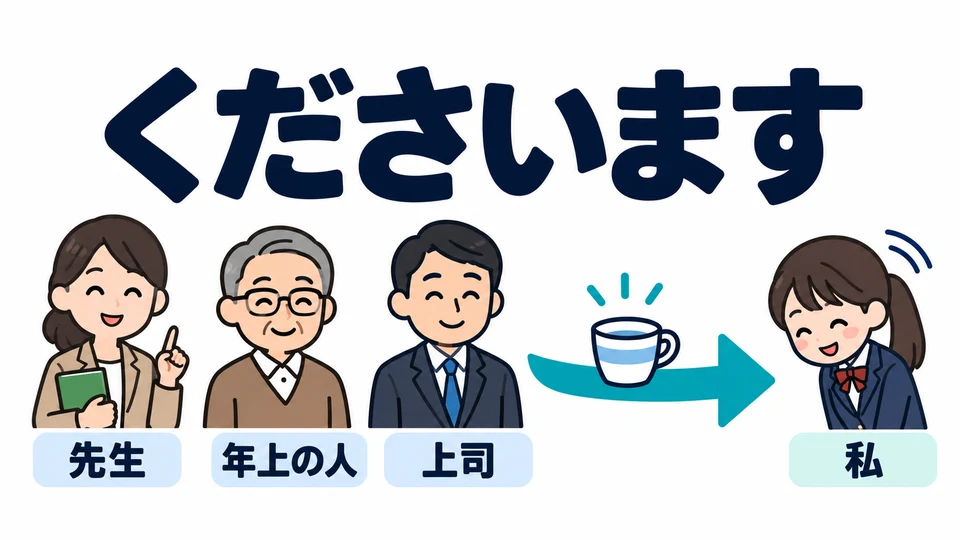
The giver may be a teacher, an elder or a supervisor. Use 「くださいます」 to show respect for that person.
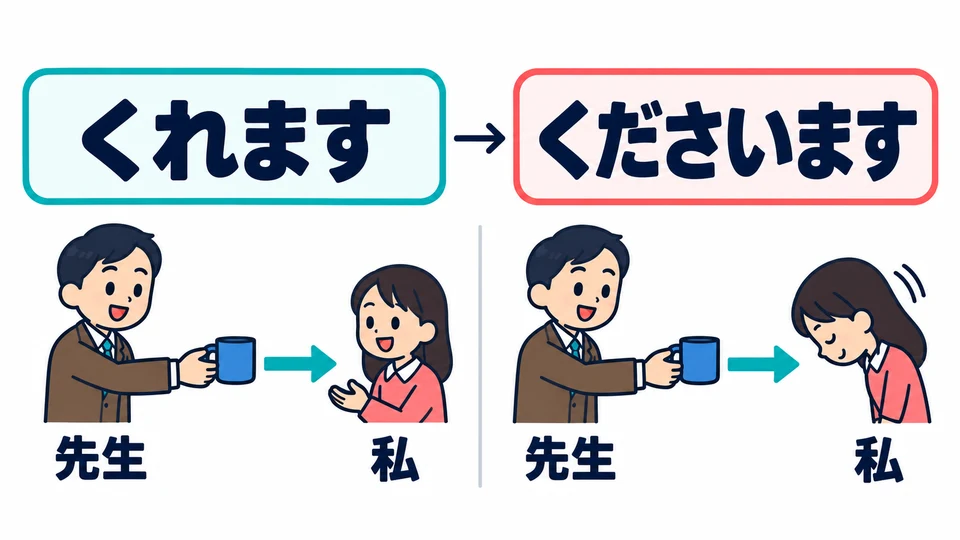
「くださいます」 is the honorific form of 「くれます」. The item still goes from the other person to me.
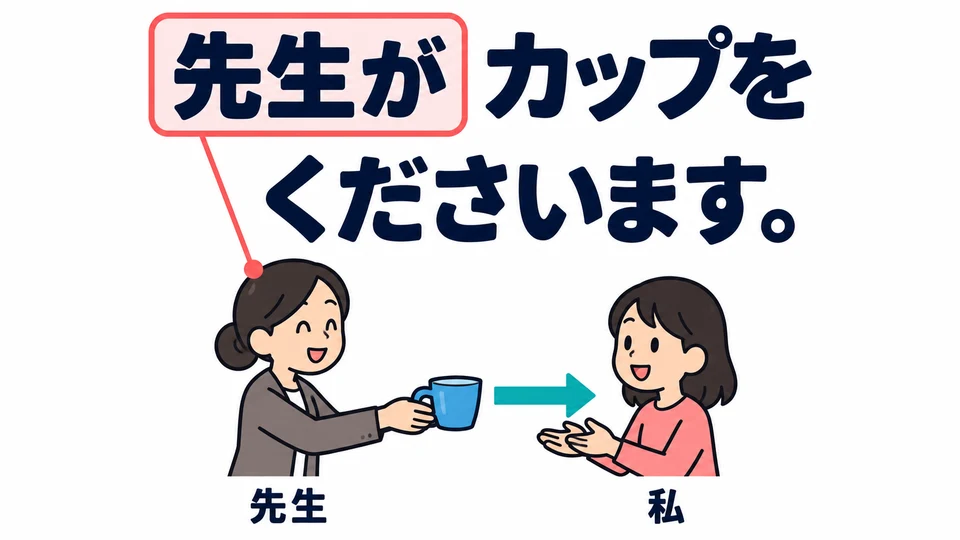
「先生が」 tells us who gives the item. The teacher is the subject of the sentence, not me, the person receiving the cup.
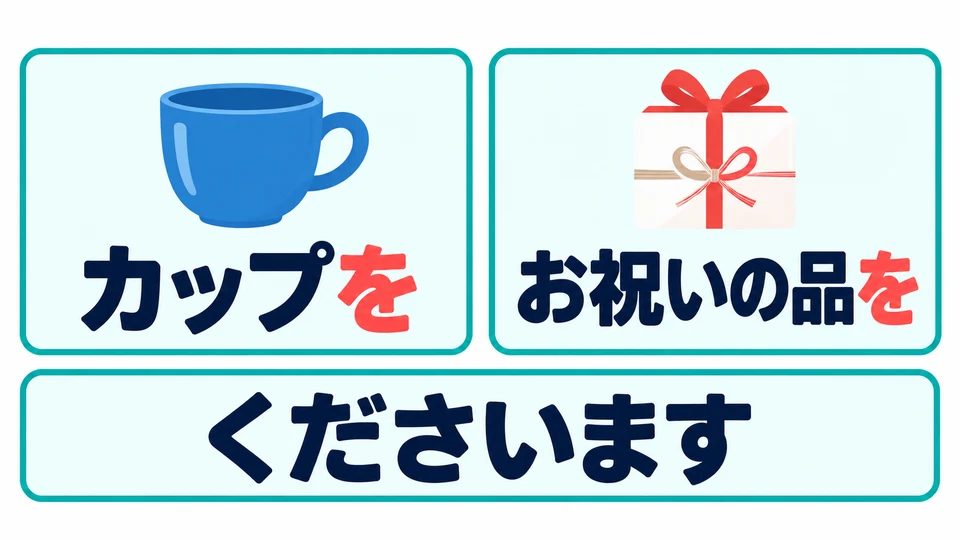
「カップを」 tells us what is given. If a supervisor gives a congratulatory gift, replace this part with 「お祝いの品を」.
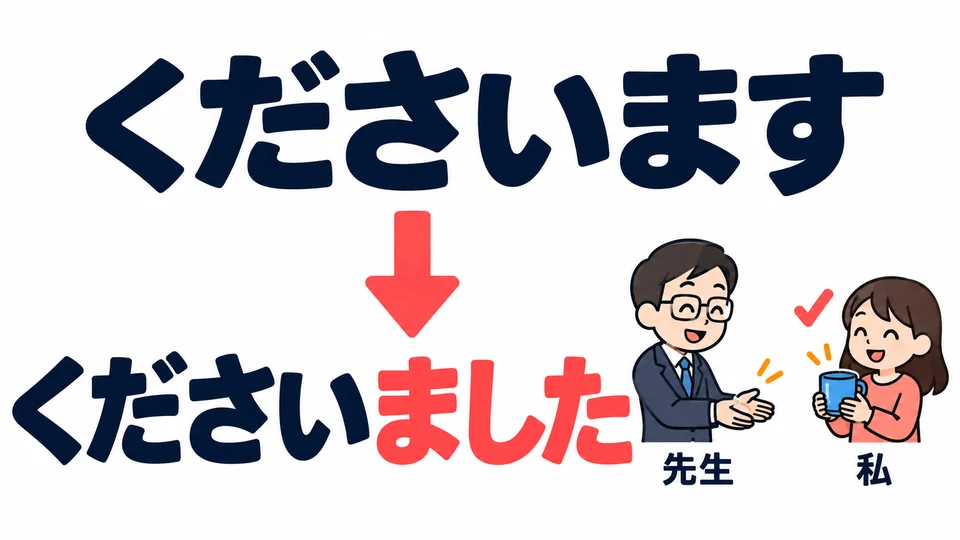
Use 「くださいました」 when the gift has already been given to me. Both the cup and the congratulatory gift in the original examples were given in the past.
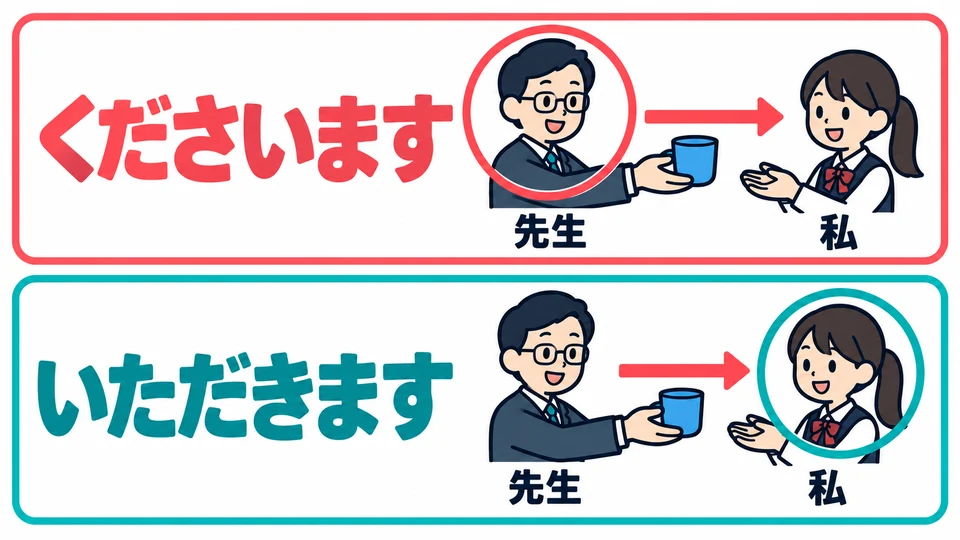
For the same gift, 「いただきます」 describes me receiving it, while 「くださいます」 describes the other person giving it.
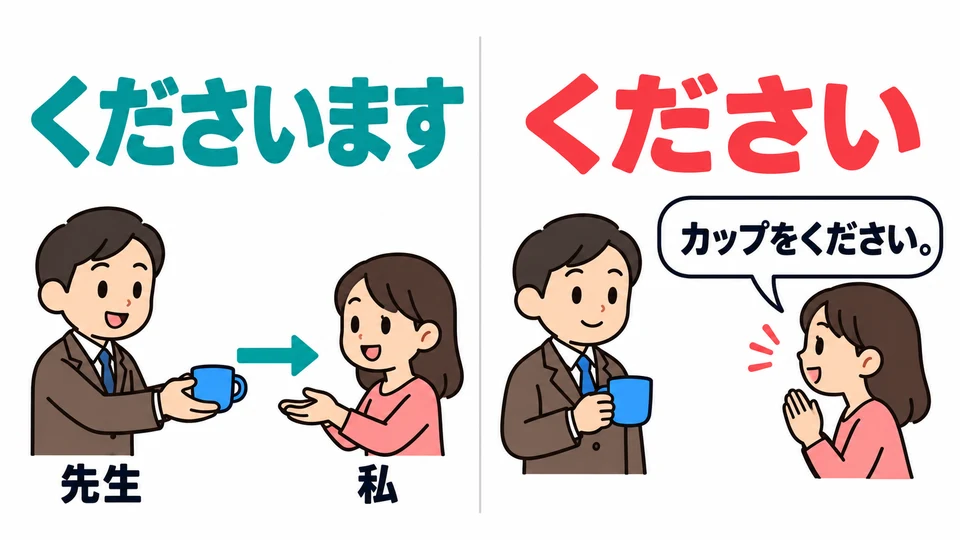
Do not confuse 「くださいます」 with 「ください」: the first says that someone gives me something; the second asks them to give it to me.
Example sentences
- 高級koukyuuなカップnakappuをoくださいました。kudasaimashita
They gave me a high-quality cup.
- 上司joushiがgaお祝いoiwaiの
In a conversation

- Aすてきなカップですね。どこで買ったんですか。
A: What a lovely cup. Where did you buy it?
- Bこれですか。先生
Check yourself
Level 1 · Recognise
Which sentence is correct?
Level 1 · Recognise
Listen and choose the meaning
Level 2 · Build
Put the words in order
The teacher gave me a wonderful book.
Level 3 · Use
What goes in the blank?
上司がお祝いの品 ました。
My boss gave me a congratulatory gift.
More grammar in this theme
- Nをくださいますsomeone respectfully gives me something