
Japanese grammar · ≈ JLPT N4 · Beginner 3
〜てくださいました~te kudasaimashita
respectful help received
Use 「〜てくださいました」 to respectfully describe help an elder or superior gave you and express gratitude.
How it works
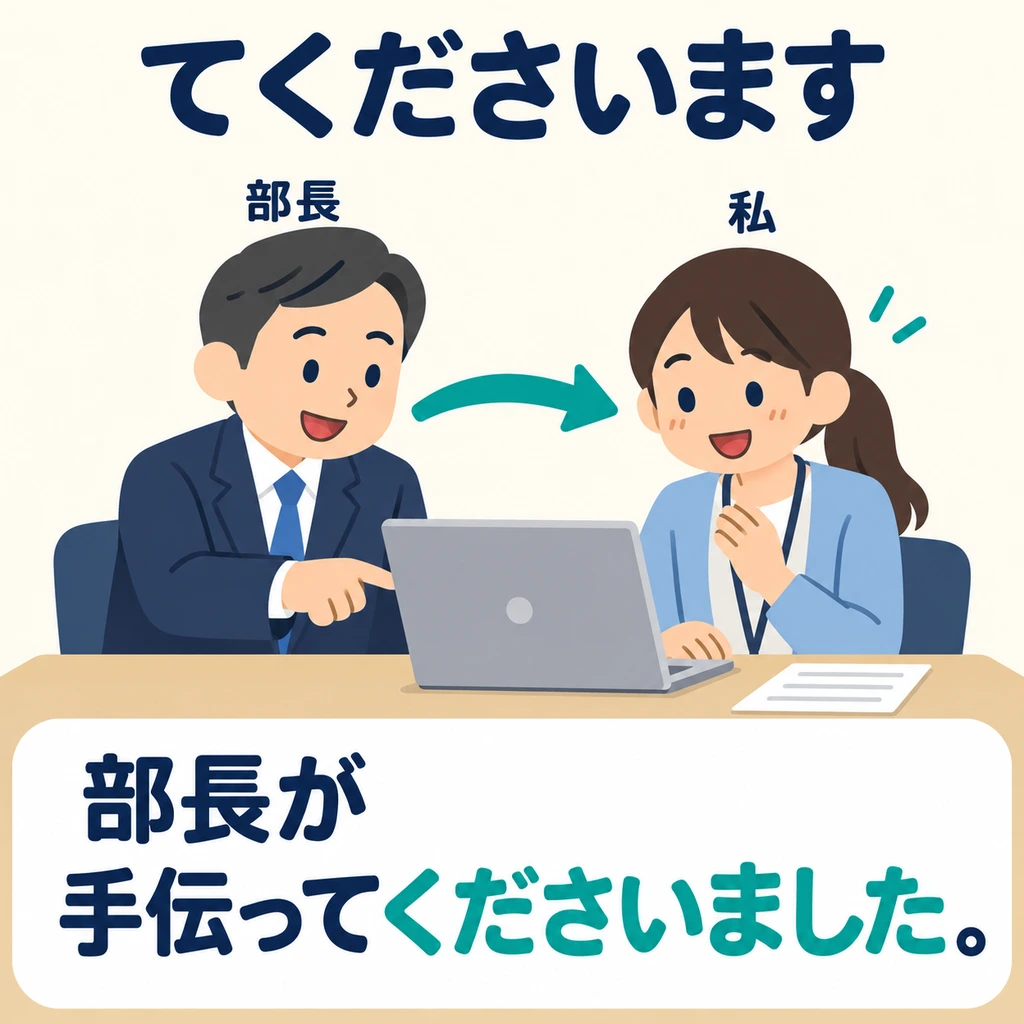
The manager helps me with my work. Look at the arrow: who gives the help, and who benefits from it?
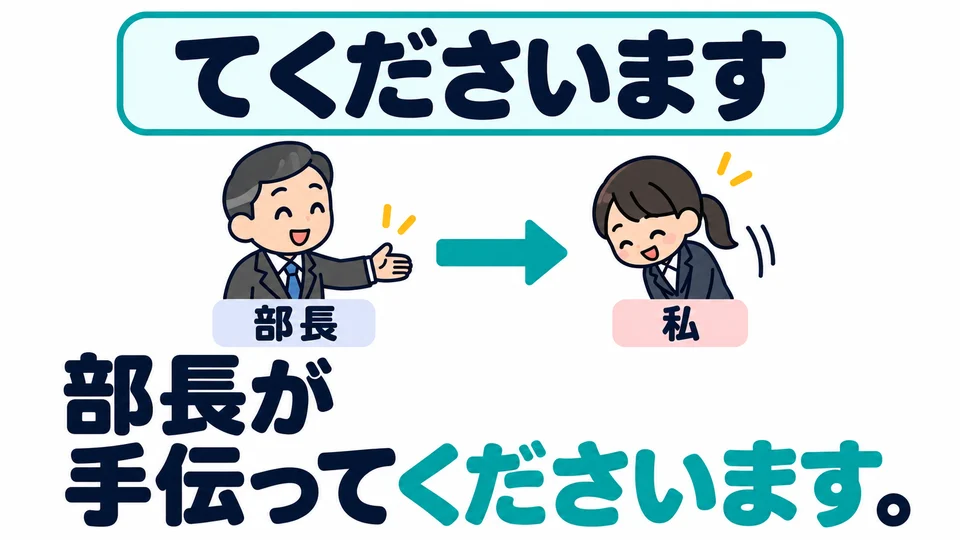
When an elder or superior does something for me, 「てくださいます」 shows respect for the person helping.
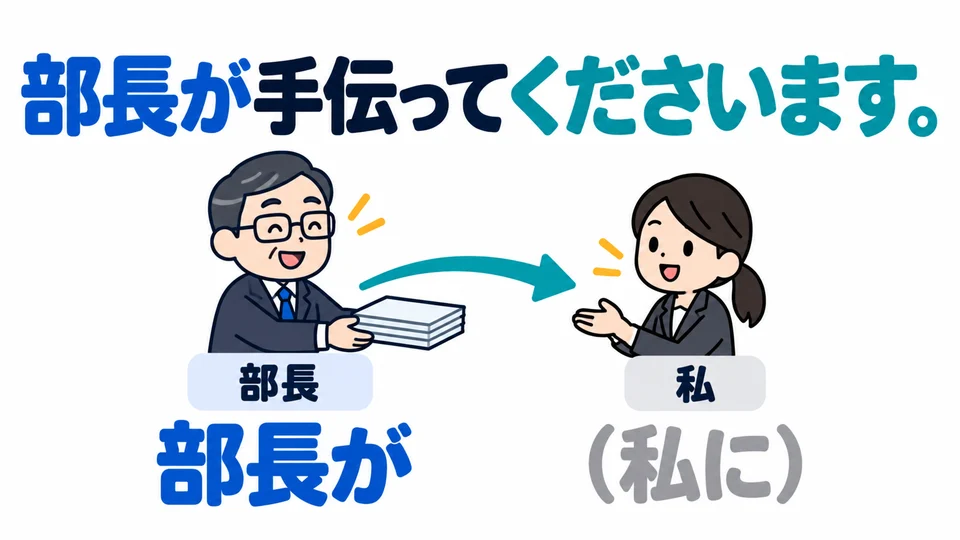
「部長が」 identifies the person doing the action. I receive the benefit, and 「私に」 is often left out.
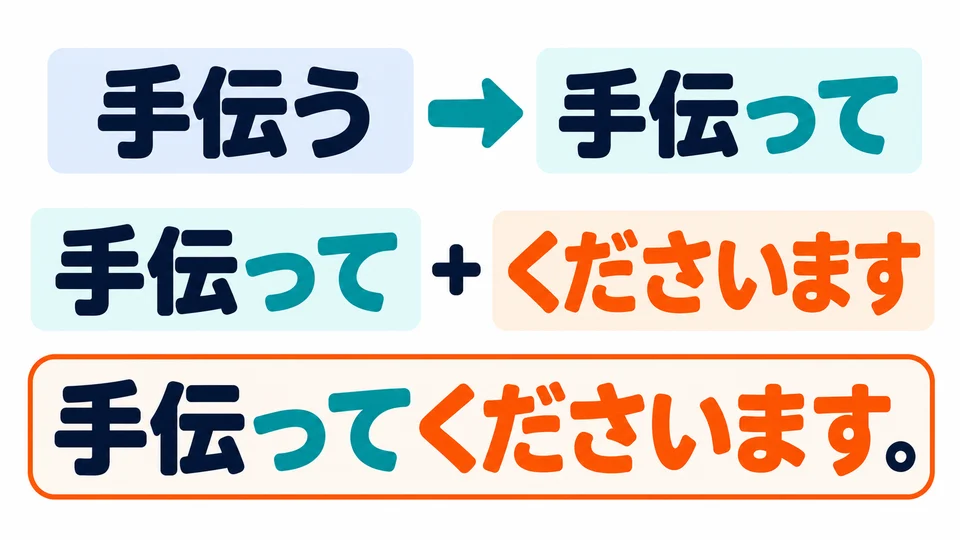
First put the action verb in the て-form, then add 「くださいます」: 手伝う→手伝って.
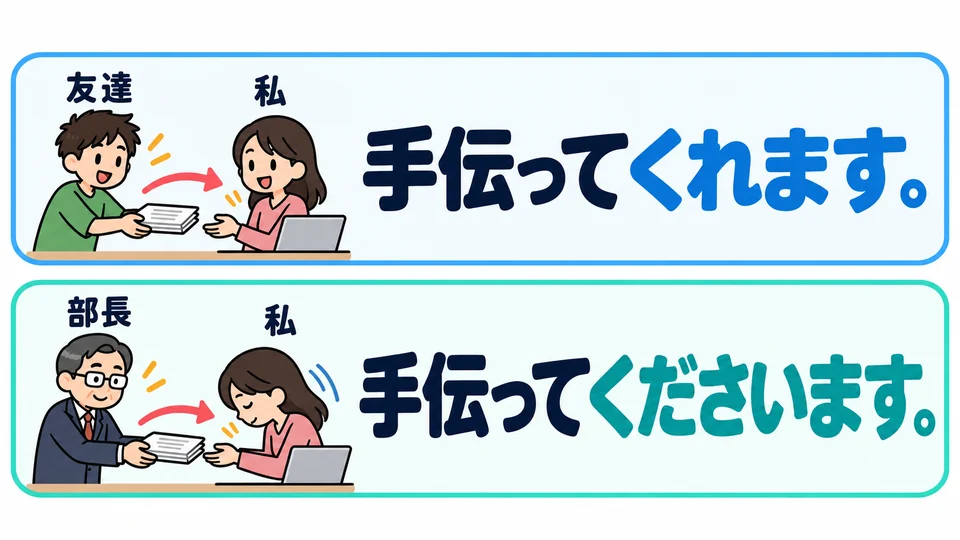
「てくれます」 also means someone does something for me. 「てくださいます」 shows greater respect for that person.
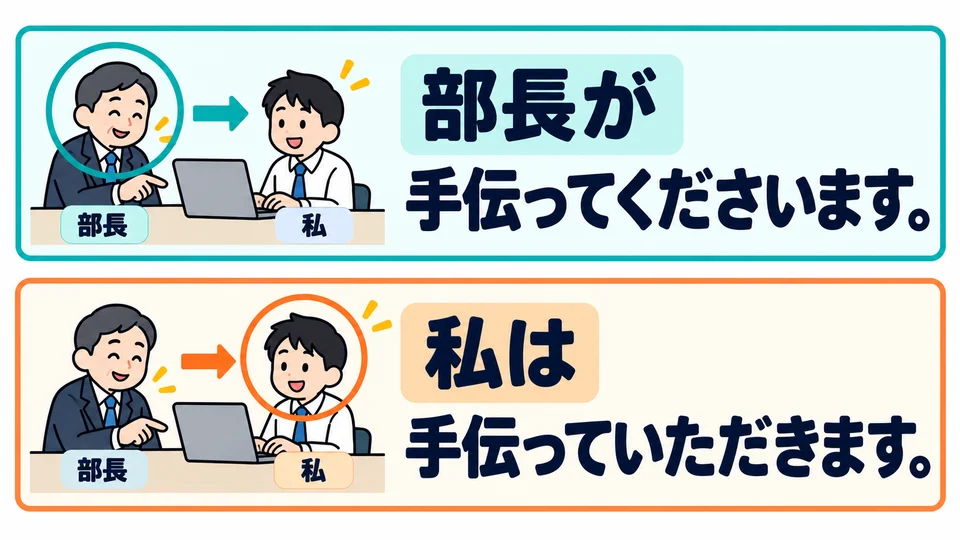
Compare the subjects: 部長が手伝ってくださいます/私は手伝っていただきます.
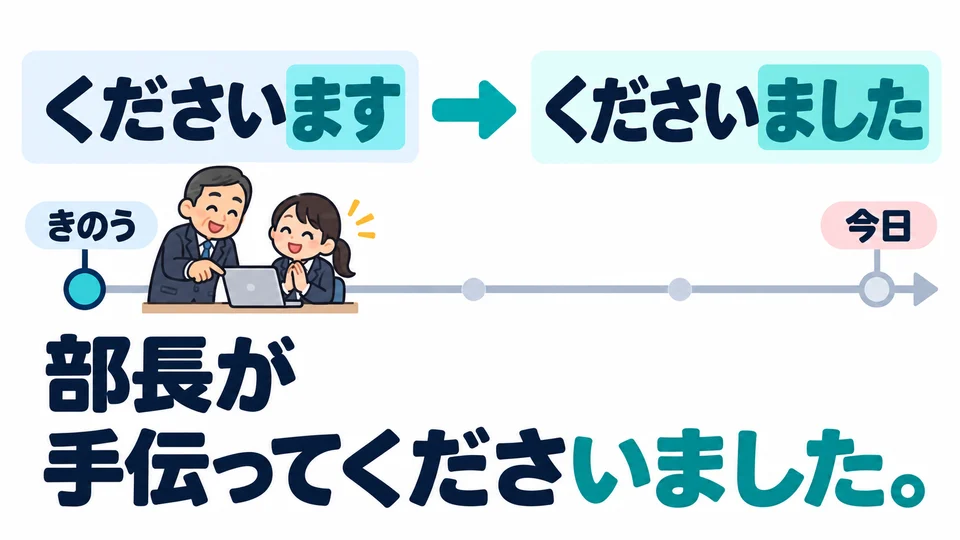
The help in the example has already happened, so the past form 「くださいました」 is used, expressing gratitude.
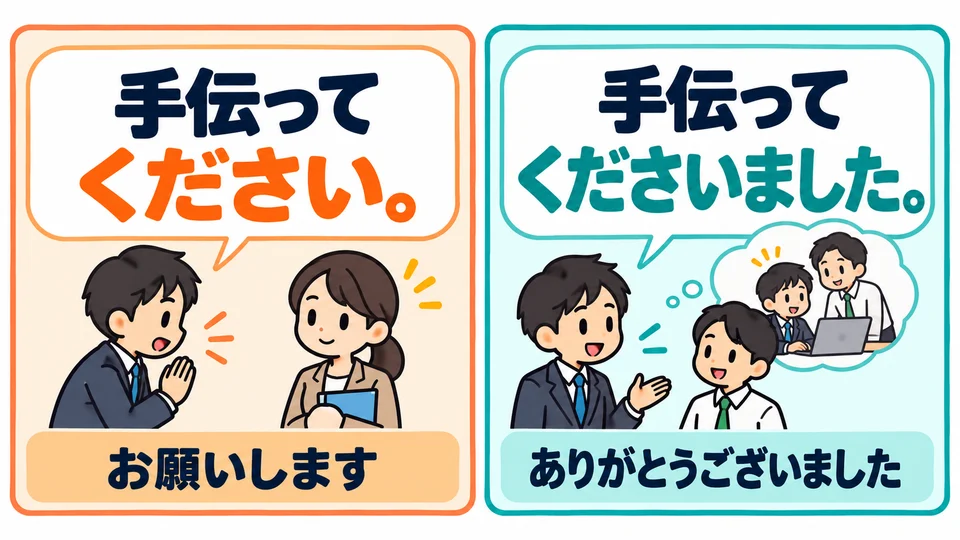
「手伝ってください」 is a request. In the example, 「手伝ってくださいました」 describes help that was given.
Example sentences
- 部長buchouがga手伝っtetsudaてteくださいました。kudasaimashita
The manager helped me out.
In a conversation

- A部長さん、お忙しいんですか。
A: Is the manager very busy?
- Bはい、でも私のプロジェクトを手伝っ
Check yourself
Level 1 · Recognise
Which sentence is correct?
Level 1 · Recognise
Listen and choose the meaning
Level 2 · Build
Put the words in order
The teacher wrote a letter of recommendation for me.
Level 3 · Use
What goes in the blank?
部長が手伝って ました。
The department head helped me.
More grammar in this theme
- 〜てくださいましたrespectful help received