Japanese grammar · ≈ JLPT N4 · Beginner 3
〜たら、〜た~tara, ~ta
discovery after an action
Use past 〜たら with a past result to describe what you discovered after doing something.
How it works
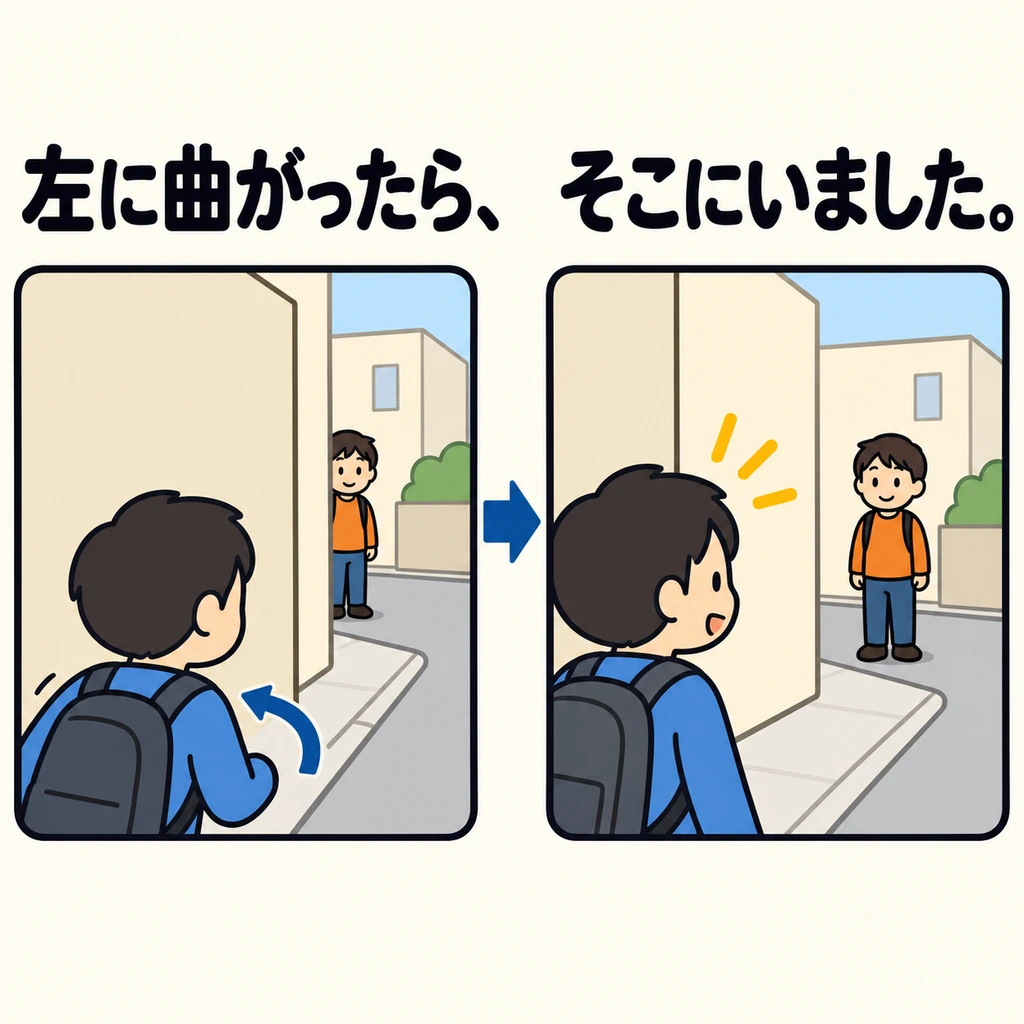
You see your friend only after turning left. Look at the picture: did you know your friend was there before you turned?
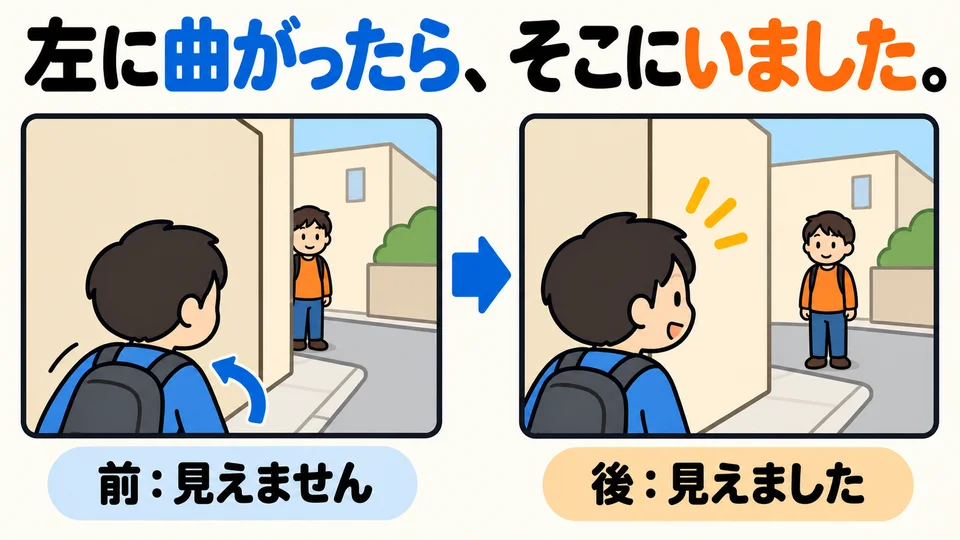
Your friend was already there; you only discovered this after turning left. Turning did not make your friend appear.
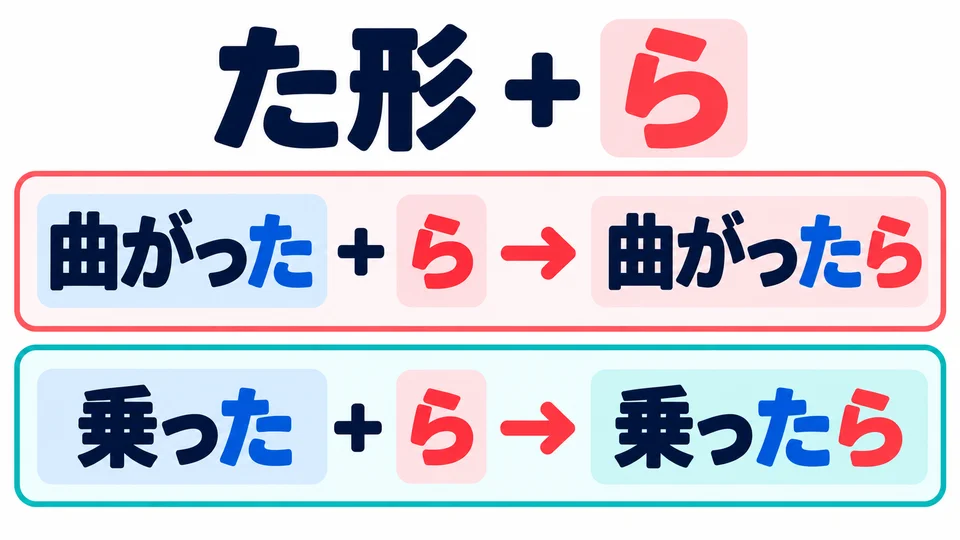
Add 「ら」 to the verb’s た-form: 曲がった→曲がったら, 乗った→乗ったら.

The second clause uses the past tense, such as 「いました」 or 「ありました」, to describe what you discovered then.
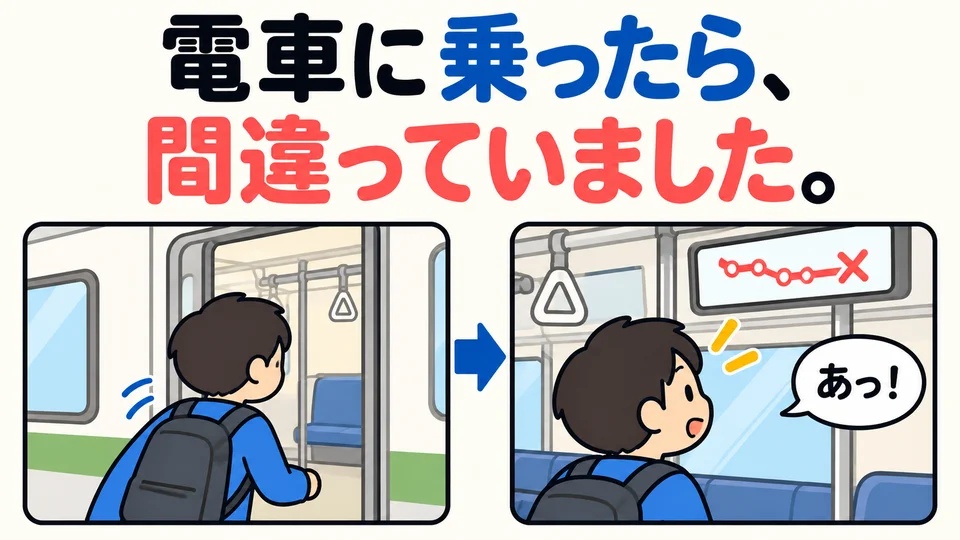
「電車に乗ったら、間違っていました。」 Only after boarding did you realize you were on the wrong train.
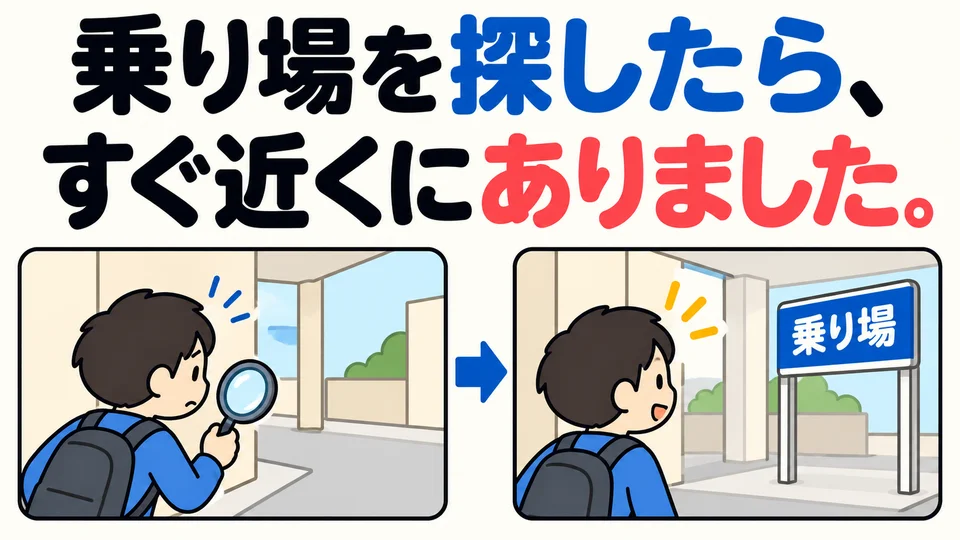
「乗り場を探したら、すぐ近くにありました。」 You looked for the boarding point and discovered it was very close by.
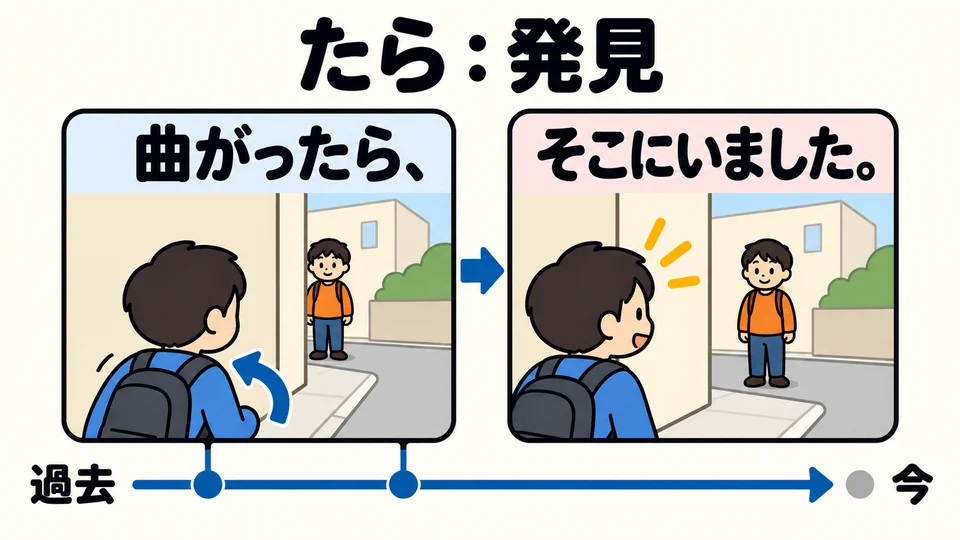
Here, 「たら」 tells an actual past experience: you did something, then happened to discover or realize something.
Example sentences
- 電車denshaにni乗ったら、nottara間違っmachigatてteいました。imashita
I got on the train, and I realized I was on the wrong one.
- 乗り場noribaを
In a conversation

- Aどこかで会いましたか。
A: Did you see him somewhere?
- Bええ、交差点を左に曲がったら、そこに
Check yourself
Level 1 · Recognise
Which sentence is correct?
Level 1 · Recognise
Listen and choose the meaning
Level 2 · Build
Put the words in order
When I opened the window, I could see the beautiful sea.
Level 3 · Use
What goes in the blank?
電車に 間違っていました。
When I got on the train, I realized I was on the wrong one.
More grammar in this theme
- 〜たら、〜たdiscovery after an action