
〜たあとで、〜~ta ato de, ~
Ta ato de, (〜たあとで、〜) means “after doing, then”.
I noticed it after getting on the train.
Use 〜たあとで to show that one action finishes before the next; the time gap can vary.
In the course
How it works
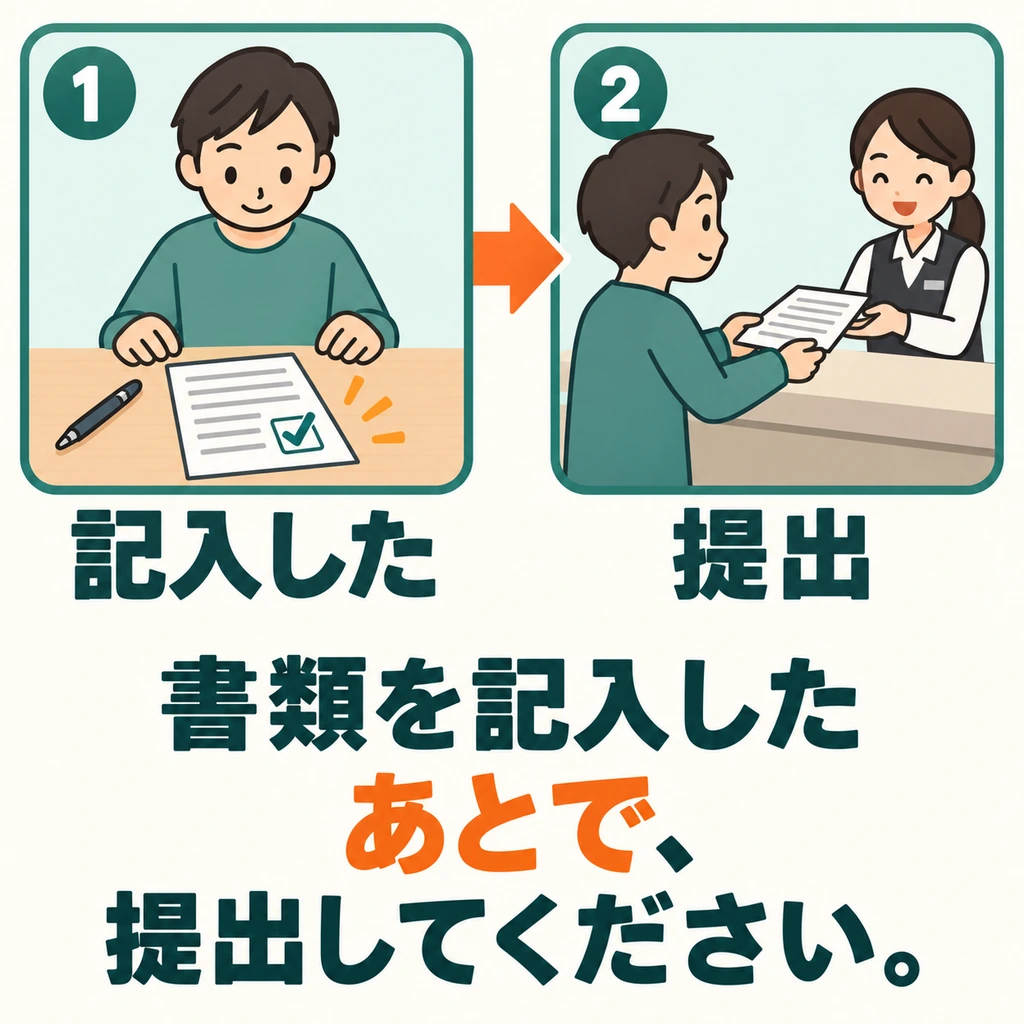
Fill out the form or submit it first? Follow the arrow: do the action on the left, then the one on the right.
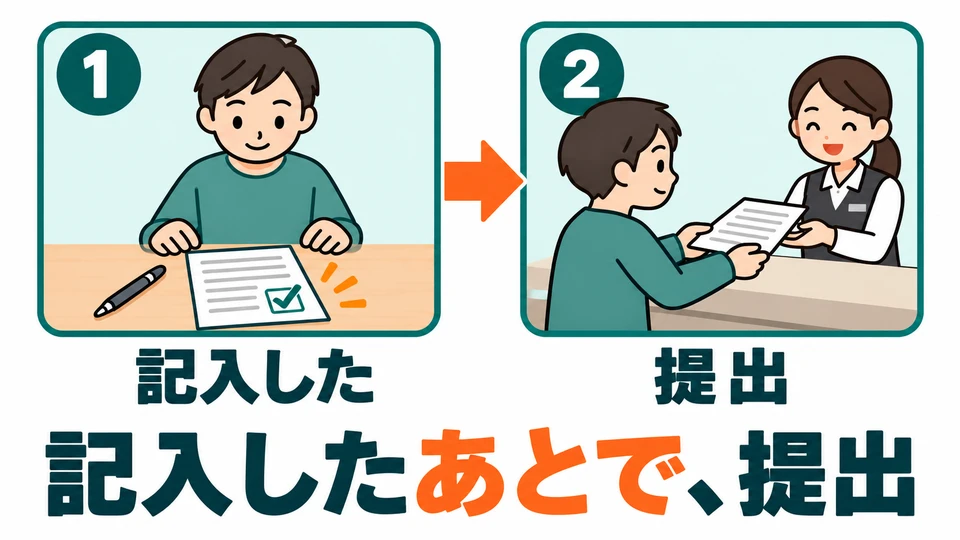
On the left, the form is finished; only then is it submitted on the right. The first action finishes before the next event happens.
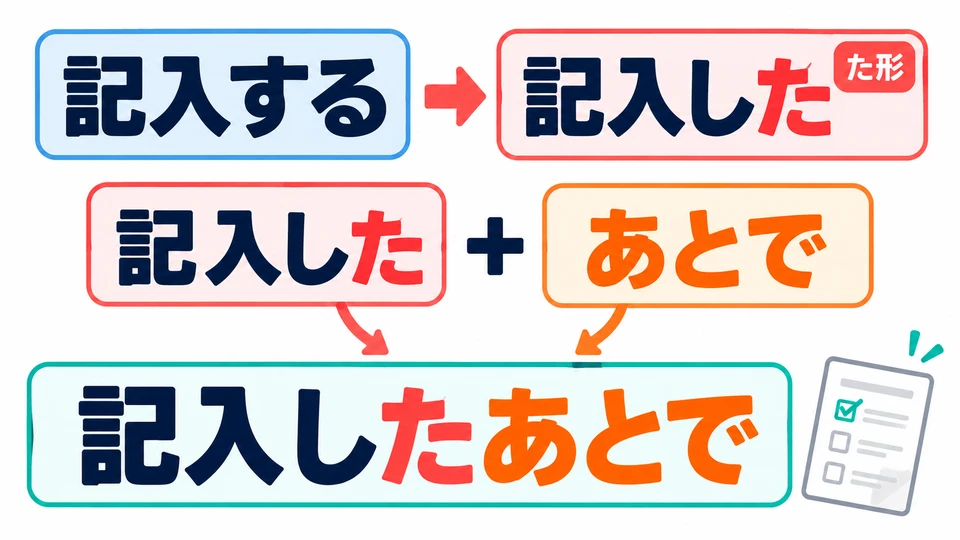
Put the verb in the た-form, then add 「あとで」. In the picture, this is 「記入したあとで」.
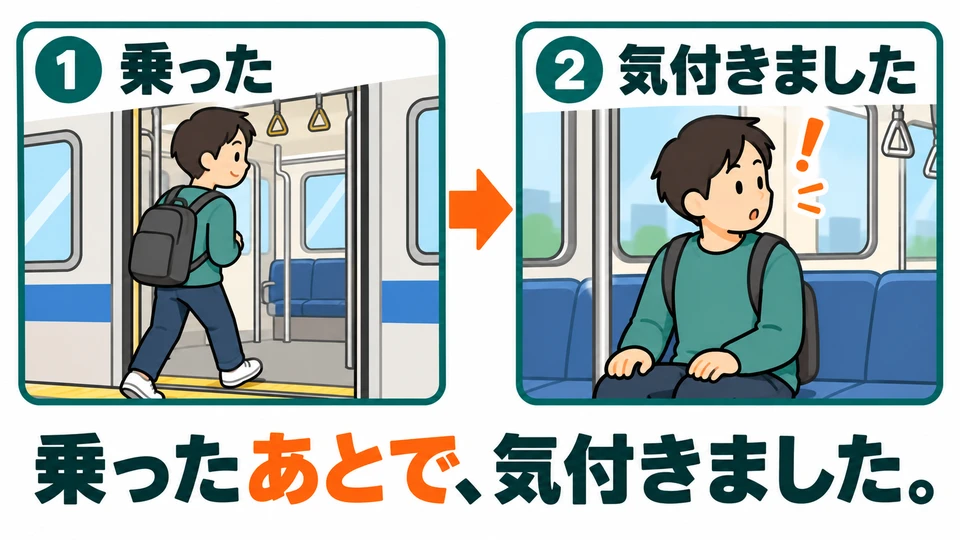
「乗ったあとで、気付きました」: first I boarded the train, and later I noticed something.
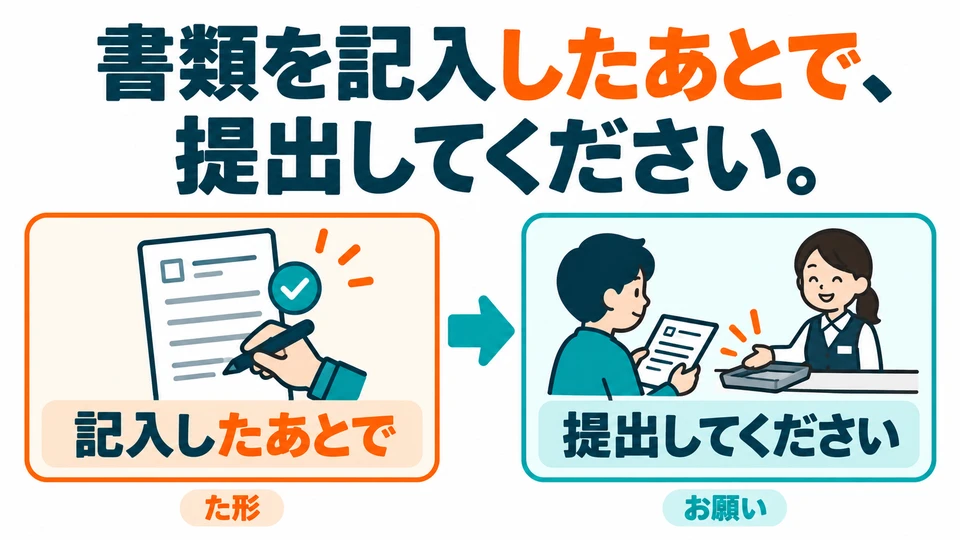
「提出してください」 is a request. The earlier た-form does not mean the whole sentence is about the past.
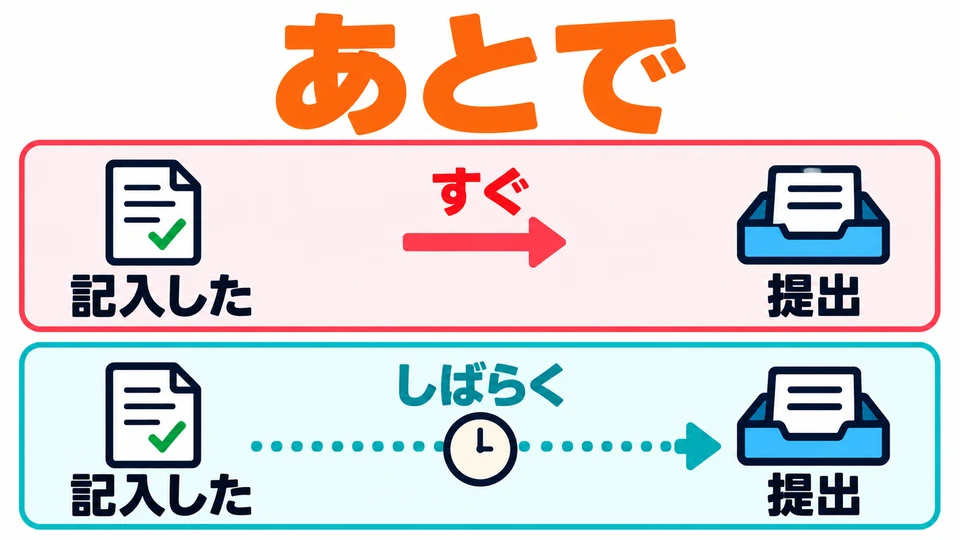
「あとで」 shows the order, without specifying the gap. The next event may follow immediately or a while later.
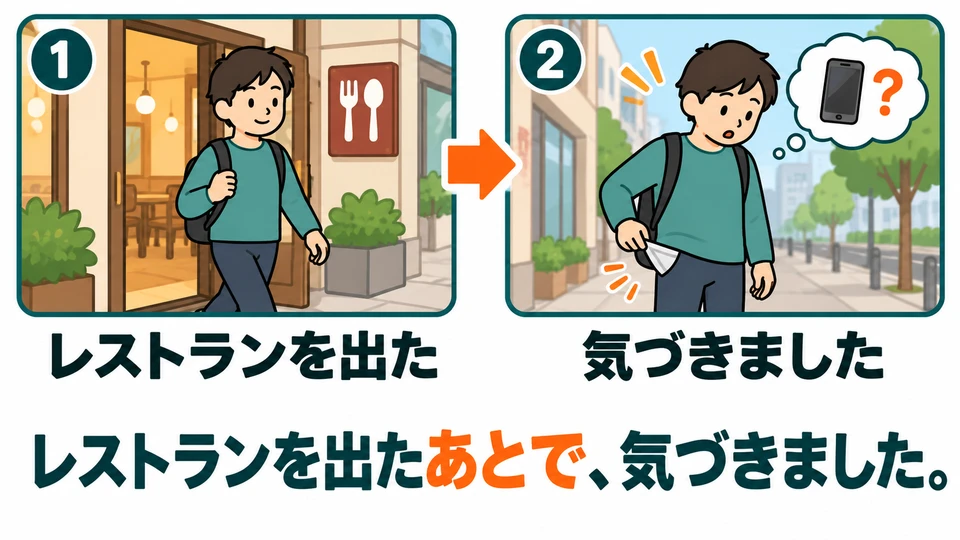
When did they notice their phone was missing? 「出たあとで」 tells us it was after leaving the restaurant.
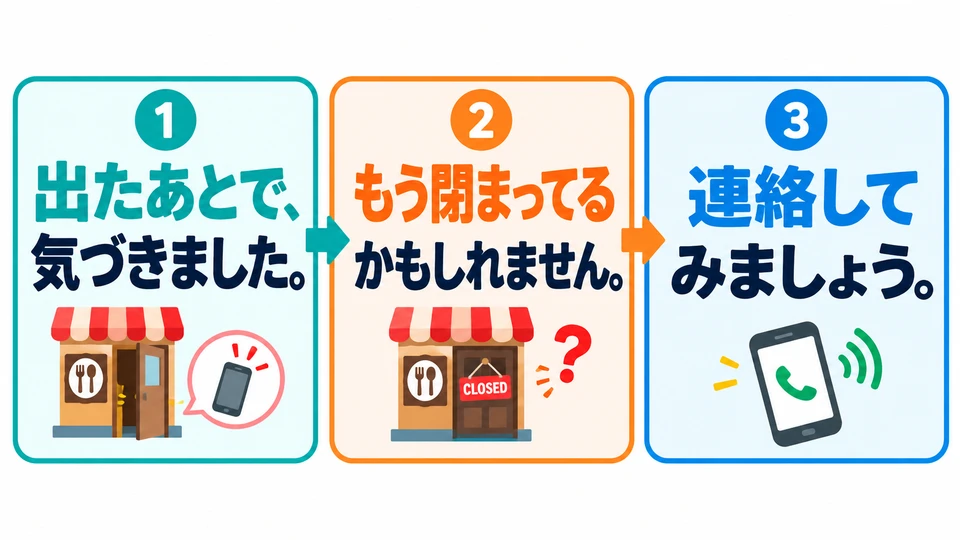
This sentence first tells us when they noticed. The conversation then considers whether the restaurant is closed and discusses contacting it.
Example sentences
- 電車denshaにni乗ったnotta後atoで、de気付きました。kizukimashita
I noticed it after getting on the train.
- 書類shoruiをo記入kinyuu
In a conversation

- Aいつ携帯電話がないことに気づきましたか。
A: When did you notice your phone was missing?
- Bレストランを出たあとで、
Check yourself
Level 1 · Recognise
Which sentence is correct?
Level 1 · Recognise
Listen and choose the meaning
Level 2 · Build
Put the words in order
After work is finished, let's go for a drink.
Level 3 · Use
What goes in the blank?
レジで 財布を忘れたことに気づきました。
After paying at the register, I realized I forgot my wallet.
More grammar in this theme
- 〜たあとで、〜after doing, then