JPEdLab iconJPEdLab
Save history

Create an account and play

Explore first, then save your progress whenever you are ready. No email address is required.

Start free
  1. Japanese grammar
  2. JLPT N4 grammar
  3. 〜までに

〜までに~made ni

Made ni (〜までに) means “deadline; by a time”.

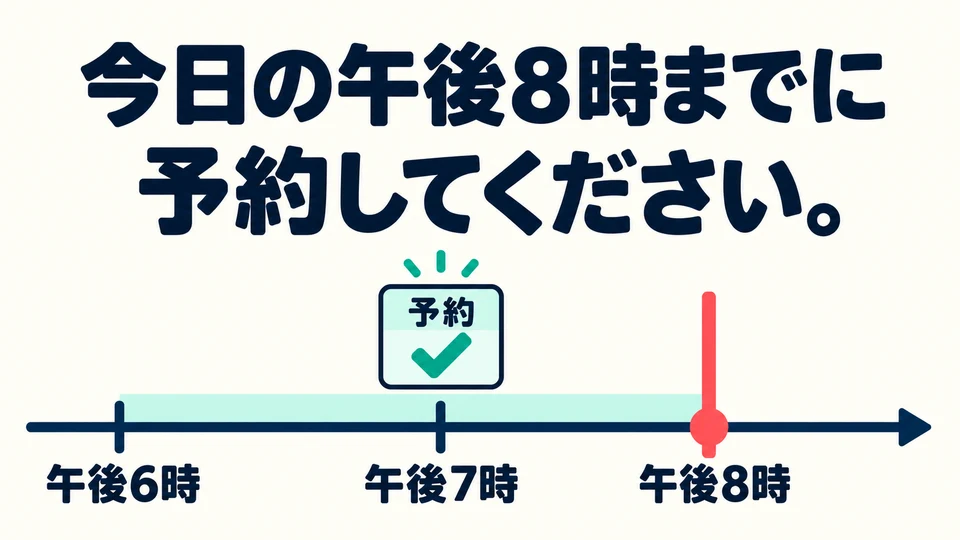
今日きょうkyouのno午後ごごgogoのno八はちhachi時じjiまでmadeにni予約よやくyoyakuしshiてteください。くださいkudasai

Please make a reservation by 8 PM today.

Use 「〜までに」 after a time or date for the latest point by which an action must be completed.

In the course›

How it works

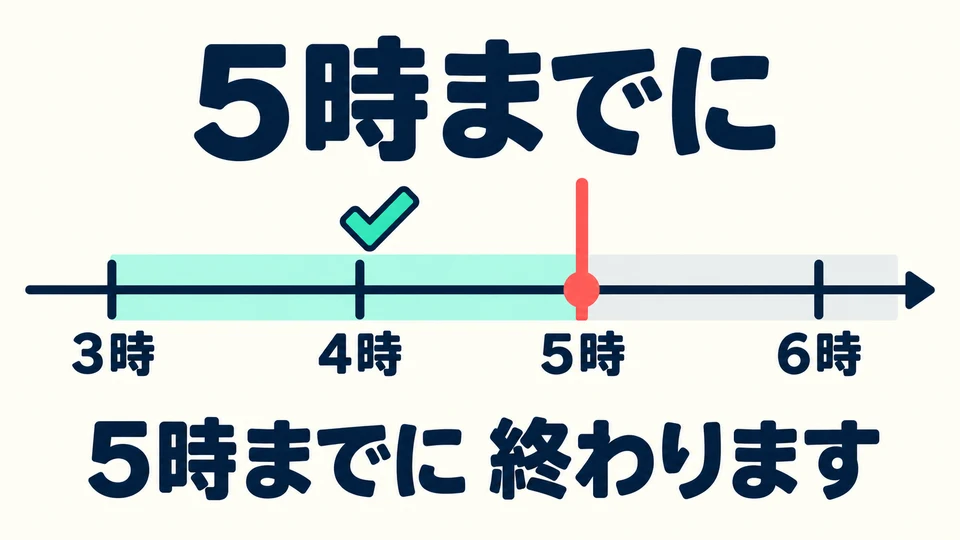
  1. 「までに」 gives a deadline for completing something. Finish it by the stated time at the latest.
    「までに」 gives a deadline for completing something. Finish it by the stated time at the latest.

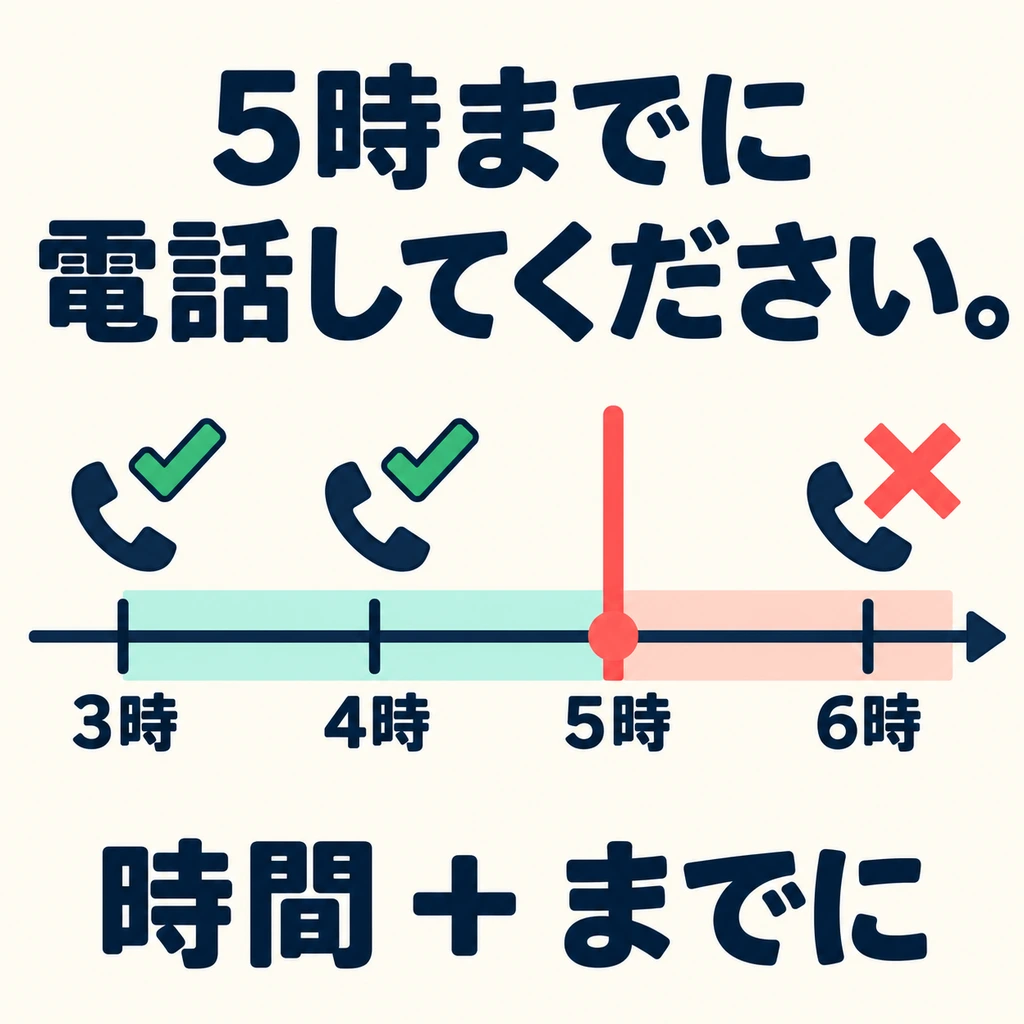
  2. Look at the picture: the deadline is five o’clock. Calling at three or four is fine too; you don’t have to wait until five.
    Look at the picture: the deadline is five o’clock. Calling at three or four is fine too; you don’t have to wait until five.

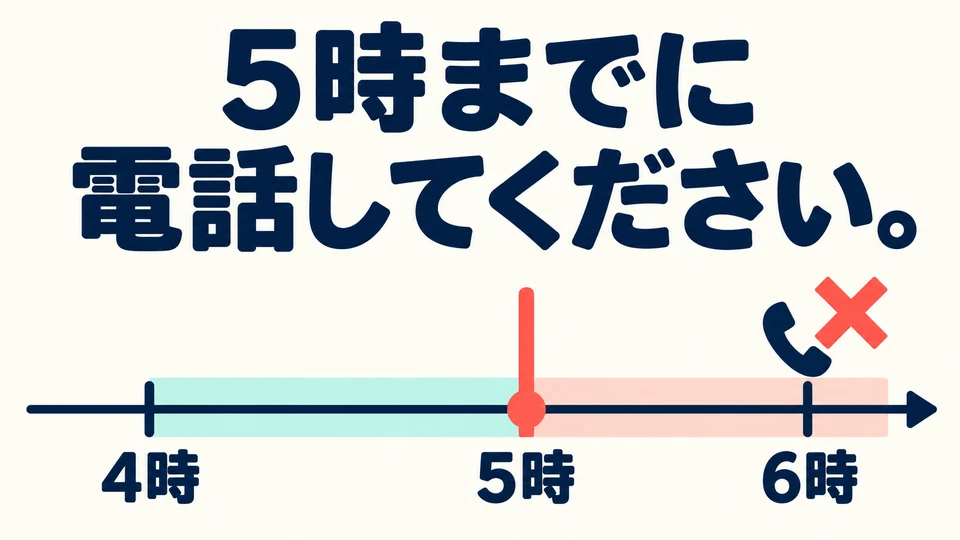
  3. Calling only at six misses the deadline. What matters is whether the action happens too late.
    Calling only at six misses the deadline. What matters is whether the action happens too late.

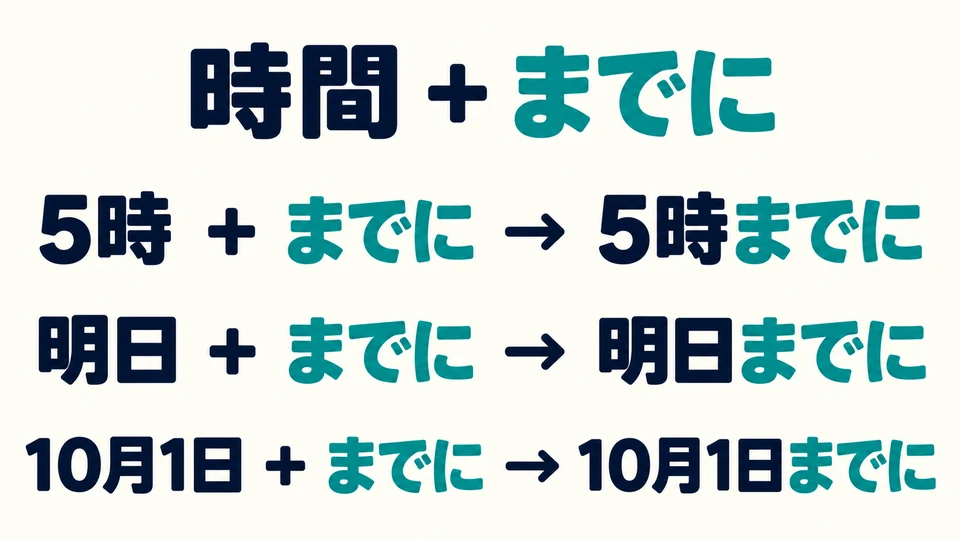
  4. Put a time expression before 「までに」. Both a clock time and a date can mark a deadline.
    Put a time expression before 「までに」. Both a clock time and a date can mark a deadline.

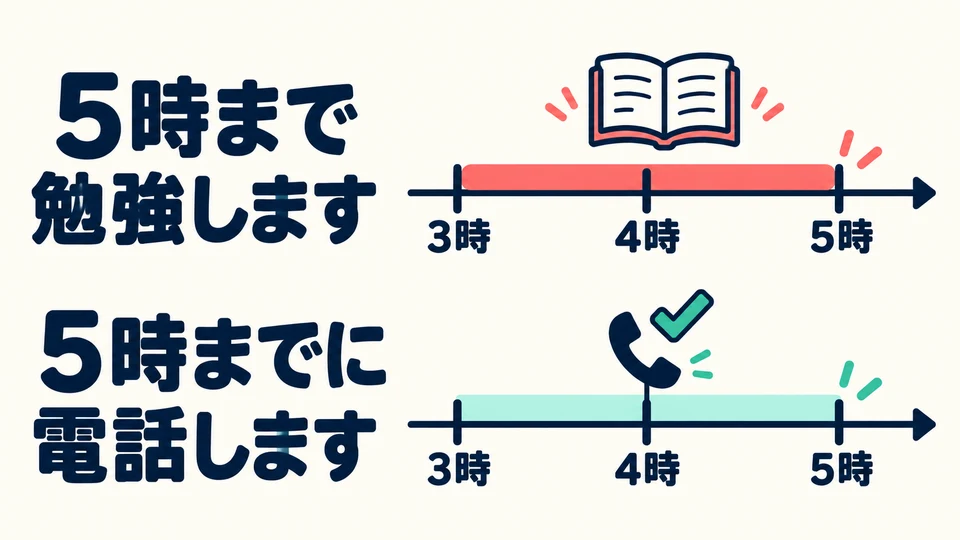
  5. 「まで」 means an action continues until a certain time; 「までに」 means completing it by a deadline.

    「まで」 means an action continues until a certain time; 「までに」 means completing it by a deadline.
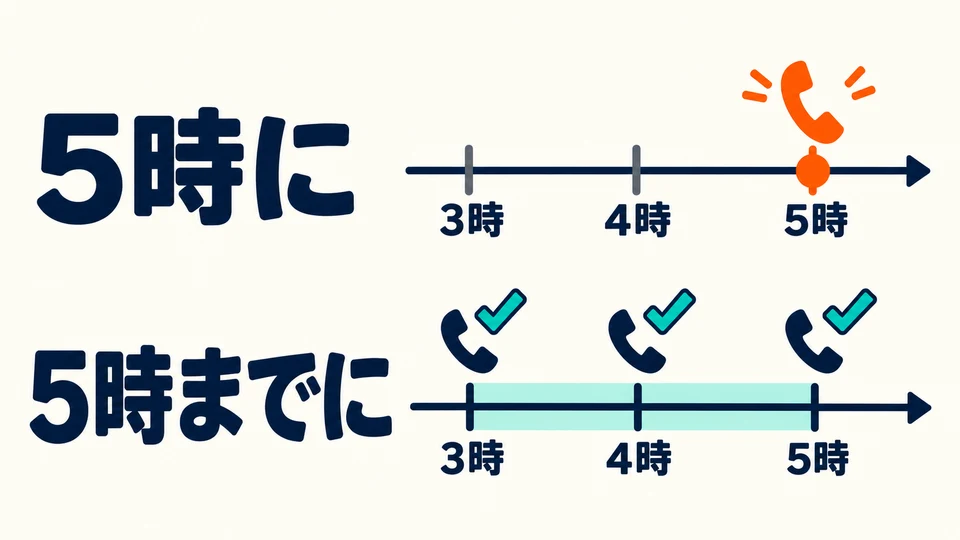
  6. 「五時に」 specifies five o’clock itself; 「五時までに」 lets you finish before five.
    「五時に」 specifies five o’clock itself; 「五時までに」 lets you finish before five.

  7. Use it when there is a deadline, such as for a reservation or buying tickets. Reserving by eight means completing the reservation no later than eight.
    Use it when there is a deadline, such as for a reservation or buying tickets. Reserving by eight means completing the reservation no later than eight.

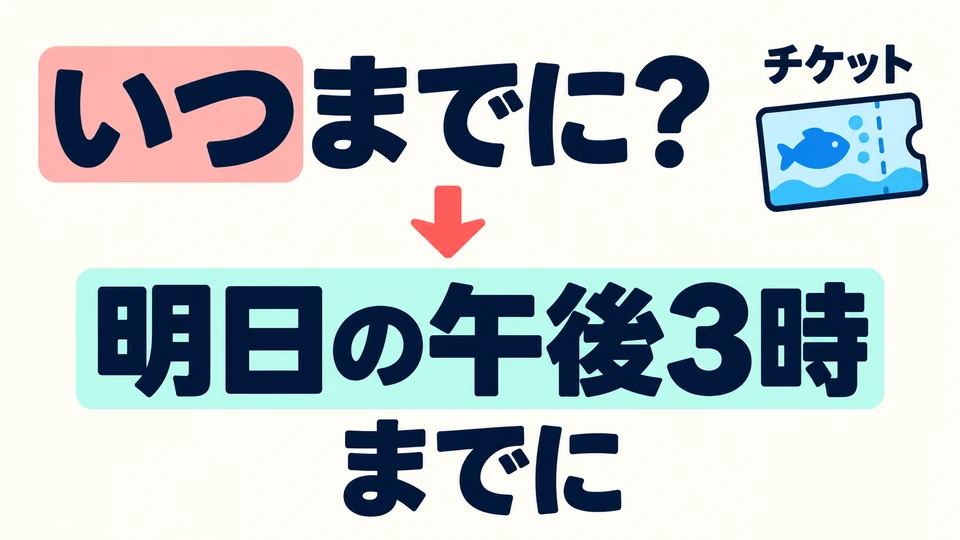
  8. Use 「いつまでに」 to ask by when something must be done. In the ticket example, the answer gives three o’clock tomorrow afternoon.

    Use 「いつまでに」 to ask by when something must be done. In the ticket example, the answer gives three o’clock tomorrow afternoon.

Example sentences

  • 今日きょうkyouのno午後ごごgogoのno八はちhachi時じjiまでmadeにni予約よやくyoyakuしshiてteください。くださいkudasai

In a conversation

  • A
    水族館すいぞくかんのチケットちけっとはわいつまでに買えかえばいいですか。か

    A: By when should I buy the aquarium tickets?

  • B
    明日あすの午後 ごご

Check yourself

  1. Level 1 · Recognise

    Which sentence is correct?

  2. Level 1 · Recognise

    Listen and choose the meaning

  3. Level 2 · Build

    Put the words in order

    Please call the tourist information center by 5 PM tomorrow.

  4. Level 3 · Use

    What goes in the blank?

    月曜日 サウナの利用を予約してください。

    Please make a reservation to use the sauna by Monday.

More grammar in this theme

  • 〜までにdeadline; by a time

More JLPT N4 grammar

Keep practising

Test your Japanese vocabulary12 adaptive questions, freeCheck your pronunciationRead aloud and get a scorePractise verb forms10-question conjugation quizSee the whole courseGrammar, vocabulary and quizzes by theme

Please make a reservation by 8 PM today.

  • 五ごgo時じjiまでmadeにni電話でんわdenwaしshiてteください。くださいkudasai

    Please call by 5 o'clock.

  • 3 さん
    時じ
    まで
    に
    買っかっ
    て
    ください。ください

    B: Please buy them by 3 PM tomorrow.

  • A
    そうですか。か当日とうじつはわだめですか。か

    A: I see. Is the day of not okay?

  • B
    はい、はい当日とうじつはわ込んこんでいますから、から事前じぜんに買うかうことをおすすめします。します

    B: Yes, it's crowded on the day, so I recommend buying them in advance.

  • Beginner 3
    Introducing a City
    More quizzesOpen this lesson’s quizzes in the course
    〜んですがsoft opening to a request
    〜なら、〜picking up a topic
    〜たらいいですかasking what one should do
    〜といいですgentle advice
    〜と、〜がありますroute and predictable result
    〜じゃなくて、〜rejecting one option; offering another
    Previous〜といいです
    Next〜と、〜があります
    See all 138
    〜かどうかwhether or not
    〜するためにpurpose; in order to
    〜んですかfollow-up explanation question
    〜なければなりませんobligation; must do
    〜てしまいましたregret: ended up doing
    〜かもしれませんpossibility: might be
    〜たあとで、〜after doing, then
    〜ていただけませんかvery polite request