JPEDLAB iconJPEDLAB
Save history

Create an account and play

Explore first, then save your progress whenever you are ready. No email address is required.

Start free
Read as articleCards
See the whole course›Beginner 3›Future Goals

Japanese grammar · ≈ JLPT N4 · Beginner 3

〜するために~suru tame ni

purpose; in order to

Use 「〜するために」 to state a clear goal first, then explain the deliberate action taken to reach it.

Start the interactive lessonIllustrated cards, audio and speaking practice

How it works

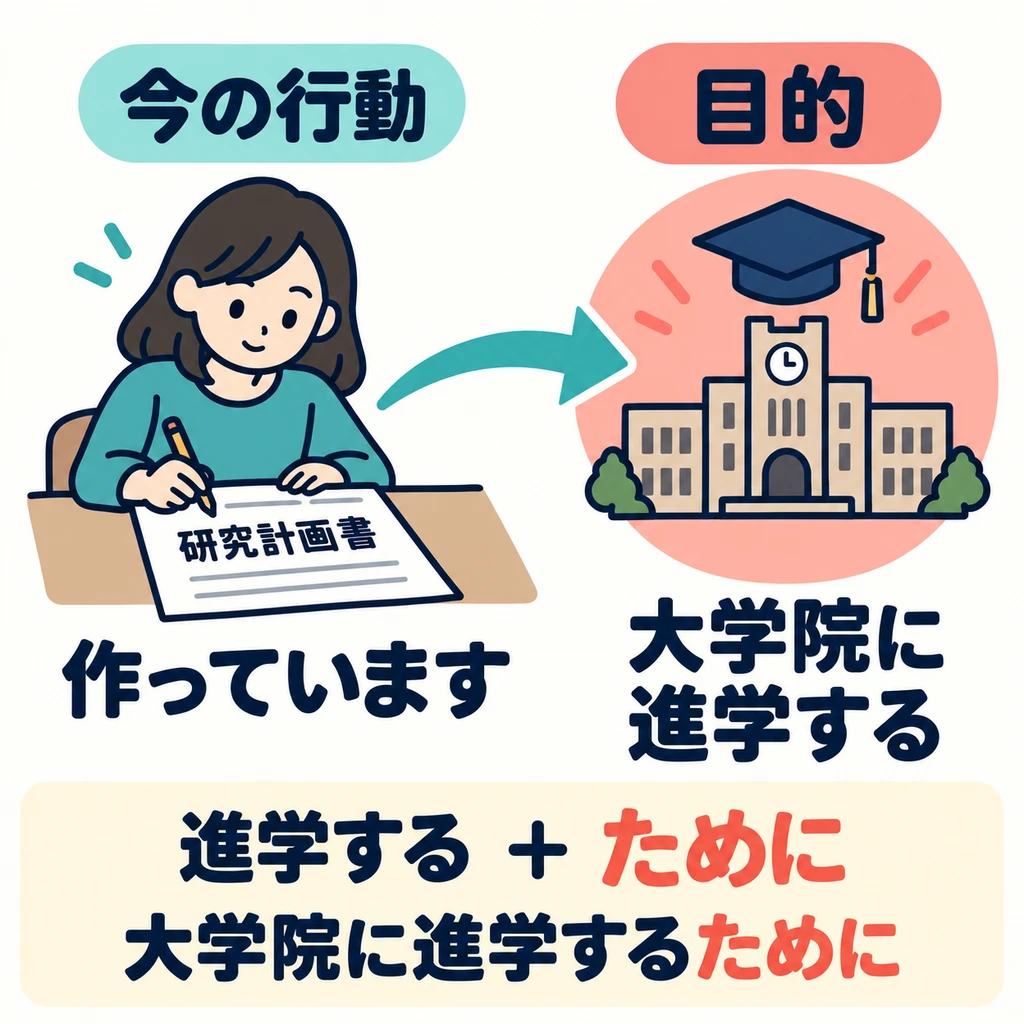
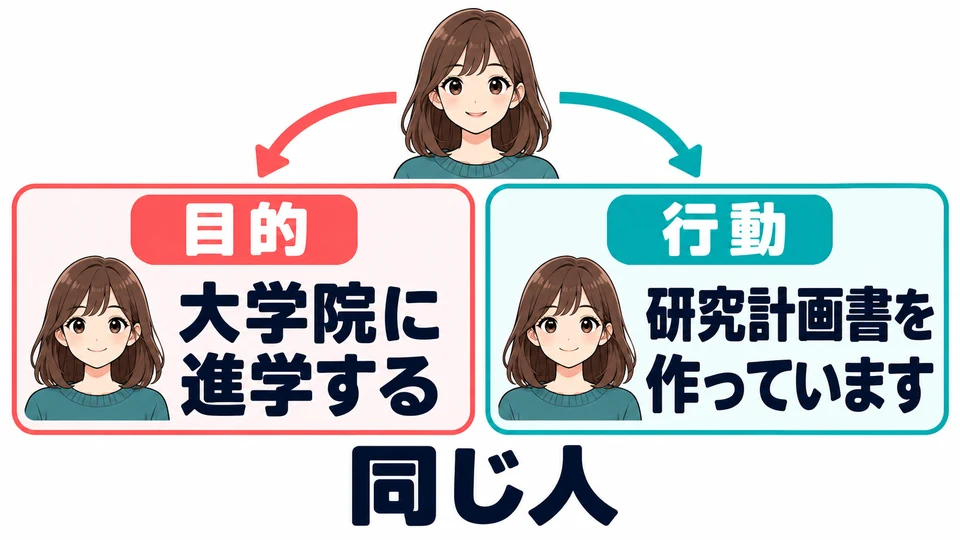
  1. Why is she writing a research proposal now? The arrow points to her goal of entering graduate school.
    Why is she writing a research proposal now? The arrow points to her goal of entering graduate school.

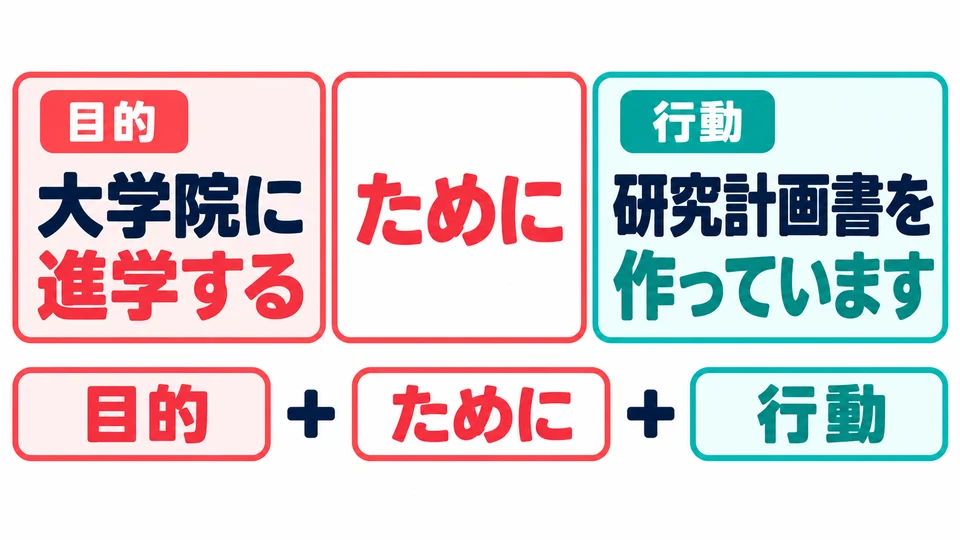
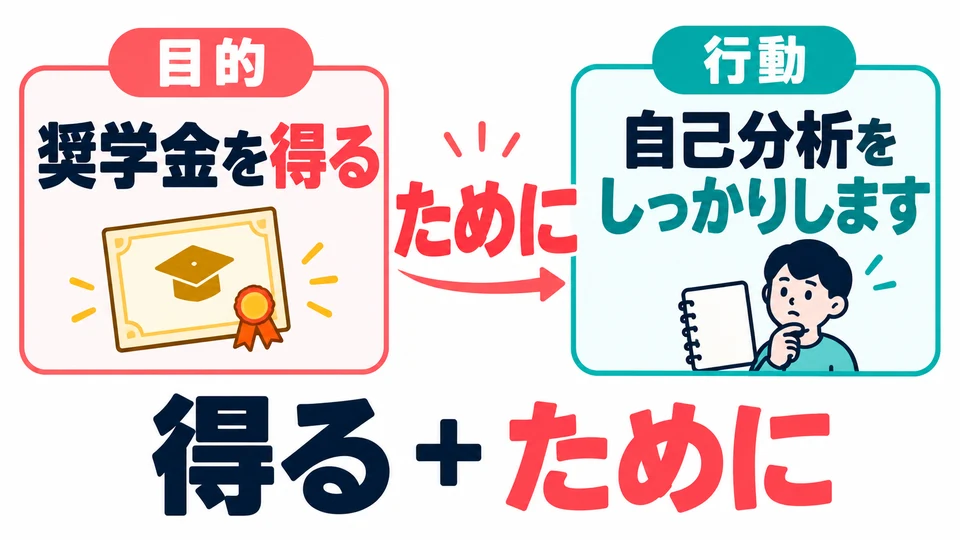
  2. State the goal you want to achieve first, then the action you take to reach it. Connect the two parts with “ために”.
    State the goal you want to achieve first, then the action you take to reach it. Connect the two parts with “ために”.

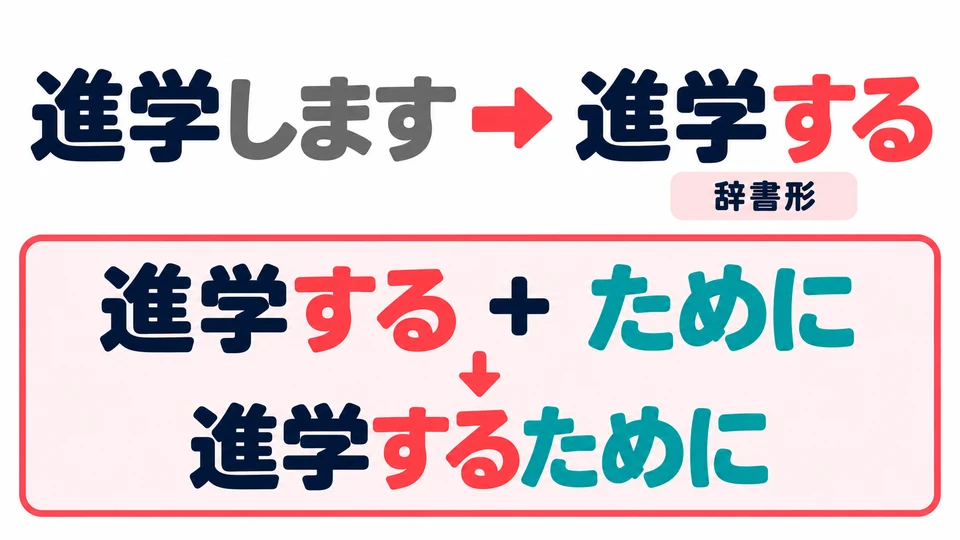
  3. Use the dictionary form of the verb for the goal: change “進学します” to “進学する”, then add “ために”.

    Use the dictionary form of the verb for the goal: change “進学します” to “進学する”, then add “ために”.
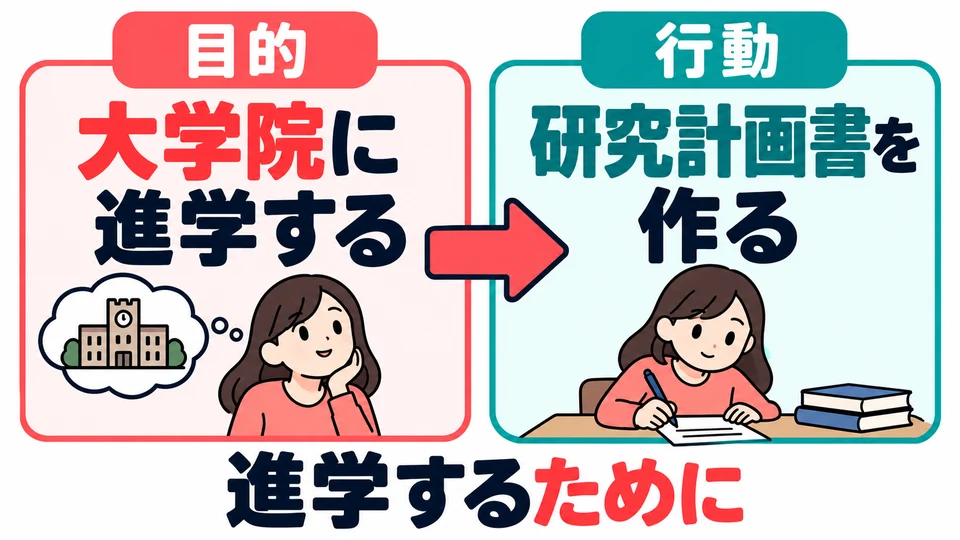
  4. Use this pattern to explain a clear purpose for doing something deliberately: you have a goal in mind and take action to reach it.
    Use this pattern to explain a clear purpose for doing something deliberately: you have a goal in mind and take action to reach it.

  5. The actions in both parts usually have the same subject. In the picture, she is both writing the proposal and hoping to enter graduate school.
    The actions in both parts usually have the same subject. In the picture, she is both writing the proposal and hoping to enter graduate school.

  6. You carefully analyze yourself to obtain a scholarship. Getting the scholarship is the goal; self-analysis is the action.
    You carefully analyze yourself to obtain a scholarship. Getting the scholarship is the goal; self-analysis is the action.

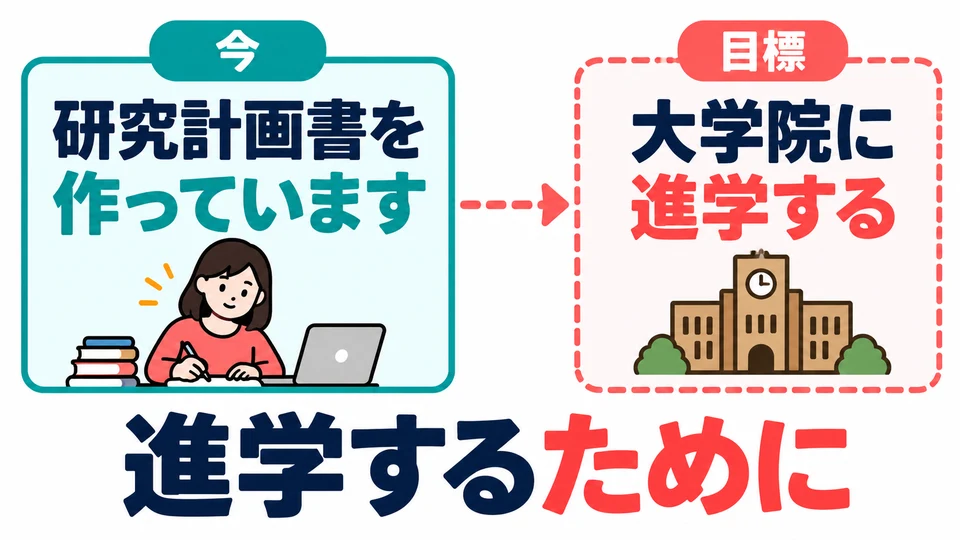
  7. “ために” expresses the goal of an action. While she is writing the proposal, her goal of entering graduate school may still be unfulfilled.

    “ために” expresses the goal of an action. While she is writing the proposal, her goal of entering graduate school may still be unfulfilled.

Example sentences

  • 大学院だいがくいんdaigakuinにni進学しんがくshingakuするsuruためtameに、にni今いまimaはわwa研究けんきゅうkenkyuu計画書けいかくしょkeikakushoをo

In a conversation

Check yourself

  1. Level 1 · Recognise

    Which sentence is correct?

  2. Level 1 · Recognise

    Listen and choose the meaning

  3. Level 2 · Build

    Put the words in order

    I am saving money in order to study abroad.

  4. Level 3 · Use

    What goes in the blank?

    大学院に進学する 今は研究計画書を作っています。

    I'm currently writing my research proposal in order to enter graduate school.

More grammar in this theme

  • 〜するためにpurpose; in order to

Keep practising

Test your Japanese vocabulary12 adaptive questions, freeCheck your pronunciationRead aloud and get a scorePractise verb forms10-question conjugation quizSee the whole courseGrammar, vocabulary and quizzes by theme
作っつくっtsuku
てte
います。いますimasu

To enter graduate school, I'm currently working on a research plan.

  • A
    卒業後、そつぎょうご何なにをする予定よていですか。か

    A: What do you plan to do after graduation?

  • B
    大学院だいがくいんに進学しんがくするために、に今いまはわ研究けんきゅう計画書けいかくしょを作っつくっています。います

    B: To enter graduate school, I'm currently working on a research plan.

  • 奨学金しょうがくきんshougakukinをo得るえるeruためtameに、にni自己じこjiko分析ぶんせきbunsekiをoしっかりshikkariします。しますshimasu

    I do thorough self-analysis in order to receive a scholarship.

    • A
      どちらの大学院だいがくいんですか。か

      A: Which university's graduate school?

    • B
      東京とうきょう大学だいがくの大学院だいがくいんです。です

      B: The University of Tokyo.

    〜たらwhen / after ~
    〜ようと思っていますintend / am thinking of ~
    〜つもりですintend / plan to ~
    何を〜するかembedded what-question
    〜かどうかwhether or not
    〜んですかfollow-up explanation question
    〜なければなりませんobligation; must do
    Previous〜かどうか
    Next〜んですか