
〜つもりです~tsumori desu
Tsumori desu (〜つもりです) means “intend / plan to ~”.
I intend to work in Japan.
Use 「〜つもりです」 for a fairly firm decision about a future action; it expresses intention, not a guaranteed outcome.
In the course
How it works

Look at the picture: he already plans to work in Japan after graduation. Use “つもりです” to express this intention.
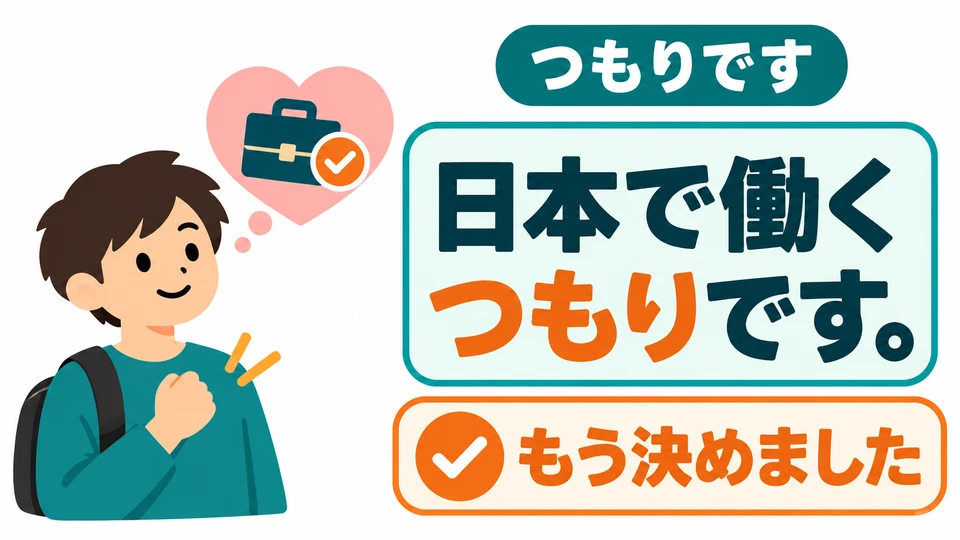
“つもりです” expresses something you have decided to do. The intention is fairly firm, beyond just wanting to give it a try.
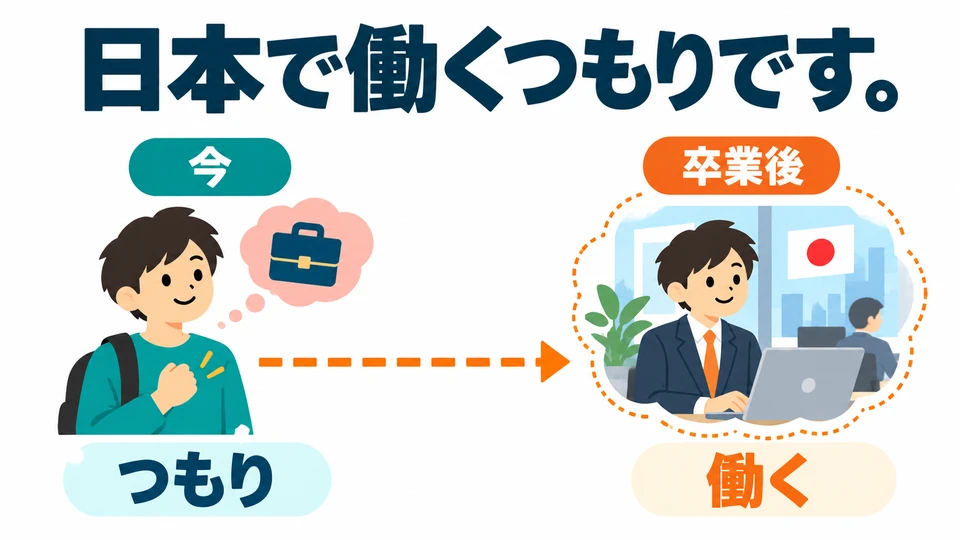
The intention exists now; the action is in the future. He has not started the job in the picture yet. This sentence does not guarantee the plan will happen.
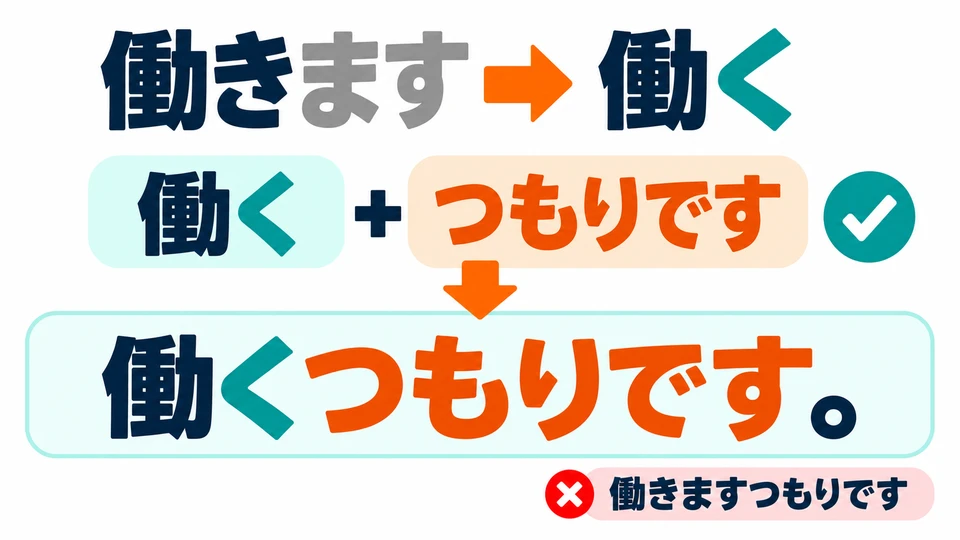
Use the verb’s dictionary form before it: 働きます→働く. Say “働くつもりです”; do not attach it to the ます form.
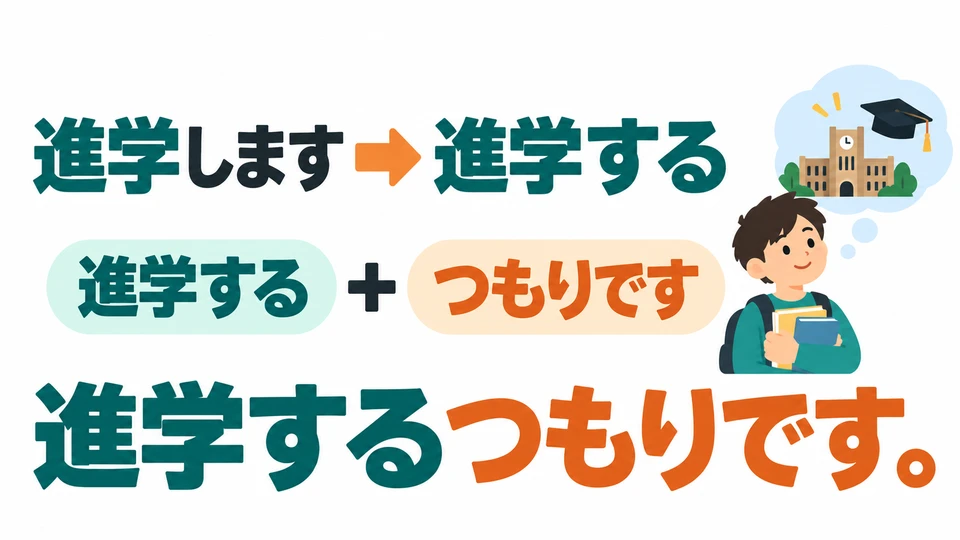
“進学します” becomes “進学する”: 進学するつもりです. This says you intend to continue your education at the next level.

To ask about plans after graduation: 卒業後はどうするつもりですか. Answer with your own plan.
Example sentences
- 日本nipponでde働くhatarakuつもりtsumoriです。desu
I intend to work in Japan.
- 大学daigaku卒業後、sotsugyougo大学院daigakuinにni
In a conversation

- A卒業後はどうするつもりですか。
A: What do you intend to do after graduation?
- B日本で就職するつもりです。
B: I intend to find a job in Japan.
Check yourself
Level 1 · Recognise
Which sentence is correct?
Level 1 · Recognise
Listen and choose the meaning
Level 2 · Build
Put the words in order
I intend to stay in Japan for 5 years.
Level 3 · Use
What goes in the blank?
日本語をしっかり____(学ぶ)です。
I plan to study Japanese diligently.
More grammar in this theme
- 〜つもりですintend / plan to ~