
〜んですが~n desu ga
N desu ga (〜んですが) means “soft opening to a request”.
Excuse me, I'd like to go to the aquarium...
Use 「〜んですが」 to explain your situation or goal before a request, leaving a gentle pause for help.
In the course
How it works

Look at the picture: he wants to go to the aquarium but does not know the way. He states his goal first so the listener knows what help he needs.
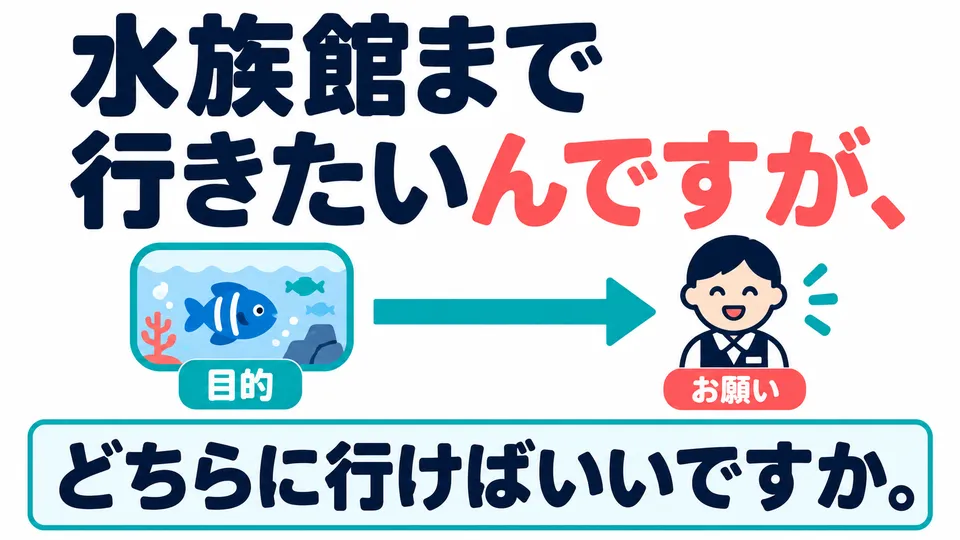
When asking for help, use 「~んですが」 to explain your situation or goal first, setting up the request that follows.
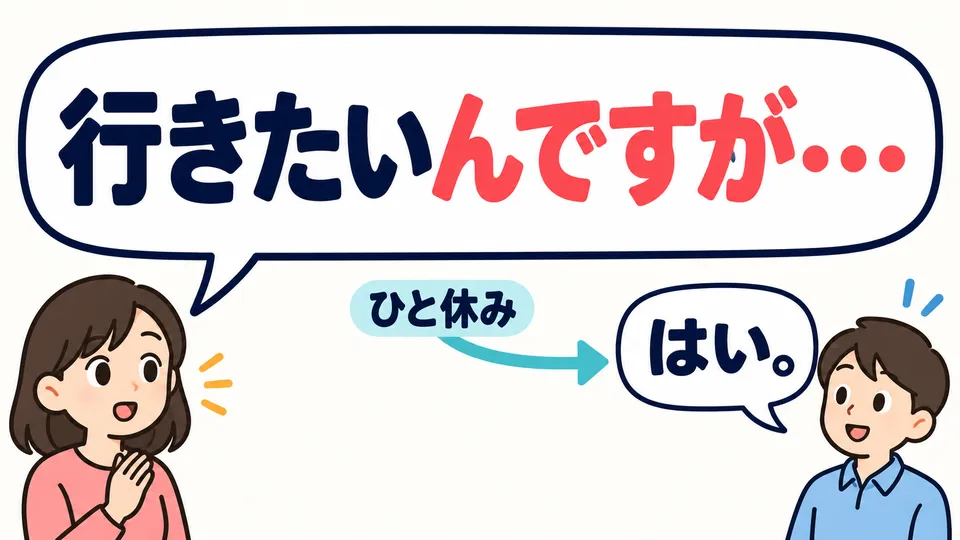
You can pause gently after 「んですが…」 and wait for a response. This makes your request for help sound softer.
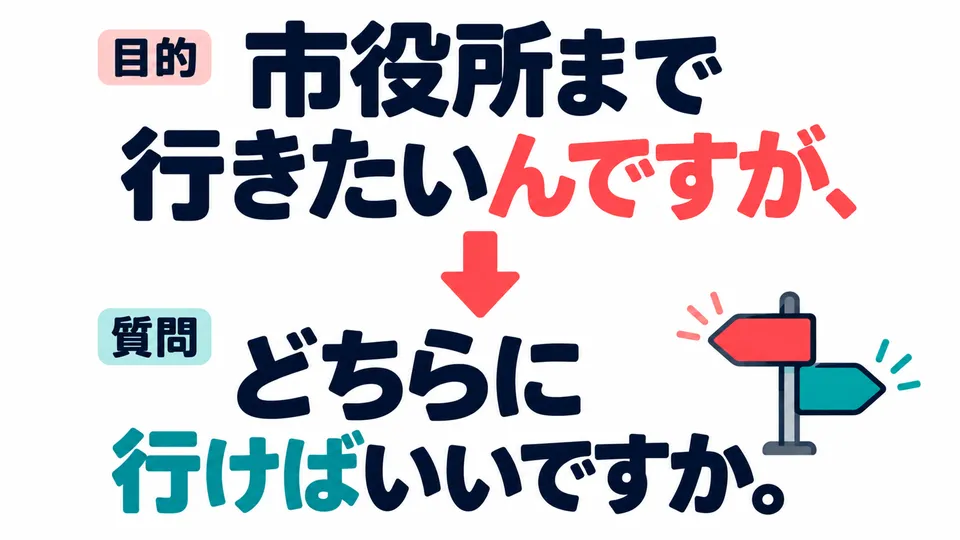
You can also add 「どちらに行けばいいですか」 to ask clearly which way you should go.
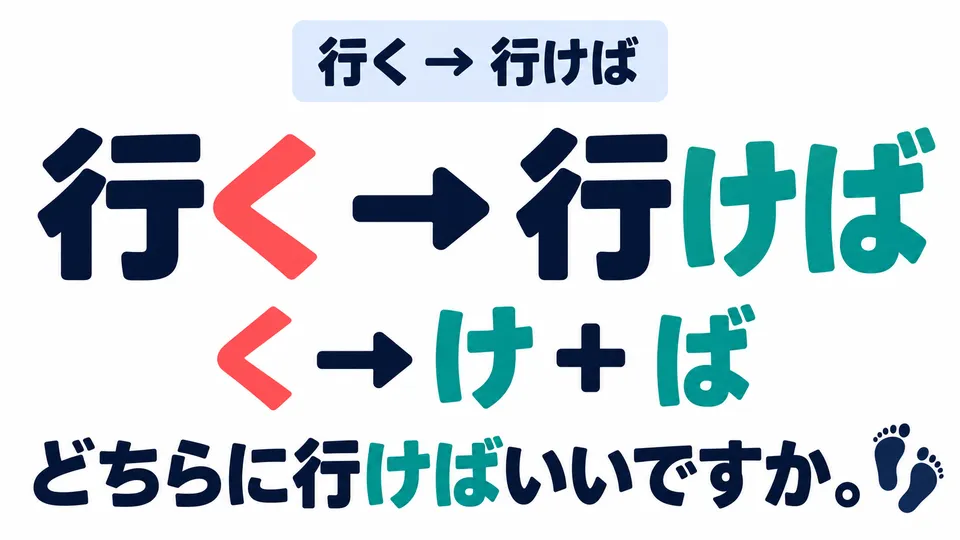
「~んですが」 is used to introduce a topic before continuing with a question or request.
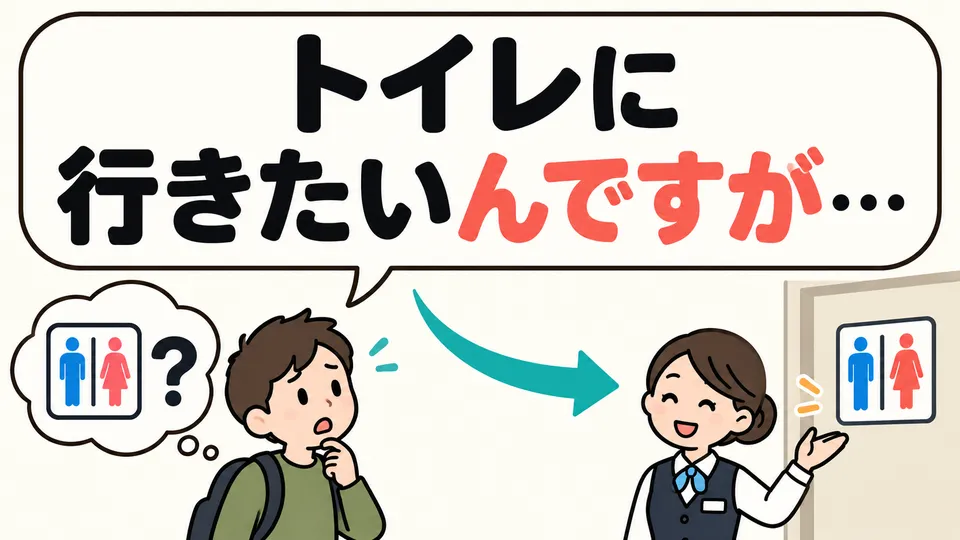
When asking someone for help, 「トイレに行きたいんですが…」 can imply that you want to know where the restroom is.
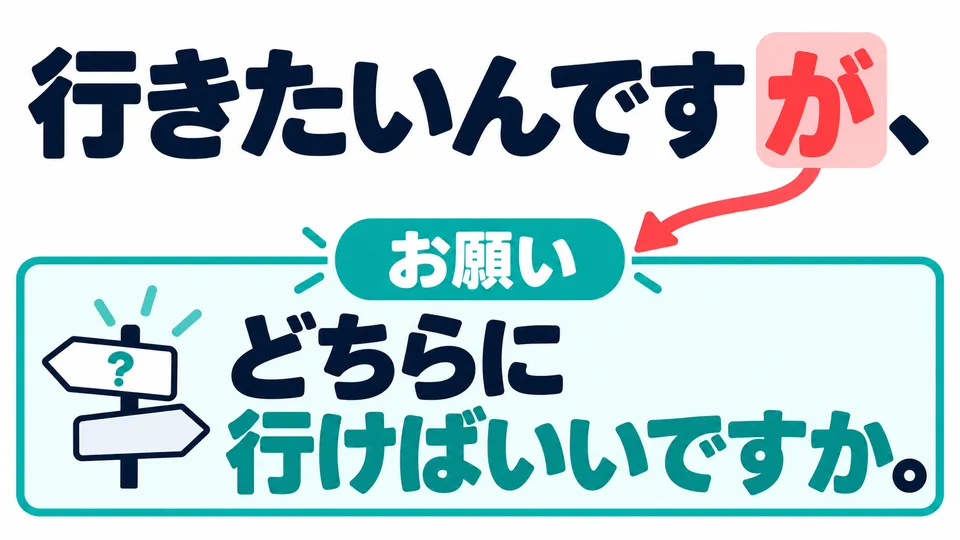
Here, 「が」 introduces the request for help that follows. It does not mean “but” or suggest a contradiction in your goal.
Example sentences
- すみません、sumimasen水族館suizokukanまでmade行きたいikitaiんnですdesuが、、、ga
Excuse me, I'd like to go to the aquarium...
- トイレtoireにni
In a conversation

- Aすみません、市役所まで行きたいんですが、どちらに行けばいいですか。
A: Excuse me, I'd like to go to the city hall. Which way should I go?
- B
Check yourself
Level 0 · Conjugate
Change to 〜んです to explain the situation. 普通形+んです
古いお寺を(見たいです)んですが、どうやって行けばいいですか。
Level 1 · Recognise
Which sentence is correct?
Level 1 · Recognise
Listen and choose the meaning
Level 2 · Build
Put the words in order
Excuse me, I'm looking for the tourist information center, where is it?
Level 3 · Use
What goes in the blank?
すみません、観光案内所を探して どこにありますか。
Excuse me, I'm looking for the tourist information center. Where is it?
More grammar in this theme
- 〜んですがsoft opening to a request