JPEDLAB iconJPEDLAB
Save history

Create an account and play

Explore first, then save your progress whenever you are ready. No email address is required.

Start free
Read as articleCards
See the whole course›Beginner 3›Unexpected Events

Japanese grammar · ≈ JLPT N4 · Beginner 3

〜ていただけませんか~te itadakemasen ka

very polite request

Use 〜ていただけませんか to politely ask someone for help or an action.

Start the interactive lessonIllustrated cards, audio and speaking practiceTake the quiz
Pattern
〜ていただけませんか
Romaji
~te itadakemasen ka
JLPT (approx.)
≈ N4
Course level
Beginner 3
Theme
Unexpected Events

How it works

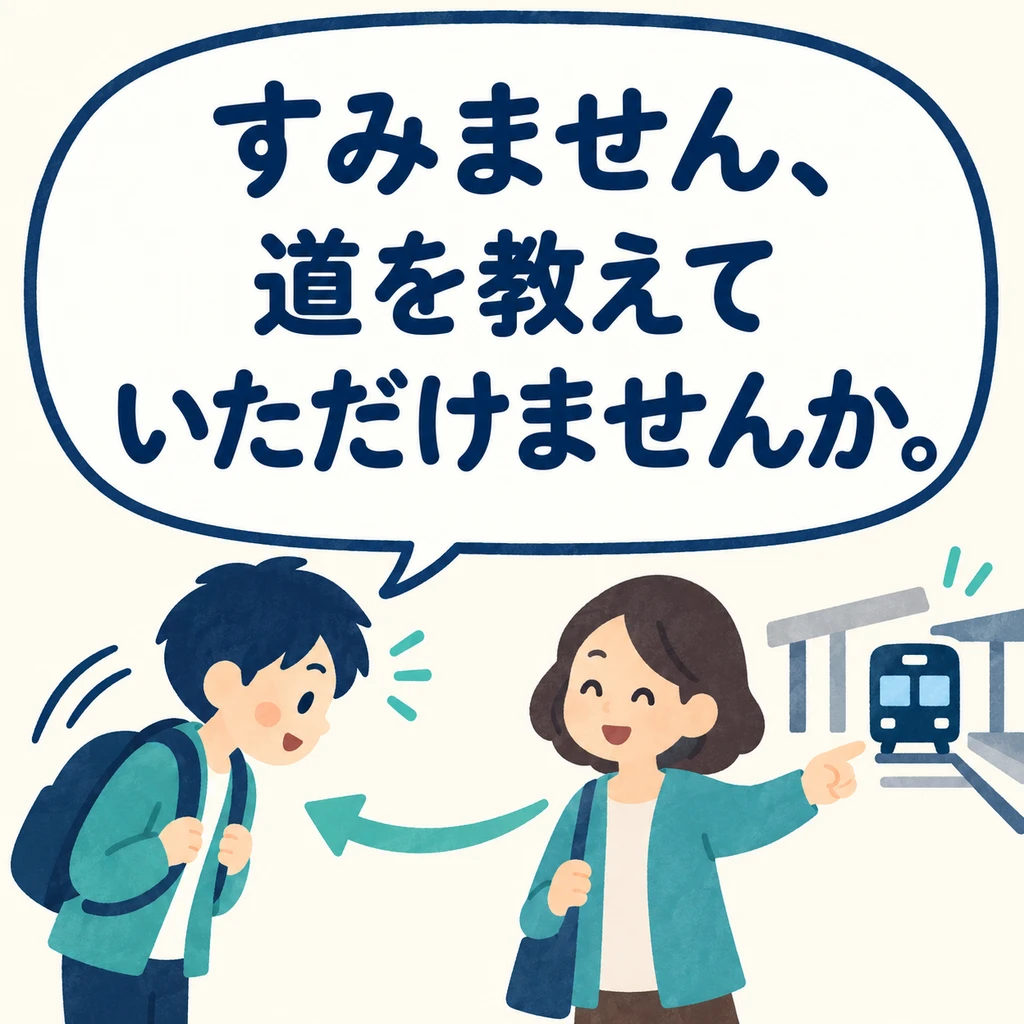
  1. How can you politely ask a stranger for help with directions? Look at the request in the picture.
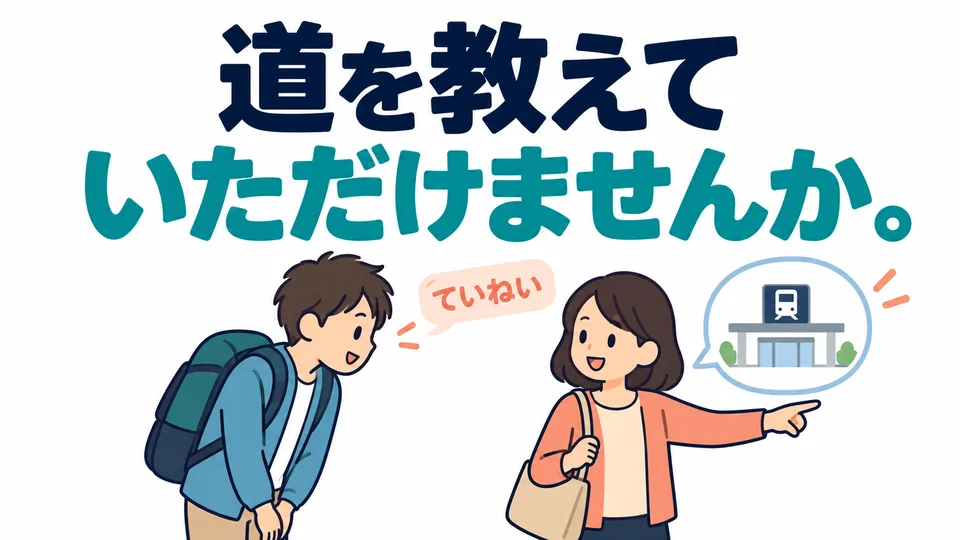
    How can you politely ask a stranger for help with directions? Look at the request in the picture.

  2. This pattern is very polite. You can use it to ask someone you do not know well for help.
    This pattern is very polite. You can use it to ask someone you do not know well for help.

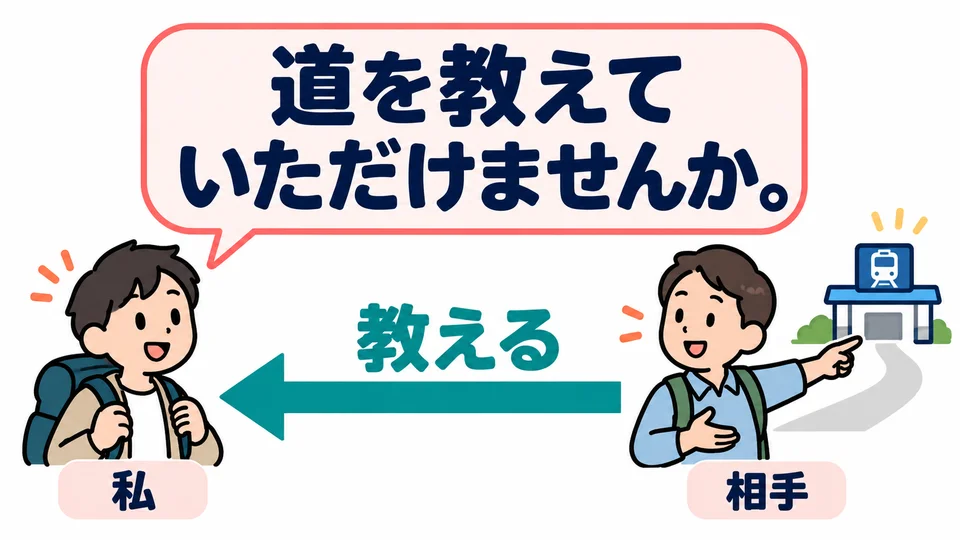
  3. Who gives directions in the picture? The other person does the action, and the speaker receives their help.
    Who gives directions in the picture? The other person does the action, and the speaker receives their help.

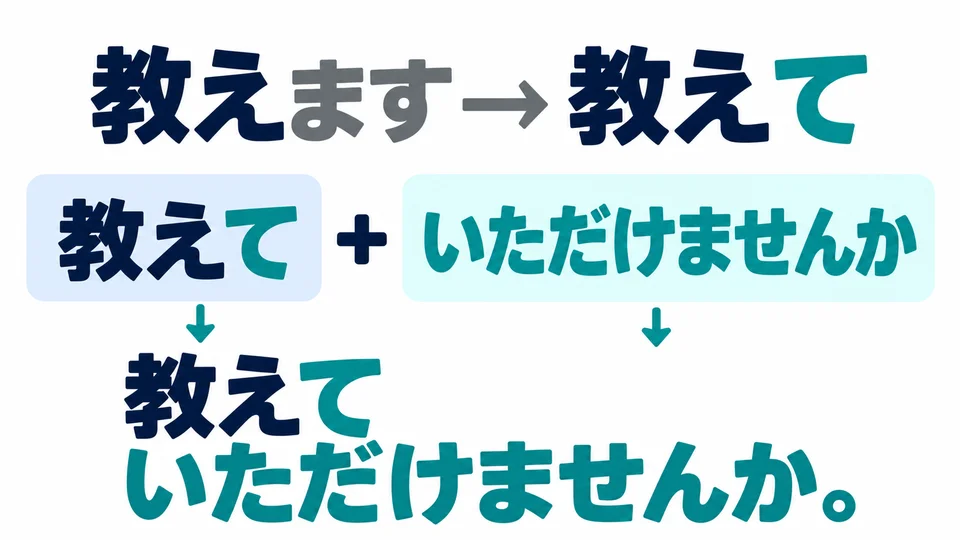
  4. Add 「いただけませんか」 after the verb’s て-form. 教えます becomes 教えて.
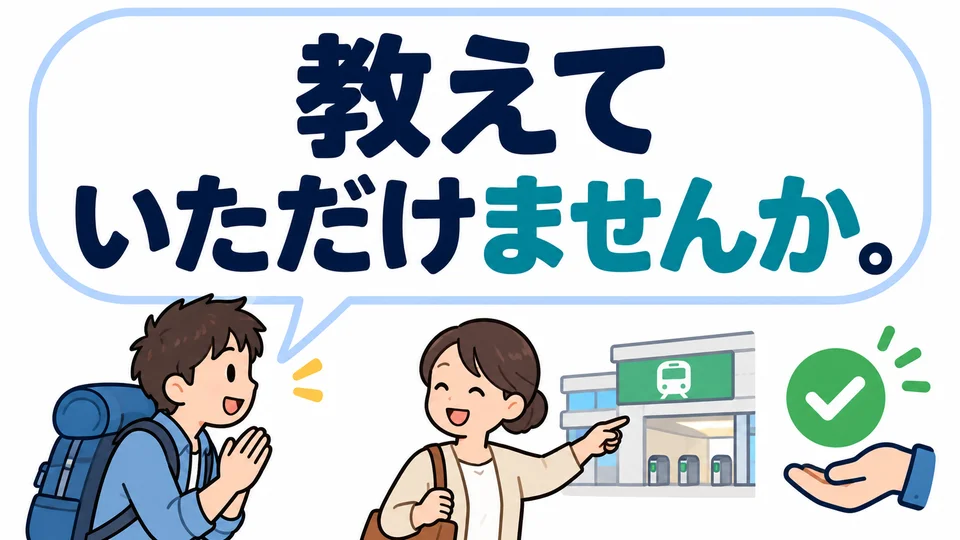
    Add 「いただけませんか」 after the verb’s て-form. 教えます becomes 教えて.

  5. Although it contains 「ません」, the whole sentence is a gentle request, not a refusal to help.
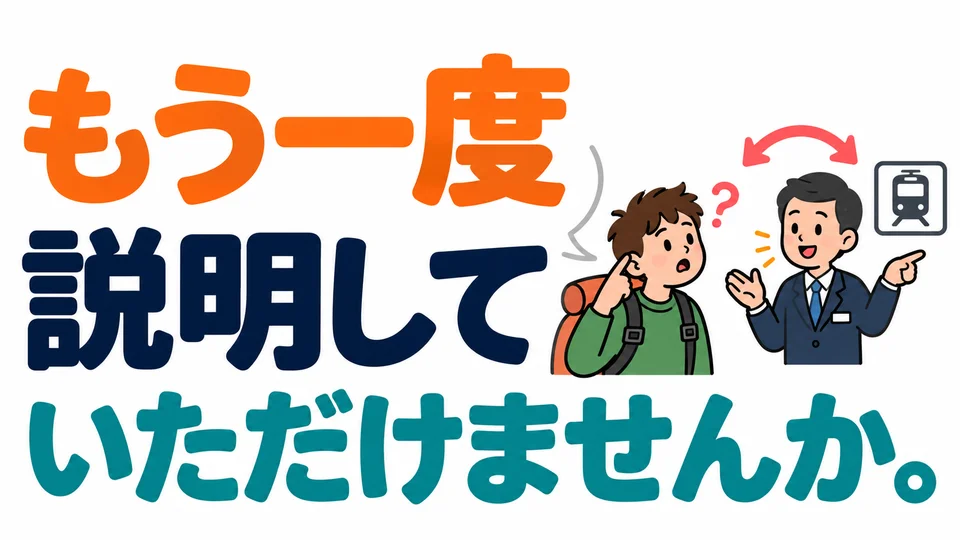
    Although it contains 「ません」, the whole sentence is a gentle request, not a refusal to help.

  6. If you did not understand, use 「もう一度説明していただけませんか」 to ask the other person to explain again.
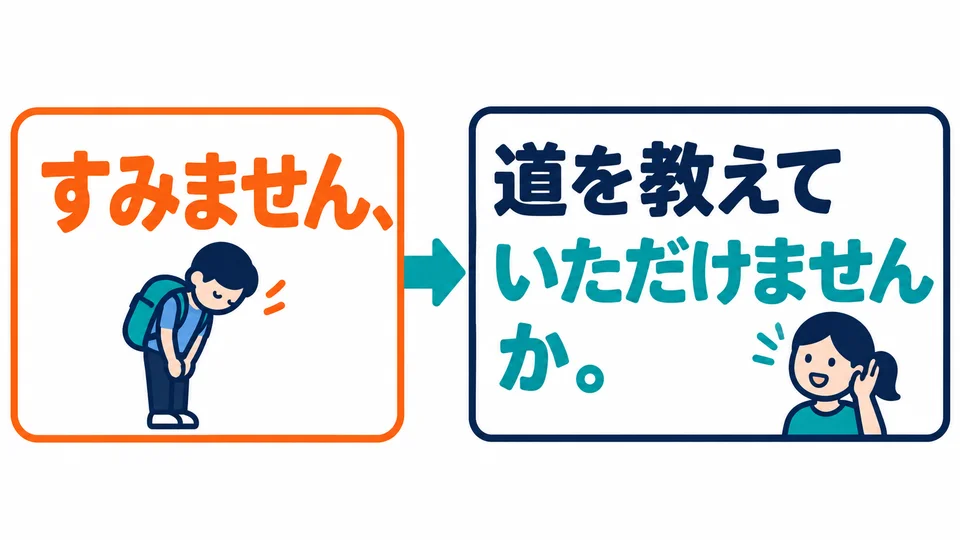
    If you did not understand, use 「もう一度説明していただけませんか」 to ask the other person to explain again.

  7. Start with 「すみません」 to apologize for interrupting the other person, then make your request.

    Start with 「すみません」 to apologize for interrupting the other person, then make your request.

Example sentences

  • すみません、すみませんsumimasen道みちmichiをo教えおしえoshieてteいただけませんitadakemasenか?かka

    Excuse me, could you tell me the way?

  • 申し訳もうしわけmoushiwakeないnai

In a conversation

  • A
    すみません、すみません駅えきまでの道みちを教えおしえていただけませんか。か

    A: Excuse me, could you tell me the way to the station?

  • B
    はい、はいこの道みち

Check yourself

  1. Which sentence is correct?

    1. 詳しい地図を見せていただけませんか。
    2. 詳しい地図を見せいただけませんか。
    3. 詳しい地図を見せていたいただけませんか。
    4. 詳しい地図。見せていただけませんか。
    Show answer

    Answer: A 詳しい地図を見せていただけませんか。

  2. Which sentence is correct?

    1. 連絡先を教えていただけませんか。
    2. 連絡先を教えいただけませんか。
    3. 連絡先。教えていただけませんか。
    4. 連絡先を教えていただけますです。
    Show answer

    Answer: A 連絡先を教えていただけませんか。

  3. Which sentence is correct?

    1. タクシー乗り場まで案内していただけませんか。
    2. タクシー乗り場まで案内しただけませんか。
    3. タクシー乗り場まで案内しいただけませんか。
    4. タクシー乗り場まで案内していいただけませんか。
    Show answer

    Answer: A タクシー乗り場まで案内していただけませんか。

More grammar in this theme

  • 〜ていただけませんかvery polite request

Keep practising

Test your Japanese vocabulary12 adaptive questions, freeCheck your pronunciationRead aloud and get a scorePractise verb forms10-question conjugation quizSee the whole courseGrammar, vocabulary and quizzes by theme
のno
ですdesu
が、がga
もうmou
一度いちどichido
説明せつめいsetsumei
しshi
てte
いただけませんitadakemasen
か?かka

I am sorry, but could you explain it one more time?

を
まっすぐ
行っいっ
て、て
二つ目ふたつめ
の
信号しんごう
を
左ひだり
に
曲がっまがっ
て
ください。ください

B: Sure. Go straight along this road, and turn left at the second traffic light.

  • A
    申し訳もうしわけないのですが、がもう一度いちど説明せつめいしていただけませんか。か

    A: I am very sorry, but could you explain it one more time?

  • B
    いいですよ。よまっすぐ行っいって、て信号しんごうを左ひだりです。です

    B: No problem. Go straight, and turn left at the light.

  • Take the quiz
    〜てしまいましたregret: ended up doing
    〜かもしれませんpossibility: might be
    〜たあとで、〜after doing, then
    〜て、〜/〜で、〜cause and result
    〜たら、〜たdiscovery after an action
    Previous〜たあとで、〜
    Next〜て、〜/〜で、〜