JPEDLAB iconJPEDLAB
Save history

Create an account and play

Explore first, then save your progress whenever you are ready. No email address is required.

Start free
Read as articleCards
See the whole course›Beginner 3›Unexpected Events

Japanese grammar · ≈ JLPT N4 · Beginner 3

〜て、〜/〜で、〜~te, ~/~de, ~

cause and result

Use 〜て or noun + で to give a cause, then state its result or a natural feeling.

Start the interactive lessonIllustrated cards, audio and speaking practice

How it works

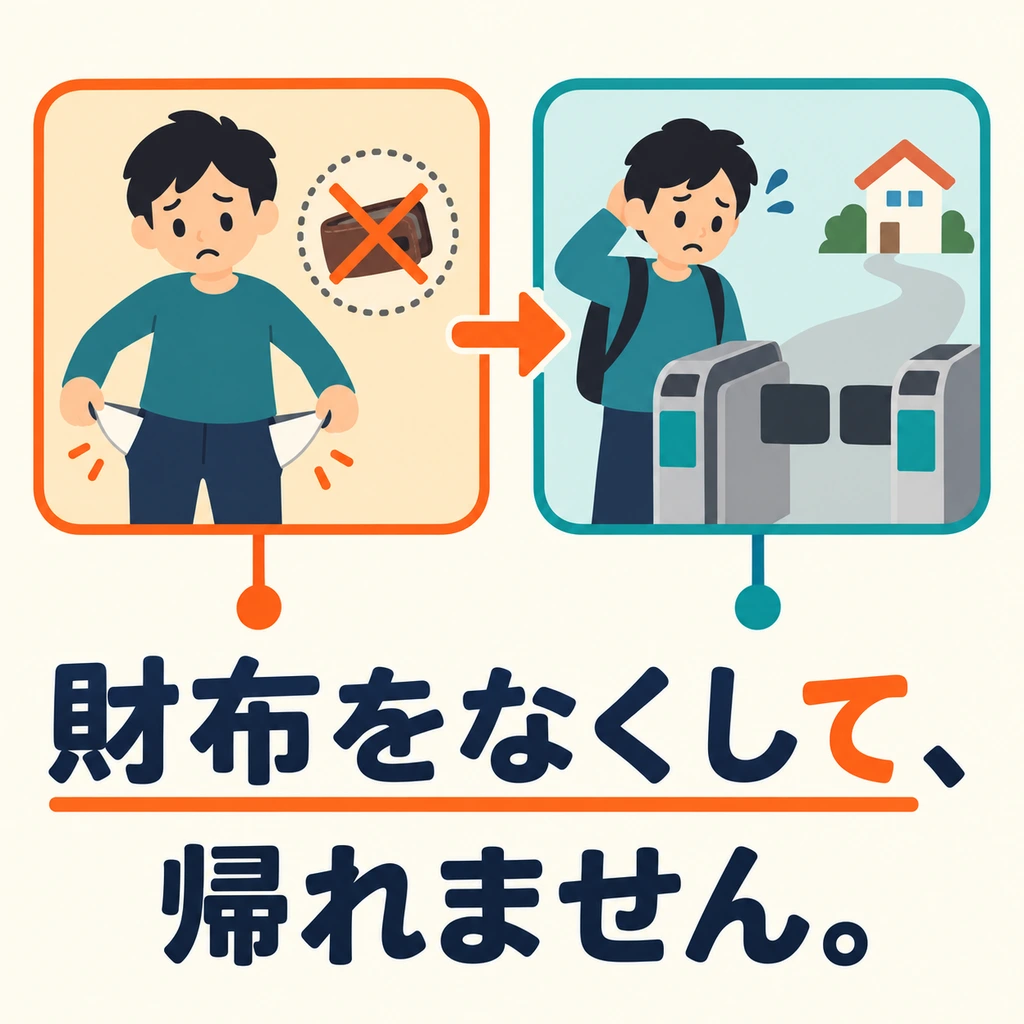
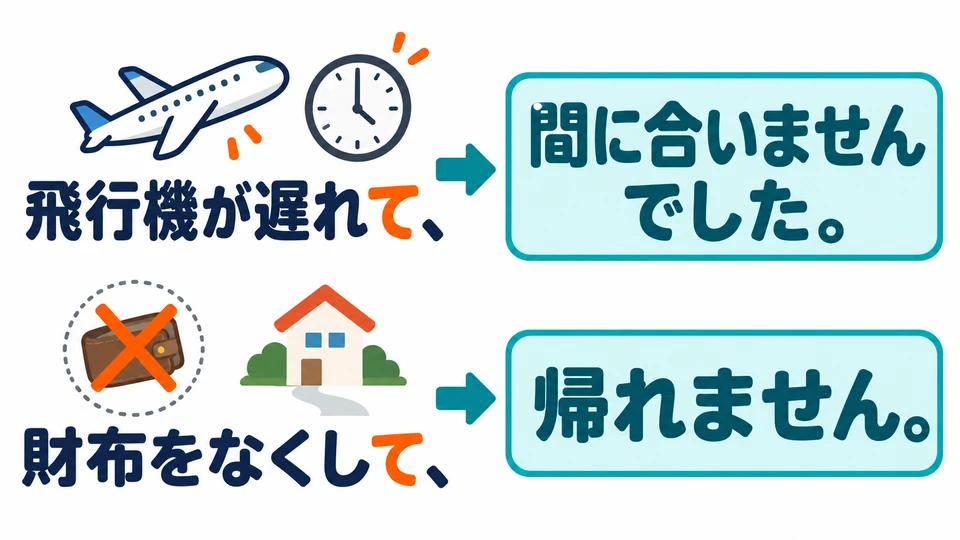
  1. Why can’t they get home? Losing the wallet is the cause; being unable to get home is the result.
    Why can’t they get home? Losing the wallet is the cause; being unable to get home is the result.

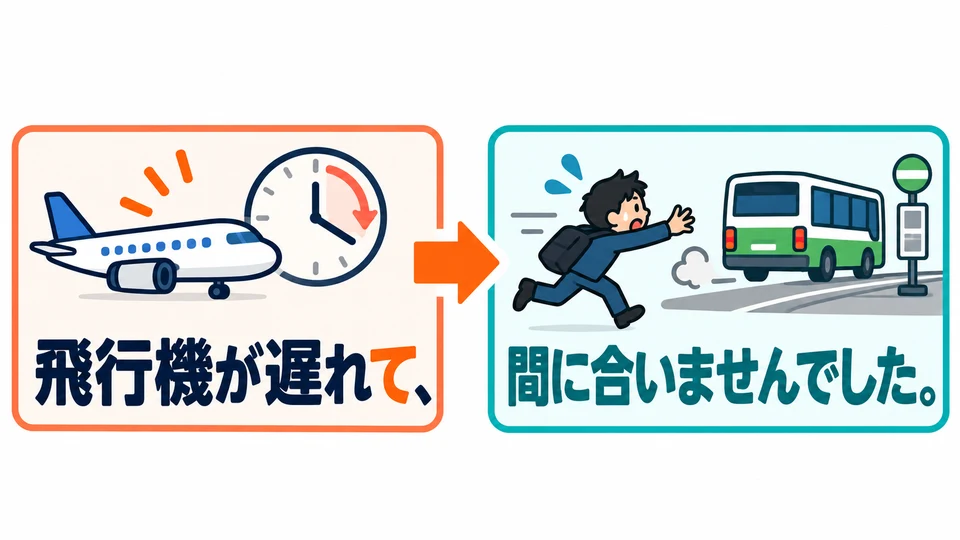
  2. The plane’s delay meant someone didn’t make it in time. Here, 「て」 links cause and result, not just events in sequence.
    The plane’s delay meant someone didn’t make it in time. Here, 「て」 links cause and result, not just events in sequence.

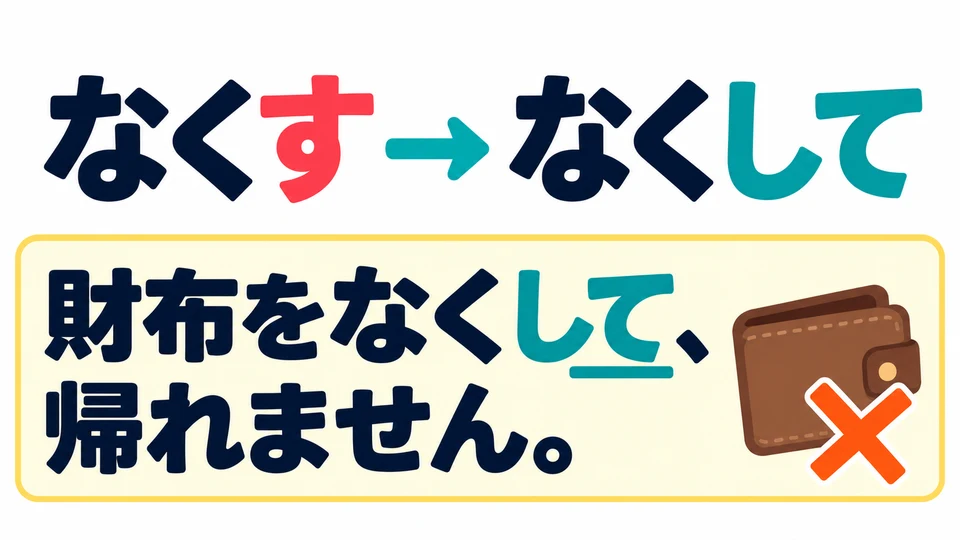
  3. When the cause is an action, use the verb’s て-form: 「なくす→なくして」.
    When the cause is an action, use the verb’s て-form: 「なくす→なくして」.

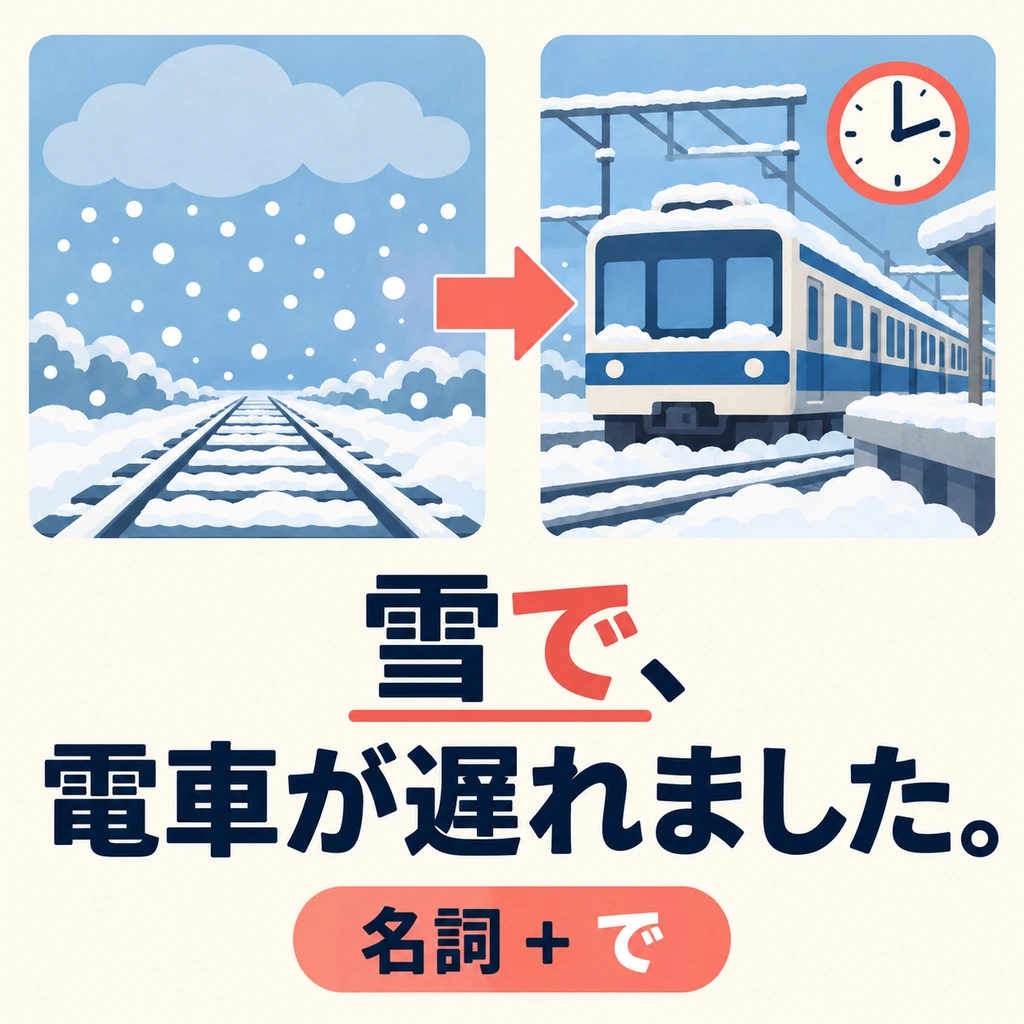
  4. When the cause is a noun, use “noun + で”. What caused the train’s delay in the picture?
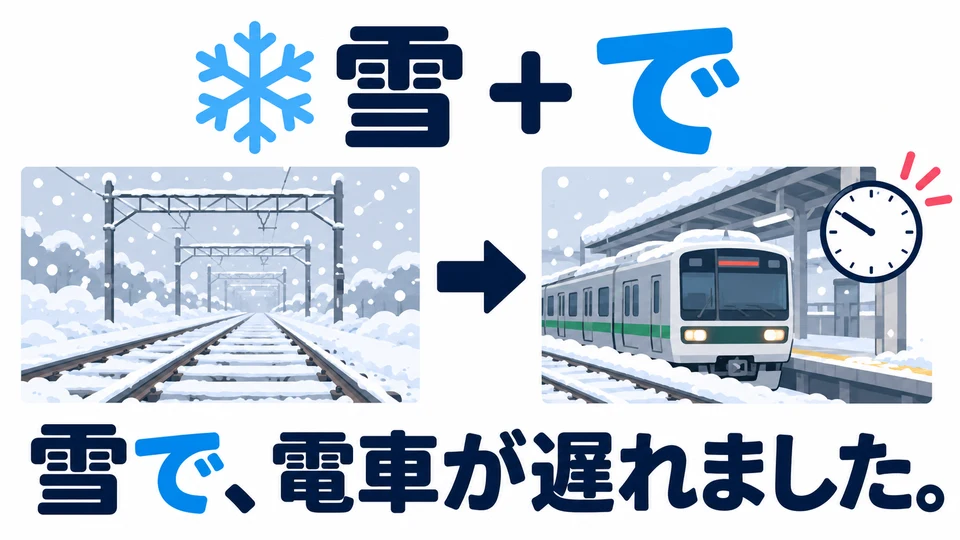
    When the cause is a noun, use “noun + で”. What caused the train’s delay in the picture?

  5. 「雪で」 means “because of the snow”. Here, 「で」 marks the cause, not the place where an action happens.
    「雪で」 means “because of the snow”. Here, 「で」 marks the cause, not the place where an action happens.

  6. The second clause often describes a result beyond someone’s control, such as a delay, not making it in time, or being unable to get home.
    The second clause often describes a result beyond someone’s control, such as a delay, not making it in time, or being unable to get home.

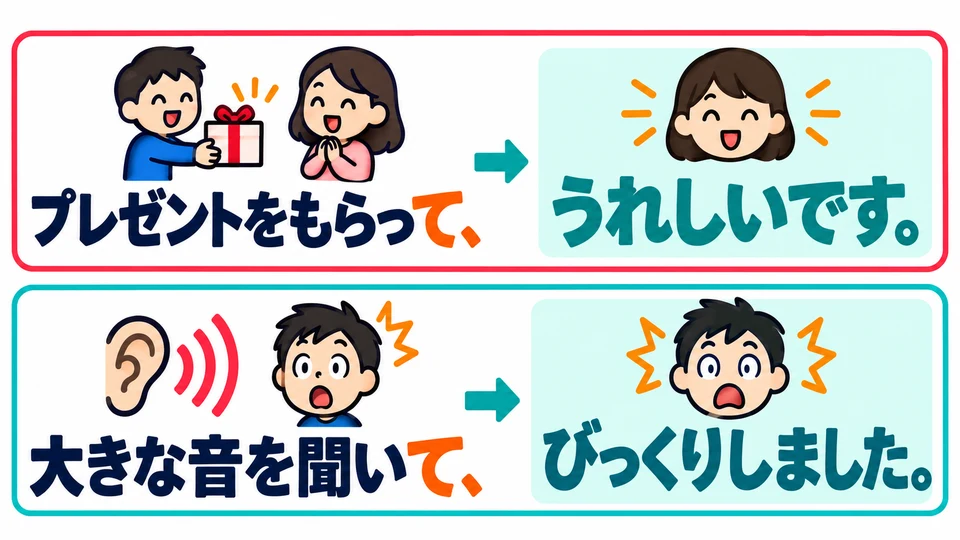
  7. The second clause can also express a feeling that arises naturally, such as happiness or surprise after something happens.
    The second clause can also express a feeling that arises naturally, such as happiness or surprise after something happens.

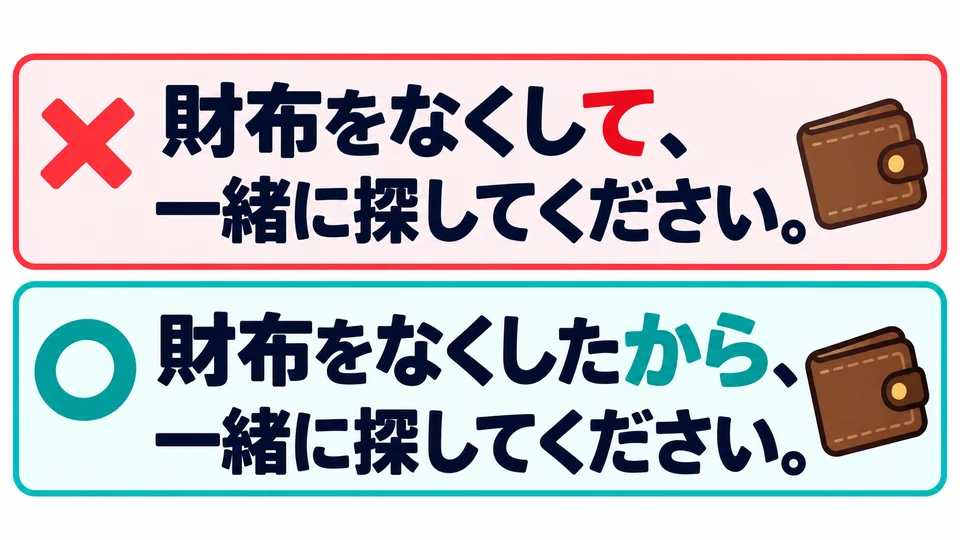
  8. Don’t use a request or command in the second clause. To explain why you’re asking someone for help, use 「から」.

    Don’t use a request or command in the second clause. To explain why you’re asking someone for help, use 「から」.

Example sentences

  • 飛行ひこうhikou機きkiがga遅れおくれokureて、てte間に合いませんでした。まにあいませんでしたmaniaimasendeshita

    The flight was delayed, and I did not make it in time.

  • 財布さいふsaifu

In a conversation

  • A
    どうしましたか。かそんなに焦っあせっている様子ようすですが。が

    A: What is wrong? You seem very rushed.

  • B
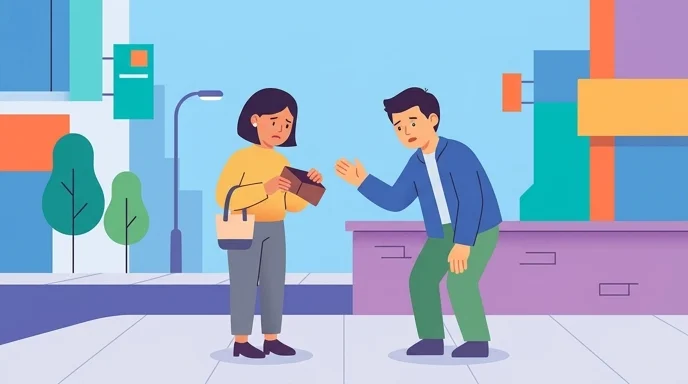
    財布さいふをなくして、て

Check yourself

  1. Level 1 · Recognise

    Which sentence is correct?

  2. Level 1 · Recognise

    Listen and choose the meaning

  3. Level 2 · Build

    Put the words in order

    I lost my wallet and can't go home.

  4. Level 3 · Use

    What goes in the blank?

     電車が止まっています。

    Due to an accident, the train is stopped.

More grammar in this theme

  • 〜て、〜/〜で、〜cause and result

Keep practising

Test your Japanese vocabulary12 adaptive questions, freeCheck your pronunciationRead aloud and get a scorePractise verb forms10-question conjugation quizSee the whole courseGrammar, vocabulary and quizzes by theme
を
o
無くしなくしnakushi
て、てte
帰れません。かえれませんkaeremasen

I lost my wallet, so I cannot go home.

帰れないかえれない
ん
です。です

B: I lost my wallet, and I cannot go home.

  • A
    大丈夫ですだいじょうぶですか。か一緒いっしょに探しましょうさがしましょうか。か

    A: Are you okay? Shall we look for it together?

  • B
    ありがとうございます。ございますぜひお願いおねがいします。します

    B: Thank you. I really appreciate it.

  • 〜てしまいましたregret: ended up doing
    〜かもしれませんpossibility: might be
    〜たあとで、〜after doing, then
    〜ていただけませんかvery polite request
    〜たら、〜たdiscovery after an action
    Previous〜ていただけませんか
    Next〜たら、〜た