
Japanese grammar · ≈ JLPT N4 · Beginner 3
〜て、〜/〜で、〜~te, ~/~de, ~
cause and result
Use 〜て or noun + で to give a cause, then state its result or a natural feeling.
How it works
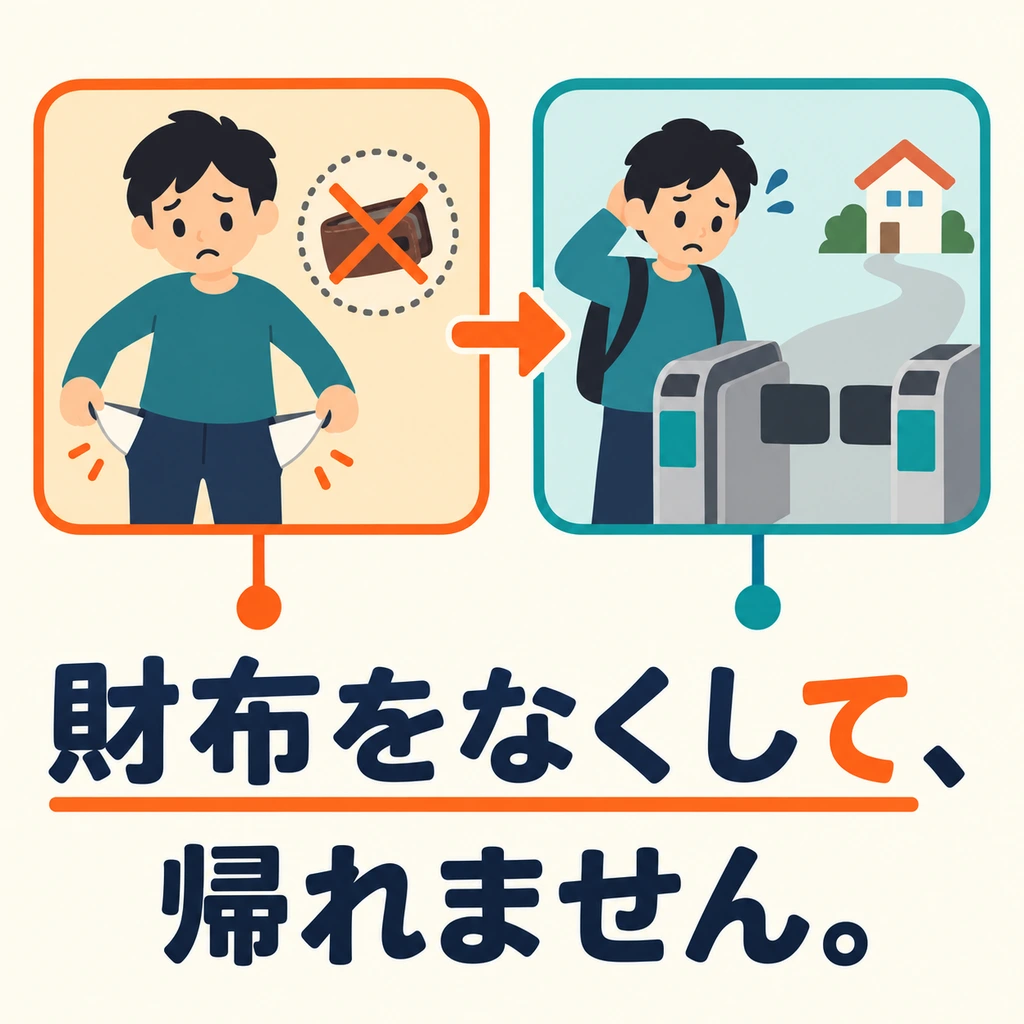
Why can’t they get home? Losing the wallet is the cause; being unable to get home is the result.
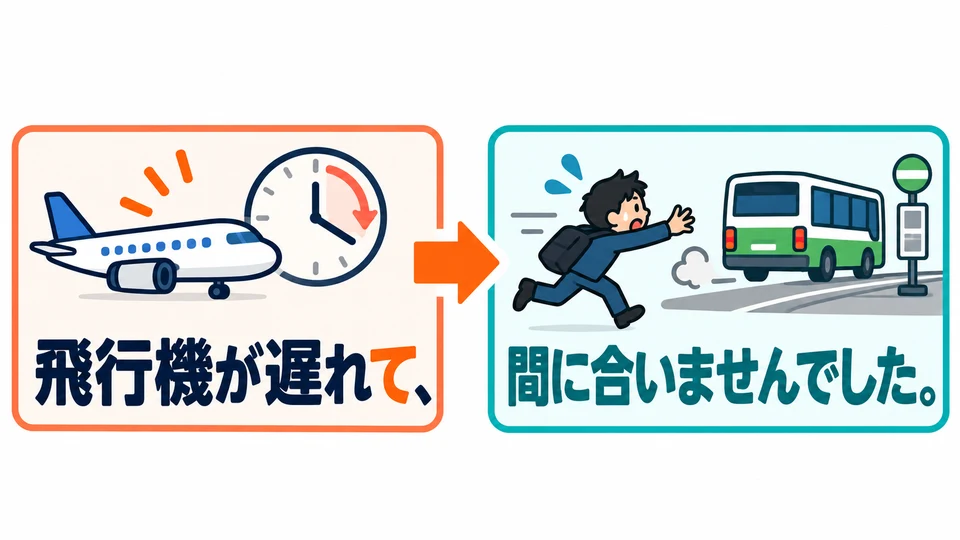
The plane’s delay meant someone didn’t make it in time. Here, 「て」 links cause and result, not just events in sequence.
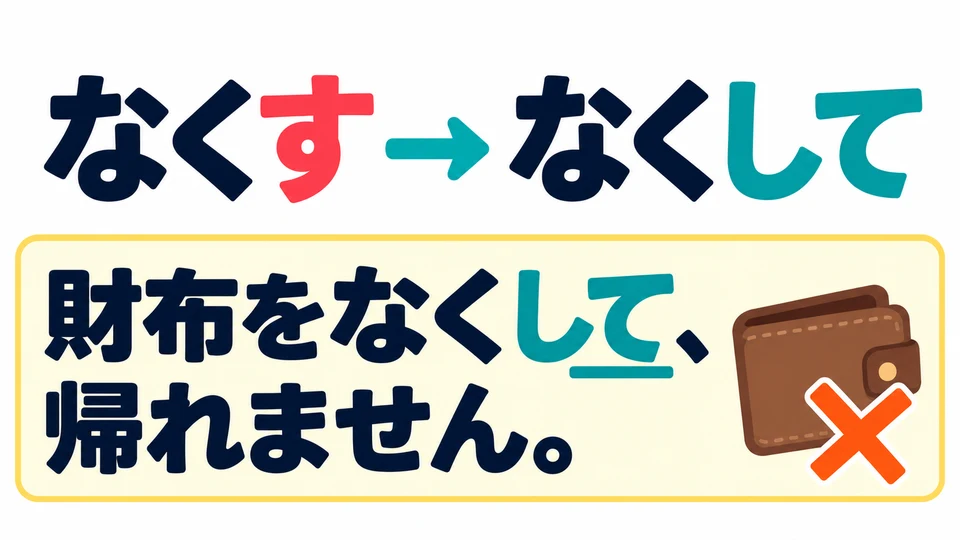
When the cause is an action, use the verb’s て-form: 「なくす→なくして」.
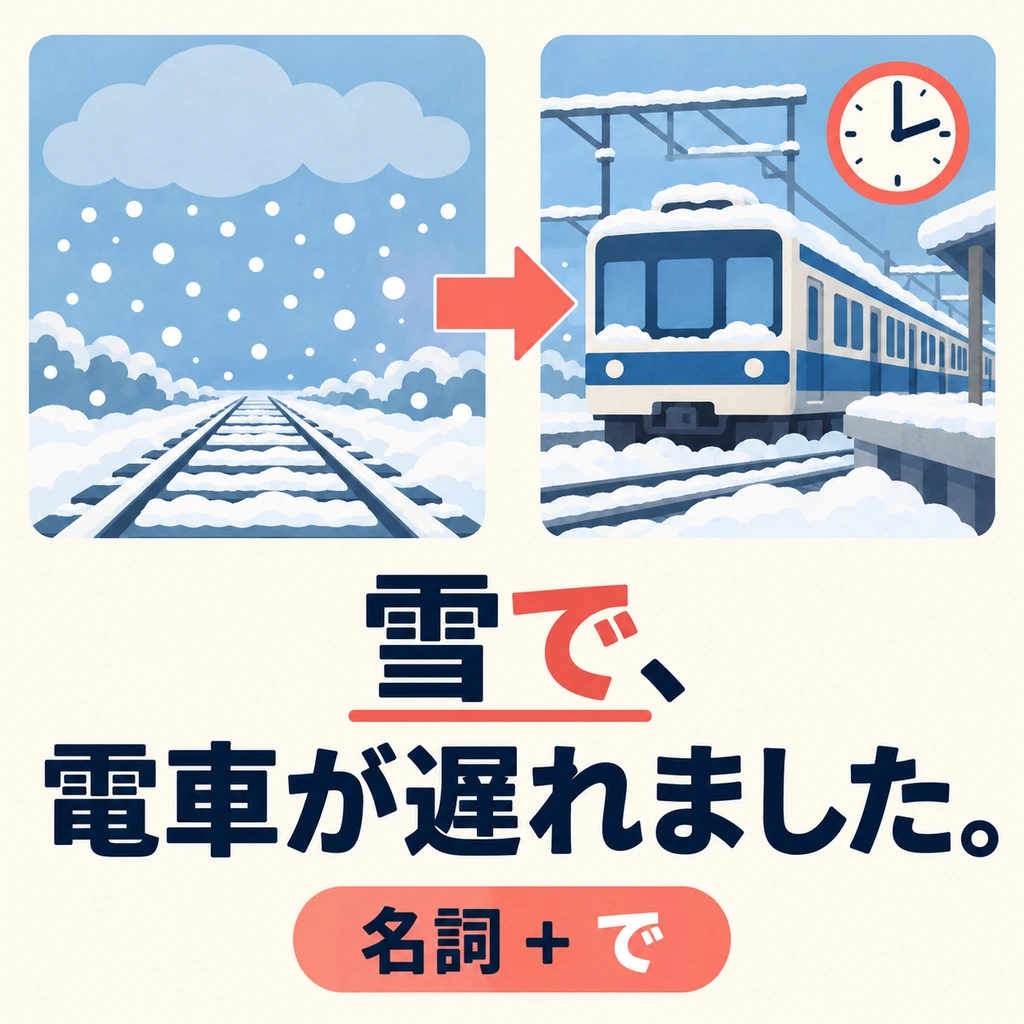
When the cause is a noun, use “noun + で”. What caused the train’s delay in the picture?
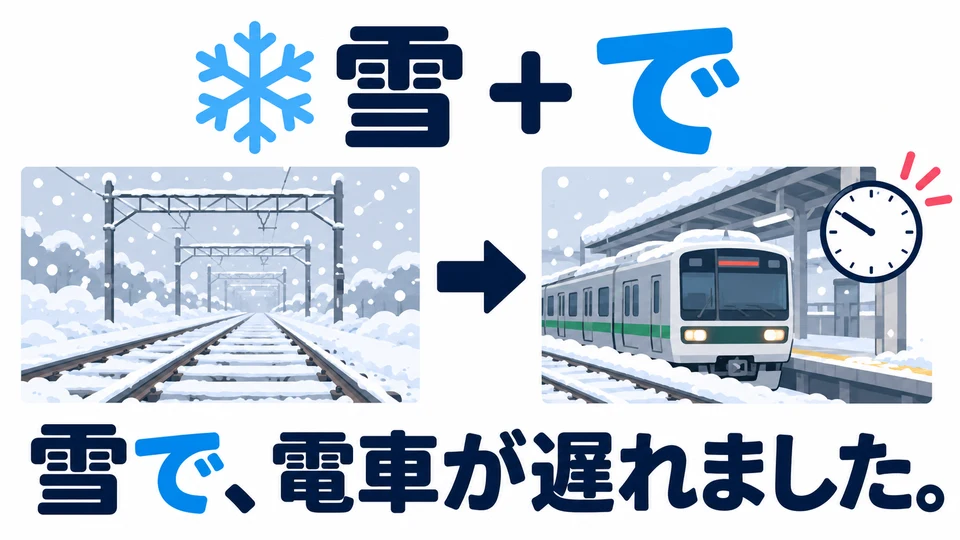
「雪で」 means “because of the snow”. Here, 「で」 marks the cause, not the place where an action happens.
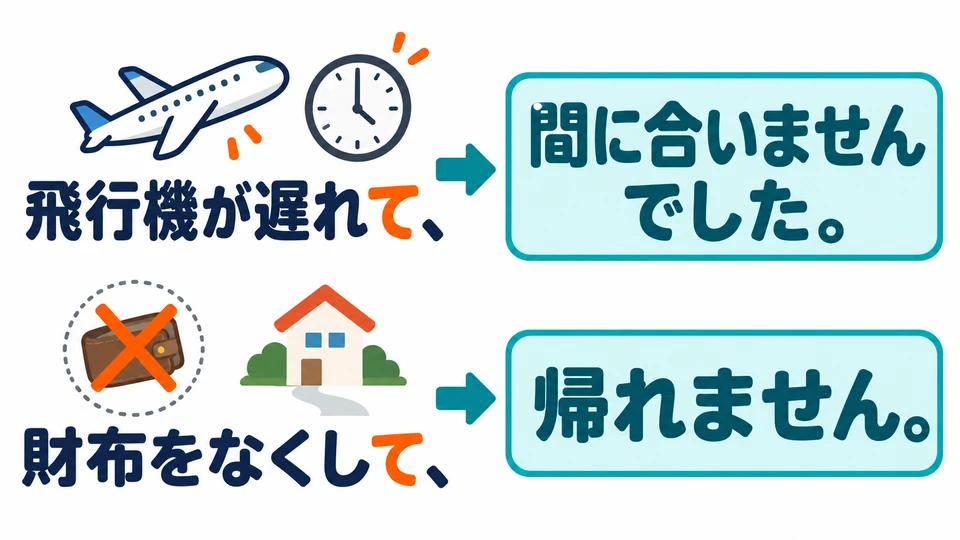
The second clause often describes a result beyond someone’s control, such as a delay, not making it in time, or being unable to get home.
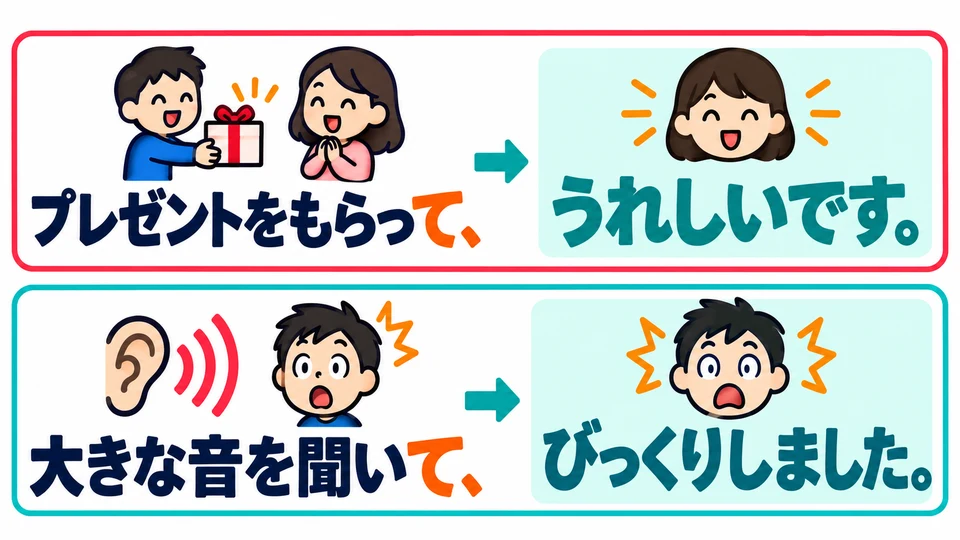
The second clause can also express a feeling that arises naturally, such as happiness or surprise after something happens.
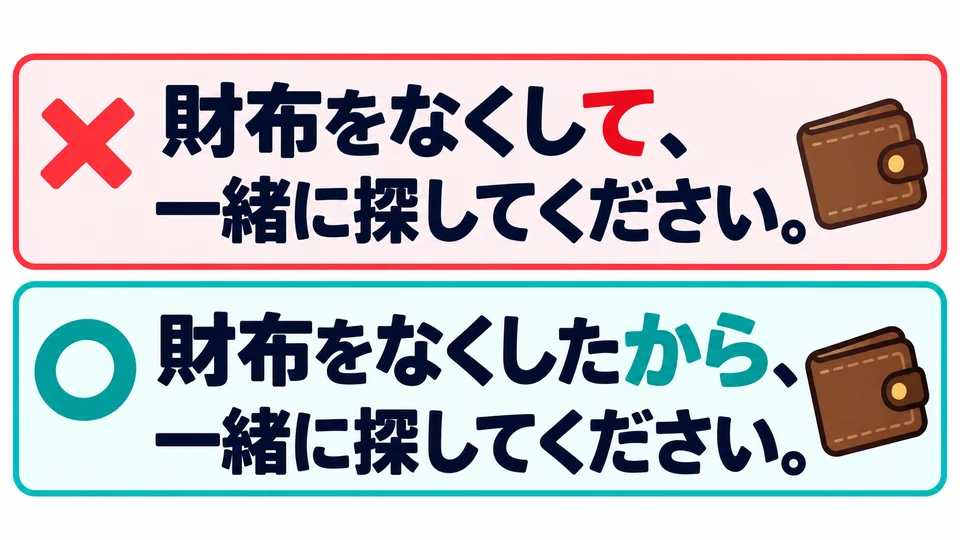
Don’t use a request or command in the second clause. To explain why you’re asking someone for help, use 「から」.
Example sentences
- 飛行hikou機kiがga遅れokureて、te間に合いませんでした。maniaimasendeshita
The flight was delayed, and I did not make it in time.
- 財布saifu
In a conversation
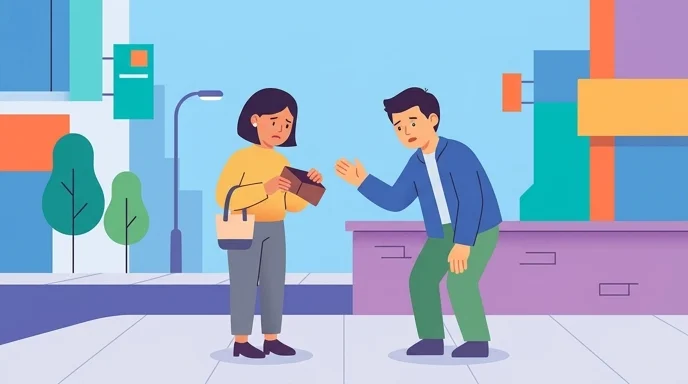
- Aどうしましたか。そんなに焦っている様子ですが。
A: What is wrong? You seem very rushed.
- B財布をなくして、
Check yourself
Level 1 · Recognise
Which sentence is correct?
Level 1 · Recognise
Listen and choose the meaning
Level 2 · Build
Put the words in order
I lost my wallet and can't go home.
Level 3 · Use
What goes in the blank?
電車が止まっています。
Due to an accident, the train is stopped.
More grammar in this theme
- 〜て、〜/〜で、〜cause and result