Lesson notes · ≈ JLPT N4 · Beginner 3
〜て、〜/〜で、〜~te, ~/~de, ~
cause and result
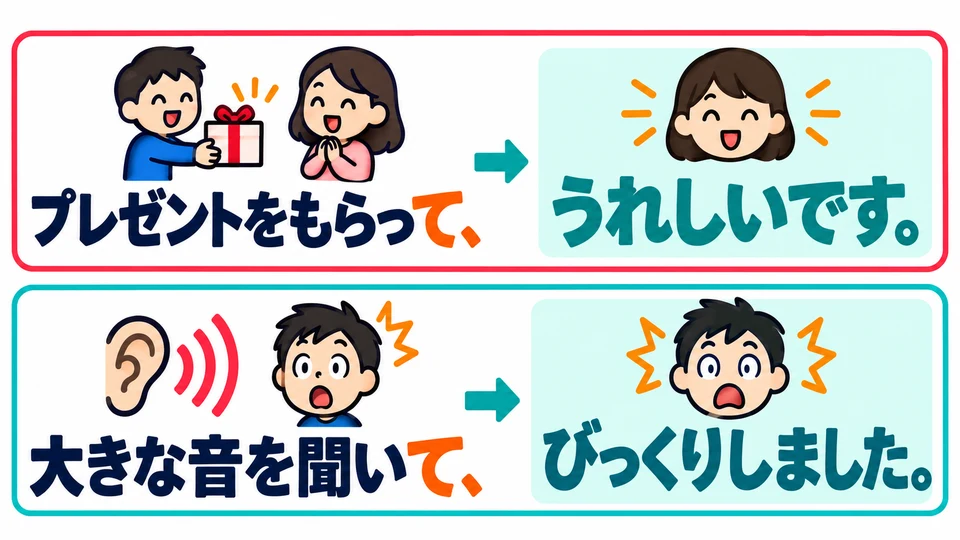
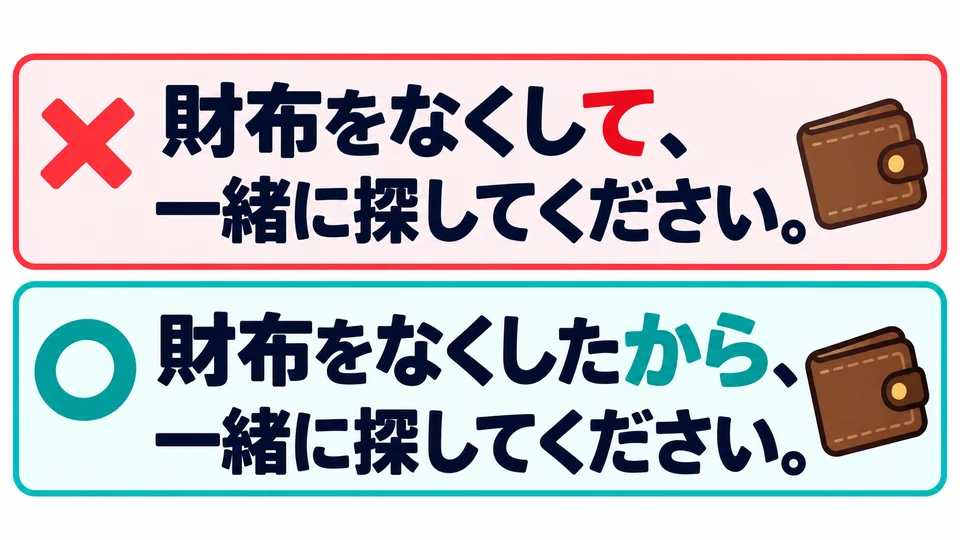
Use 〜て or noun + で to give a cause, then state its result or a natural feeling.
How it works
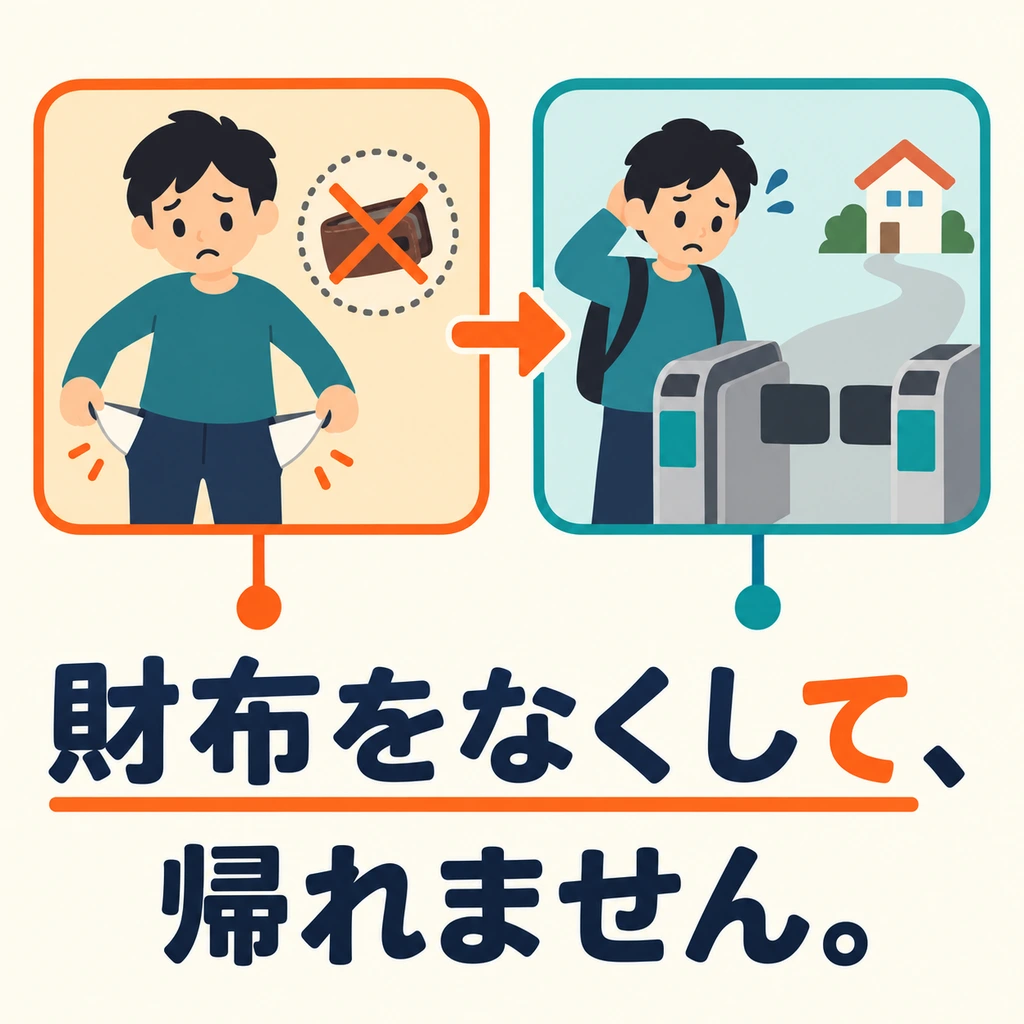
Why can’t they get home? Losing the wallet is the cause; being unable to get home is the result.
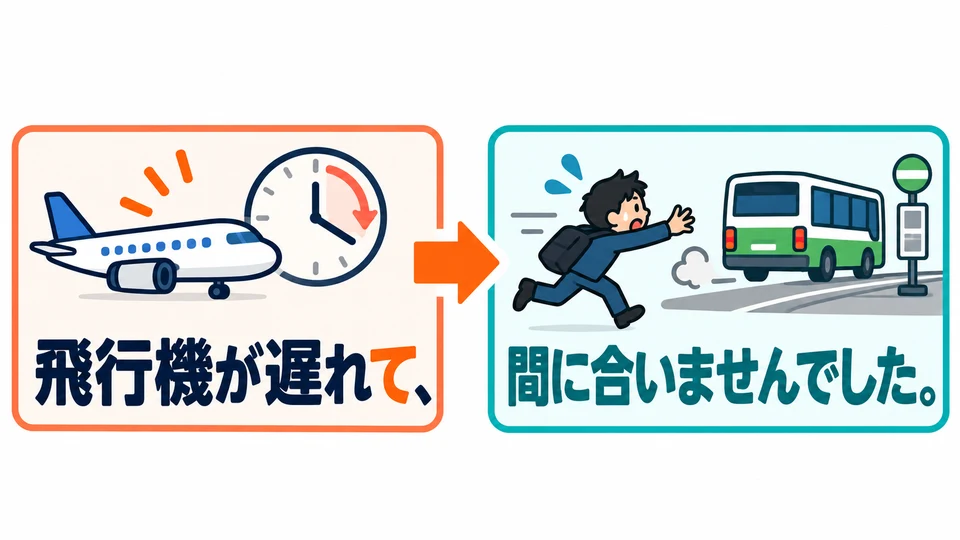
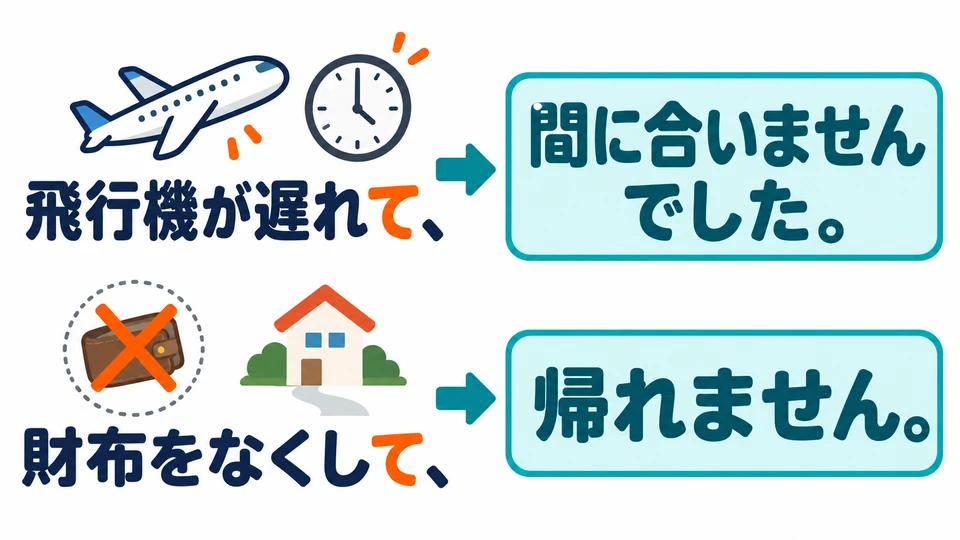
The plane’s delay meant someone didn’t make it in time. Here, 「て」 links cause and result, not just events in sequence.
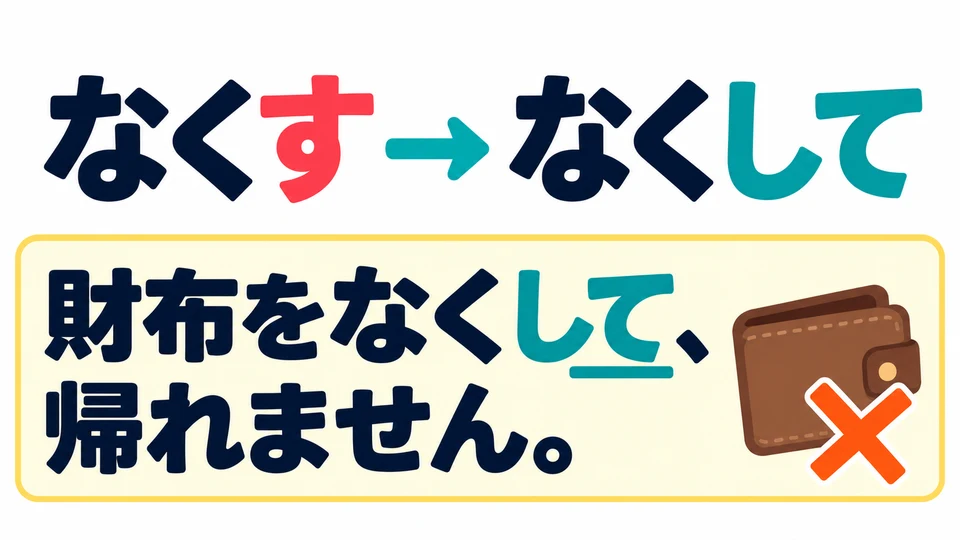
When the cause is an action, use the verb’s て-form: 「なくす→なくして」.
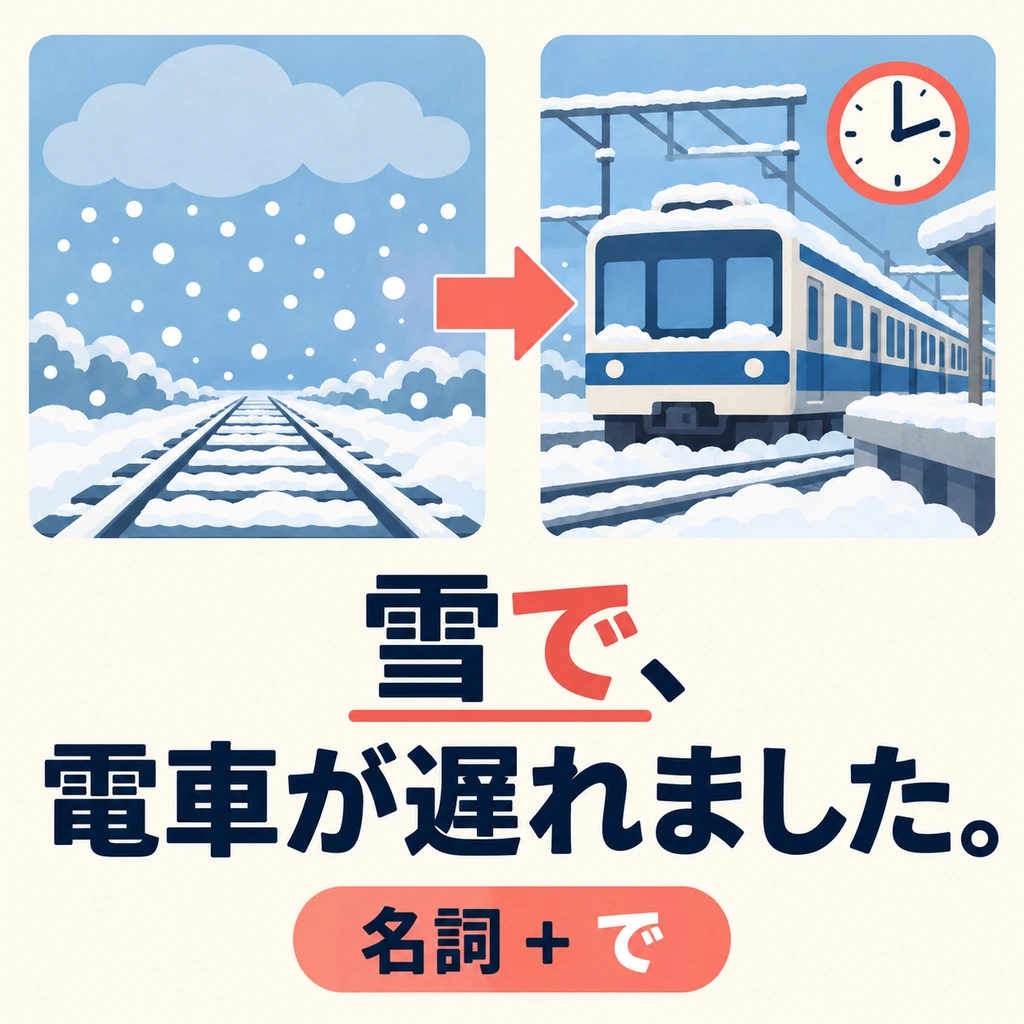
When the cause is a noun, use “noun + で”. What caused the train’s delay in the picture?
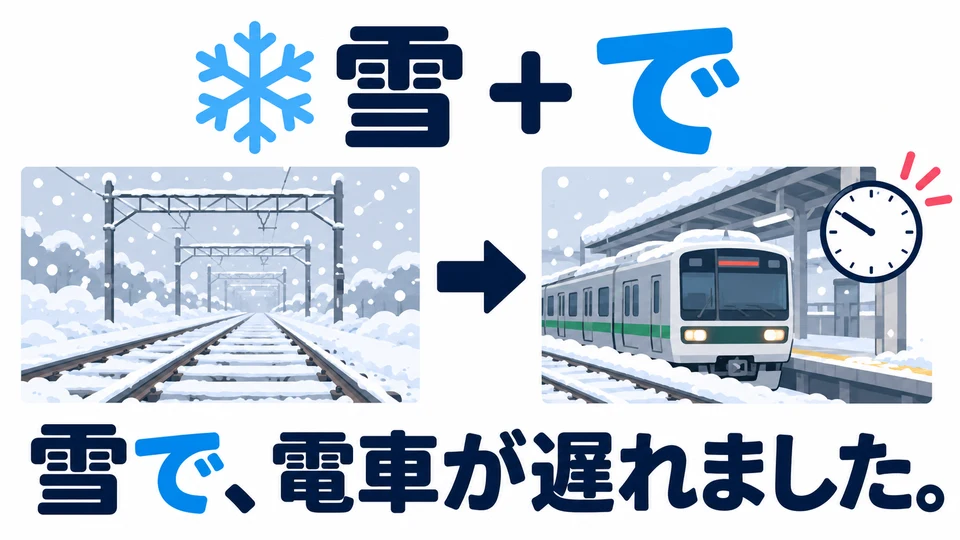
「雪で」 means “because of the snow”. Here, 「で」 marks the cause, not the place where an action happens.