JPEDLAB iconJPEDLAB
Save history

Create an account and play

Explore first, then save your progress whenever you are ready. No email address is required.

Start free
Read as articleCards
See the whole course›Beginner 3›Travel Plans

Japanese grammar · ≈ JLPT N4 · Beginner 3

〜てあります~te arimasu

preparation already complete

Use 〜てあります when a purposeful preparation is complete and its result is ready now.

Start the interactive lessonIllustrated cards, audio and speaking practiceTake the quiz
Pattern
〜てあります
Romaji
~te arimasu
JLPT (approx.)
≈ N4
Course level
Beginner 3
Theme
Travel Plans

How it works

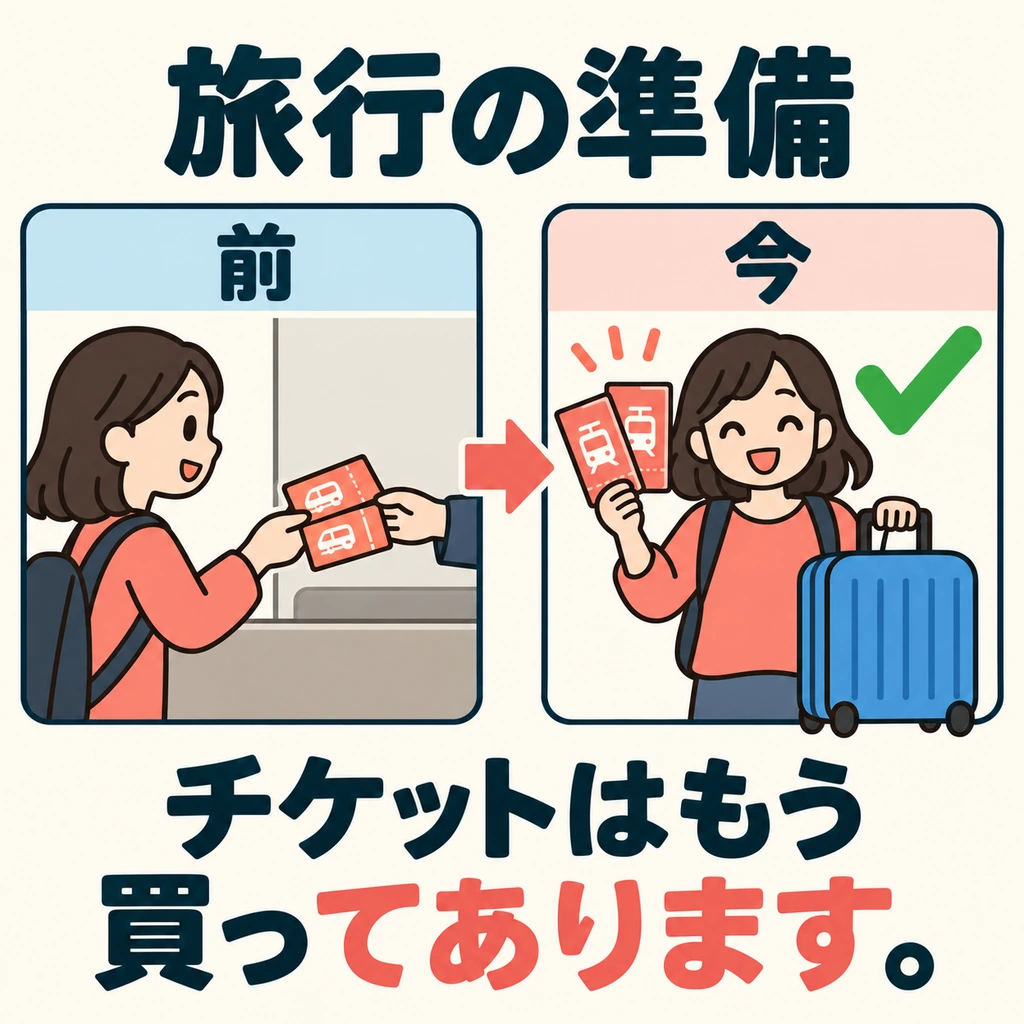
  1. Look at the picture: the tickets have already been bought. Use 「てあります」 to say the preparations are complete.
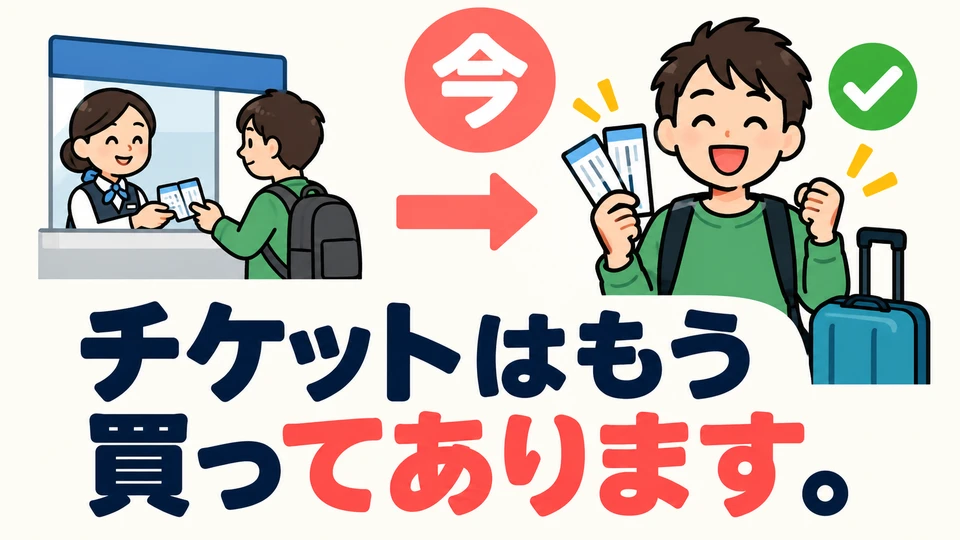
    Look at the picture: the tickets have already been bought. Use 「てあります」 to say the preparations are complete.

  2. Look again at the right: the tickets are still in hand. The focus is on the completed action’s result still being useful now.
    Look again at the right: the tickets are still in hand. The focus is on the completed action’s result still being useful now.

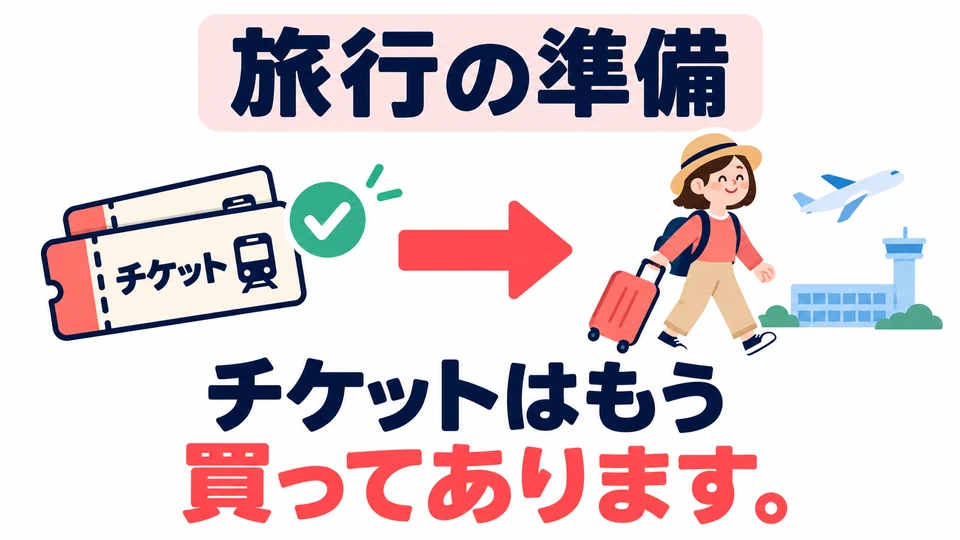
  3. This is preparation with a purpose: the tickets were bought in advance for the trip. There is no need to buy them now, so you can set off without worry.
    This is preparation with a purpose: the tickets were bought in advance for the trip. There is no need to buy them now, so you can set off without worry.

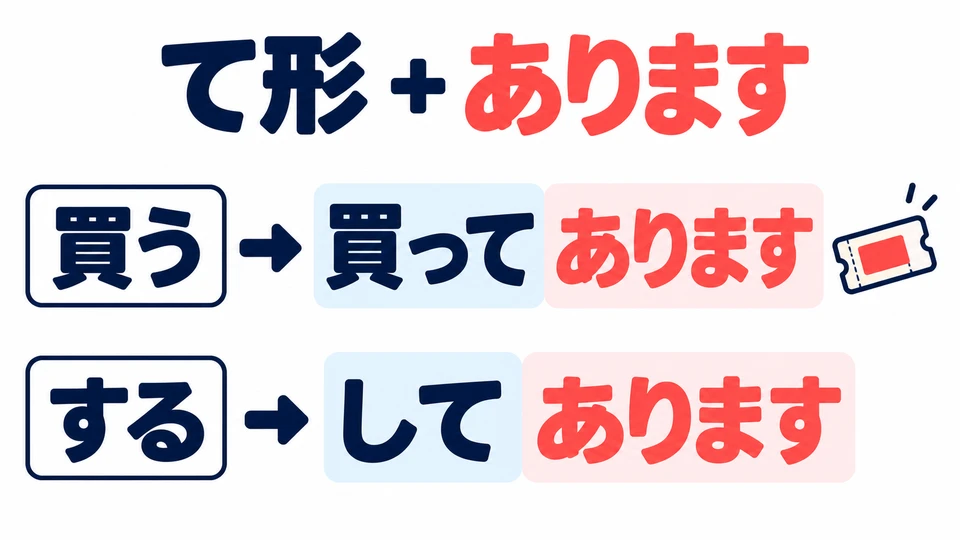
  4. Attach it to the verb’s て-form: 買う→買ってあります; する→してあります.
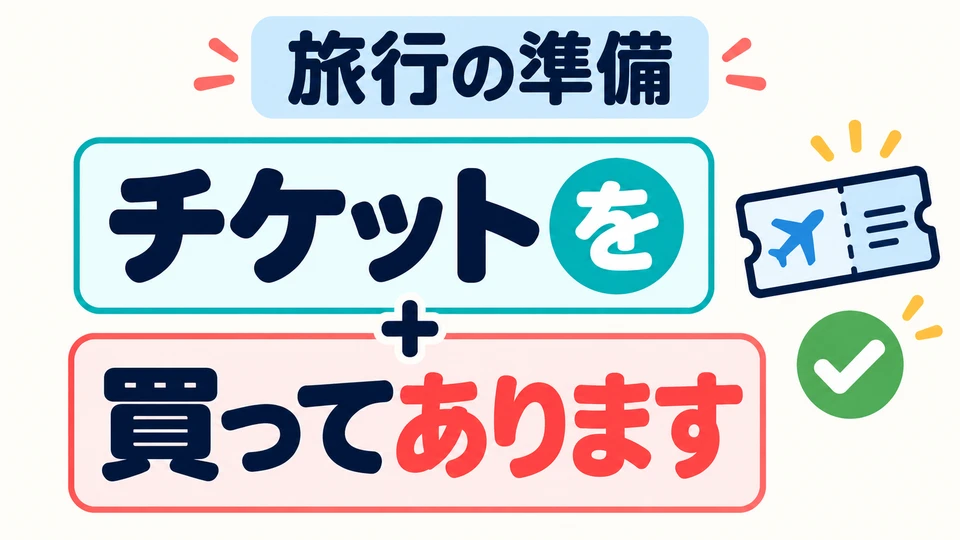
    Attach it to the verb’s て-form: 買う→買ってあります; する→してあります.

  5. When saying that preparations are complete, the object can still take 「を」. It does not always have to change to 「が」; judge by the context.
    When saying that preparations are complete, the object can still take 「を」. It does not always have to change to 「が」; judge by the context.

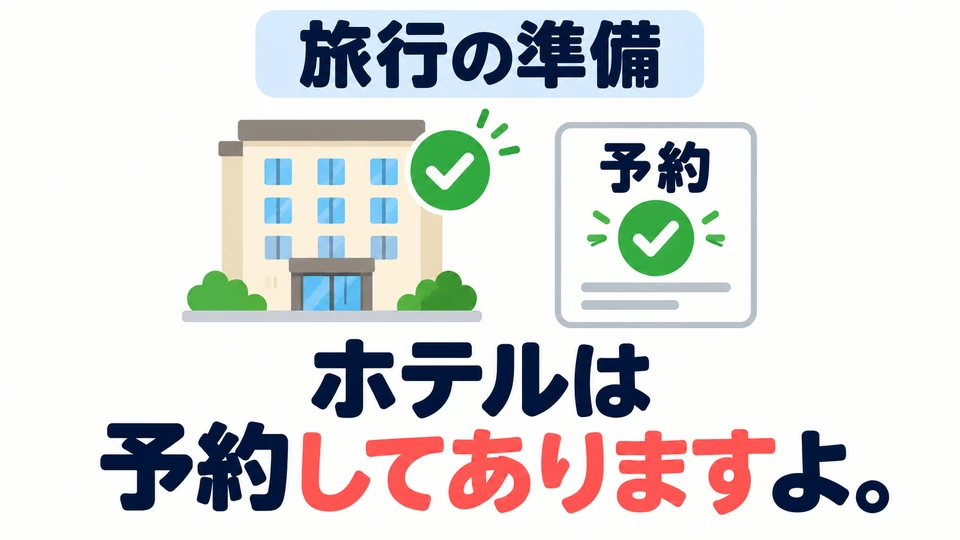
  6. Asked if you are ready for the trip? 「ホテルは予約してありますよ。」 says the hotel reservation is already taken care of.
    Asked if you are ready for the trip? 「ホテルは予約してありますよ。」 says the hotel reservation is already taken care of.

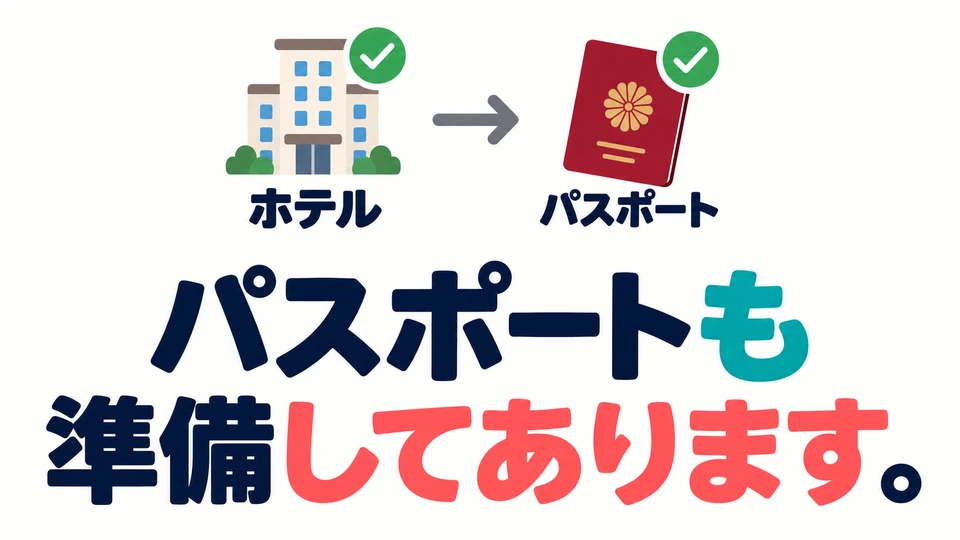
  7. And what about the passport? 「パスポートも準備してあります。」 uses 「も」 to add that it is ready too.
    And what about the passport? 「パスポートも準備してあります。」 uses 「も」 to add that it is ready too.

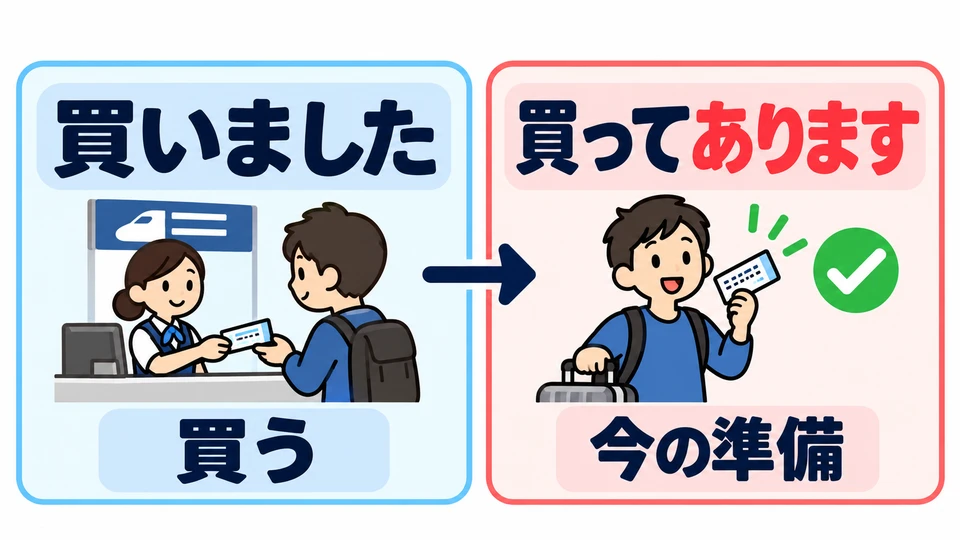
  8. 「買いました」 reports that the purchase happened; 「買ってあります」 emphasizes that things are ready now.
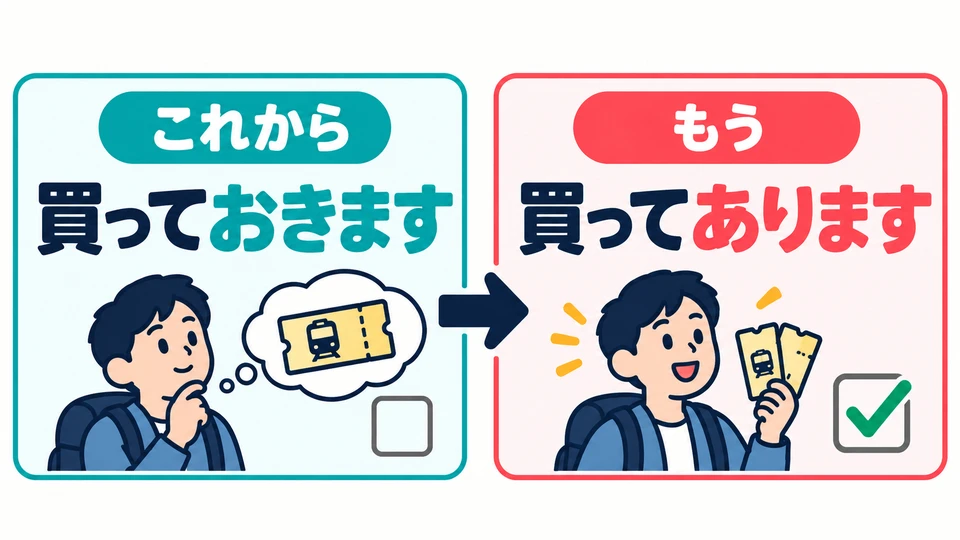
    「買いました」 reports that the purchase happened; 「買ってあります」 emphasizes that things are ready now.

  9. 「買っておきます」 says you will buy something in advance as preparation; 「買ってあります」 says the preparation is already complete.

    「買っておきます」 says you will buy something in advance as preparation; 「買ってあります」 says the preparation is already complete.

Example sentences

  • チケットちけっとchikettoはわwaもうmou買っかっkatてteありますarimasuよ。よyo

    I've already bought the tickets.

In a conversation

  • A
    旅行りょこうの準備じゅんびはわ終わりましたおわりましたか。か

    A: Are your travel preparations done?

  • B
    はい、はいホテルほてるはわ予約よやくしてあります

Check yourself

  1. Which sentence is correct?

    1. チケットはもう買ってあります。
    2. チケットはもう買ってあり。
    3. チケットはもう買ってありますます。
    4. チケットはもう買ってありますを。
    Show answer

    Answer: A チケットはもう買ってあります。

  2. Which sentence is correct?

    1. パスポートは準備してあります。
    2. パスポートは準備して。
    3. パスポートは準備しであり。
    4. パスポートは準備してありです。
    Show answer

    Answer: A パスポートは準備してあります。

  3. Which sentence is correct?

    1. ビザは取ってあります。
    2. ビザは取って。
    3. ビザは取ってありますだ。
    4. ビザは取ってありっます。
    Show answer

    Answer: A ビザは取ってあります。

More grammar in this theme

  • 〜てありますpreparation already complete

Keep practising

Test your Japanese vocabulary12 adaptive questions, freeCheck your pronunciationRead aloud and get a scorePractise verb forms10-question conjugation quizSee the whole courseGrammar, vocabulary and quizzes by theme
よ。よ

B: Yes, the hotel has already been reserved.

  • A
    そうですか。かパスポートぱすぽーとは。わ

    A: I see. What about the passport?

  • B
    パスポートぱすぽーとも準備じゅんびしてあります。あります

    B: The passport is ready too.

  • Take the quiz
    〜ましょうかsuggestion or offer
    〜し、〜adding reasons or features
    〜のは、〜ですhighlighting or evaluating
    〜そうですprediction from signs
    〜ておきますprepare in advance
    Previous〜ておきます