JPEDLAB iconJPEDLAB
Save history

Create an account and play

Explore first, then save your progress whenever you are ready. No email address is required.

Start free
Read as articleCards
1/11

Who corrected the report? My senior did, and I received the help. The arrow points toward me, the beneficiary.

››

Lesson notes · ≈ JLPT N4 · Beginner 3

〜ていただきます~te itadakimasu

humbly receive someone’s help

Use 「〜ていただきます」 for help received from someone you respect, expressing humility and gratitude.

How it works
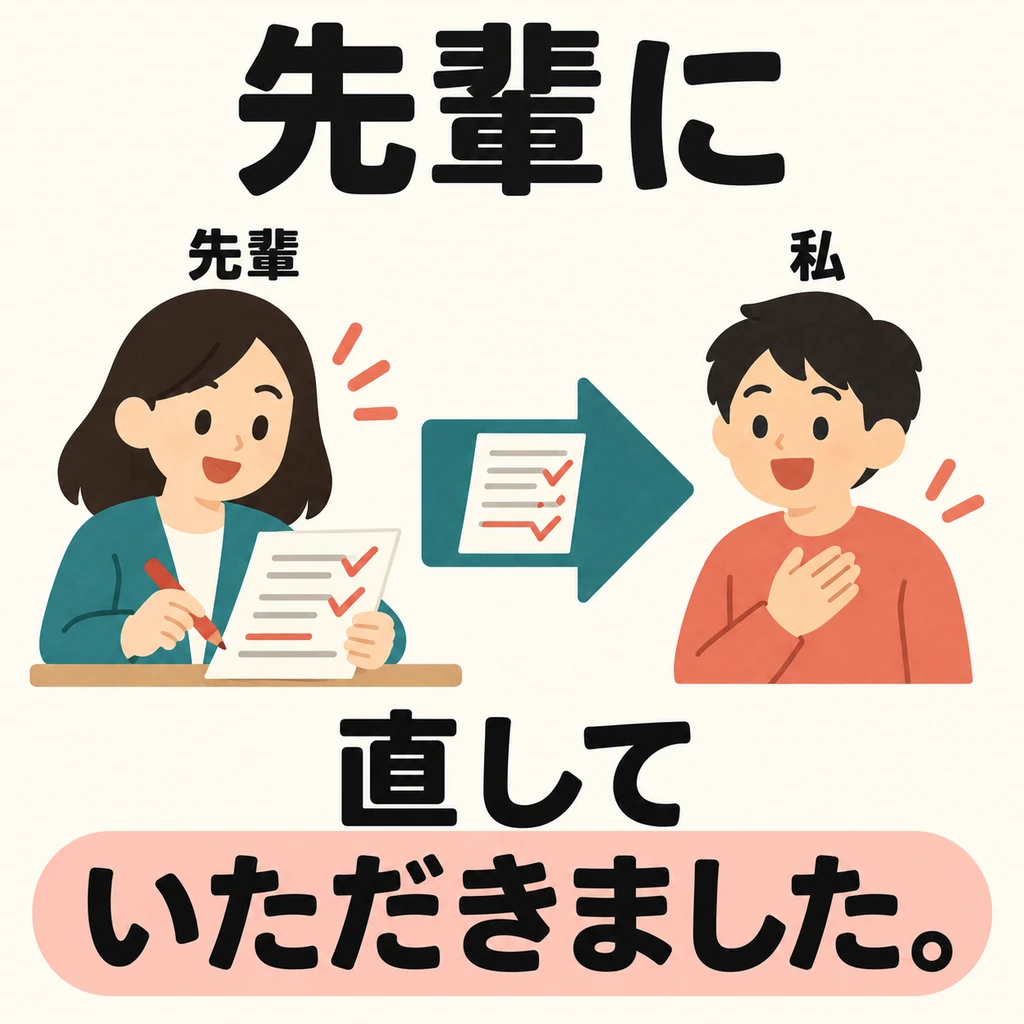
  1. Who corrected the report? My senior did, and I received the help. The arrow points toward me, the beneficiary.
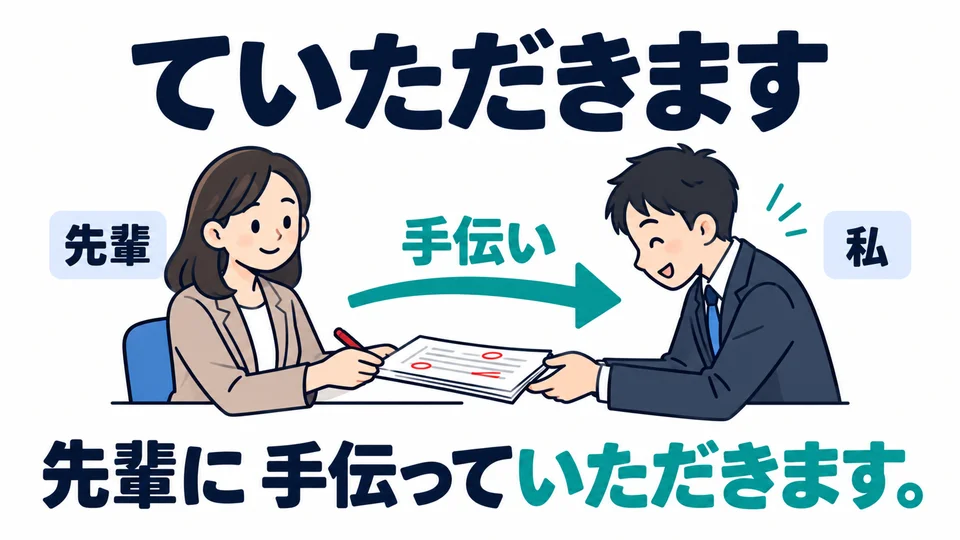
    Who corrected the report? My senior did, and I received the help. The arrow points toward me, the beneficiary.

  2. Use this humble expression when talking about help received from an elder, a superior, or someone you wish to show respect to.
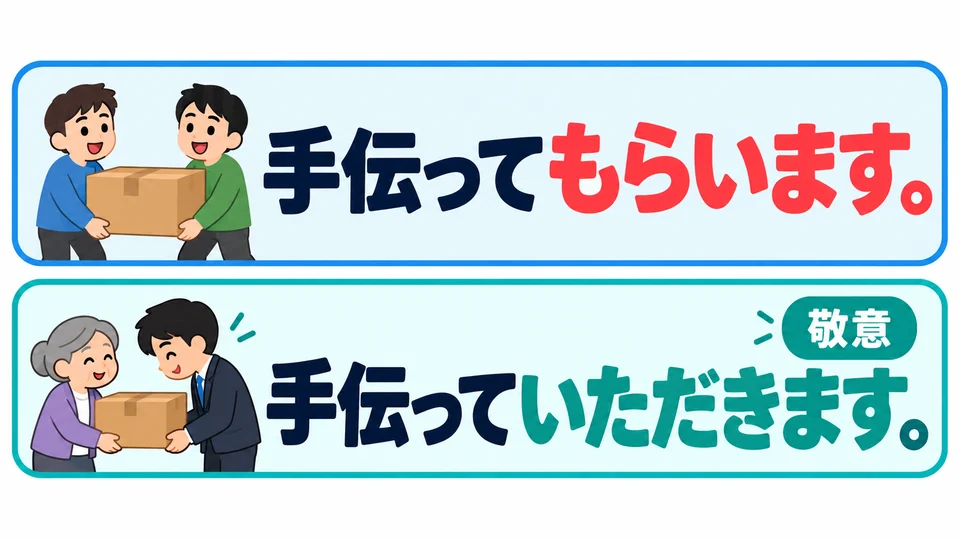
    Use this humble expression when talking about help received from an elder, a superior, or someone you wish to show respect to.

  3. 「てもらいます」 also means receiving help. Using 「ていただきます」 shows greater respect for the person helping you.
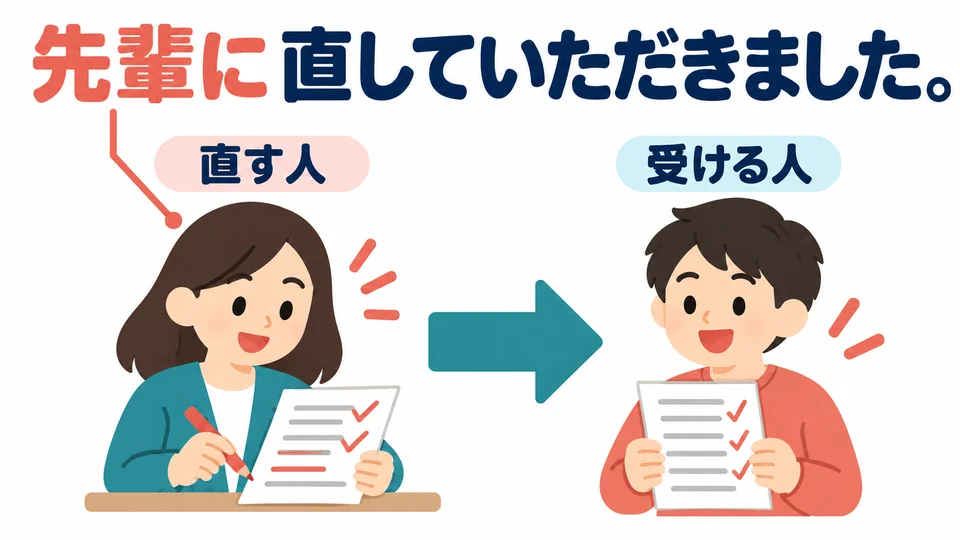
    「てもらいます」 also means receiving help. Using 「ていただきます」 shows greater respect for the person helping you.

  4. 「先輩に」 identifies the person who helped me. It was my senior who actually corrected the report.
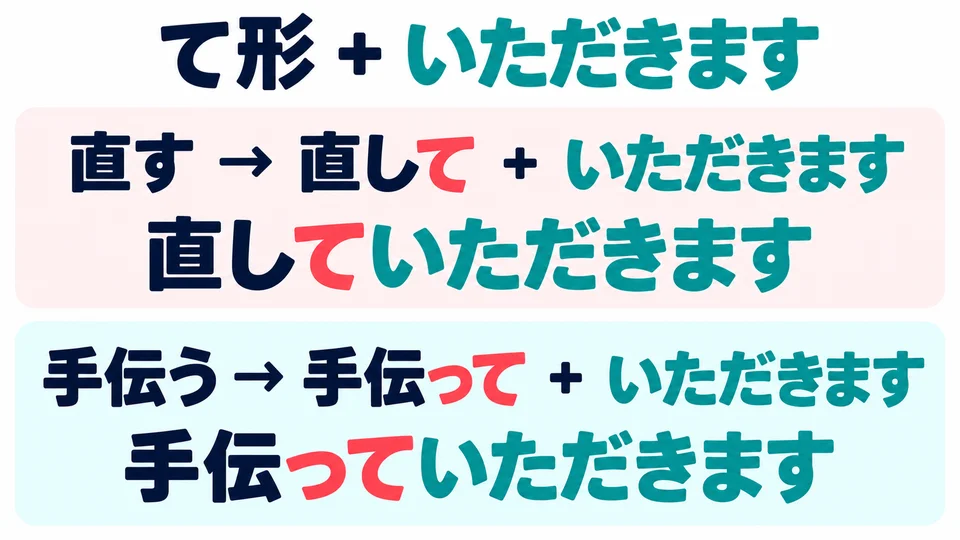
    「先輩に」 identifies the person who helped me. It was my senior who actually corrected the report.

  5. Use the verb’s て-form: 直す→直して, 手伝う→手伝って. Then add いただきます.
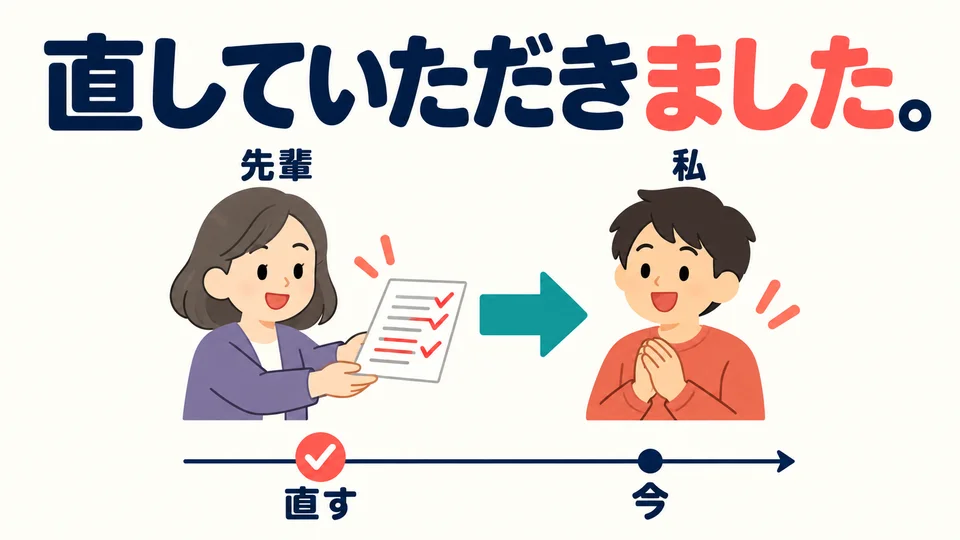
    Use the verb’s て-form: 直す→直して, 手伝う→手伝って. Then add いただきます.
  6. For help already received, say 「ていただきました」. In the picture, the report has already been corrected.

For help already received, say 「ていただきました」. In the picture, the report has already been corrected.

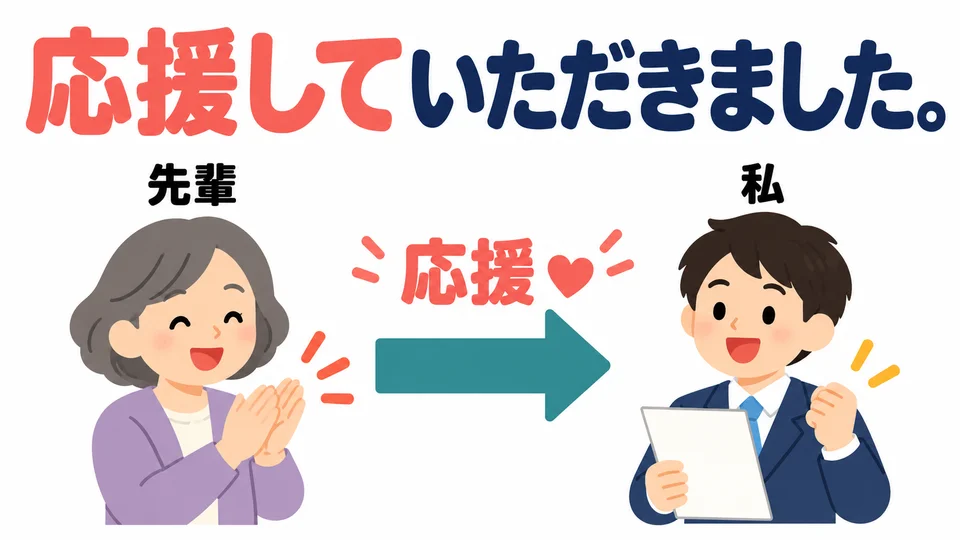
  • Help can also be emotional support. 「応援していただきました」 means that someone encouraged or supported you.

    Help can also be emotional support. 「応援していただきました」 means that someone encouraged or supported you.

  • This sentence explains that the speaker received help. It also carries a sense of gratitude.

    This sentence explains that the speaker received help. It also carries a sense of gratitude.

  • Example sentences

    • 手伝ってつだっtetsudatてteいただきました。いただきましたitadakimashita

      I had someone help me.

    • 応援おうえんouenしshiてteいただきました。いただきましたitadakimashita

      I received encouragement from others.

    In a conversation

    • A
      レポート、れぽーともう出しましただしましたか。か

      A: Have you submitted the report yet?

    • B
      はい、はい先輩せんぱいに直しなおしていただきました。いただきました

      B: Yes, I had my senior review and correct it for me.

    • A
      そうですか。か手伝ってつだってもらえてよかったですね。ね

      A: I see. It's great that someone helped you.

    Check yourself

    1. Level 1 · Recognise

      Which sentence is correct?

    2. Level 1 · Recognise

      Listen and choose the meaning

    3. Level 2 · Build

      Put the words in order

      I had the teacher write a letter of recommendation for me.

    4. Level 3 · Use

      What goes in the blank?

      先生に面接の練習を ました。

      I had the teacher help me practice for the interview.

    More grammar in this theme

    • 〜てあげますdo something to help someone
    • 〜てもらいますreceive someone’s help
    • 〜てくれますsomeone does something for me
    • Nをいただきますhumbly receive something
    • Nをくださいますsomeone respectfully gives me something
    • 〜ていただきますhumbly receive someone’s help
    • 〜てくださいましたrespectful help received
    PreviousNをくださいますNext〜てくださいました

    Keep practising

    Test your Japanese vocabulary12 adaptive questions, freeCheck your pronunciationRead aloud and get a scorePractise verb forms10-question conjugation quizSee the whole courseGrammar, vocabulary and quizzes by theme
    See the whole course
    Beginner 3
    Helping Each Other