受身形ukemi-kei
Ukemi-kei (受身形) means “passive voice, receiver in focus”.
Use the passive 「受身形」 to focus on who or what receives an action; the agent can be marked with に or omitted.
In the courseBeginner 3Travel Mishaps
How it works
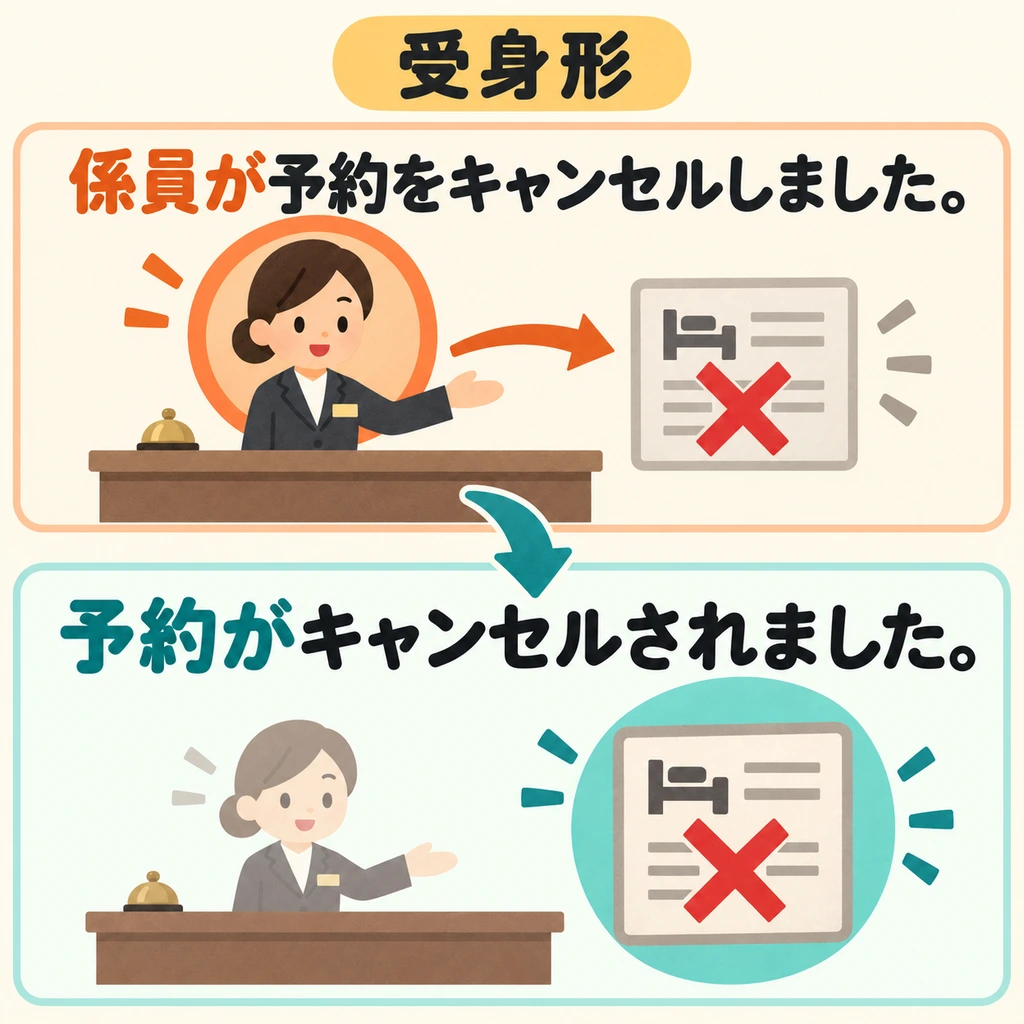
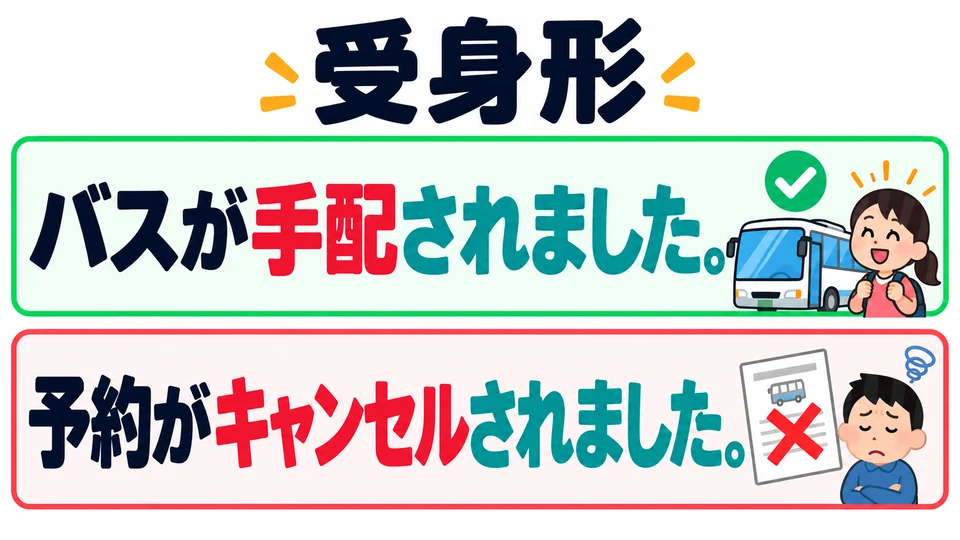
In the same event, the focus shifts from the staff member to the reservation. The passive form focuses on the receiver of the action.
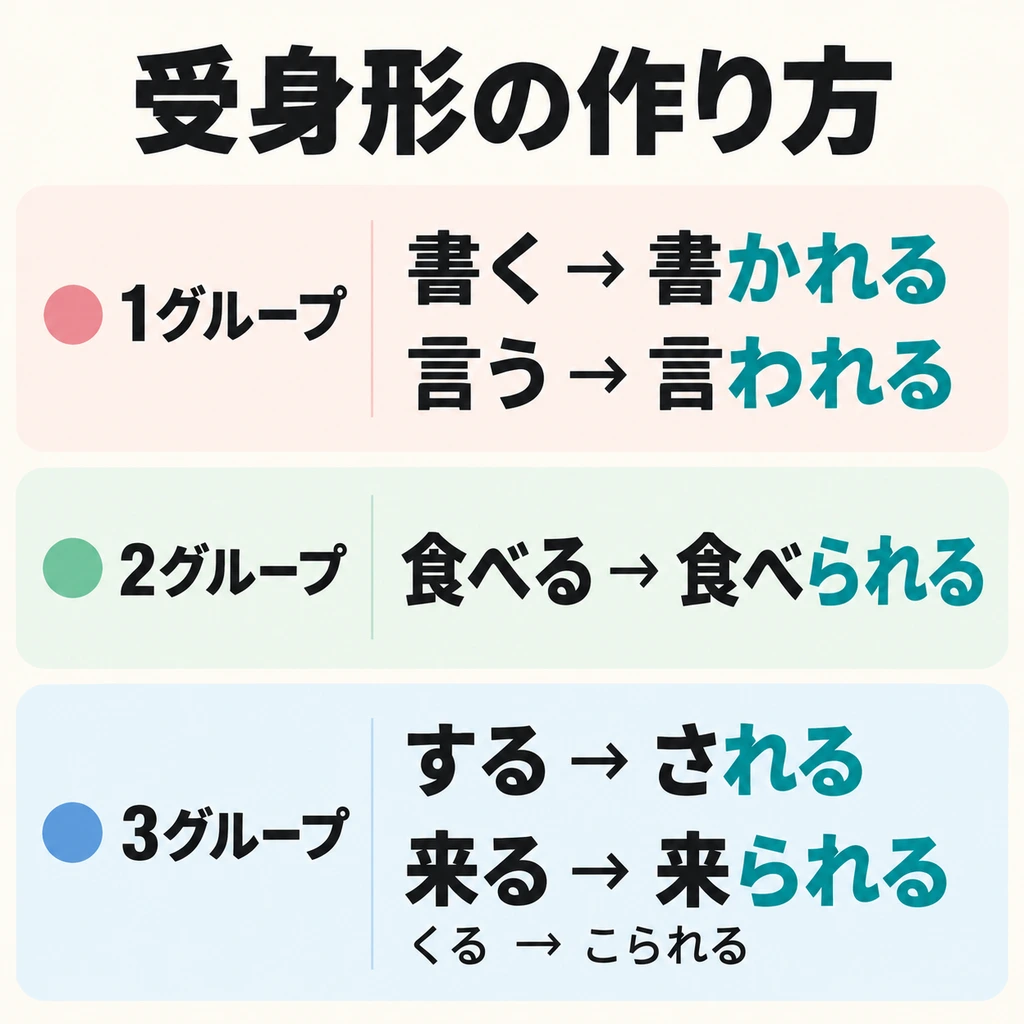
The passive form depends on the verb group. First check whether the verb belongs to Group 1, 2, or 3.
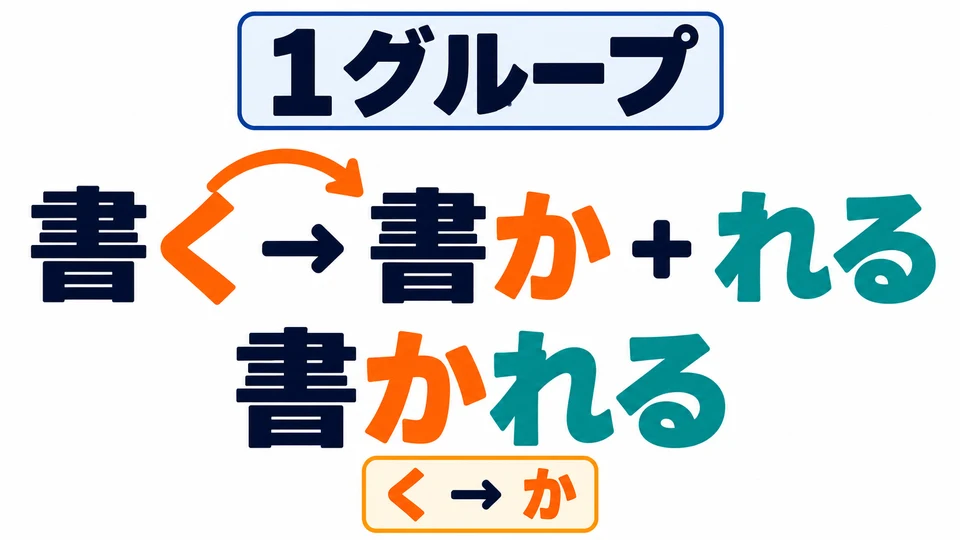
For Group 1 verbs, change the final kana to its あ-row equivalent, then add れる: 書く→書かれる.
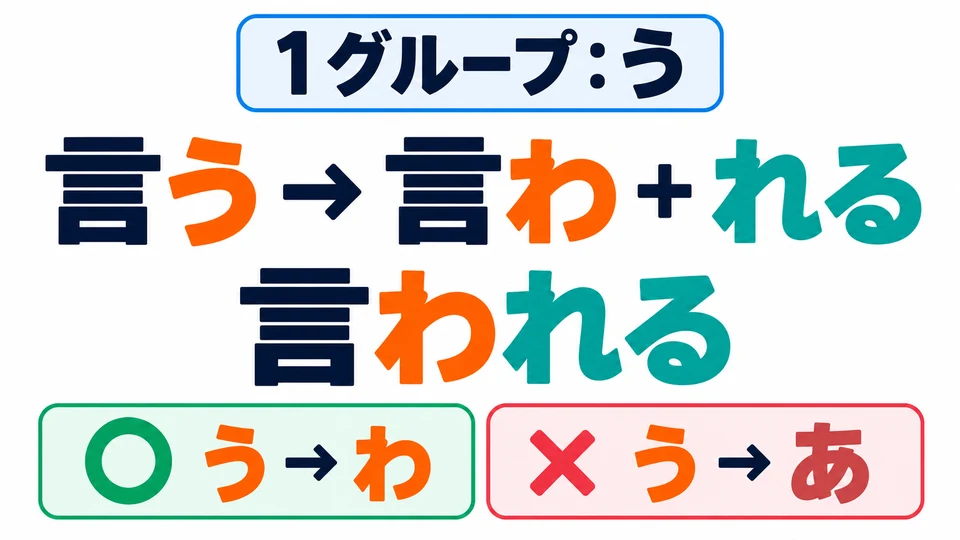
If a Group 1 verb ends in う, change it to わ: 言う→言われる. Do not change it to あ.
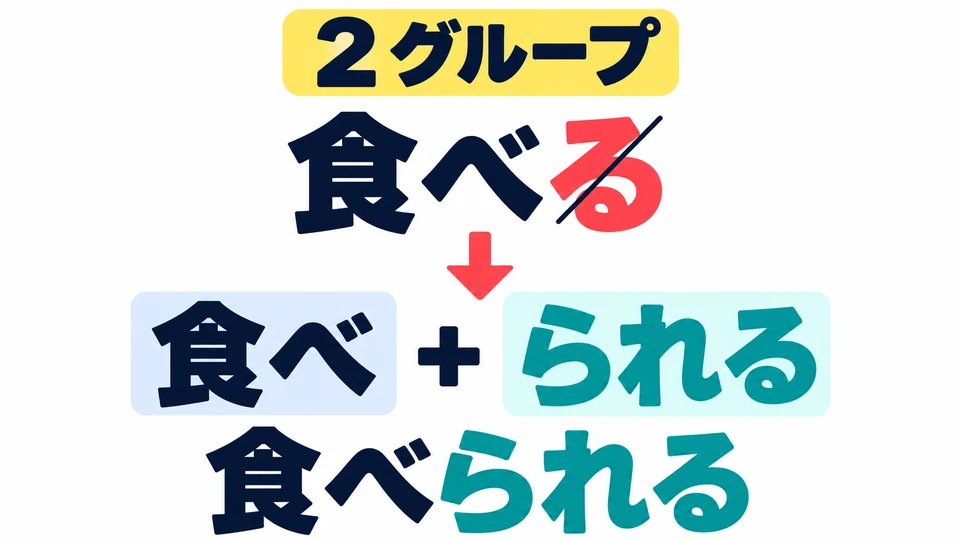
For Group 2 verbs, remove る and add られる: 食べる→食べられる.
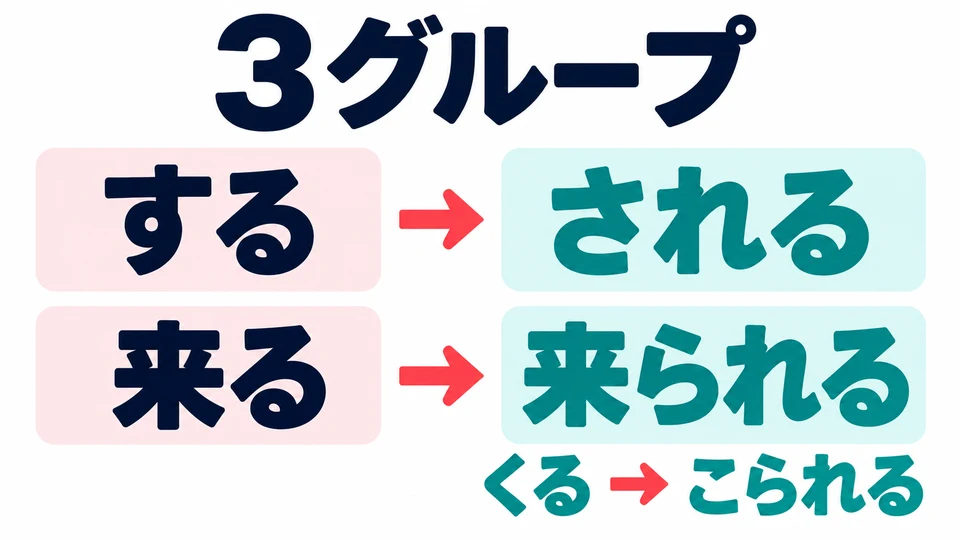
Memorize Group 3 separately: する→される; 来る→来られる, pronounced こられる.
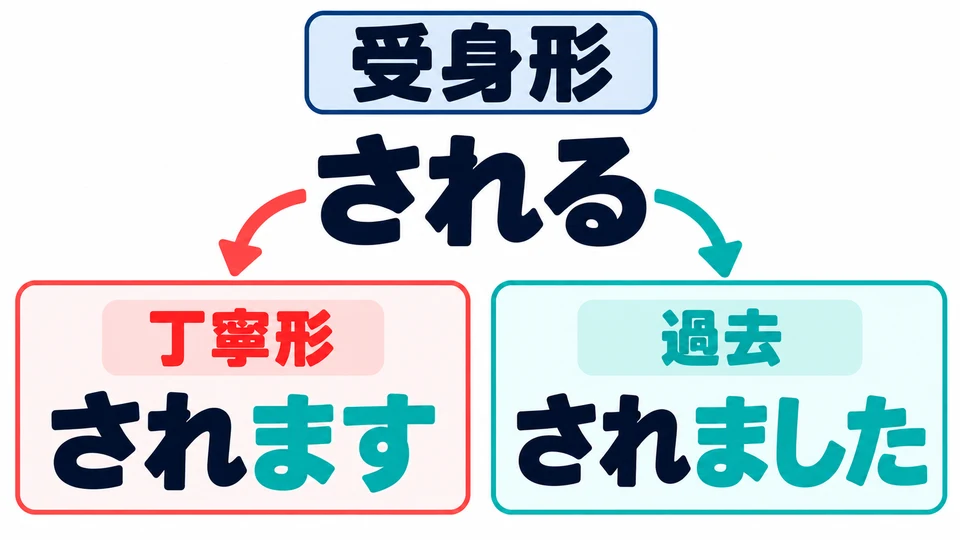
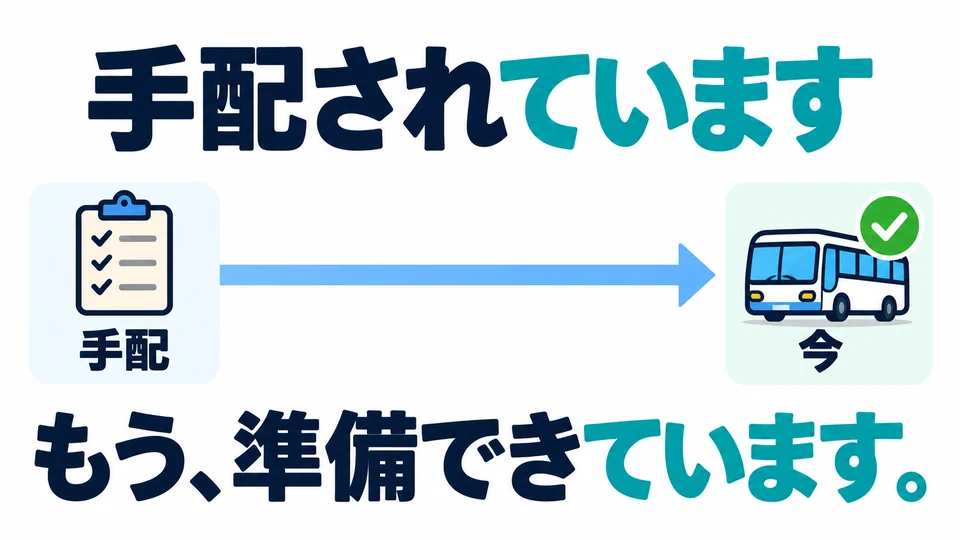
The passive form also has a polite form: される→されます. Its past form is されました.
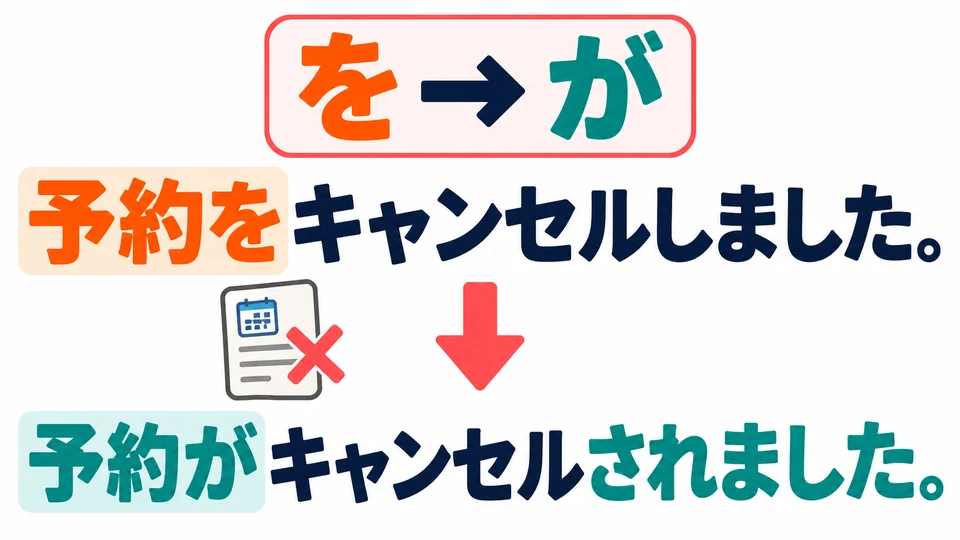
「予約を」 in the active sentence becomes 「予約が」 in the passive sentence, marking the receiver of the action.
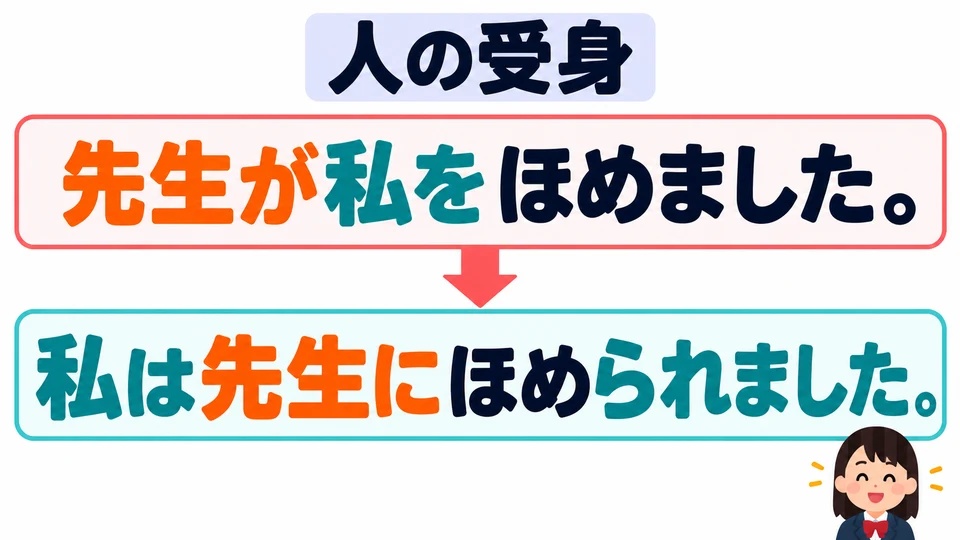
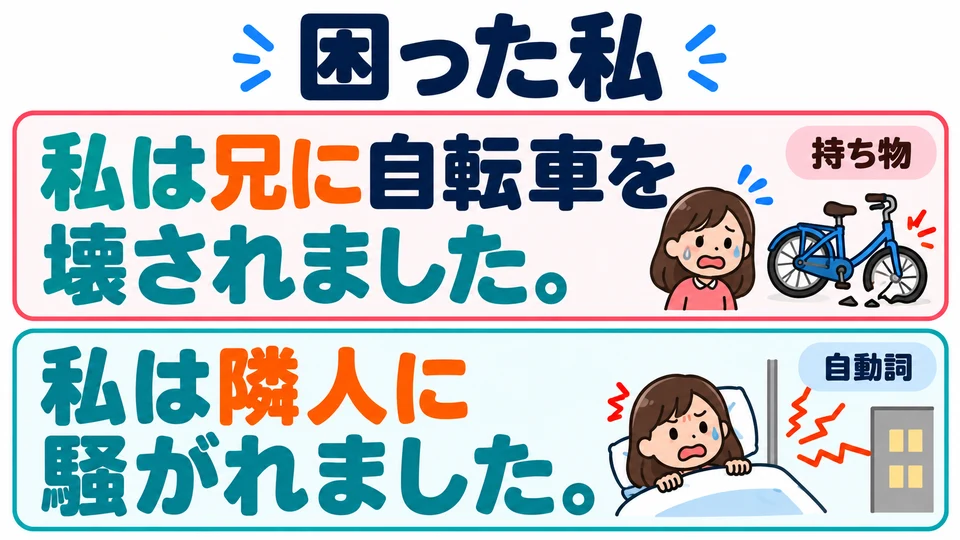
A person can also be the focus of a passive sentence. は or が marks the receiver of the action, and に marks the person performing it. Adjust the particles when rewriting the sentence.
In a conversation

- Aシャトルバスはどこですか?
A: Where is the shuttle bus?
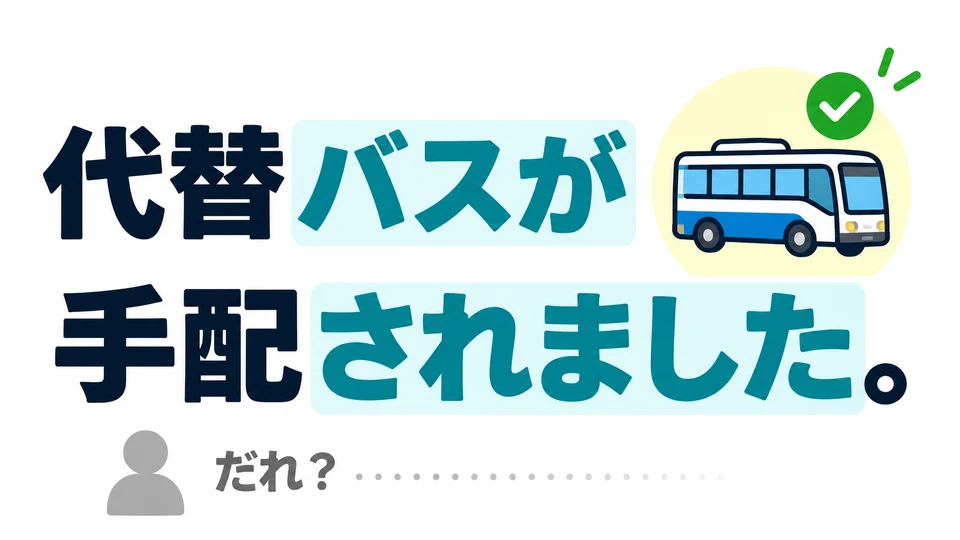
- Bシャトルバスは運行を停止されました。代替バス
Check yourself
Level 0 · Conjugate
Use 〜れる/られる to show receiving an action. 受身形
学生は先生に(褒める)。
Level 1 · Recognise
Which sentence is correct?
Level 1 · Recognise
Listen and choose the meaning
Level 2 · Build
Put the words in order
The shuttle bus service has been suspended.
Level 3 · Use
What goes in the blank?
シャトルバスの運行が停止 。
The shuttle bus was suspended from operating.
More grammar in this theme
- 受身形passive voice, receiver in focus