JPEdLab iconJPEdLab
Save history

Create an account and play

Explore first, then save your progress whenever you are ready. No email address is required.

Start free
  1. Japanese grammar
  2. JLPT N4 grammar
  3. 〜たばかりです

〜たばかりです~ta bakari desu

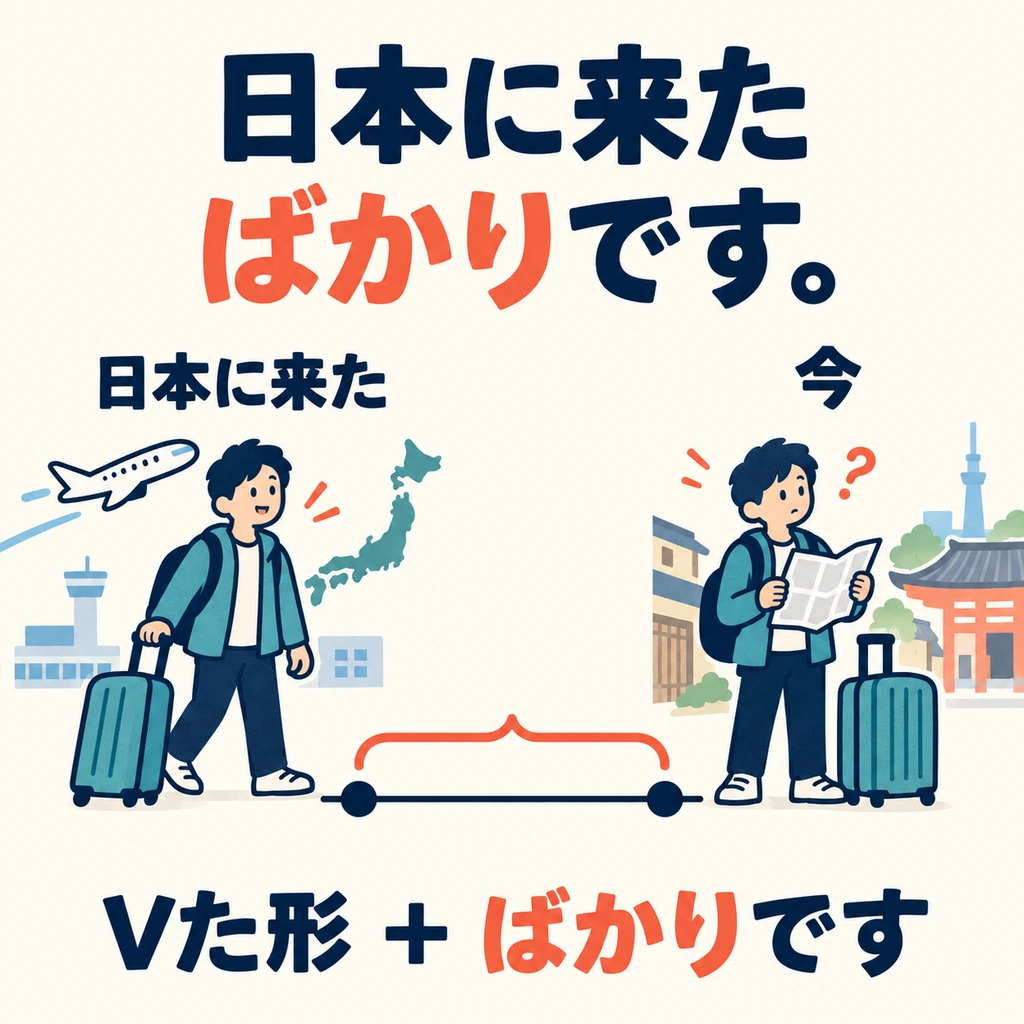
Ta bakari desu (〜たばかりです) means “recently completed action”.

日本にっぽんnipponにni来たきたkitaばかりbakariで、de、まだmada何なんnanもmo分かりません。わかりません。wakarimasen。

I have just come to Japan, so I don't understand anything yet.

Use 「〜たばかりです」 for a completed action that feels recent to the speaker, with no fixed time limit.

In the course›

How it works

  1. He has arrived in Japan but is still unfamiliar with his surroundings. Does he feel he has been here a long time?
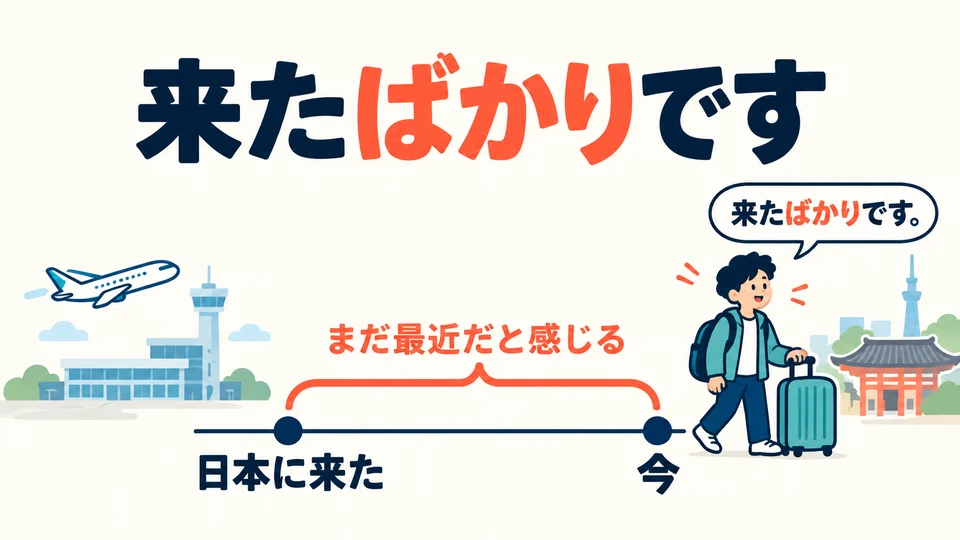
    He has arrived in Japan but is still unfamiliar with his surroundings. Does he feel he has been here a long time?

  2. Use 「たばかりです」 for an action that is complete and that you feel happened only recently.
    Use 「たばかりです」 for an action that is complete and that you feel happened only recently.

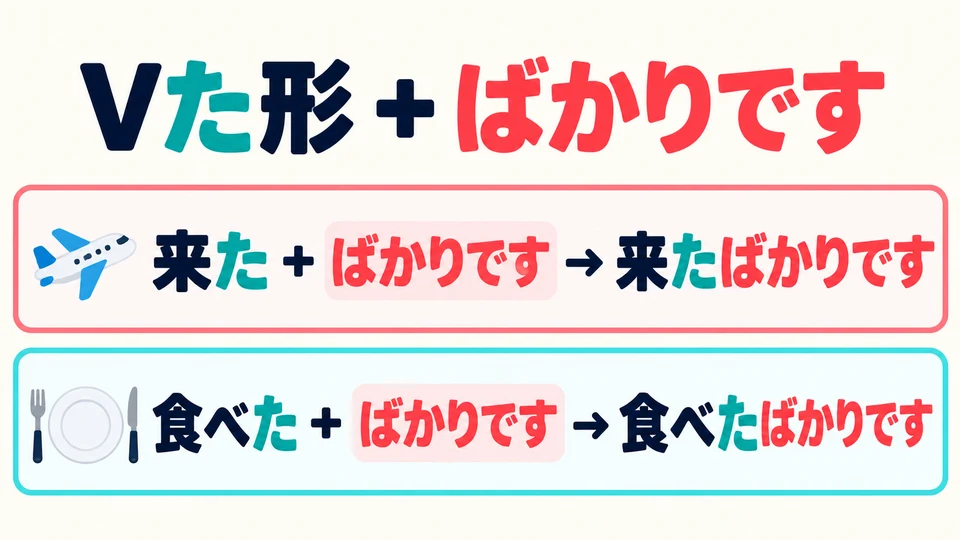
  3. Put the verb in the た-form, then add 「ばかりです」: 来た→来たばかりです.

    Put the verb in the た-form, then add 「ばかりです」: 来た→来たばかりです.

  4. The speaker decides what counts as “recent.” There is no fixed time span, and it need not mean just a moment ago.
    The speaker decides what counts as “recent.” There is no fixed time span, and it need not mean just a moment ago.

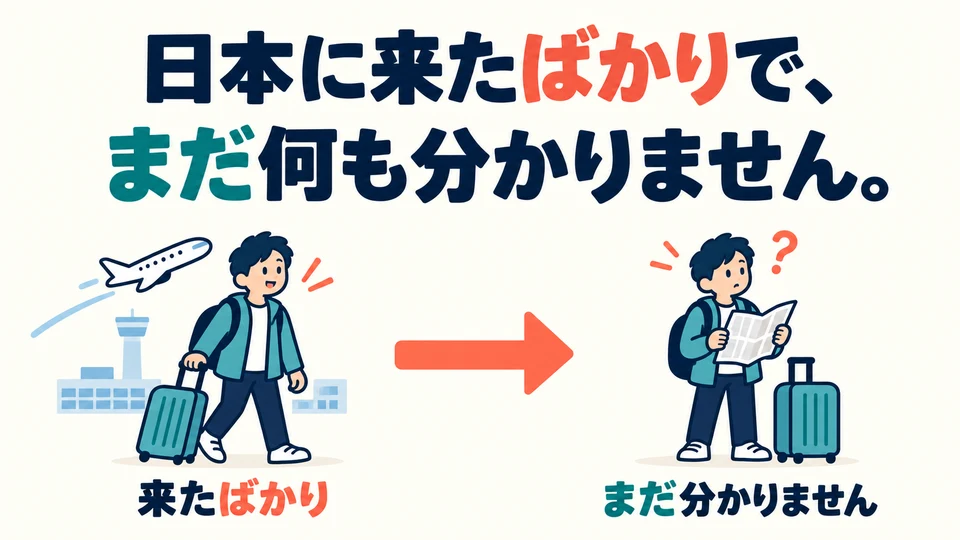
  5. The second half of the example says “I don’t understand anything yet”: having recently arrived, the speaker is still unfamiliar with things.
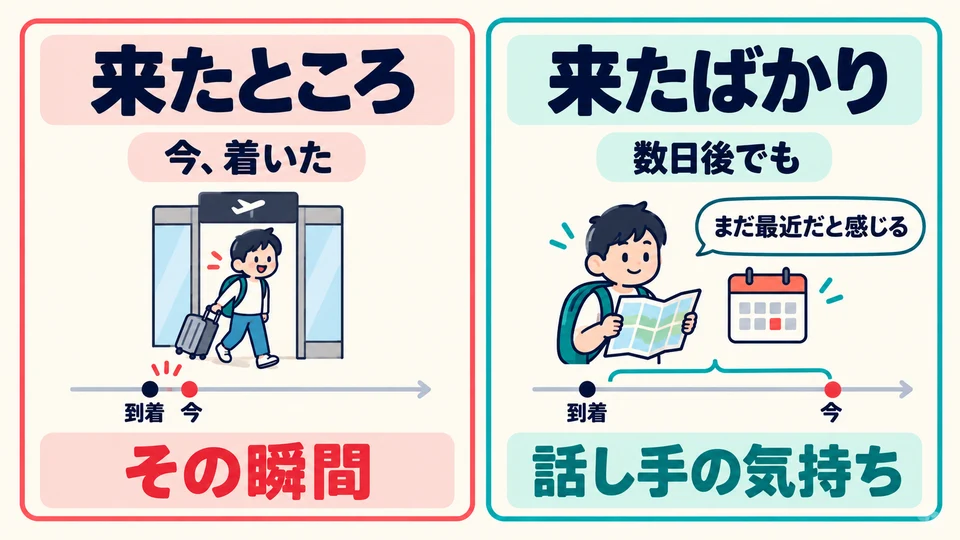
    The second half of the example says “I don’t understand anything yet”: having recently arrived, the speaker is still unfamiliar with things.

  6. 「来たところ」 refers to the moment just after arriving. Even after a few days, you can say 「来たばかり」 if the arrival still feels recent.

    「来たところ」 refers to the moment just after arriving. Even after a few days, you can say 「来たばかり」 if the arrival still feels recent.

Example sentences

  • 日本にっぽんnipponにni来たきたkitaばかりbakariで、de、まだmada何なんnanもmo分かりません。わかりません。wakarimasen。

    I have just come to Japan, so I don't understand anything yet.

In a conversation

  • A
    あの、町内ちょうない会かいの説明せつめい会かいはわどこですか?か

    A: Excuse me, where is the briefing session for the neighborhood association?

  • B
    今いま終わったおわったばかり

Check yourself

  1. Level 1 · Recognise

    Which sentence is correct?

  2. Level 1 · Recognise

    Listen and choose the meaning

  3. Level 2 · Build

    Put the words in order

    I have just moved to this town.

  4. Level 3 · Use

    What goes in the blank?

    日本に来た____、まだ何も分かりません。

    I just came to Japan, so I still do not understand anything.

More grammar in this theme

  • 〜たばかりですrecently completed action

More JLPT N4 grammar

Keep practising

Test your Japanese vocabulary12 adaptive questions, freeCheck your pronunciationRead aloud and get a scorePractise verb forms10-question conjugation quizSee the whole courseGrammar, vocabulary and quizzes by theme
この
kono
地域ちいきchiiki
のno
イベントいべんとibento
にni
参加さんかsanka
したshita
ばかりbakari
で、de、
まだmada
緊張きんちょうkinchou
しshi
てte
います。imasu。

I have just participated in this community event, so I am still nervous.

です
よ。

B: It has just ended.

  • A
    ああ、残念です。ざんねんです。

    A: Oh, that's a shame.

  • Intermediate 1
    Joining Activities and Local Life
    More quizzesOpen this lesson’s quizzes in the course
    〜ようになりますbegin doing something habitually
    〜なくなりますstop doing or feeling
    〜ながら〜while doing another action
    〜と言っていましたreport what someone said
    命令形forceful direct command
    〜なstrongly tell someone not to
    〜ながらtwo actions happening together
    Previous〜なくなります
    Next〜ながら〜
    See all 138
    〜ところですaction stage right now
    〜てきますgradual approach or appearance
    〜そうに〜appearance while doing something
    〜みたいですsimilarity-based comparison
    〜もsurprisingly many or long
    〜しか〜ないonly; less than enough
    〜たらどうですかgentle suggestion or advice
    〜らしいですreported news; apparently