JPEdLab iconJPEdLab
Save history

Create an account and play

Explore first, then save your progress whenever you are ready. No email address is required.

Start free
  1. Japanese grammar
  2. JLPT N4 grammar
  3. 〜らしいです

〜らしいです~rashii desu

Rashii desu (〜らしいです) means “reported news; apparently”.

このkono風邪かぜkazeは、わ、wa、今いまimaとてもtotemo流行っはやっhayaてteいるらしいです。irurashiidesu。

I heard that this cold is very prevalent right now.

Use 〜らしいです to pass on something heard or read that you have not confirmed yourself.

In the course›

How it works

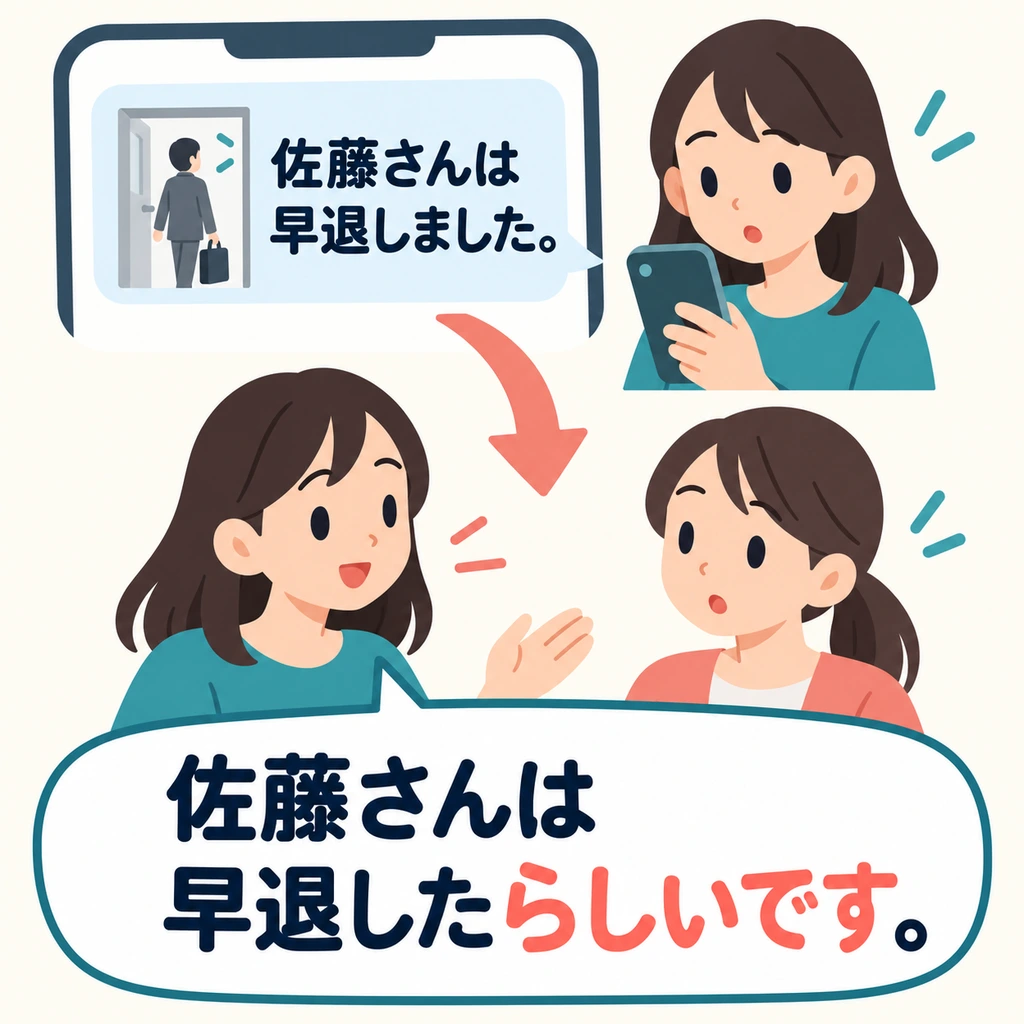
  1. She learns from a message that Sato left work early, then tells a coworker. Use 「らしいです」 to pass on the news.
    She learns from a message that Sato left work early, then tells a coworker. Use 「らしいです」 to pass on the news.

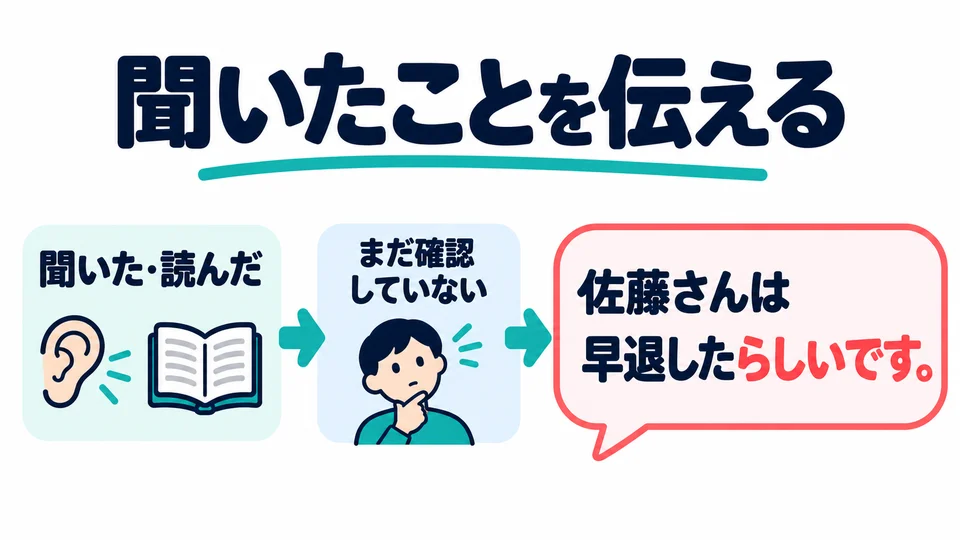
  2. Based on something you heard or read, say “I heard” or “apparently.” It shows you have not confirmed it yourself.
    Based on something you heard or read, say “I heard” or “apparently.” It shows you have not confirmed it yourself.

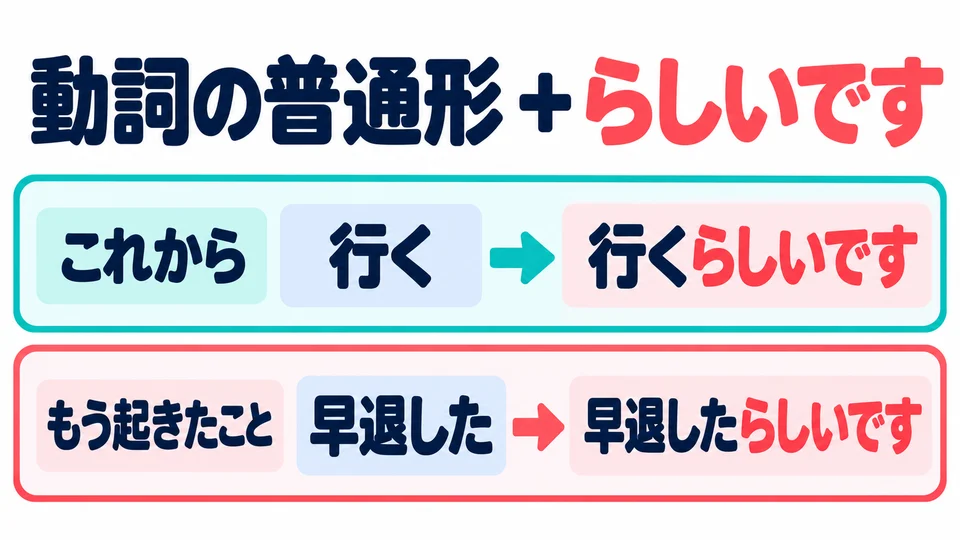
  3. Attach 「らしいです」 to a verb in plain form. For something that has already happened, use the past form: したらしいです.
    Attach 「らしいです」 to a verb in plain form. For something that has already happened, use the past form: したらしいです.

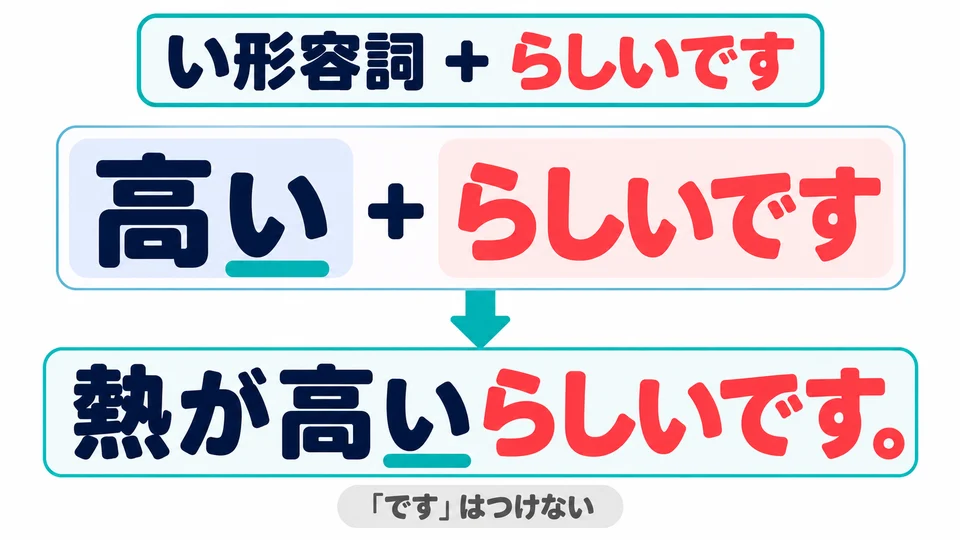
  4. Use the plain form of い-adjectives too, without 「です」. For example: 高い→高いらしいです.
    Use the plain form of い-adjectives too, without 「です」. For example: 高い→高いらしいです.

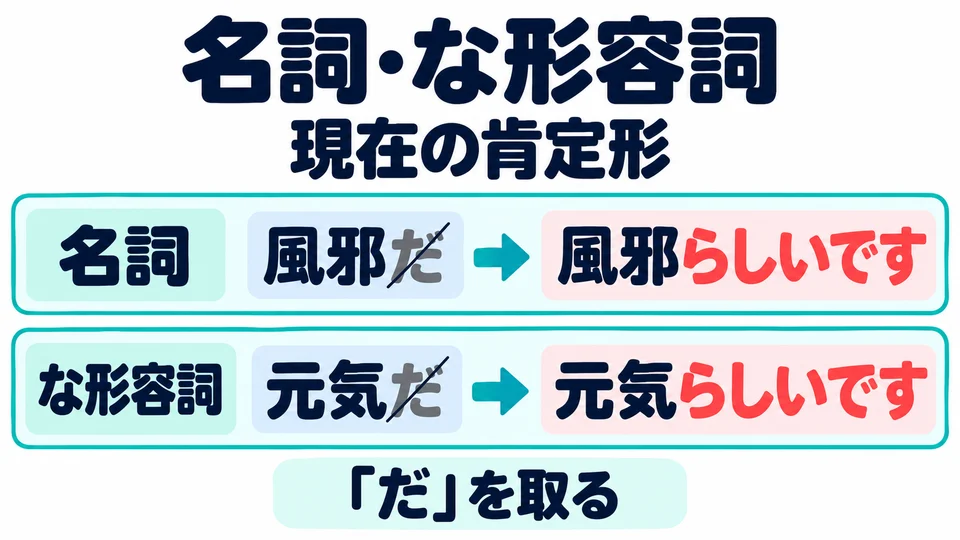
  5. With nouns and な-adjectives in the present affirmative, omit 「だ」: 風邪らしいです, 元気らしいです.
    With nouns and な-adjectives in the present affirmative, omit 「だ」: 風邪らしいです, 元気らしいです.

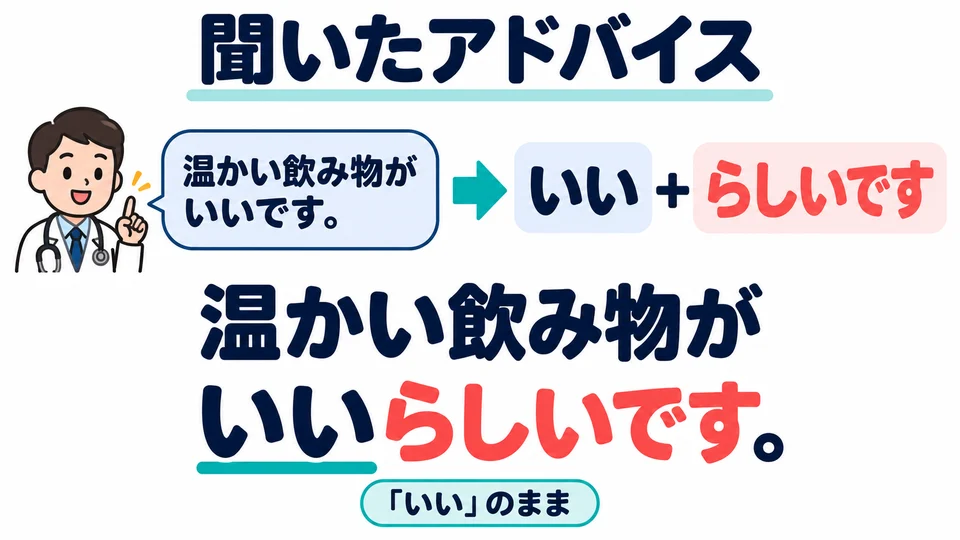
  6. In the example, 「いいらしいです」 keeps 「いい」 and reports advice you heard. Do not change it to 「よさそう」.

    In the example, 「いいらしいです」 keeps 「いい」 and reports advice you heard. Do not change it to 「よさそう」.

Example sentences

  • このkono風邪かぜkazeは、わ、wa、今いまimaとてもtotemo流行っはやっhayaてteいるらしいです。irurashiidesu。

    I heard that this cold is very prevalent right now.

  • のどnodoが

In a conversation

  • A
    佐藤さんさとうさんはわ体調たいちょうが悪くわるくて、今日きょう会社かいしゃを早退そうたいしたらしいです。

    A: I heard that Mr. Sato was feeling unwell and left work early today.

  • B
    そう

Check yourself

  1. Level 1 · Recognise

    Which sentence is correct?

  2. Level 1 · Recognise

    Listen and choose the meaning

  3. Level 2 · Build

    Put the words in order

    Apparently, this winter's cold can suddenly cause severe chills.

  4. Level 3 · Use

    What goes in the blank?

    この風邪は、今とても____。

    I heard this cold is going around a lot right now.

More grammar in this theme

  • 〜らしいですreported news; apparently

More JLPT N4 grammar

Keep practising

Test your Japanese vocabulary12 adaptive questions, freeCheck your pronunciationRead aloud and get a scorePractise verb forms10-question conjugation quizSee the whole courseGrammar, vocabulary and quizzes by theme
ga
痛いいたいitai
ときtoki
は、わ、wa、
温かいあたたかいatatakai
飲み物のみものnomimono
がga
いいらしいです。iirashiidesu。

They say that warm drinks are good when you have a sore throat.

な
ん
です
か。
症状しょうじょう
はわ
軽いですかるいです
か、
それ
と
も
ひどいです
か。

B: Is that so? Are his symptoms mild or severe?

  • A
    急きゅうに体にからだが震えるふるえるほど寒気さむけがして、熱ねつも高いらしいです。たかいらしいです。

    A: Apparently, he suddenly got chills so bad that he was shaking, and he seems to have a high fever.

  • Intermediate 1
    Health and Daily Habits
    More quizzesOpen this lesson’s quizzes in the course
    〜もsurprisingly many or long
    〜しか〜ないonly; less than enough
    〜たらどうですかgentle suggestion or advice
    〜ないで〜without doing something
    〜て〜accompanying state or sequence
    〜ないで〜without doing something
    〜のに/〜にpurpose or goal
    〜やすいですeasy to do
    〜にくいですdifficult to do
    〜ようにしていますmake a conscious effort; habit
    〜ないようにしていますmindful effort to avoid
    〜ことにしますdecide to do
    〜ないことにしますdecide not to do
    Previous〜ないで〜
    Next〜て〜
    See all 138
    〜と言っていましたreport what someone said
    命令形forceful direct command
    〜なstrongly tell someone not to
    〜ながらtwo actions happening together
    〜させますmake or let someone act
    〜のを見ましたsaw someone do
    〜ていましたpast repeated habit
    〜かなI wonder if…