JPEdLab iconJPEdLab
Save history

Create an account and play

Explore first, then save your progress whenever you are ready. No email address is required.

Start free
  1. Japanese grammar
  2. JLPT N4 grammar
  3. 〜ていました

〜ていました~te imashita

Te imashita (〜ていました) means “past repeated habit”.

子供こどもkodomoのnoころ、koro、私わたしwatashiはわwa毎日外まいにちそとmainichisotoでde遊んあそんasonでdeいました。imashita。

When I was a child, I used to play outside every day.

Use 「〜ていました」 for actions repeated as a habit during a past period.

In the course›

How it works

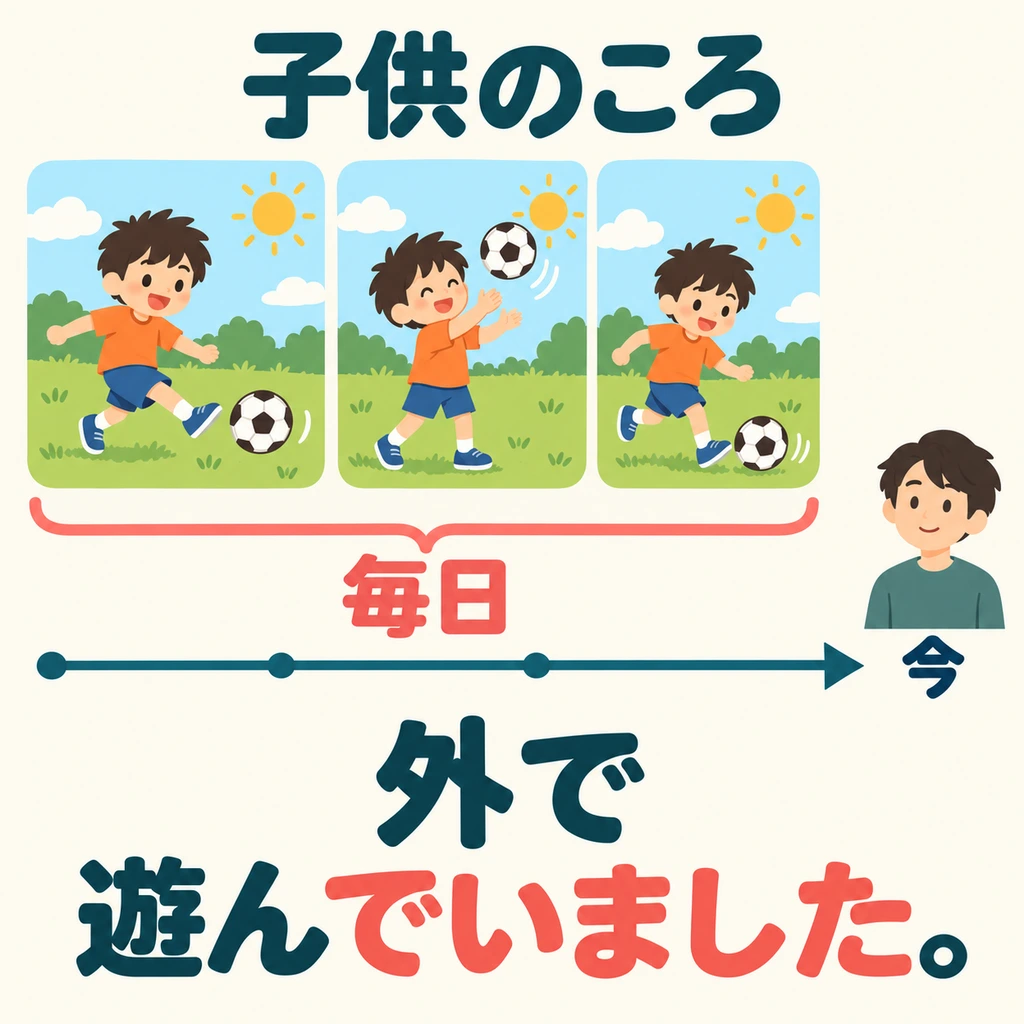
  1. Think back to playing outside every day as a child: this describes something done repeatedly during that time.
    Think back to playing outside every day as a child: this describes something done repeatedly during that time.

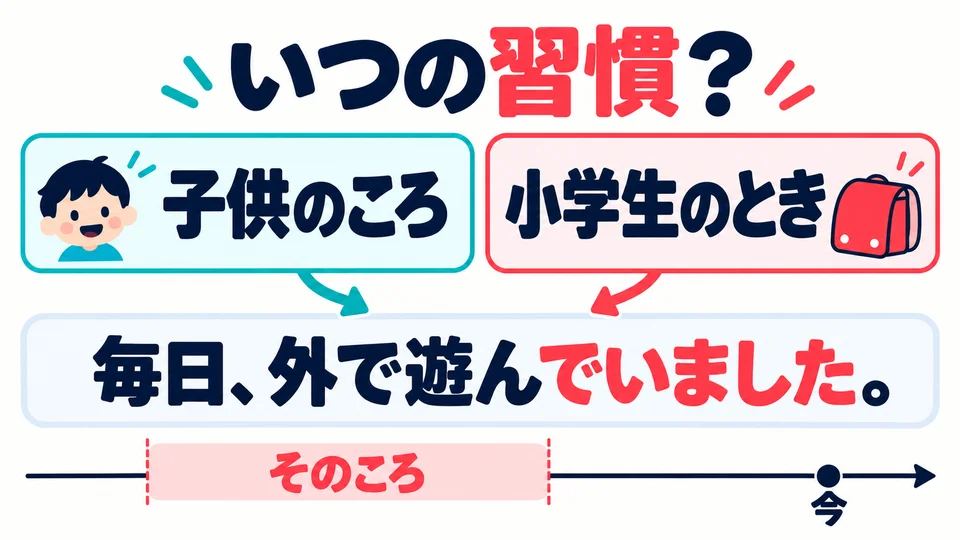
  2. 「子供のころ」 and 「小学生のとき」 first tell us when in the past the habit took place.
    「子供のころ」 and 「小学生のとき」 first tell us when in the past the habit took place.

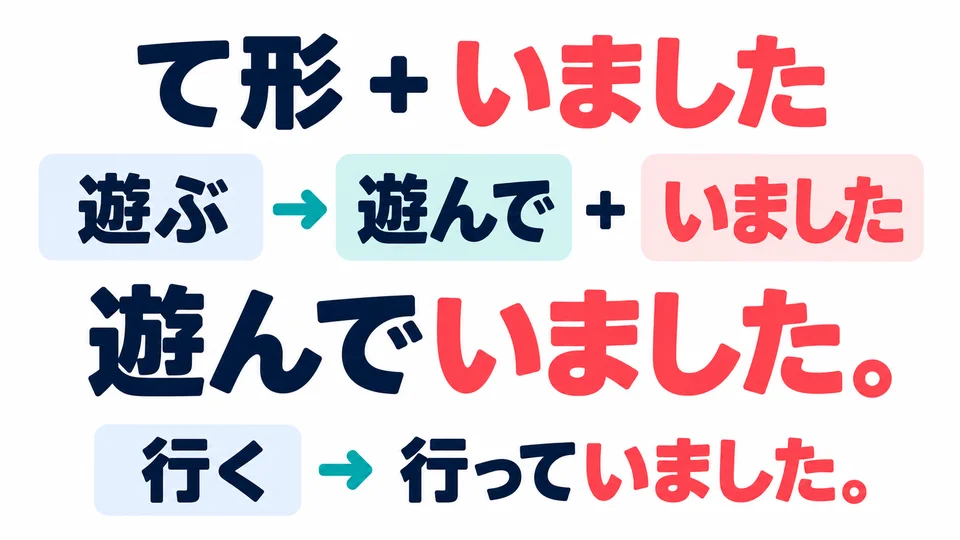
  3. Add 「いました」 to the verb’s て-form: 遊ぶ→遊んでいました。
    Add 「いました」 to the verb’s て-form: 遊ぶ→遊んでいました。

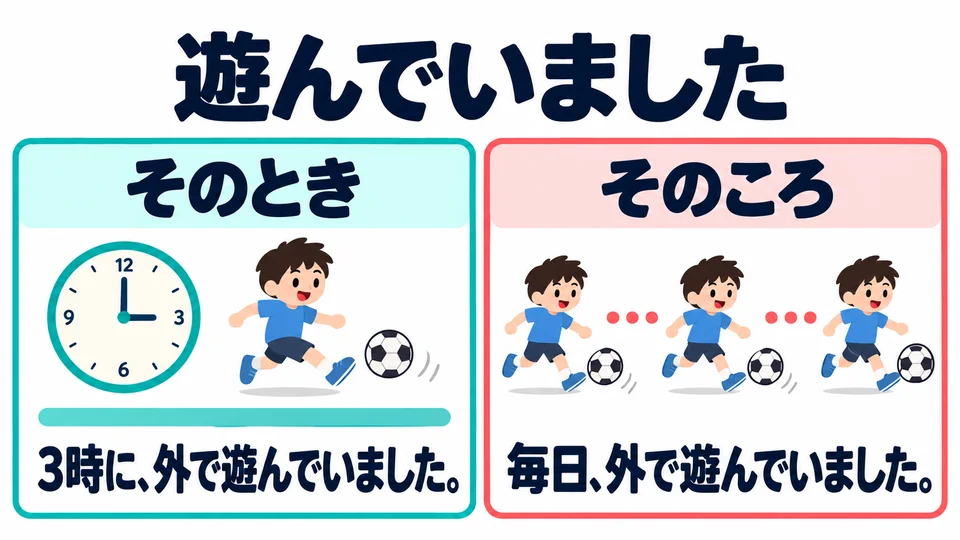
  4. It can also describe ongoing actions in the past; this lesson’s examples focus on repeated past habits.
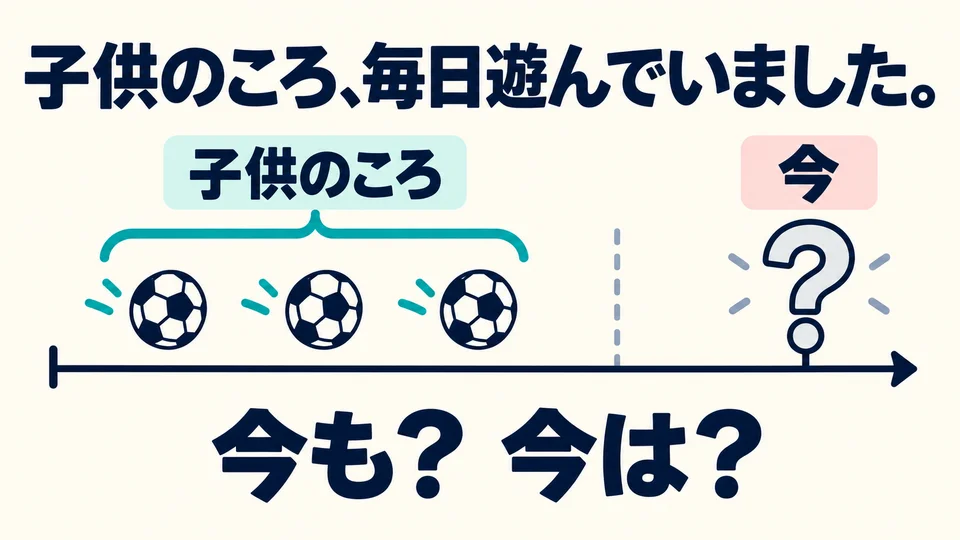
    It can also describe ongoing actions in the past; this lesson’s examples focus on repeated past habits.

  5. It only describes the past. This pattern alone does not tell us whether the habit continues now.
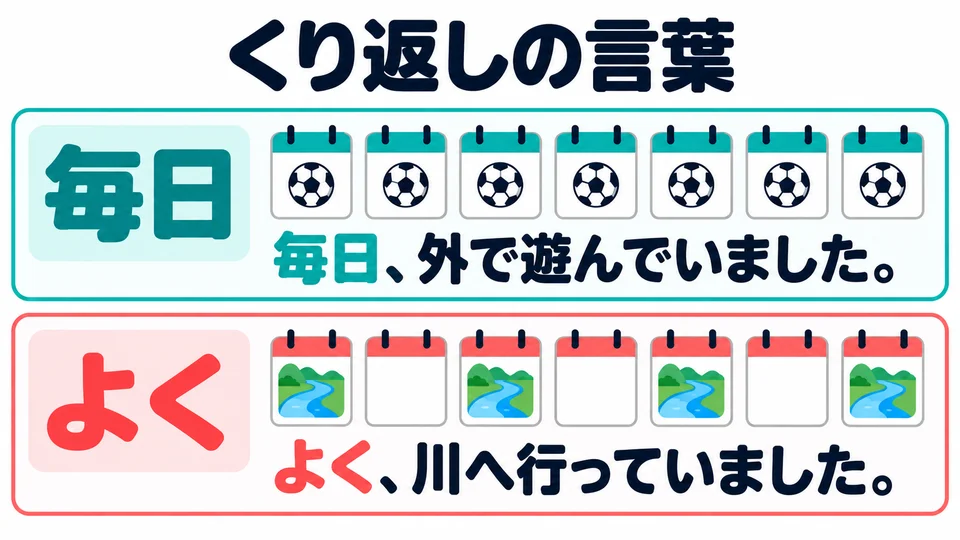
    It only describes the past. This pattern alone does not tell us whether the habit continues now.

  6. In the examples, 「毎日」 means “every day” and 「よく」 means “often.” Both signal repeated actions.
    In the examples, 「毎日」 means “every day” and 「よく」 means “often.” Both signal repeated actions.

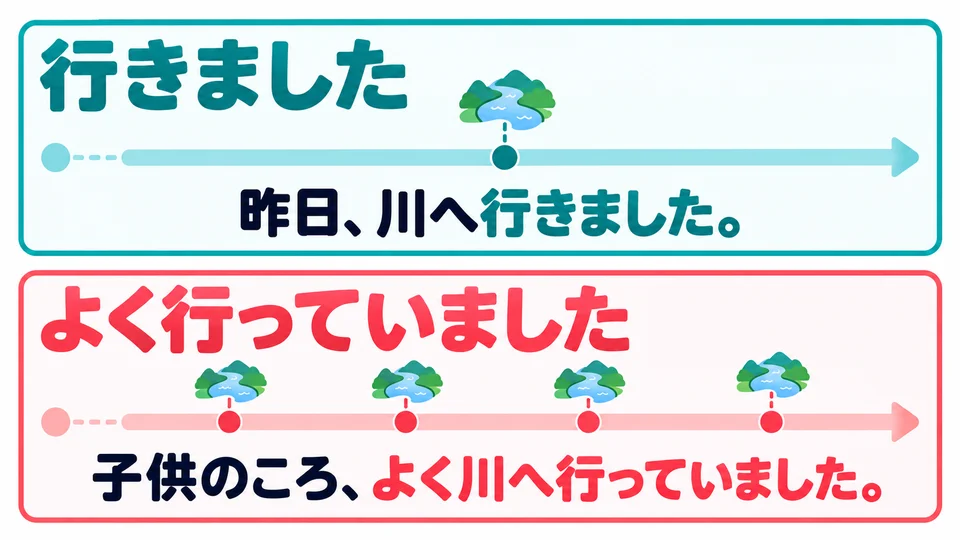
  7. 「行きました」 can describe a single visit; 「よく行っていました」 emphasizes a habit at that time.

    「行きました」 can describe a single visit; 「よく行っていました」 emphasizes a habit at that time.

Example sentences

  • 子供こどもkodomoのnoころ、koro、私わたしwatashiはわwa毎日外まいにちそとmainichisotoでde遊んあそんasonでdeいました。imashita。

    When I was a child, I used to play outside every day.

In a conversation
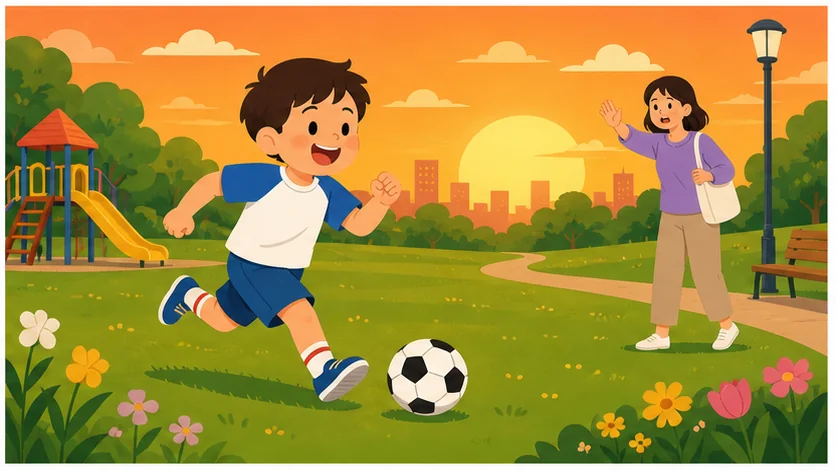
  • A
    子供こどものころ、どんなお子さんなおこさんでしたか。

    A: What kind of child were you when you were young?

  • B
    私わたしはわのびのびした子供したこどもで、毎日まいにち遅くおそく

Check yourself

  1. Level 1 · Recognise

    Which sentence is correct?

  2. Level 1 · Recognise

    Listen and choose the meaning

  3. Level 2 · Build

    Put the words in order

    When I was a child, I used to play outside every day.

  4. Level 3 · Use

    What goes in the blank?

    子供のころ、私は毎日外で____。

    When I was a child, I used to play outside every day.

More grammar in this theme

  • 〜ていましたpast repeated habit

More JLPT N4 grammar

Keep practising

Test your Japanese vocabulary12 adaptive questions, freeCheck your pronunciationRead aloud and get a scorePractise verb forms10-question conjugation quizSee the whole courseGrammar, vocabulary and quizzes by theme
  • 小学生しょうがくせいshougakuseiのnoとき、toki、父ちちchichiとtoよくyoku近くちかくchikakuのno川かわkawaへえe行っいっiてteいました。imashita。

    When I was in elementary school, I often went to the nearby river with my father.

  • まで
    外そと
    で
    はしゃい
    で
    いました。

    B: I was a carefree child, and I used to run around and have fun outside until late every day.

  • A
    そうですか。とても元気げんきな子供なこどもだったんですね。

    A: I see. You were a very energetic child, weren't you?

  • Intermediate 1
    Observations and Childhood Experiences
    More quizzesOpen this lesson’s quizzes in the course
    〜させますmake or let someone act
    〜のを見ましたsaw someone do
    Nばかり/Vてばかりいますkeep doing the same thing
    〜させられますbe made to do
    〜させてくれますkindly let me do
    〜させてもらいますgratefully be allowed to
    Previous〜のを見ました
    NextNばかり/Vてばかりいます
    See all 138
    〜やすいですeasy to do
    〜にくいですdifficult to do
    〜ようにしていますmake a conscious effort; habit
    〜ないようにしていますmindful effort to avoid
    〜かなI wonder if…
    〜なんかどうですかgentle suggestion
    〜がっていますshowing a feeling
    〜からですgiving a reason