JPEDLAB iconJPEDLAB
Save history

Create an account and play

Explore first, then save your progress whenever you are ready. No email address is required.

Start free
Read as articleCards
See the whole course›Intermediate 1›Observations and Childhood Experiences

Japanese grammar · ≈ JLPT N3 · Intermediate 1

〜させてくれます~sasete kuremasu

kindly let me do

Use 「〜させてくれます」 when someone kindly lets you or your group do something.

Start the interactive lessonIllustrated cards, audio and speaking practiceTake the quiz
Pattern
〜させてくれます
Romaji
~sasete kuremasu
JLPT (approx.)
≈ N3
Course level
Intermediate 1
Theme
Observations and Childhood Experiences

How it works
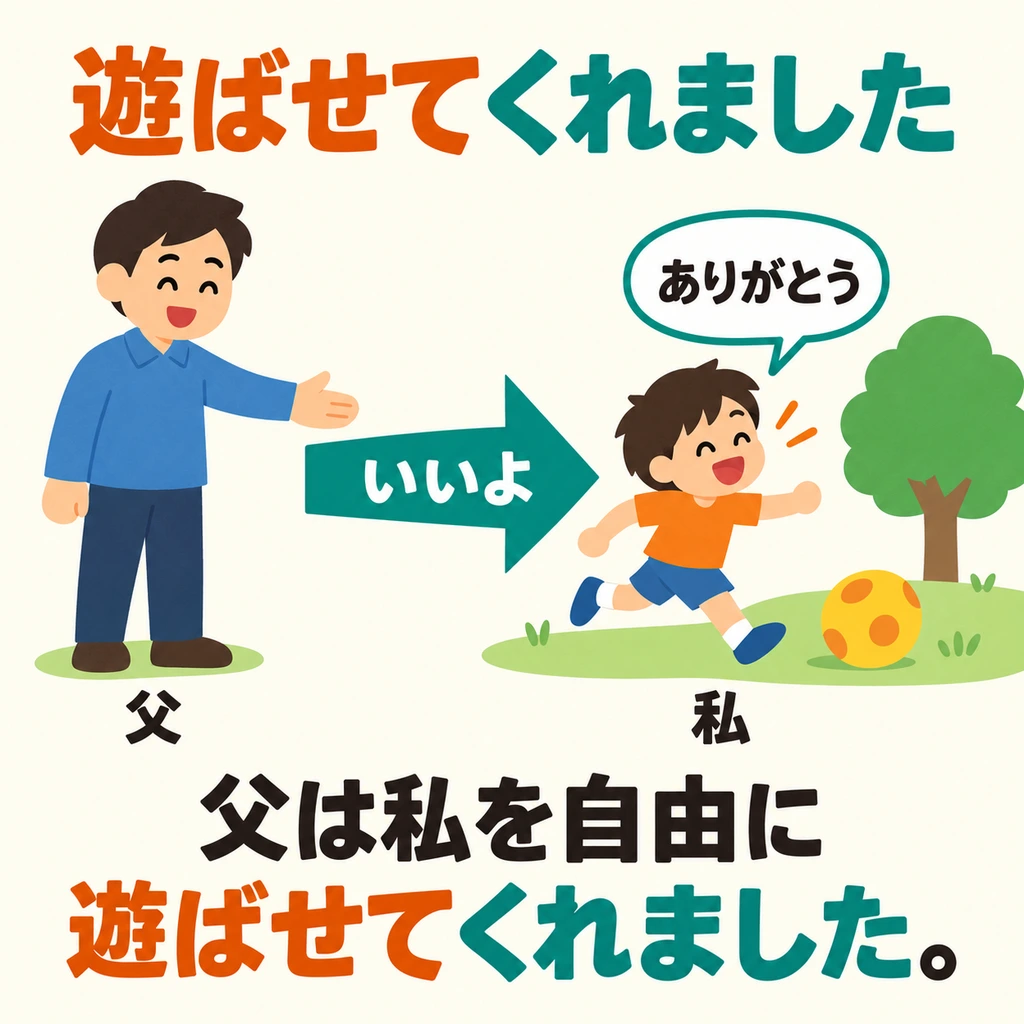
  1. Look at the picture: who is actually playing? Dad says “yes,” giving me the chance to play freely.
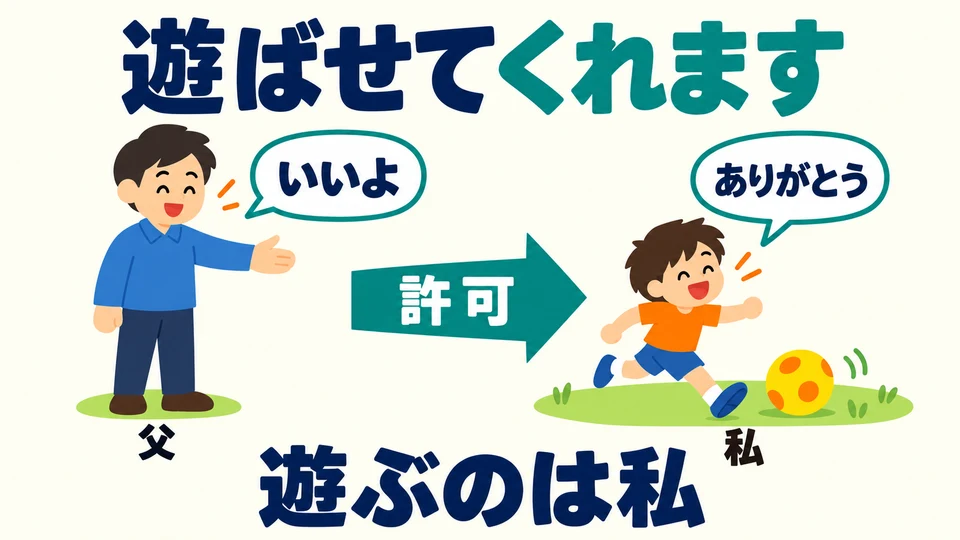
    Look at the picture: who is actually playing? Dad says “yes,” giving me the chance to play freely.

  2. Someone lets me, or someone on my side, do what we want. 「くれます」 conveys that we benefit from this and feel grateful.
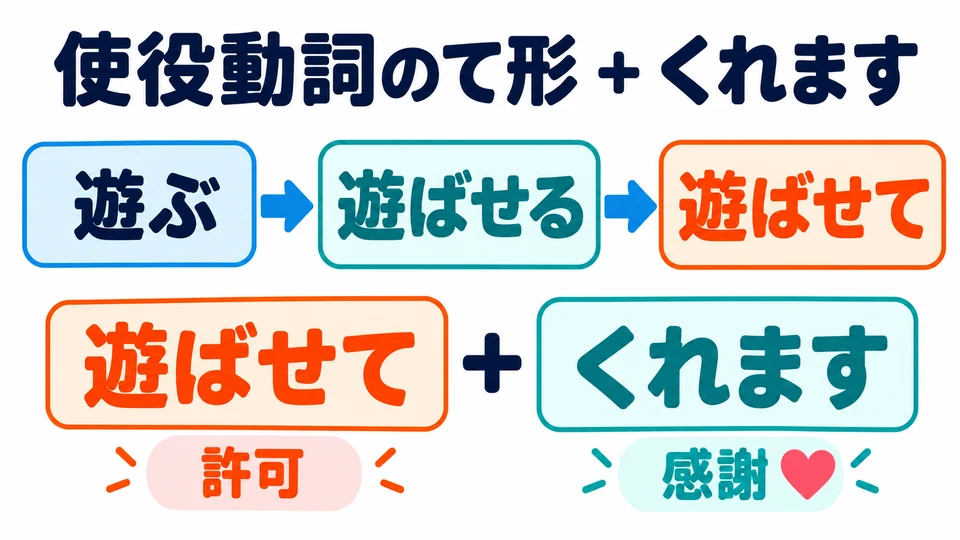
    Someone lets me, or someone on my side, do what we want. 「くれます」 conveys that we benefit from this and feel grateful.

  3. Attach it to the て-form of a causative verb: 遊ばせて+くれます. The first part expresses letting someone act; the second expresses the benefit received.
    Attach it to the て-form of a causative verb: 遊ばせて+くれます. The first part expresses letting someone act; the second expresses the benefit received.

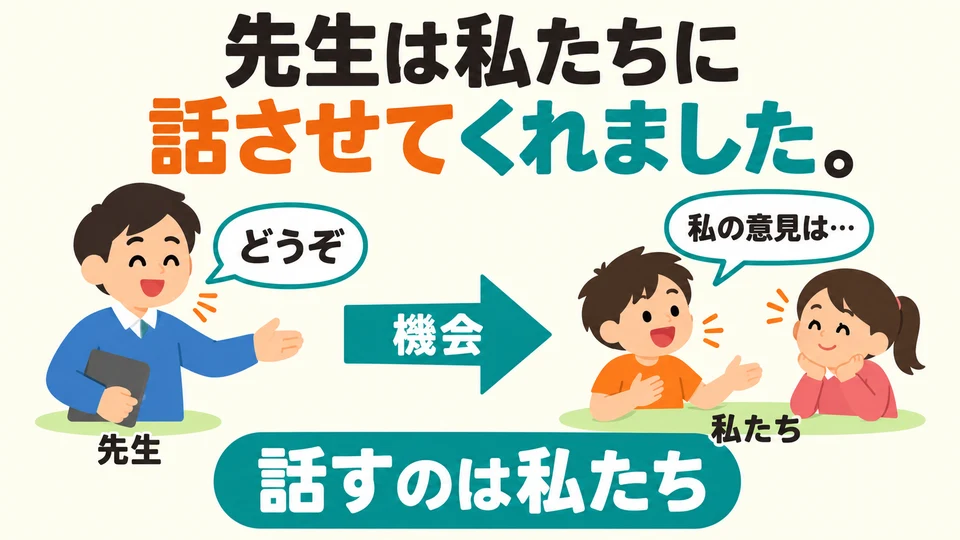
  4. The teacher lets us share our opinions. “We” are the ones actually speaking; the teacher gives us the opportunity to speak.
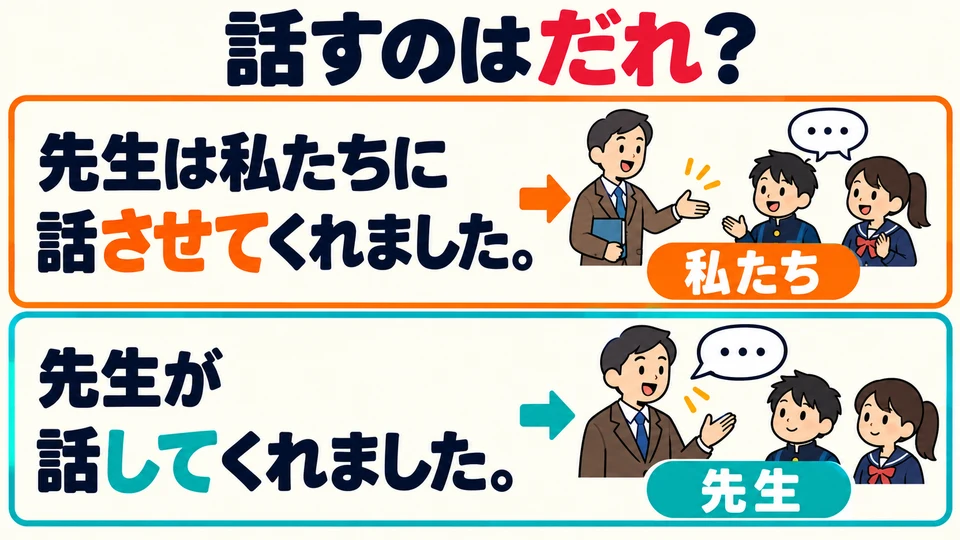
    The teacher lets us share our opinions. “We” are the ones actually speaking; the teacher gives us the opportunity to speak.

  5. With 「先生が話してくれました」, the teacher is the one who speaks. Notice how the person doing the action changes.

    With 「先生が話してくれました」, the teacher is the one who speaks. Notice how the person doing the action changes.

Example sentences

  • 父ちちchichiはわwa休みやすみyasumiのno日ひhiに、ni、私わたしwatashiをo公園こうえんkouenでde自由じゆうjiyuu

In a conversation

  • A
    ご両親ごりょうしんの教育きょういく方針ほうしんはわどのようなものでしたか。

    A: What was your parents' educational philosophy?

  • B
    とても自由じゆうでした。やりたいこと

Check yourself

  1. Which sentence is correct?

    1. 子供のころ、両親は私を毎年海外の国へ旅行に行かせてくれました。
    2. 子供のころ、両親は私を毎年海外の国へ旅行に行かせました。
    3. 子供のころ、両親は私を毎年海外の国へ旅行に行かせられました。
    4. 子供のころ、両親は私を毎年海外の国へ旅行に行ってくれました。
    Show answer

    Answer: A 子供のころ、両親は私を毎年海外の国へ旅行に行かせてくれました。

  2. Which sentence is correct?

    1. 幼稚園の先生は、私たちに毎日かわいい絵を描かせてくれました。
    2. 幼稚園の先生は、私たちに毎日かわいい絵を描かせました。
    3. 幼稚園の先生は、私たちに毎日かわいい絵を描かせられました。
    4. 幼稚園の先生は、私たちに毎日かわいい絵を描いてくれました。
    Show answer

    Answer: A 幼稚園の先生は、私たちに毎日かわいい絵を描かせてくれました。

  3. Which sentence is correct?

    1. 厳しい祖父でしたが、夏休みは私を近くの山でたくさん虫取りをさせてくれました。
    2. 厳しい祖父でしたが、夏休みは私を近くの山でたくさん虫取りをさせました。
    3. 厳しい祖父でしたが、夏休みは私を近くの山でたくさん虫取りをさせられました。
    4. 厳しい祖父でしたが、夏休みは私を近くの山でたくさん虫取りをしてくれました。
    Show answer

    Answer: A 厳しい祖父でしたが、夏休みは私を近くの山でたくさん虫取りをさせてくれました。

More grammar in this theme

  • 〜させてくれますkindly let me do

Keep practising

Test your Japanese vocabulary12 adaptive questions, freeCheck your pronunciationRead aloud and get a scorePractise verb forms10-question conjugation quizSee the whole courseGrammar, vocabulary and quizzes by theme
に遊ばせにあそばせniasobase
てte
くれました。kuremashita。

On days off, my father let me play freely in the park.

  • 先生せんせいsenseiはわwa私たちわたしたちwatashitachiにni自分じぶんjibunのno意見いけんikenをo話させはなさせhanasaseてteくれました。kuremashita。

    The teacher let us speak our own opinions.

  • を
    何なん
    で
    も
    やらせ
    て
    くれました。

    B: It was very free. They let me do whatever I wanted to do.

  • A
    いいですね。私わたしの両親りょうしんも、自由じゆう時間じかんはわ好きなことすきなことをさせてくれました。

    A: That's nice. My parents also let me do what I liked during my free time.

  • Take the quiz
    〜させますmake or let someone act
    〜のを見ましたsaw someone do
    〜ていましたpast repeated habit
    Nばかり/Vてばかりいますkeep doing the same thing
    〜させられますbe made to do
    〜させてもらいますgratefully be allowed to
    Previous〜させられます
    Next〜させてもらいます