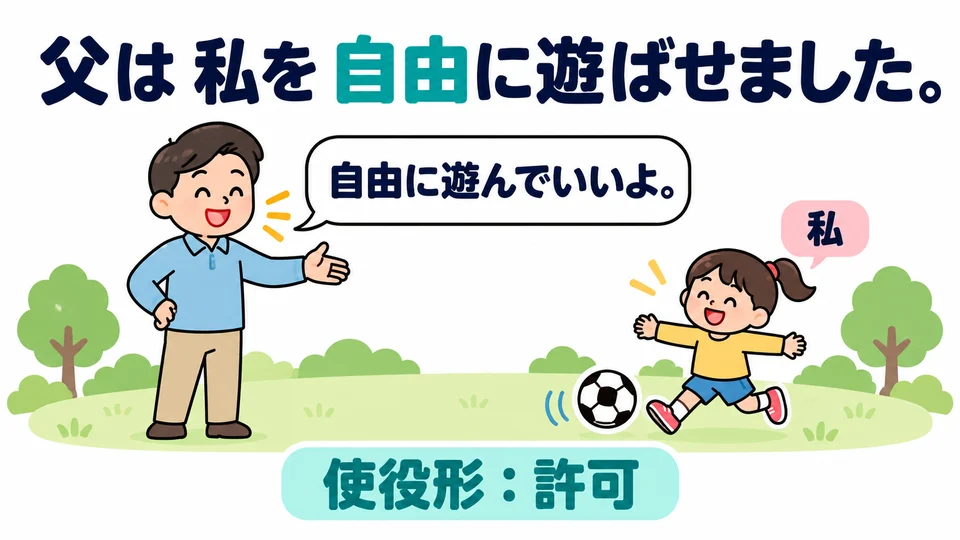
〜させます~sasemasu
Sasemasu (〜させます) means “make or let someone act”.
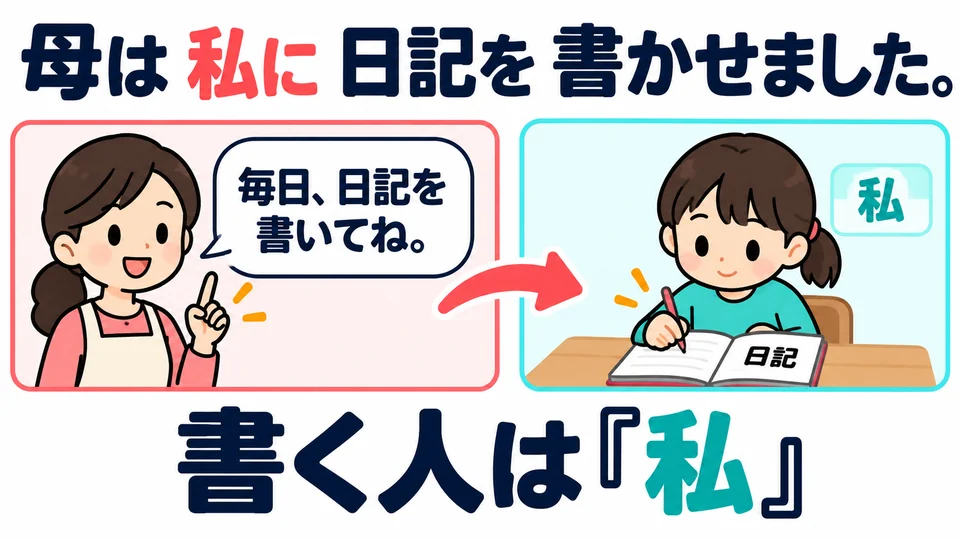
My mother made me write in my diary every day.
Use 「〜させます」 when someone makes or allows another person to do an action.
In the course
How it works
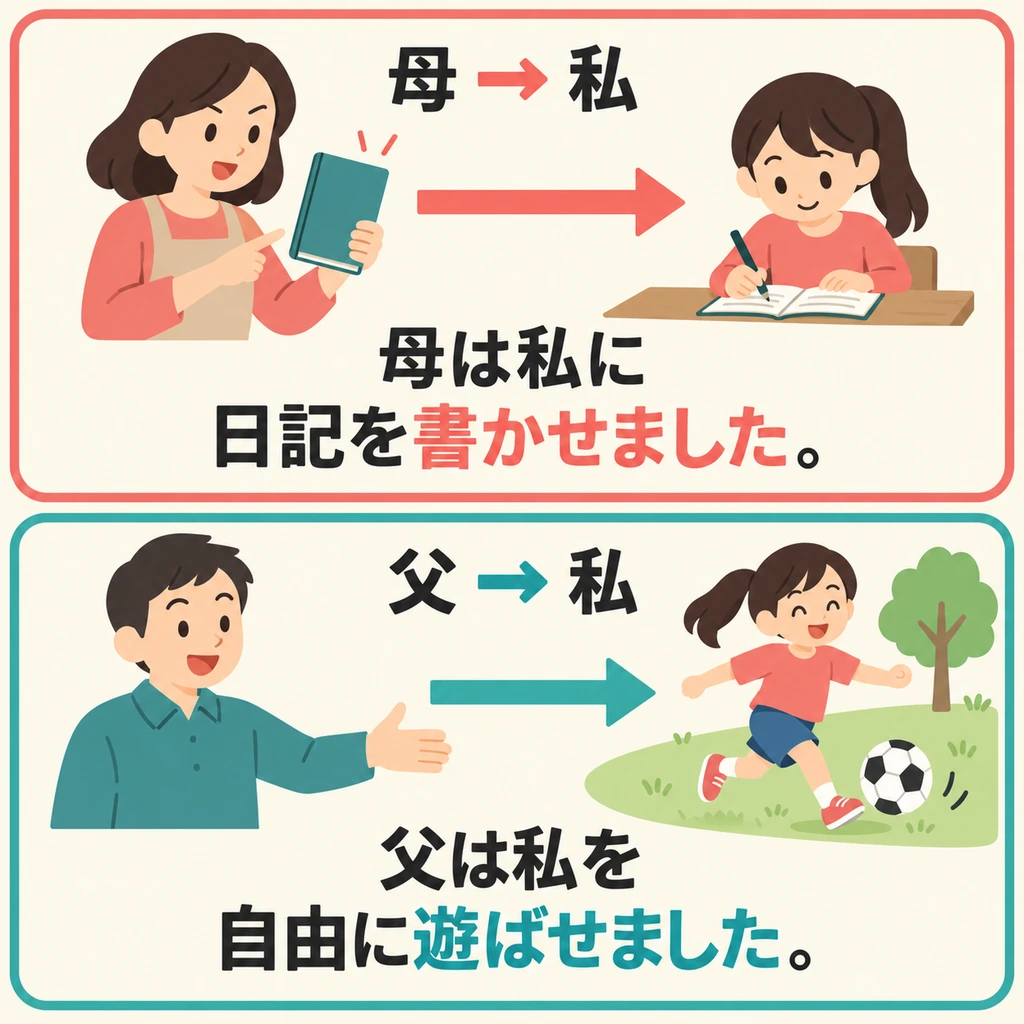
The causative means making or letting someone act. In the picture, the parents give instructions or permission; “I” do the action.
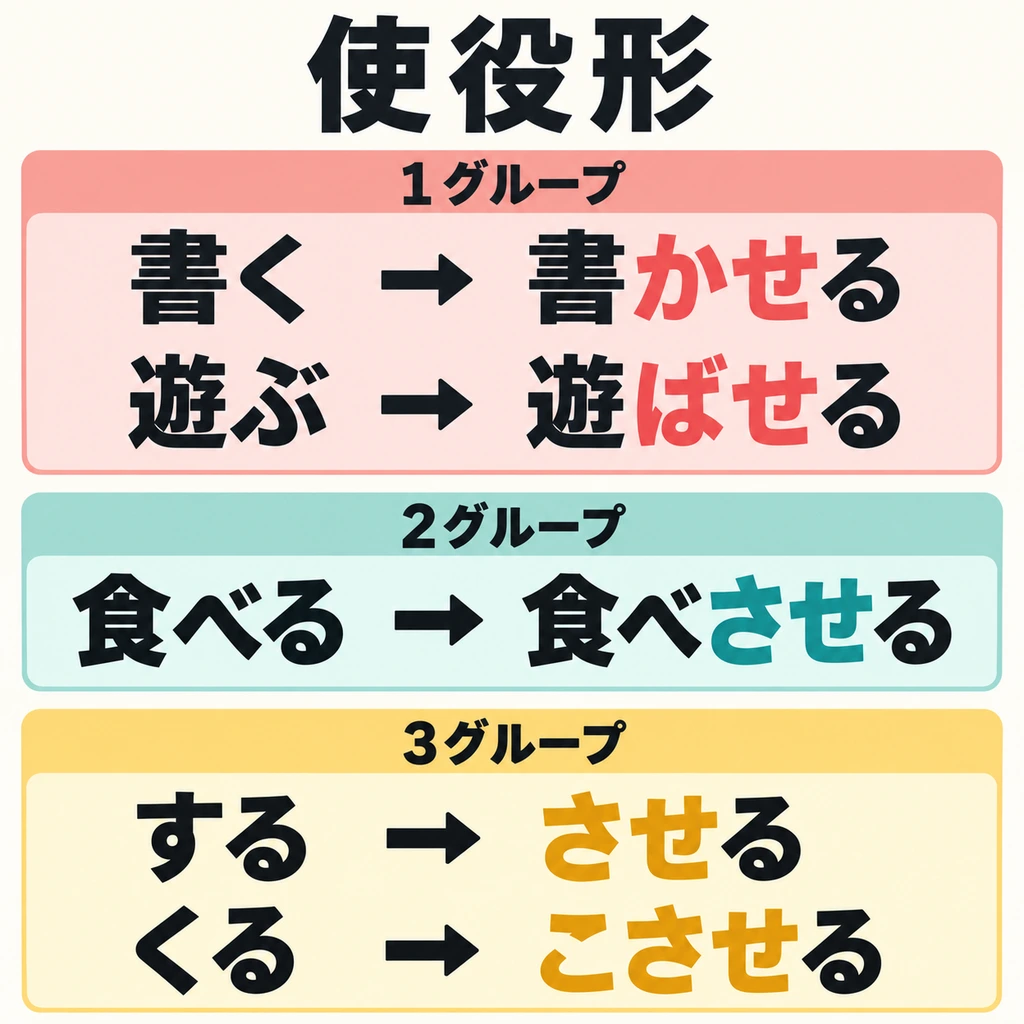
First, see how the dictionary form becomes the causative form. Each of the three verb groups has its own rule.
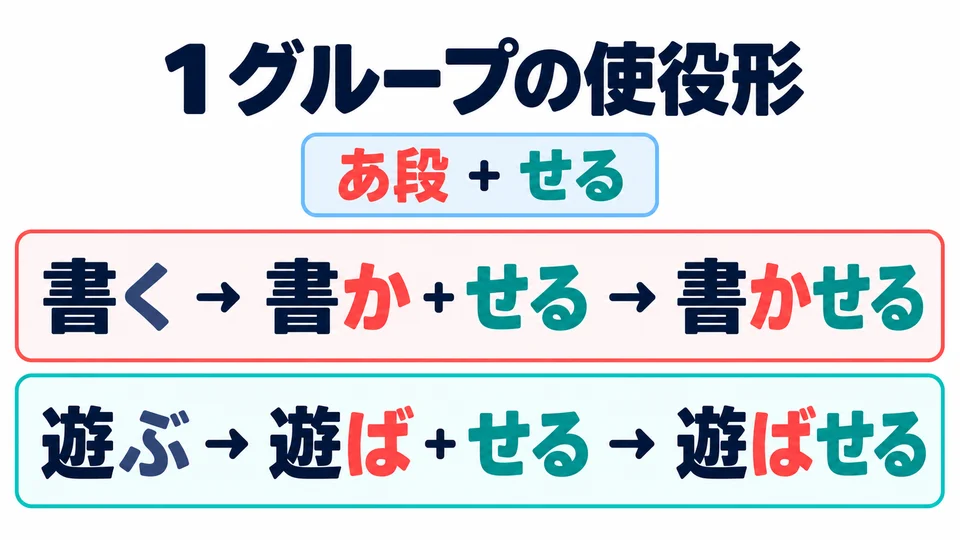
For group 1 verbs, change the final kana to its あ-row counterpart, then add せる: 書く→書かせる, 遊ぶ→遊ばせる.
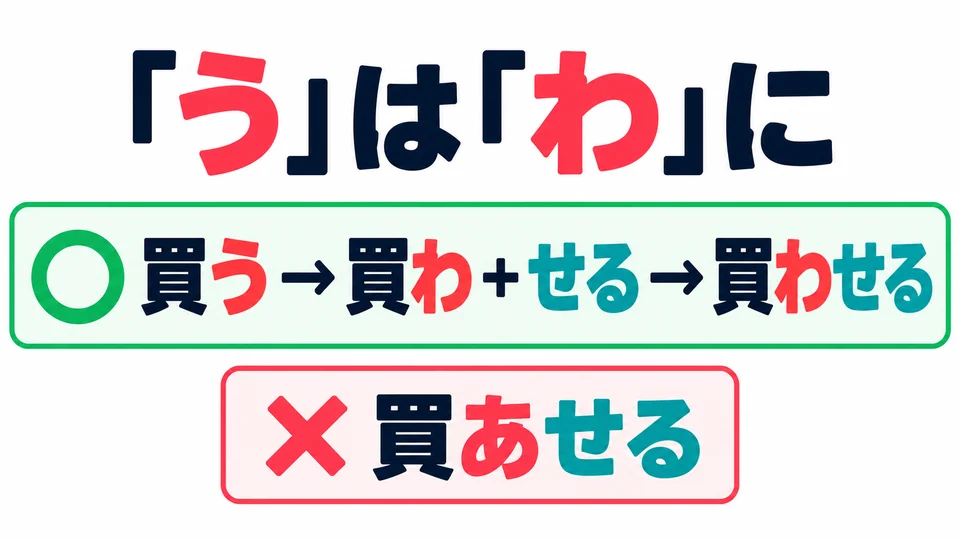
When a group 1 verb ends in う, change it to わ: 買う→買わせる, not 買あせる.
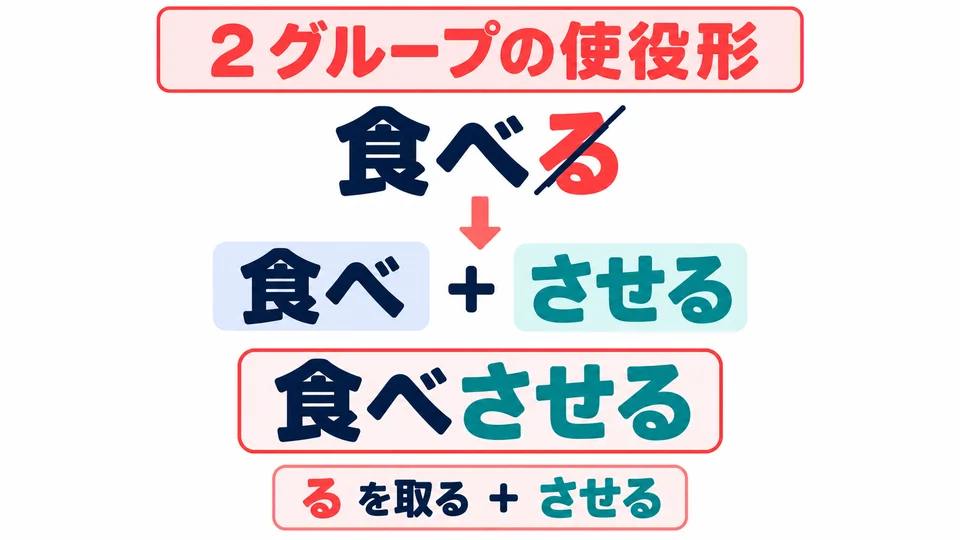
For group 2 verbs, remove る and add させる: 食べる→食べさせる.
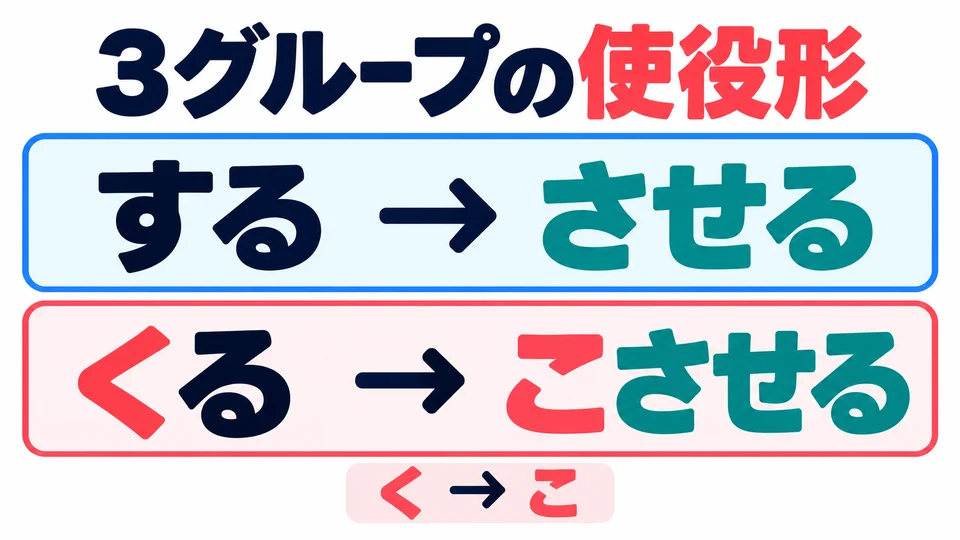
Memorize group 3 separately: する→させる; くる→こさせる. Notice that く changes to こ.
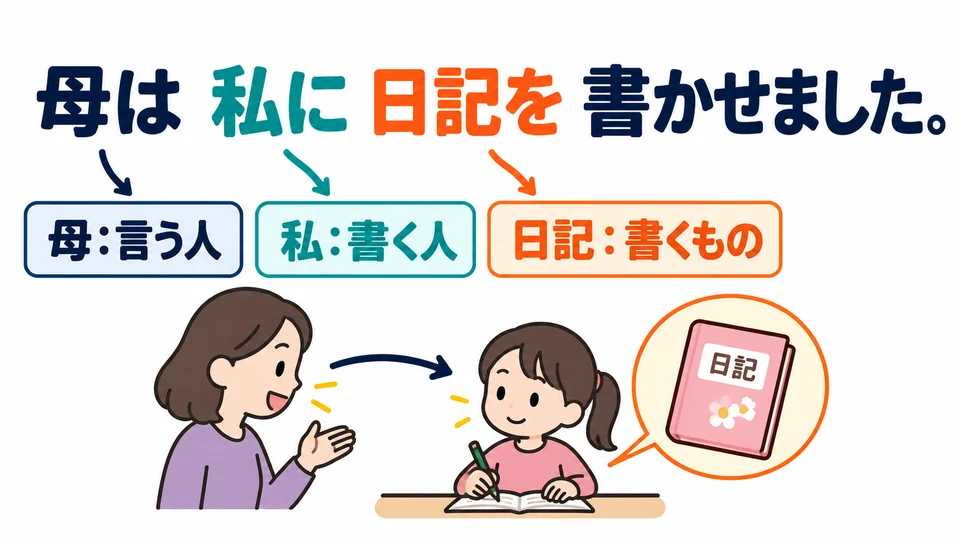
日記を marks the object of the action. 私に marks the person writing the diary, while the mother gives the instruction.
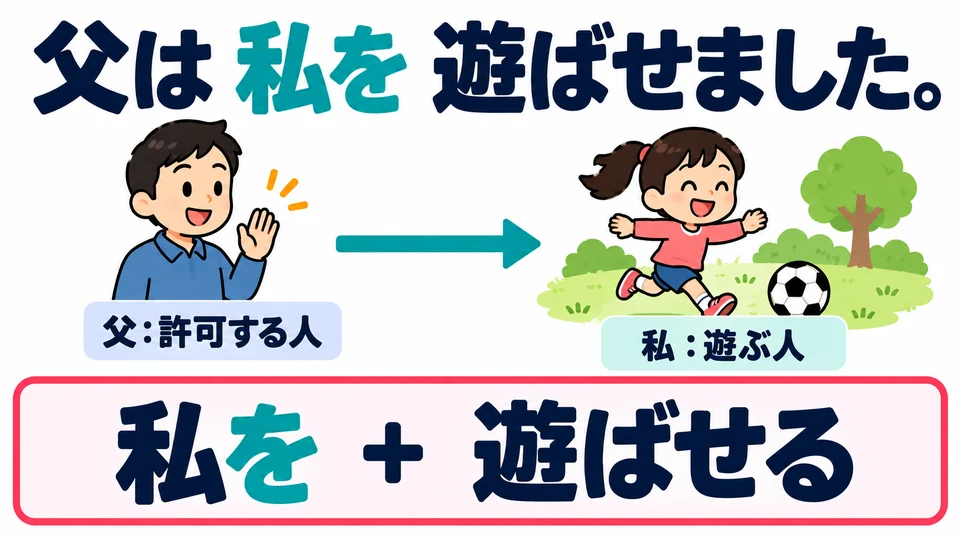
遊ぶ has no object. Here, 私を marks the person playing. With intransitive verbs, を often marks the person made or allowed to act.
Example sentences
- 母hahaは、wa、私watashiにni毎日mainichi日記nikkiをo書かせました。kakasemashita。
My mother made me write in my diary every day.
- 父chichi
In a conversation
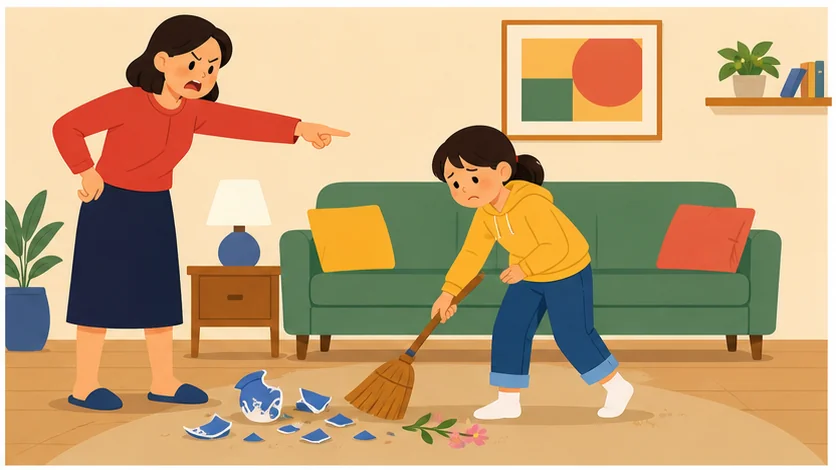
- A昨日、お母さんにとても叱られました。
A: Yesterday, my mother scolded me severely.
- Bどうしてですか。何かいたずらをした
Check yourself
Level 0 · Conjugate
Use 〜せる: make or let someone do the action. 使役形
母は子どもに野菜を(食べる)。
Level 1 · Recognise
Which sentence is correct?
Level 1 · Recognise
Listen and choose the meaning
Level 2 · Build
Put the words in order
My mother made me write a diary every day.
Level 3 · Use
What goes in the blank?
母は、私に毎日日記を____。
My mother made me write a diary every day.
More grammar in this theme
- 〜させますmake or let someone act