
Japanese grammar · ≈ JLPT N4 · Intermediate 1
〜がっています~gatte imasu
showing a feeling
Use 「〜がっています」 to describe outward signs that someone else is showing a feeling or desire.
How it works
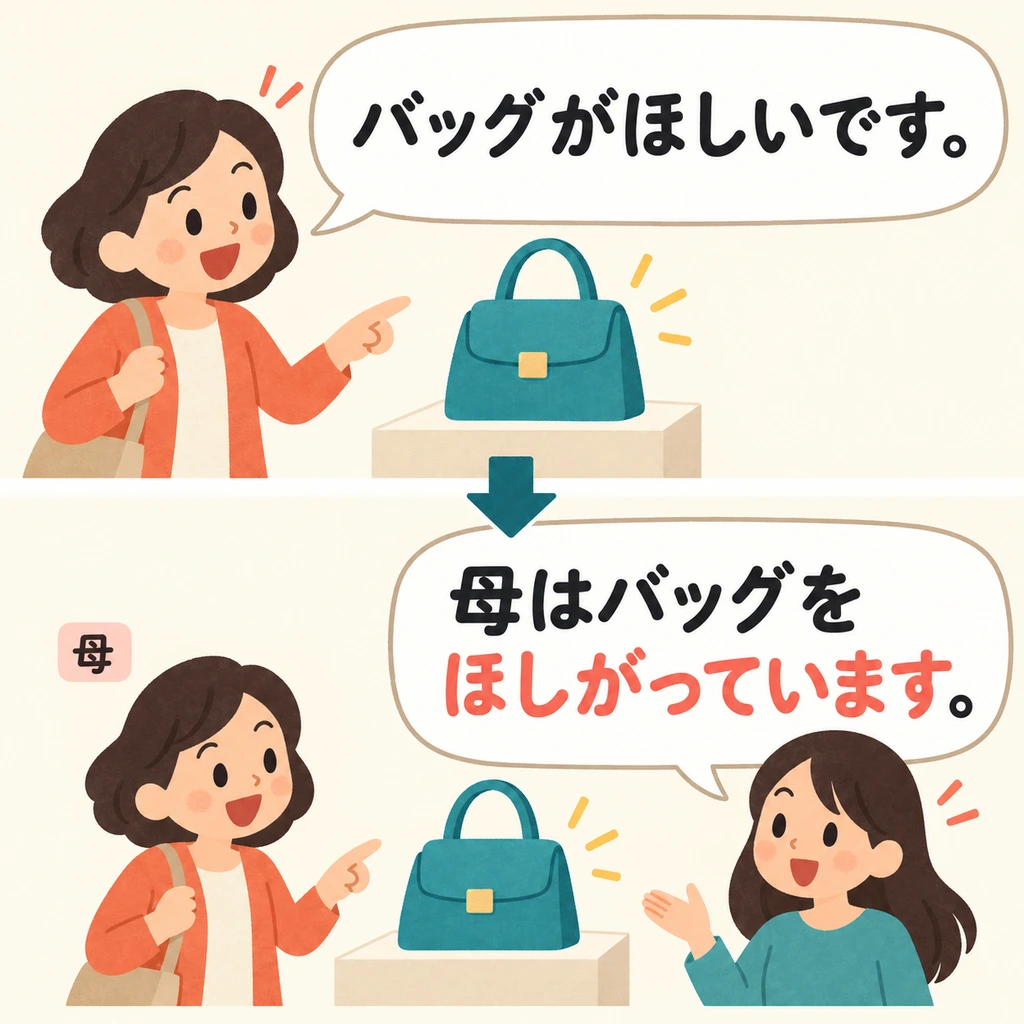
She says she wants the bag. Someone else describes the desire she shows through her words or actions.
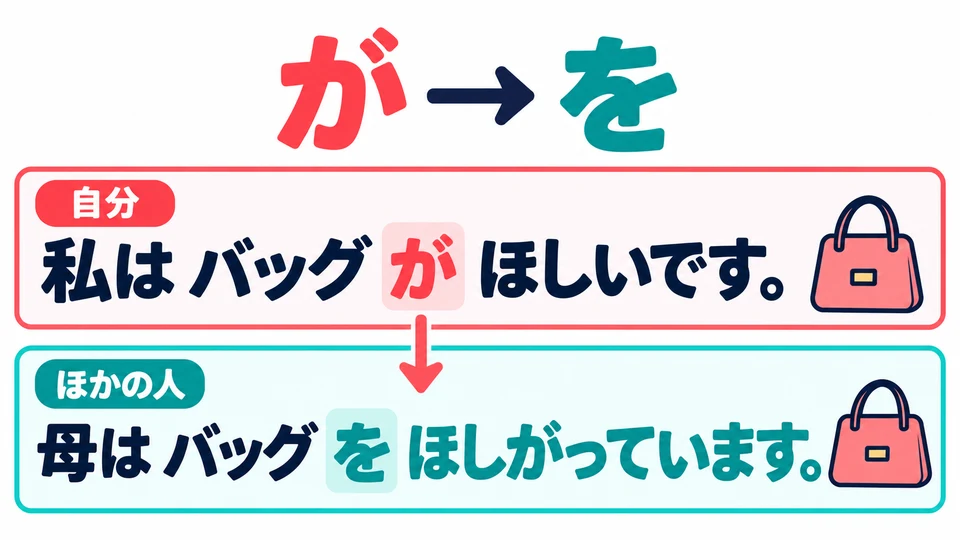
With 「ほしい」, mark the desired item with 「が」. With 「ほしがる」, use 「を」 instead.
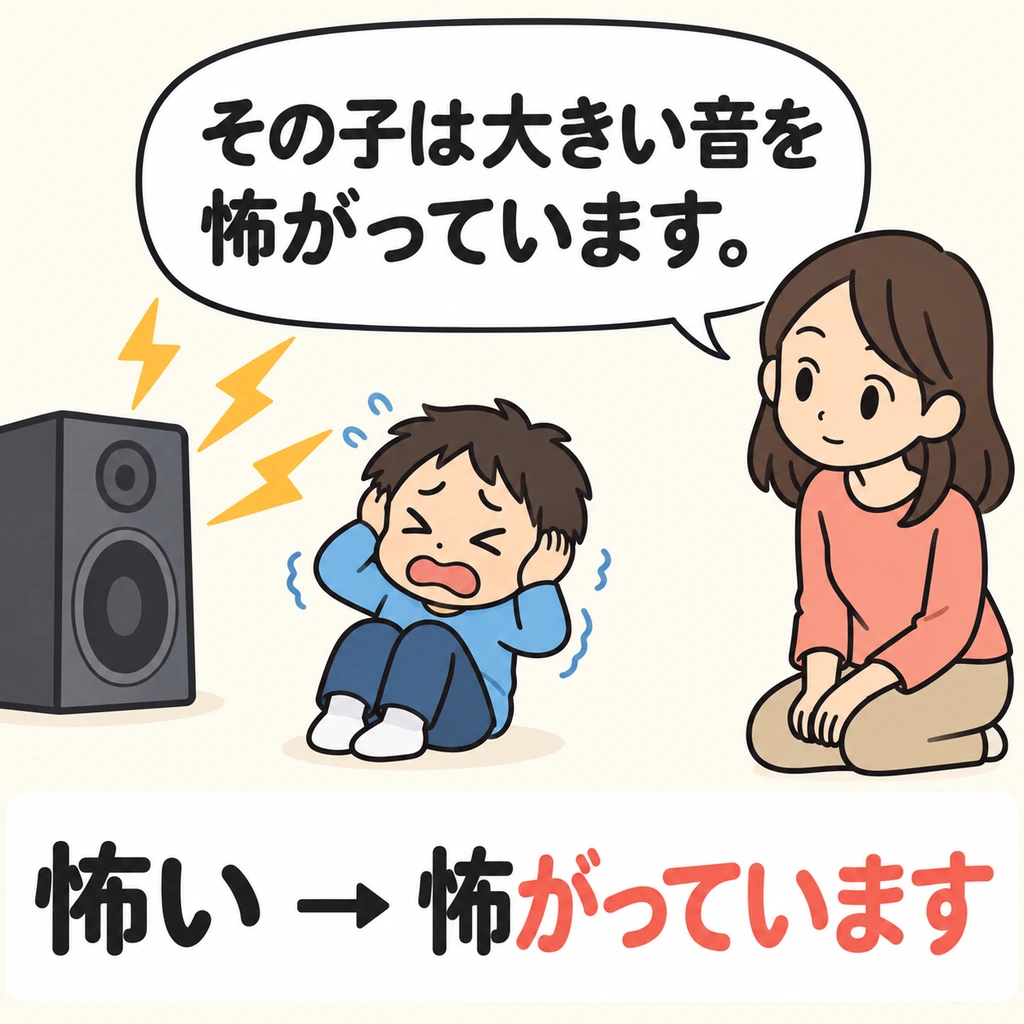
This is not limited to wanting things. It also describes how others show feelings such as fear.
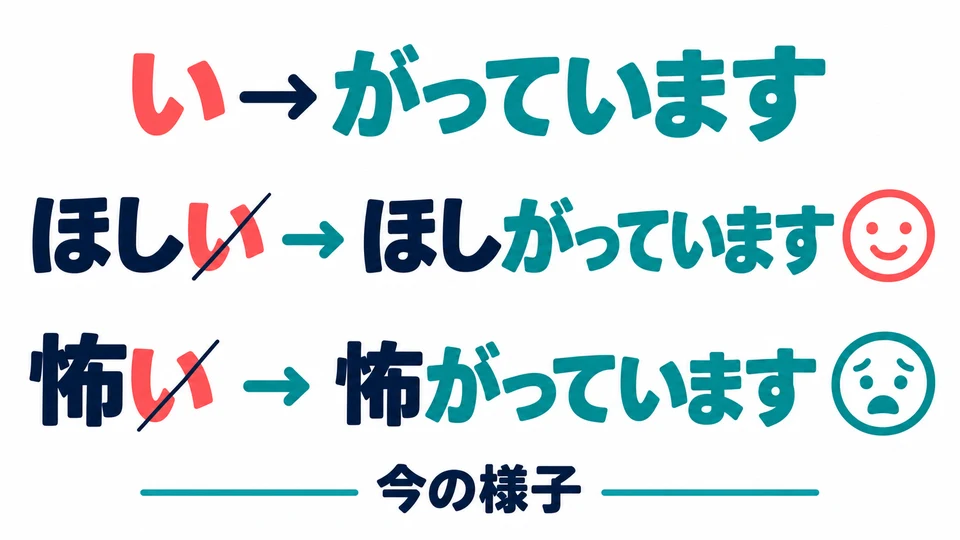
Remove the adjective’s final 「い」 and add 「がっています」 to describe what someone is showing now.
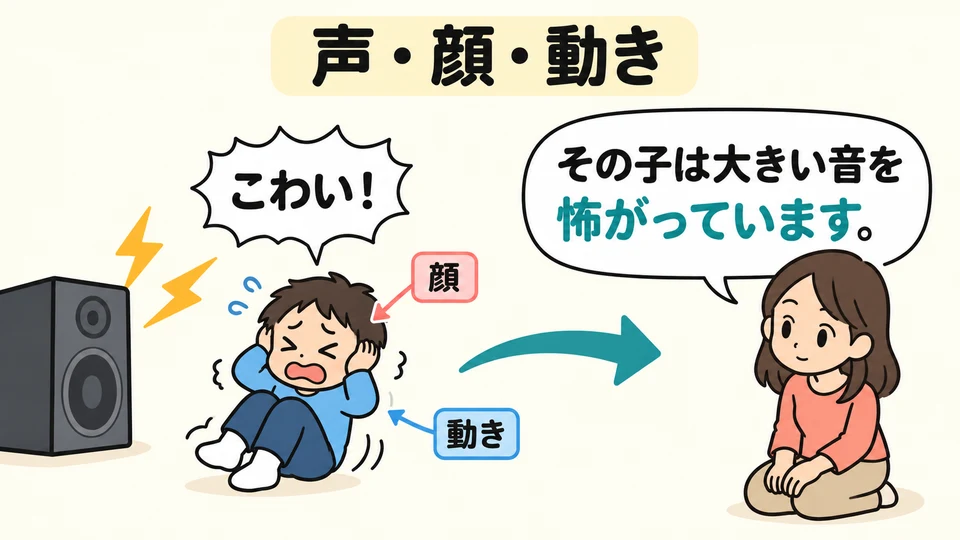
In the example, the child’s voice, expression, or movements to avoid the noise give the speaker grounds to describe the child’s fear.
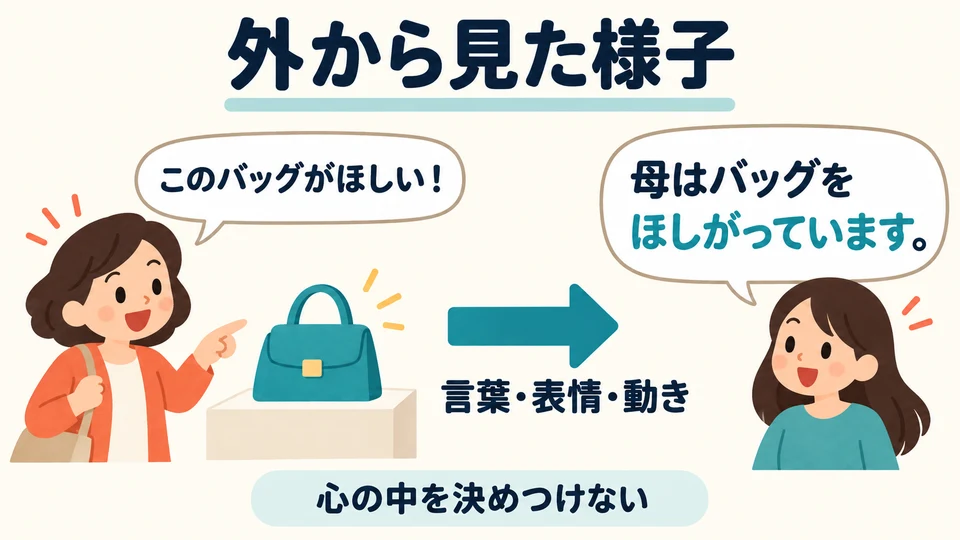
「がる」 does more than change the person: it focuses on outward signs, without directly asserting what someone else feels inside.
Example sentences
- 母hahaはwa最近、saikin、軽くkarukuてte使いやすいtsukaiyasuiバッグbagguをoほしがっhoshigatてteいます。imasu。
In a conversation

Check yourself
Level 1 · Recognise
Which sentence is correct?
Level 1 · Recognise
Listen and choose the meaning
Level 2 · Build
Put the words in order
My mother has recently been wanting a bag that is light and easy to use.
Level 3 · Use
What goes in the blank?
母は最近、軽くて使いやすいバッグを____。
My mother has been wanting a lightweight, easy-to-use bag recently.
More grammar in this theme
- 〜がっていますshowing a feeling